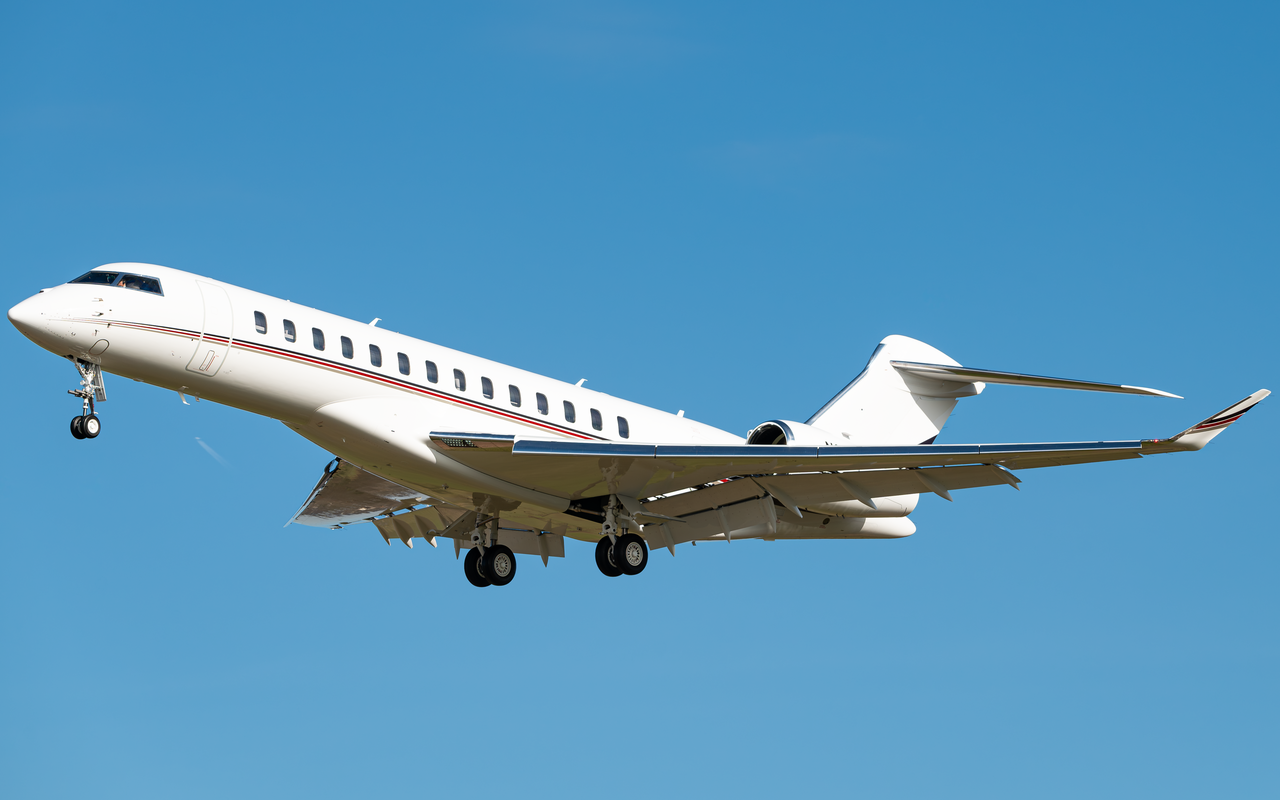
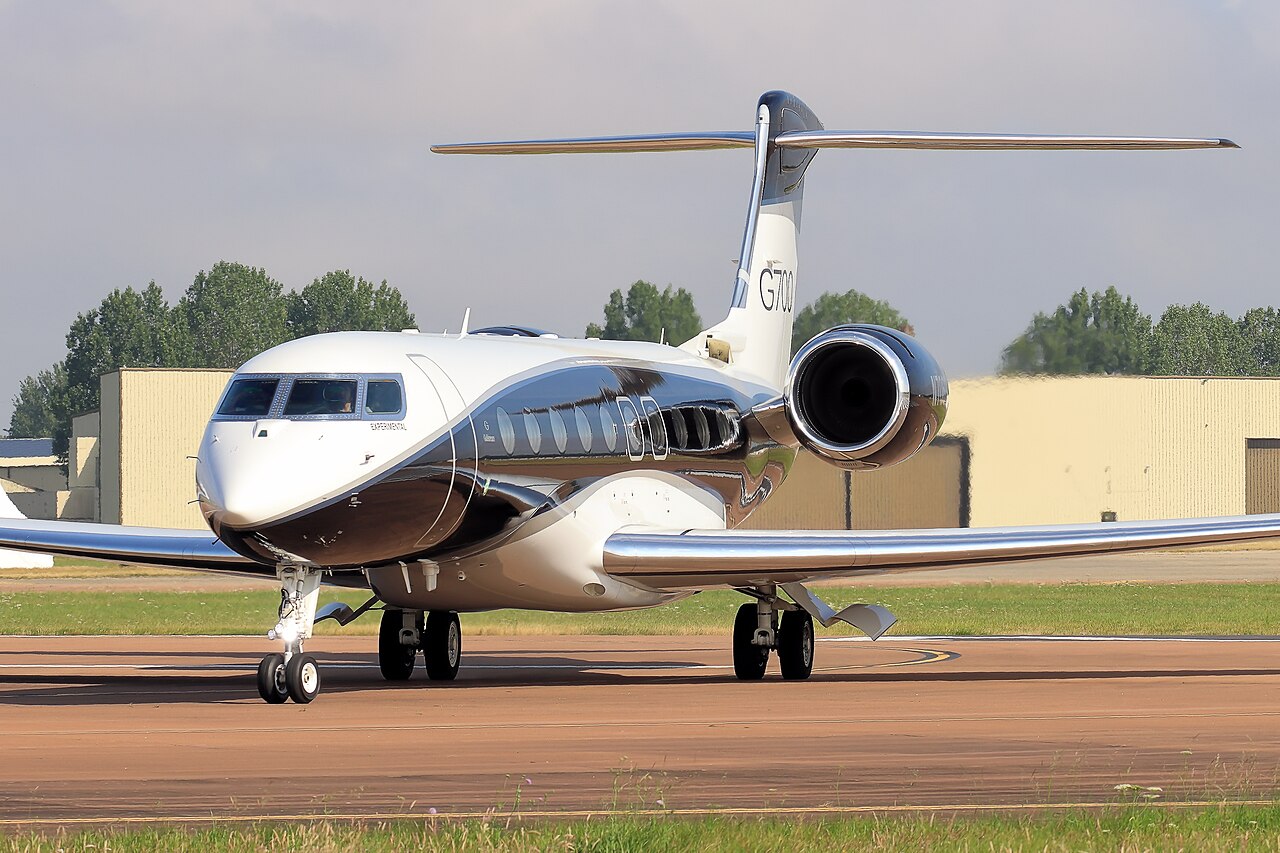
Cabin layout and comfort
The headline difference is zones. The Global 7500 offers four — usually a club four up front, a conference dining group, a private stateroom and a crew rest area. The G700 introduces a fifth zone, made possible by an extra 2 ft 6 in of cabin length. For principals who want a dedicated office in addition to a bedroom, the G700 simply has more room to carve up.
Bombardier's answer is the Nuage seat — the first clean-sheet business-jet chair in 30 years, with a deep recline, tilting headrest and a floating swivel. Most operators consider the Nuage the most comfortable seat in private aviation today, and the Global 7500's cabin altitude at FL410 (~4,500 ft) is roughly 350 ft lower than the G700's, which translates into noticeably less fatigue on 13-hour sectors.
The G700 fights back with the largest oval windows in the class — 20 per side versus the Global 7500's 14 — flooding the cabin with daylight. If you fly mostly in daytime over scenic routes, the G700 cabin feels markedly more open.
Range and city pairs
On paper the G700 leads by 50 nautical miles — 7,750 nm versus 7,700 nm — and in headwind scenarios that occasionally matters. Both aircraft connect New York → Singapore, Los Angeles → Sydney, London → Perth, Dubai → Houston and Hong Kong → New York non-stop with a full cabin and reasonable winds.
The Global 7500 was first to achieve several of these city pairs in service and remains the proven option on the toughest winter eastbound legs. The G700 entered service later and has rapidly demonstrated the same envelope; on the Asia-Pacific routes, fleets are still small and availability tighter.
Speed
Maximum cruise favours the G700 at Mach 0.935 versus the Global 7500's Mach 0.925. On a typical long-range cruise (Mach 0.85) the two aircraft perform almost identically; the gap on a 7-hour leg is 5–10 minutes. For mission planning, treat them as equivalent.
Hourly charter cost
Global 7500 charter rates in 2026 run $18,000–$22,000 per flight hour, plus positioning, landing fees, international handling and catering. A New York → London leg typically lands between $135,000 and $165,000 all-in; a New York → Singapore one-way is in the $300,000–$370,000 band depending on winds and ground handling.
G700 charter rates run $19,000–$23,000 per flight hour. The premium reflects scarcity as much as operating cost: the G700 fleet is still ramping, and on popular dates supply is thin enough to push trip pricing 5–10% above the Global 7500 for an equivalent mission. As the fleet matures through 2026 we expect that gap to narrow.
Empty-leg repositioning on both types is rare but extraordinarily valuable when it appears — a one-way Global 7500 or G700 between major hubs can save 40–60% on the equivalent on-demand charter. If your dates are flexible, watch the empty-leg board for ultra-long-range jets in your corridor.
Which ultra-long-range jet should you charter?
- —Choose the Global 7500 if you prioritise the lowest cabin altitude in the segment, the Nuage seat, broader operator availability and a marginally lower hourly rate. The proven workhorse of the ultra-long-range class.
- —Choose the Gulfstream G700 if you need a fifth living zone (separate office plus stateroom), want the largest windows in private aviation, or are routing into Gulfstream-friendly FBOs and service networks.
- —Either aircraft is ideal for non-stop intercontinental city pairs — NYC → SIN, LAX → SYD, LHR → PER, DXB → IAH — where range, cabin space and quiet matter more than the last 10 knots of cruise speed.