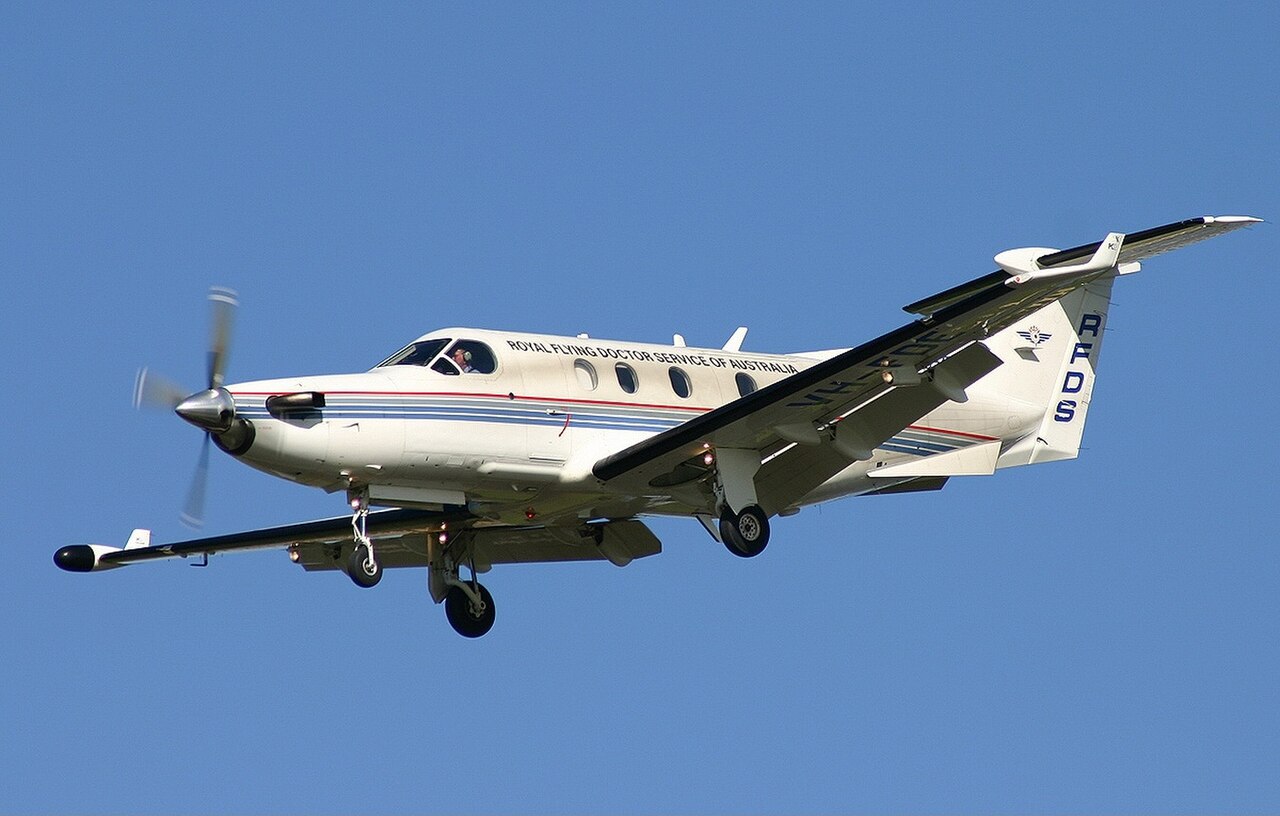
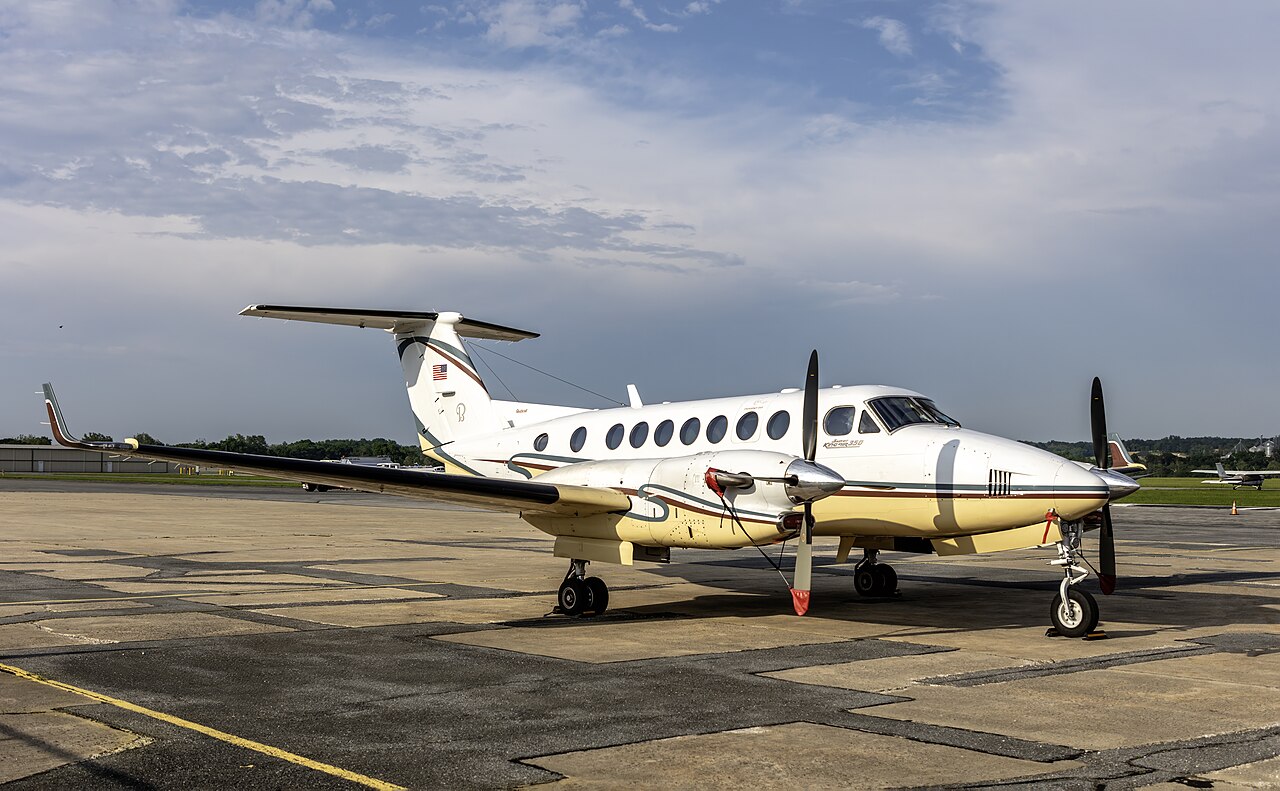
Cabin size and comfort
The King Air 350 wins on raw cabin length: 19.5 ft versus the PC-12's 16.9 ft. That extra 2.6 feet translates into more legroom for every seat and space for a small refreshment centre or an additional luggage cubby. For a party of eight the 350 feels noticeably less cramped on a two-hour sector.
Where the PC-12 fights back is width and floor shape. Its 5.0 ft flat floor is wider than the King Air's 4.5 ft oval cross-section, and the flat floor makes moving around the cabin in flight easier — especially for passengers who need to reach the rear baggage area or the lavatory. The PC-12 also has a full-size cargo door (53 × 53 in) that accepts everything from golf clubs to skis without folding seats, something the King Air cannot match.
Bottom line: if your priority is maximum passenger count and you fly from paved runways, the King Air 350 delivers more volume. If you value cabin width, cargo flexibility and a flat floor, the PC-12 is the better choice.
Range and speed
On paper both aircraft advertise roughly 1,800 nautical miles of maximum range. In practice the PC-12 achieves that figure with four passengers and favourable winds; the King Air 350 typically needs to sacrifice one or two seats to reach the same number. The PC-12's single-engine efficiency and large fuel fraction give it a slight real-world edge on long legs.
Speed is where the King Air 350 pulls ahead. Its twin PT6A-60As push it to ~312 knots true airspeed, roughly 20 knots faster than the PC-12's ~290 knots. On a 500-nautical-mile sector that saves 10–12 minutes — hardly decisive for leisure, but meaningful if you are running a daily corporate shuttle.
Hourly charter cost
Pilatus PC-12 charter cost in 2026 averages $1,800–$2,800 per flight hour in the US and Europe. The lower operating cost of a single engine, simpler maintenance and high dispatch reliability keep the rate competitive on almost every route.
King Air 350i charter cost runs $2,200–$3,200 per flight hour. The premium covers the second engine, the larger cabin and the higher fuel burn. For missions where twin-engine redundancy is required by insurance or corporate policy, the extra cost is non-negotiable — but for private leisure charters the PC-12 usually undercuts it by 15–25% on an all-in trip basis.
Empty-leg positioning can slash either aircraft's cost by 30–50%. If your dates are flexible, watching the empty-leg board for PC-12 or King Air 350 repositioning flights is the fastest way to reduce a turboprop charter bill.
Short-field performance
This is the PC-12's signature advantage. It needs only 2,485 ft for takeoff at sea level and can land in roughly 2,500 ft. More importantly, Pilatus certifies it for unimproved surfaces — grass, gravel and even compacted dirt — which opens up a catalogue of airfields the King Air 350 simply cannot use.
For ski trips the PC-12 is certified for steep approaches into Courchevel, St Moritz Samedan and other alpine strips. For island and lodge access it can operate from private grass strips in the Scottish Highlands, the Bahamas Out Islands and remote ranches in the American West.
The King Air 350 is no slouch — 3,300 ft takeoff and 2,600 ft landing on paved runways is still better than most jets — but it is not certified for unimproved fields, and its higher wing loading demands more precise touchdown technique on short or wet runways.
Which turboprop should you charter?
- —Choose the Pilatus PC-12 if you fly to small or unpaved airfields, carry bulky cargo (skis, golf clubs, fishing gear), value the lowest hourly rate or need alpine short-field capability.
- —Choose the King Air 350 if you routinely carry 7–8 passengers, need twin-engine redundancy for over-water or mountainous routes, or want the fastest turboprop cruise speed in the charter fleet.
- —Either aircraft is ideal for intra-continental shuttles up to 1,500 nm — London to the Scottish Highlands, Geneva to Sardinia, New York to Nantucket, Denver to Aspen — where jet speed is unnecessary and turboprop economy and runway access win the day.
FAQ
Frequently asked
Is the Pilatus PC-12 safer than the King Air 350?
Both aircraft have exceptional safety records. The King Air 350 has twin-engine redundancy, which is comforting over water or mountainous terrain. The PC-12 has a single PT6A engine with a stellar reliability history and a full-airframe parachute system (BRS). For single-pilot operations, both are certified; the PC-12 is often preferred for its simpler systems.
How much does it cost to charter a Pilatus PC-12 per hour?
In 2026, Pilatus PC-12 charter rates range from $1,100 to $2,800 per flight hour in the US and Europe. Empty-leg positioning can reduce this by 30–50% on popular corridors such as Denver → Aspen, London → Scottish Highlands or Zurich → Sardinia.
How much does it cost to charter a King Air 350 per hour?
King Air 350i charter rates typically run $2,200–$3,200 per flight hour. The premium over the PC-12 reflects the larger cabin, higher passenger capacity and twin-engine redundancy. On short sectors the difference is modest; on longer legs it compounds.
Can a Pilatus PC-12 land on a grass runway?
Yes. The PC-12 is certified for unimproved surfaces including grass, gravel and dirt strips. Its rugged landing gear and low tire pressure make it a favourite for remote lodges, island airstrips and private estates where paved runways do not exist.
Which is better for a family ski trip: PC-12 or King Air 350?
For alpine access the PC-12 has the edge. Its short-field performance and steep-approach certification open up Courchevel, St Moritz Samedan and other mountain airfields the King Air 350 cannot serve. If you are flying a party of eight to a major airport such as Geneva or Innsbruck, the King Air 350 offers a larger cabin at a comparable speed.