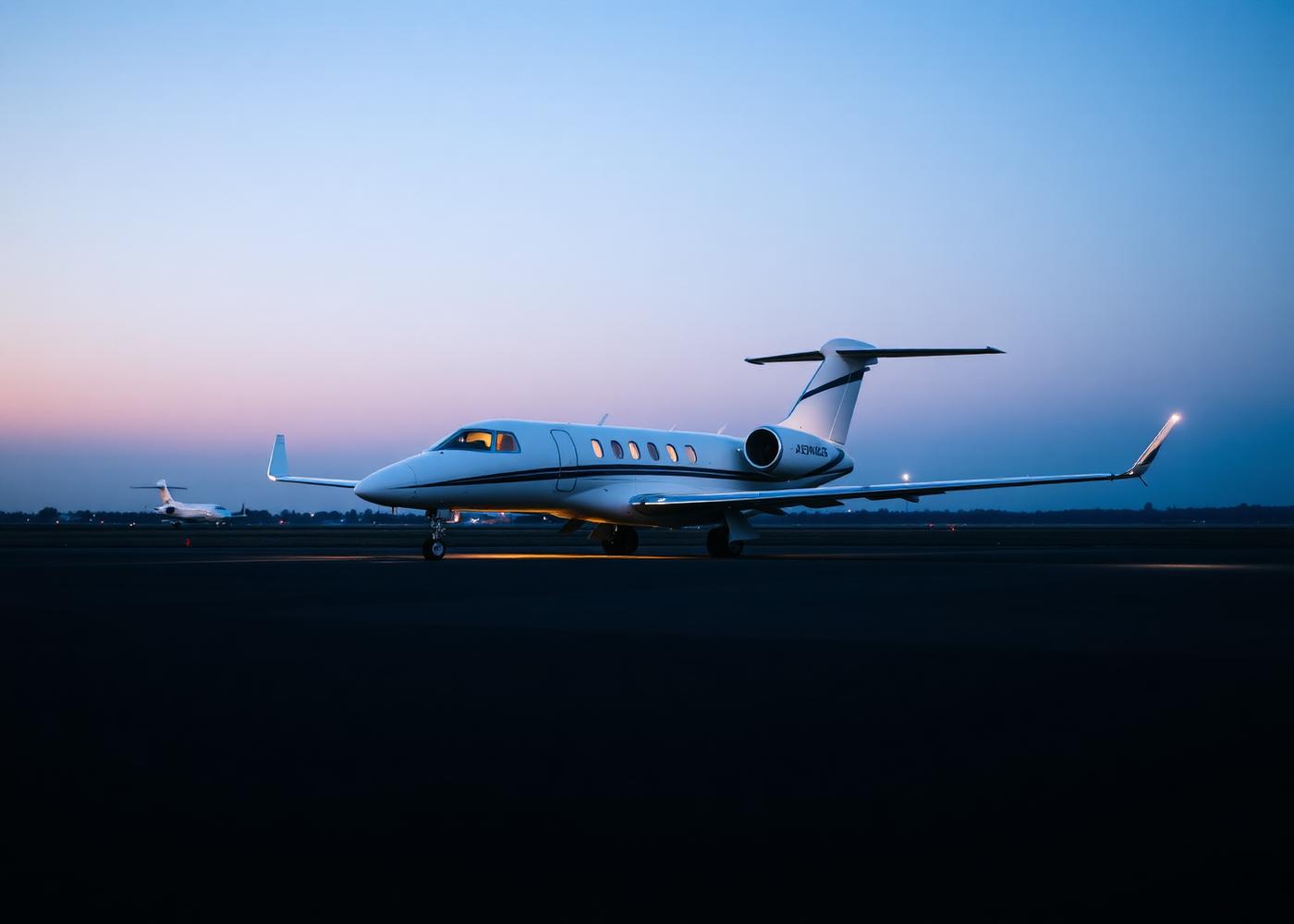
Pilatus PC-12 NGX private jet charter

Pilatus PC-12 NGX Charter

Single-engine economics, jet-style cabin.

PAX6–8RANGE1,803 nmSPEED290 ktsBAGGAGE40 cu ftCABIN4'10" × 5'0"TYPICALZurich → St Moritz · from CHF 4,800

OVERVIEW

Pilatus PC-12 NGX

The Pilatus PC-12 NGX is the world's most-delivered single-engine turbine aircraft — exceptional reliability, jet-style cabin appointments and unmatched short-runway access at the most economical operating cost in private aviation.

EBACE 2019, Le Grand-Saconnex (EB190163)

IN DEPTH

The complete guide to chartering the Pilatus PC-12 NGX

The story behind the Pilatus PC-12 NGX

Pilatus Aircraft of Stans, Switzerland, has been producing robust, high-performance single-engine aircraft since the 1940s — aircraft designed to operate reliably in the Alps, in the Australian outback, in the African bush, and in conditions that would defeat more delicate designs. The PC-12 is the company's defining achievement: a single-engine turboprop that, since its first flight in May 1991 and its entry into service in 1994, has accumulated over 8 million fleet flight hours across more than 1,900 aircraft delivered to customers in over 50 countries. It is, without credible dispute, the world's best-selling pressurised single-engine turboprop — a record that reflects not marketing but genuine engineering merit.

The NGX variant, unveiled at EBACE 2019 and entering service in 2020, represents the most significant advancement of the PC-12 design since its introduction. The centrepiece of the update is the Pratt & Whitney Canada PT6E-67XP engine — an entirely new powerplant featuring the world's first dual-channel autothrottle on a turboprop, delivered through Pilatus's proprietary Electronic Propeller and Engine Control System (EPECS). This system manages power, propeller pitch and fuel flow with a degree of precision previously available only on turbofan engines, reducing pilot workload, optimising fuel consumption and improving single-pilot operating safety in a manner that is genuinely revolutionary rather than incremental. The NGX also introduced a new Honeywell Primus Apex avionics suite, larger panoramic windows, a redesigned interior architecture and an enhanced active noise reduction system.

The Pilatus PC-12 NGX is available for charter today as a premium single-engine turboprop, carrying up to nine passengers in a pressurised, air-conditioned cabin at a cruise speed of 290 knots. Its particular distinction — the feature that no other executive turboprop can fully replicate — is the combination of full pressurisation, genuine cargo capability via a large rear cargo door, and the ability to operate from unprepared strips of grass, gravel, sand or packed earth as short as 2,485 feet. It is the aircraft that goes where others cannot, then brings the boardroom experience once you arrive.

On board: the cabin

The PC-12 NGX's cabin measures 14.3 feet (4.36 metres) in length, 5 feet (1.52 metres) in width and 4 feet 10 inches (1.47 metres) in height — a cross-section that is comparable to, and in some dimensions exceeds, several light jets, including the Cessna Citation Mustang and the Honda HA-420 HondaJet. The NGX's 2020 interior refresh introduced wider, more sculptured seats in full-grain leather, improved headrests with integrated speakers for the aircraft's Bluetooth audio system, larger panoramic windows that are 36 per cent bigger than those of the preceding PC-12/47E, and improved overhead lighting with full RGB ambient control. The cumulative effect is a cabin that feels significantly more premium than the aircraft's turboprop categorisation might suggest.

In the most common executive configuration, six passengers are seated in a club arrangement — two pairs of facing seats with a fold-out table — plus two additional aft-facing seats, providing comfortable seating for six to eight on shorter sectors. A belted lavatory position is provided at the rear, typically fitted with a chemical toilet in a screened enclosure. The aircraft's single-aisle layout allows movement throughout the cabin, and the forward galley — compact but properly equipped — supports pre-catered meals, cold beverages and a full barista-grade coffee service on many operator-managed aircraft.

What the PC-12 NGX's cabin numbers do not fully convey is the sense of light, quality and completeness that the latest interiors achieve. Pilatus works closely with its completion partners — and offers factory-direct completion options at its Stans facility — to deliver interiors that are genuinely bespoke rather than off-the-shelf. Charter clients will find aircraft ranging from tastefully restrained corporate configurations in dark leather and brushed aluminium to quite extraordinary personal statements in hand-stitched leather, carbon-fibre trim and sapphire-blue ambient lighting. The baggage compartment, accessible via the aircraft's large rear cargo door at 53 inches wide and 51 inches high, provides approximately 40 cubic feet of usable baggage space — less than the King Air 350i but sufficient for a typical five- to six-person group's weekend luggage.

Performance, range and runway access

The PT6E-67XP engine at the PC-12 NGX's nose is flat-rated at 1,200 shaft horsepower, driving a five-blade Hartzell composite propeller. Maximum cruise speed is 290 knots true airspeed at FL250 — the aircraft's optimal cruise flight level — with a certified ceiling of 30,000 feet that keeps it comfortably above most weather and below commercial traffic on trans-European sectors. Maximum range with four passengers is 1,803 nautical miles; with six passengers in the typical executive charter configuration, the practical range is approximately 1,500 nautical miles, enabling non-stop flights from London Biggin Hill to Marrakech (1,280 nm), Zurich to Tromsø (1,350 nm), or Paris to Reykjavik (1,390 nm) with comfortable reserves.

The PC-12 NGX's short-field performance is its defining operational characteristic. The published take-off distance over a 50-foot obstacle is 2,485 feet, and the landing distance over the same obstacle is 2,170 feet — figures that, combined with the aircraft's multi-surface capability, open access to a claimed 21,300 airports worldwide, vastly exceeding the airport access of any jet aircraft and most twin-turboprops as well. In practical terms this means the PC-12 NGX can operate from grass strips in the Scottish Highlands, gravel airstrips in the Norwegian fjords, sand runways in the Sahel, high-altitude dirt strips in the Andes, and farm airstrips in the African bush — operations that would be impossible for the King Air 350i and unthinkable for any jet.

The PT6E-67XP's EPECS autothrottle also contributes meaningfully to fuel efficiency. Pilatus claims a fuel burn at cruise of approximately 70 imperial gallons per hour — slightly above the King Air 350i for a smaller aircraft, but reflecting the PC-12 NGX's higher specific power and the efficiency cost of single-engine versus twin-engine powerplant architecture. For operators, the single-engine configuration reduces maintenance complexity dramatically: one engine, one engine management system, one propeller overhaul schedule. This simplicity is a key driver of the PC-12's relatively accessible charter rates and its widespread availability in markets where maintenance infrastructure is limited.

Signature missions and best routes

The Pilatus PC-12 NGX is the champion of the short-field specialist mission — journeys that begin or end somewhere a jet simply cannot reach. In Europe, these include the Channel Islands (Alderney's 2,887-foot runway), the Scottish island circuit (Barra's beach runway, Islay, Tiree, Campbeltown), the Norwegian fjord destinations (Sogndal, Ørsta-Volda), the Alpine ski resorts (Courchevel, Zermatt's nearby Sion, Lech's proximity to Hohenems), and the more remote Greek island airstrips (Astypalaia, Ikaria, Skiros) that commercial aviation cannot serve and light jets cannot access. For a private party of four to six, the PC-12 NGX makes these destinations genuinely accessible at a fraction of the cost and time of commercial connections.

In Africa, the PC-12 NGX is the pre-eminent safari circuit aircraft. Its ability to land on the laterite and grass strips of the Masai Mara conservancies, the remote Zambian bushcamps, the Okavango Delta's sand landing strips and the highland airfields of the Ethiopian Simien Mountains gives it an unmatched capability within the luxury safari sector. Lodge airstrips in Botswana's Okavango are typically 3,500 to 4,500 feet of compacted sand — well within the PC-12's envelope and well beyond that of any pressurised jet. The combination of pressurisation (allowing high-altitude overland sectors in comfort) and short-field capability (enabling direct access to bush camps) makes the NGX uniquely matched to the extended African safari itinerary.

In the Caribbean and Pacific island circuits — the Grenadines, the BVI, French Polynesia, Micronesia — the PC-12 NGX similarly excels, connecting island airstrips of 2,500 to 3,500 feet that the turboprop twins and jets must overfly. A Barbados-based PC-12 NGX can serve Bequia (3,100 feet), Carriacou (2,650 feet), Mustique (3,150 feet) and Union Island (3,300 feet) in a single day — an island-hopping itinerary that would require multiple charter changes and airline connections on any other type. Closer to home, the aircraft is equally at home on the business shuttle mission: London Biggin Hill to Amsterdam Lelystad, or Geneva to Milan Bresso, both well within range and involving city-centre airports unavailable to larger aircraft.

Operating economics and charter pricing

The Pilatus PC-12 NGX charters at approximately £2,000 to £3,500 per flight hour in the European market (roughly $2,400 to $4,200), depending on the operator, the aircraft's configuration, and seasonal demand. These rates make it meaningfully more affordable than the King Air 350i on an hourly basis, and dramatically less expensive than any jet alternative, while offering a cabin experience and a mission capability that frequently exceeds what those more expensive aircraft can deliver on short-field or remote-destination missions. A typical London Biggin Hill to Newquay charter might cost £4,000 to £6,000 all-inclusive; Geneva to Nice approximately £4,500 to £6,500; Edinburgh to Barra approximately £3,500 to £5,000.

The economics of a PC-12 NGX charter are particularly attractive for groups of four to six travelling on sectors under 1,000 nautical miles. Per-seat costs in this configuration regularly undercut premium economy or business-class scheduled fares on comparable routes, while eliminating connection time, baggage limitations, check-in procedures and the entirely avoidable indignity of commercial airport terminals. For the solo traveller or couple, however, the per-person costs are higher, and a single-pilot turboprop — while certificated for single-crew operation — may not align with the preferences of clients who expect a two-pilot crew as standard. Most reputable charter operators fly the PC-12 NGX with two pilots as company policy.

Annual ownership operating costs for a PC-12 NGX run in the region of $800,000 to $1.2 million — significantly below both the King Air 350i and any business jet of comparable passenger capacity. This lower cost base, combined with the aircraft's exceptional versatility and the global depth of its operator fleet, produces a charter market that is well-supplied, competitively priced and generally available with relatively short notice periods. Empty-leg availability is significant: with the largest single-type fleet of any pressurised turboprop in existence, the PC-12 NGX generates more empty-leg opportunities than any comparable aircraft, and Limitless Sky clients registered on our empty-leg alert service consistently benefit from discounted positioning flights.

How the Pilatus PC-12 NGX compares

The PC-12 NGX's most discussed competitors are the Beechcraft King Air 350i (twin-engine, longer cabin, higher cost) and the Daher TBM 960 (faster, smaller, shorter range). Against the King Air 350i, the fundamental trade-off is clear: the 350i's twin-engine configuration provides greater engine-failure safety margins for remote or oceanic operations, and its cabin is longer and wider for larger groups. The PC-12 NGX counters with lower cost, shorter field performance, a massive cargo door enabling stretcher or bulky cargo operations, and the EPECS autothrottle's contribution to single-pilot safety — making the single-engine limitation less operationally significant than it might appear.

Against the TBM 960, the comparison reverses: the TBM is faster (330 knots versus 290), climbs higher (31,000 feet versus 30,000), and carries a similar passenger count (six to seven) with a similarly premium interior. However, its cabin is narrower and shorter than the PC-12 NGX, its cargo capability is limited, and its short-field performance — while good — does not reach the PC-12's capability on truly short or unprepared strips. The TBM 960 is the better choice for speed-critical missions on prepared airstrips; the PC-12 NGX is the better choice when destination accessibility and cargo flexibility are priorities.

Against light jets — the Phenom 300, Citation CJ3+ — the PC-12 NGX is slower but provides comparable cabin volume at lower cost, superior short-field access and the unique ability to operate from unpaved surfaces. Jet passengers often assume that the turboprop experience is categorically inferior; the PC-12 NGX's premium NGX interior and EPECS-powered quiet cruise frequently correct that assumption within minutes of boarding. The defining judgment is simple: if you need to go somewhere a jet cannot reach, the PC-12 NGX is the finest aircraft in the world for that mission.

Verdict: who should charter the Pilatus PC-12 NGX?

The Pilatus PC-12 NGX is the aircraft for the client who values access above all — who wants to land at the island airstrip, the bush camp, the mountain valley or the city-centre grass field and arrive in a pressurised, leather-appointed cabin having consumed a proper espresso en route. It is the explorer's aircraft, the adventurer's aircraft, the pragmatist's aircraft: one that makes no apology for its single engine and offers in return a capability that no twin-engine alternative, and no jet of any description, can fully replicate.

It is ideally suited to parties of four to six, to solo travellers or couples who value access and experience over cabin size, to African safari itineraries requiring multi-strip operations, to European island-hopping, to Norwegian and Scottish wilderness access, and to any corporate group whose destination airfield would disqualify a twin-turboprop or a jet. It is the right choice for the operator of a remote lodge or estate who needs to bring guests to the property's own strip, and for the luxury travel designer who needs an aircraft that can flex between an executive shuttle one morning and a cargo run the next — facilitated by the PC-12's cavernous rear cargo door.

What the PC-12 NGX is not, is the correct aircraft for large groups (beyond eight passengers), for very long sectors (beyond 1,500 nm non-stop), or for clients whose primary metric is cruise speed and who are prepared to pay for a jet to achieve it. For everyone else — and there are more 'everyone else' clients than the industry often acknowledges — the PC-12 NGX represents an extraordinary combination of capability, quality and value that Limitless Sky is proud to offer at the apex of the turboprop charter market.

PHOTO GALLERY

Pilatus PC-12 NGX — exterior & cabin

Reference photography of the Pilatus PC-12 NGX (and sister types within the same cabin family where noted). Images sourced from Wikimedia Commons under Creative Commons licences.

EXTERIOR

EBACE 2019, Le Grand-Saconnex (EB190163)
EBACE 2019, Le Grand-Saconnex (EB190163) · Matti Blume · CC BY-SA 4.0 via Wikimedia Commons
Pilatus PC-12NG, EBACE 2018, Le Grand-Saconnex (BL7C0407)
Pilatus PC-12NG, EBACE 2018, Le Grand-Saconnex (BL7C0407) · Matti Blume · CC BY-SA 4.0 via Wikimedia Commons

INTERIOR

EBACE 2023, Le Grand-Saconnex (EB237708)
EBACE 2023, Le Grand-Saconnex (EB237708) · Matti Blume · CC BY-SA via Wikimedia Commons
Pilatus PC-12 Pro AERO Friedrichshafen 2025-0405
Pilatus PC-12 Pro AERO Friedrichshafen 2025-0405 · New York-air · CC BY-SA 4.0 via Wikimedia Commons

SPECIFICATIONS

Pilatus PC-12 NGX specifications

Passengers6–8
Range1,803 nm
Speed290 kts
Cabin height4'10"
Cabin width5'0"
Baggage40 cu ft
Runway2,485 ft

CABIN EXPERIENCE

On board the Pilatus PC-12 NGX

  • Six executive seats
  • Aft cargo door for skis and bulky items
  • Honeywell Primus Apex avionics

BEST ROUTES

Where the NGX flies best

Geneva → Sion

from CHF 3,800

London → Alderney

from £2,500

BROWSE ALL ROUTES →

CHARTER PRICING

Pilatus PC-12 NGX charter pricing

ROUTEESTIMATED PRICE
Zurich → St Moritzfrom CHF 4,800
Denver → Aspenfrom $4,100

Indicative all-inclusive one-way pricing — aircraft, crew, fuel, handling, catering and taxes. Confirmed quote in 10 minutes.

WHO SHOULD CHARTER THIS

Why choose the Pilatus PC-12 NGX?

The right client profile for the NGX: 6–8 passengers, missions inside its 1,803 nm range, and routes where the turboprop cabin size is the sweet spot between cost and comfort.

  • Most-delivered single turbine in history
  • Lowest operating cost in segment
  • 2,485 ft runway capability

RANGE & LIMITATIONS

What the NGX can — and can't — do

Non-stop range

1,803 nm with typical payload. Missions beyond this figure require a technical fuel stop — expect 30–45 minutes on the ground and a modest re-quote. On strong headwinds or full-cabin days the practical range trims by 5–10%.

Runway requirement

Balanced-field length around 2,485 ft. Rules out very short-strip airfields (Courchevel, Lugano, London City steep-approach) unless the airframe is specifically certified — our ops team validates every airport pairing before we confirm the quote.

Payload & baggage

40 cu ft of hold space with 6–8 passengers. Ski, golf and dive equipment fit for most parties; larger groups with full luggage should size up one category to preserve the range figure above.

FAQ

Frequently asked

How much does a Pilatus PC-12 charter cost?

Turboprop bands on our pricing guide typically run $1,000–$2,800/hr; European PC-12 NGX quotes often fall around £2,000–£3,500/hr. Published examples include Geneva → Sion from CHF 3,800 and Denver → Aspen from $4,100.

Can the PC-12 land on short or unpaved strips?

Yes — short-field and multi-surface capability is the type's hallmark (published take-off over 50 ft around 2,485 ft). That is why ski, island and safari missions often specify a PC-12 over a light jet.

Do PC-12 passengers still use an FBO?

At major airports, yes — you arrive via the FBO lounge when one exists. At remote strips there may be only a basic handler. See What is an FBO? for the standard private-terminal experience.

Is Wi-Fi available onboard?

Yes — most aircraft in this class offer high-speed Ka-band or Starlink connectivity suitable for video calls and streaming throughout cruise.

Can pets fly on board?

Many operators permit pets in the cabin, subject to aircraft-owner approval, destination rules, documentation and any operator-specific charges. Tell us the species and weight when you request a quote.

How quickly can the aircraft be ready?

Once a quote is confirmed, this aircraft can typically be positioned within 2–4 hours anywhere in its home region, and within 24 hours globally.

FURTHER READING

Planning the NGX for business or leisure

SIMILAR AIRCRAFT

Also in Turboprop

HEAD-TO-HEAD

Compare the NGX

ALL COMPARISONS →

PILATUS PC-12 NGX CLUSTER

Everything connected to the Pilatus PC-12 NGX

Ready to charter the Pilatus PC-12 NGX?

Quotes in 10 minutes. Aircraft positioned within hours. 24/7, worldwide.

REQUEST A QUOTE

Pilatus PC-12 NGX gallery

Exterior and cabin photography of the Pilatus PC-12 NGX type.

Limitless Sky ownership desk

What it costs to buy, operate and charter out a Pilatus PC-12 NGX

A five-year planning model on the same assumptions as our ownership vs charter vs fractional analysis: 100 owner-occupied hours a year, 15% owner positioning, 200 third-party charter hours sold on a managed certificate at an 85% owner revenue share, and 22% market depreciation over the hold.

Acquisition

Indicative market value€3.69m – €5.49m
Model purchase price used€4,500,000
Inspection, legal and delivery (2%)€90,000
Residual value after 5 years€3,510,000

Annual cost of operation

Fixed cost (crew, hangar, insurance, management)€260,000
Direct operating cost per aircraft hour€650
Owner missions (114.99999999999999 aircraft hours)€74,750
Annual cash operating cost before charter€334,750

What renting it out brings in

Charter sold (200 occupied hours at €2,400)€480,000
Owner share at 85%€408,000
Direct cost of those flights (240 aircraft hours)(€156,000)
Net annual contribution to fixed costs€252,000
Share of fixed costs covered97%
Charter hours needed to cover all fixed costs206 hours

Five-year verdict

Net five-year cash cost, with charter income€1,599,050
Cost per owner-occupied hour€3,198
Cost per hour if never chartered out€5,718
Opportunity cost of tied-up capital (4%/yr)€900,000
Methodology and sources— how these numbers are built

Purchase price band

The €3.69m€5.49m band is an indicative pre-owned range for a well-maintained, mid-life Pilatus PC-12 NGX on a current maintenance and engine programme, in a typical European charter specification. It is built from published asking prices and retail transaction ranges (Duncan Aviation market letters, AvBuyer and Controller listings, VREF and Aircraft Bluebook retail guidance), then narrowed against what our desk sees pay-and-close in Europe. The model uses a single point inside that band, €4,500,000, so the five-year output is reproducible. Serial number, total time, cycles, engine-programme enrolment, avionics mandates, interior age and import/VAT status routinely move a real transaction outside the band in either direction.

Fixed cost assumptions

€260,000 a year covers two (or, for larger cabins, three) crew with training and recurrent sim, hangarage at a European base, hull and liability insurance, the management fee on a third-party AOC, navigation and weather subscriptions, and scheduled non-flying charges. It excludes financing, tax, extraordinary maintenance events and cabin refurbishment. Sources are operator and management-company budget templates for the type, cross-checked against NBAA and Conklin & de Decker fixed-cost structures.

Direct operating cost per hour

€650 per aircraft hour is fuel at prevailing European Jet A-1 pricing, engine and airframe programme accruals, APU and landing-gear reserves, landing, handling and navigation fees, catering and crew expenses. It is applied to actual aircraft hours, not occupied hours: owner trips carry a 15% positioning uplift and third-party charter carries 20%, which is what repositioning empty legs cost in practice.

Charter revenue estimate

200 third-party occupied hours a year at a wholesale base rate of €2,400 per hour is what a managed Pilatus PC-12 NGX realistically sells in Europe once owner availability, maintenance downtime and seasonality are taken out — not the retail rate a client pays. The rate is the operator-level rate band we transact at on Avinode and directly with operators; the owner keeps 85% under a standard management agreement, with the balance retained by the operator. Ferry, fuel surcharges, de-icing and overnights on charter missions are captured in the direct-cost line rather than netted off the rate.

Depreciation and the five-year frame

22% market depreciation is applied over a 5-year hold, with 2% acquisition costs (inspection, legal, delivery) at entry and 3% selling costs at exit. Owner utilisation is held at 100 occupied hours a year across every aircraft so types can be compared like for like. Capital opportunity cost is shown separately at 4% simple per year and is not added into the cash cost. The same frame drives our ownership vs charter vs fractional analysis and the most profitable jets to own ranking, so the three never disagree.

Review cadence

Values are reviewed each quarter against the same sources and re-published in one dataset, so every aircraft page moves together. Read our editorial standards for how we source and correct figures.

Indicative planning estimates prepared by the Limitless Sky desk — not an appraisal, charter quotation, offer or tax advice. Figures are pre-tax and pre-financing and exclude recoverable VAT, extraordinary maintenance and substitute lift during downtime. Actual values depend on serial number, hours, maintenance and engine-programme status, specification, base and charter demand. Ask the desk for a tail-specific forecast, or charter the Pilatus PC-12 NGX instead and skip the balance sheet entirely.

Interactive · ownership desk

Run your own numbers on the Pilatus PC-12 NGX

Move your annual flying, the charter hours you are willing to release, the management fee your operator charges and how long you intend to hold the aircraft. Buy versus charter-out break-even updates instantly.

Your assumptions

Buy versus charter out

Net cost of owning over 5 years€1,599,050
Cost per owner-occupied hour€3,198
Same hours bought on the charter market€1,416,000
Indicative retail charter rate per hour€2,832
Owning costs more€183,050

Break-even

Owner hours a year where owning beats chartering118 h
Charter hours a year to cover the whole fixed budget206 h
Charter income after the cost of flying it€252,000 / yr
Share of fixed costs covered97%

At 100 hours a year, chartering is cheaper than owning the Pilatus PC-12 NGX by €183,050 over the hold. Owning turns cheaper from around 118 hours a year.

Pre-tax, pre-financing planning estimates on the same frame as the tables above: 15% owner positioning, 20% positioning on charter, 2% acquisition cost, 3% selling cost, and published five-year depreciation scaled linearly to your resale horizon. Retail comparison rate is the wholesale base rate plus 18%. Ask the desk for a tail-specific forecast.

KNOWLEDGE GRAPH

Where the Pilatus PC-12 NGX fits in our aviation graph

Routes, destinations and airports this aircraft typically serves — plus peers in the same class and family.

Book HereDo you have a question?