

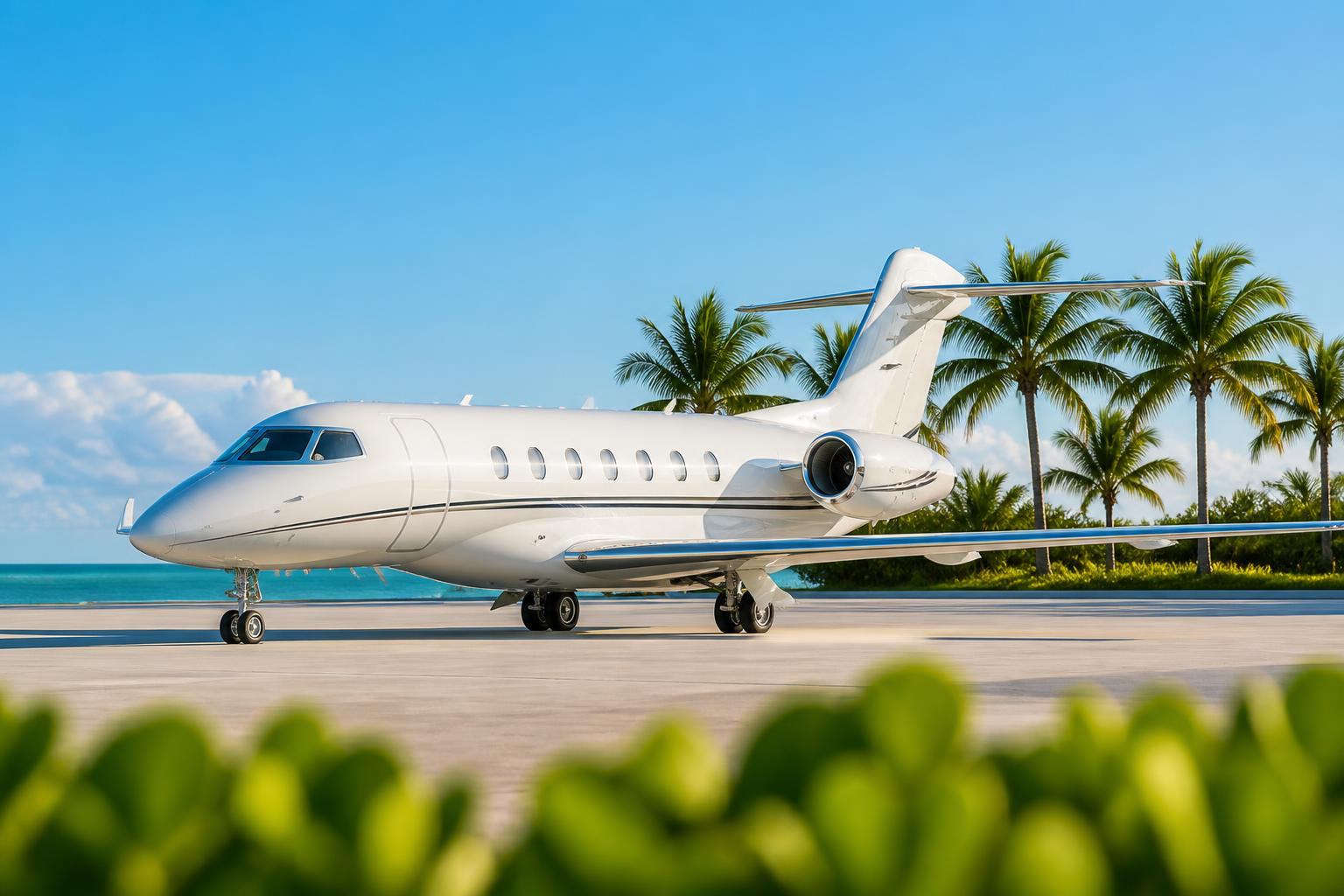
Coastline approach for Tokyo to Helsinki private jet charter
Charter Desk · Route Intelligence

Private jetTokyoHelsinki

The Tokyo to Helsinki corridor is served by private charter through Limitless Sky. This page consolidates the airport options, aircraft classes and pricing context for the route, plus availability of empty legs and concierge ground arrangements at both ends.

Distance
4,225 nm
Flight time
On request
Indicative
€64,000–€85,000 one-way, all-in
Private jet charter Tokyo to Helsinki
01Great-Circle Route

The line every operator flies

4225 nm great-circle between HND and HEL, On request typical block time.

4,225 NM · ON REQUEST
HND · TokyoHEL · Helsinki
Private jet on the Tokyo to Helsinki corridor
The Charter Desk Recommends
Aircraft positioning sets the Tokyo–Helsinki number on a On request sector; flexing around it beats negotiating on rate.

Depart HND — Primary departure for Tokyo. · Arrive HEL — Primary arrival for Helsinki. · Value pick: Gulfstream G500

ROUTE INTELLIGENCE · AIRCRAFT RECOMMENDATION ENGINE

Which aircraft actually make sense on TokyoHelsinki

BEST VALUE

Gulfstream G500

Heavy

The Gulfstream G500 clears both runways and has range headroom on the 4,225 nm leg without stepping up into a larger, more expensive cabin — the lowest hourly cost that still handles this pair reliably.

Indicative all-in €79,700

FASTEST

Bombardier Global 5000

Ultra Long Range

On 4,225 nm the Bombardier Global 5000 carries the highest cruise speed in the eligible short-list. The saving is roughly 24 minutes of block time against the smallest eligible class — worth it on a same-day return, marginal otherwise.

Indicative all-in €74,400

ROUTE INTELLIGENCE · AIRPORT INTELLIGENCE

Which airport, and why — on both ends

A private jet mission stands or falls on airport choice. For TokyoHelsinki we resolve the primary field on each side, then rank the alternatives worth considering with the trade-offs that actually matter to a client — transfer time, curfew, slot pressure, MTOW and helicopter link.

DEPARTURE · HND

Airport (HND)

Very good
Opening hours
Consult FBO for local operating hours
Slots
PPR / consult handling
Customs
Consult handler
FBOs
1 FBO on field
To city
30 min by car · 30 min by limousine
Helicopter
Not typical
VIP terminal
Handled by FBO
Runway
11,024 ft longest

BEST FOR

  • · Heavy jets
  • · Long-range operations

DATA · DERIVED FROM AIRPORT REGISTER · FALLBACK

ARRIVAL · HEL

Airport (HEL)

Very good
Opening hours
Consult FBO for local operating hours
Slots
PPR / consult handling
Customs
Consult handler
FBOs
1 FBO on field
To city
30 min by car · 30 min by limousine
Helicopter
Not typical
VIP terminal
Handled by FBO
Runway
11,483 ft longest

BEST FOR

  • · Heavy jets
  • · Long-range operations

DATA · DERIVED FROM AIRPORT REGISTER · FALLBACK

ROUTE INTELLIGENCE · PRICING INTELLIGENCE

What actually moves the price today

On Tokyo → Helsinki, aircraft positioning is the biggest lever on price today.

PRICE DRIVERS

Aircraft positioning
Very high

Long-haul aircraft rarely sit ready at Tokyo. Positioning legs across the Atlantic add substantial hours before you fly and are the single largest lever on price.

Return / repositioning
Medium

If the aircraft can't pick up a return charter from Helsinki, the empty repositioning leg is baked into your quote.

Airport handling & fees
Medium

Landing, handling and ramp fees on HND–HEL are set field by field — HND and HEL each carry their own coordinated-airport surcharge profile.

Fuel price band
High

On a 4,225 nm sector, jet-fuel price movements meaningfully change the quote — operators quote against a live fuel-uplift band.

Seasonality
Medium

Tokyo → Helsinki demand cycles pull the 4,225 nm sector off its low band on peak weeks.

Demand at the target airport
Medium

Ramp capacity at HEL constrains the lift available for 4,225 nm inbounds from Tokyo — operators quote accordingly.

Weather sensitivity
Low

Weather rarely re-prices HND–HEL beyond marginal fuel adjustments over 4,225 nm.

Slot & PPR pressure
Medium

Slot coordination at HEL — peak-season Saturdays especially — forces earlier commitment on Tokyo departures and raises handling on HND–HEL.

Crew duty & rest
High

Ultra-long sectors trigger augmented crew requirements — an extra pilot's cost is reflected in the hourly rate.

Overnight parking
Medium

Overnight parking at HEL is normally available and adds a defined ramp and handling fee to the HND–HEL quote.

SAVING OPPORTUNITIES

Saving levers on TokyoHelsinki

Consider a nearby departure airport

If the aircraft is already positioned closer to another Tokyo-area field, using it reduces positioning cost and often trims 5–15% off the quote.

Consider a nearby arrival airport

Alternative arrivals near HEL can trim handling and slot pressure on HND–HEL — see the airport comparison above.

Match an existing empty leg

HND ↔ HEL (4,225 nm) is a corridor we monitor for empty legs — set an alert and match one when your dates flex.

Flex your departure time

Departing 2–4 hours off the peak slot window at HND drops handling and slot fees on the 4,225 nm run to HEL.

Offer the return leg

A same-aircraft return on HND–HEL avoids the repositioning charge back to base — say so in the quote request.

Estimated ranges only · Charter market · Never a live quote

Route Intelligence · Operational

How this sector actually flies

TokyoHelsinki operational profile

01

Nonstop feasibility

Nonstop for heavy jets (Falcon 8X, Challenger 605/650 with light payload); a full cabin may want a Global 6000.

02

Typical flight level

FL410–FL450 over the 4,225 nm HND–HEL sector

03

Typical routing

Overland European upper routes — direct via UN airways with minimal detour.

04

Runway

the shorter runway on this pair clears heavy metal unrestricted.

05

Fuel stop likelihood

No fuel stop on 4,225 nm; HND–HEL is a single-sector mission for every class we quote.

06

Cabin service

Multi-course dining, sleep configuration and hot cabin service — full FA experience.

07

Best departure time

Mid-morning (10:00–12:00) departure from HND clears the weekday slot peak and lands HEL before midday handling pressure.

From the Broker Desk

What we actually see on TokyoHelsinki

Observed availability, positioning reality and airport friction from our own movement archive — anonymised, never operator-attributed.

Quote bands on this corridor

Full-charter one-way, desk quote

€63,600 – €81,700

Ultra Long Range through Heavy over 4,225 nm HND–HEL, all-in of landing, handling, crew and fuel surcharge. Weekend and peak-season departures out of HND sit at the upper end.

Price stand: August 2026. HND–HEL quotes move with fuel, crew duty and slot availability — we re-price at the point of booking.

Where the aircraft positions from

Positioning into Tokyo (HND)

With little metal based on the field, aircraft typically ferry in from RJAA (32 nm, 4 aircraft), RJNS (90 nm, 2 aircraft), RJBE (231 nm, 1 aircraft). A 30–60 minute positioning sector is normal and is already inside the quotes above — beware anyone showing a price that ignores it.

Positioning into Helsinki (HEL)

With little metal based on the field, aircraft typically ferry in from EFHK (0 nm, 2 aircraft), EETN (54 nm, 25 aircraft), EVRA (206 nm, 27 aircraft). A 30–60 minute positioning sector is normal and is already inside the quotes above — beware anyone showing a price that ignores it.

Aircraft we would talk you out of

Phenom 100 / Citation M2 and comparable light jets

At 4,225 nm this sector is beyond a comfortable light-jet leg with full seats and bags — you buy a fuel stop, and a stop costs more than the class saves. It is also the class where golf bags and ski gear stop fitting.

Desk recommendations

  • Give us 48 hours where the trip allows: Tokyo (HND) has a small based fleet, and the difference between a based aircraft and a ferried one is the single biggest line item on this pair.
Empty leg opportunities on Tokyo to Helsinki

Empty Legs

Live empty legsTokyoHelsinki

Repositioning legs departing HND within 14 days, priced per aircraft for up to 19 seats.

LATEST EMPTY LEGS · TOKYOHELSINKI

ALERT ME

Checking live inventory…

EMPTY-LEG ALERTS

Be first when a matching one-way appears.

We scan operator inventory every 12 hours. The moment a leg matches your route, date window and budget, we email you with a direct booking link.

ROUTE INTELLIGENCE · BOOKING ADVICE

When to book, when to fly

LEAD TIME

48–72 hours is comfortable — 12 hours is achievable when aircraft are in position.

BEST BOOKING WINDOW

Tuesday–Thursday midweek is typically the lowest-friction window on this pair.

FLEXIBLE DATES

A ±1-day window opens up meaningfully more empty-leg and repositioning options — worth signalling in the enquiry.

HOW TO SAVE MONEY

  • · Depart mid-week rather than Friday/Sunday.
  • · Consider a nearby departure or arrival airport (see the comparison above).
  • · Set an empty-leg alert on this corridor and its reverse — matches often deliver 30–75% discounts.
  • · If your itinerary allows a same-aircraft return, offer it: it removes the operator's empty repositioning cost.
  • · Confirm the maximum runway you can accept — sometimes a smaller category is materially cheaper.

ROUTE INTELLIGENCE · FAQ

Answers specific to TokyoHelsinki.

TokyoHelsinki frequently asked questions

ASK A QUESTION

Block time is On request on the 4,225 nm great-circle sector, using a ultra long range in typical wind conditions.

Indicative one-way pricing on this pair is €64,000–€85,000 one-way, all-in, depending on aircraft class and season. Empty legs run 25–75% below these ranges.

Bombardier Global 5000 (Ultra Long Range) is our standing pick — On 4,225 nm the Bombardier Global 5000 carries the highest cruise speed in the eligible short-list. The saving is roughly 24 minutes of block time against the smallest eligible class — worth it on a same-day return, marginal otherwise.

Nonstop for heavy jets (Falcon 8X, Challenger 605/650 with light payload); a full cabin may want a Global 6000.

Bombardier Global 5000 is the honest answer — anything smaller risks a tech stop against wind or with full payload.

A ULR sector may need an augmented crew; confirm at booking.

Observed pricing

What Tokyo → Helsinki has actually cost

  • On a 4,225 nm sector our fixed-price model quotes €79,800 for an ultra long range and €79,800 for an ultra long range in standard season — 1 cabin class clear the range and runway test here.

    first party operations · confidence 95% · verified 2026-08-18

  • Peak weeks move the same ultra long range sector from €79,800 to €94,200, an uplift of 18% on a block time of about 8h 42m.

    first party operations · confidence 95% · verified 2026-08-18

Field capability

Airport and runway capability on Tokyo → Helsinki

  • We track 2 ground-handling and 0 VIP catering suppliers at Tokyo (CKTS Co., Ltd., Universal Aviation Tokyo), so handling, slots and catering are arranged through named counterparties rather than a broker chain.

    first party operations · confidence 95% · verified 2026-08-18

  • The longest jet-capable runway across the 2 fields serving Tokyo is 13,123 ft at Narita International Airport, which sets the largest cabin class that can be dispatched here.

    first party operations · confidence 95% · verified 2026-08-18

  • We track 1 ground-handling and 0 VIP catering supplier at Helsinki, Finland (Helsinki Business Aviation Center), so handling, slots and catering are arranged through named counterparties rather than a broker chain.

    first party operations · confidence 95% · verified 2026-08-18

  • The longest jet-capable runway across the 1 field serving Helsinki, Finland is 11,483 ft at Helsinki Vantaa Airport, which sets the largest cabin class that can be dispatched here.

    first party operations · confidence 95% · verified 2026-08-18

Observed supply

What we see flying on Tokyo → Helsinki

  • 2 charter operators in our verified directory declare a home base at Helsinki, Finland — ACXJET, Jetflite — which is why positioning legs from this end are often quotable same-day.

    first party operations · confidence 95% · verified 2026-08-18

Book HereDo you have a question?