Tokyo Haneda
HNDSlot-restricted; PPR mandatory. Closest to central Tokyo.
- TRANSFER
- 30 min · 22 km
- TO
- central Tokyo
- MODES
- Chauffeured sedan · Helicopter to Roppongi

Distance, simplified.
Tokyo offers two distinct executive options. Haneda's slot allocation is tightly restricted but delivers the city in 25 minutes; Narita is the easier alternative for ad-hoc arrivals.
See full private jet charter pricing.
BEST TIME TO CHARTER
November to March is peak across South-East Asia; Japan and Hong Kong run year-round on business demand.
AIRPORTS, FBOs & TRANSFERS
Each option below shows the executive airport, drive time to Tokyo, and typical ground options. Tap an airport for the full guide — runways, FBOs, customs, slot rules and arrival workflow.
Slot-restricted; PPR mandatory. Closest to central Tokyo.
24h ops; easier slot availability; 60 min to central Tokyo.
New to private terminals? What is an FBO? · Private jet charter cost guide — FBO choice and charter pricing for Tokyo
POPULAR ROUTES
| ROUTE | FLIGHT TIME | TYPICAL AIRCRAFT | FROM |
|---|---|---|---|
| Tokyo → Hong Kong | 4h 00m | Midsize Jet | from €13,000 |
| Tokyo → Singapore | 6h 30m | Heavy Jet | from €52,700 |
One-way prices for the aircraft class listed are estimated, confirmed quote within 1–2 hours. You get an estimate per aircraft class straight away, then two or three confirmed options with aircraft photos.
COSTS TO EXPECT
ENTRY POINT
from €13,000
Lowest estimated one-way price across the routes above — estimated, confirmed quote within 1–2 hours.
TYPICAL AIRCRAFT
Midsize Jet · Heavy Jet
Cabin selected against range, runway and party size. We confirm the exact tail before contracting.
WHAT'S INCLUDED
All-inclusive quote
Crew, fuel, handling, landing and de-icing fees, standard catering and FBO access. Peak-period positioning and overnight crew may apply on one-ways — flagged upfront.
Charter pricing is route- and date-sensitive. For a binding number, share dates, pax and luggage in the quote form.
CHARTER BUYER'S GUIDE
Tokyo serves as the primary gateway for corporate leaders, institutional investors, and high-net-worth travellers entering the Japanese market. As the world's most populous metropolitan area, its private aviation infrastructure is sophisticated but operates under significant regulatory constraints compared to European or North American hubs. The demand for private jet charter to Tokyo is driven by two distinct sectors: the financial core of Marunouchi and Otemachi, and the luxury lifestyle districts of Minato and Shinjuku.
Flying into Tokyo by private jet is not merely about comfort; it is a tactical decision to bypass the congestion of one of the world's busiest commercial aviation networks. The city is a hub for the technology, automotive, and finance industries, meaning that many arrivals are strictly time-sensitive. However, Tokyo also attracts a significant volume of leisure traffic during key seasonal events, notably the cherry blossom season and the autumn foliage peak. Regardless of the purpose of travel, the complexity of Japanese slot allocation and the specific ground handling protocols at Haneda and Narita require precise planning and an understanding of the operational nuances that define the Tokyo airspace. This guide provides the technical and logistical clarity required to navigate these complexities, ensuring that the transition from cabin to city is as seamless as the flight itself.
Seasonality in Tokyo significantly impacts both aircraft availability and airport slot accessibility. The peak periods for private aviation occur during the Sakura (cherry blossom) season, typically from late March to mid-April, and the Golden Week holiday period in late April through early May. During these windows, slots at Haneda (HND) become exceptionally difficult to secure, and parking at both major airports is restricted. Owners and operators often ferry aircraft to secondary airports after dropping passengers to avoid high parking fees and limited apron space.
Autumn, specifically late October through early December, is another high-demand period as temperatures cool and the foliage changes. For business travellers, the windows of September through November and January through June represent the most active periods for corporate missions. Weather-wise, Tokyo is generally accessible year-round, but charterers should be aware of the typhoon season, which typically peaks in August and September. While modern executive jets can navigate most weather patterns, severe typhoons can occasionally lead to airport closures or significant arrival delays. Winter (December to February) is usually clear and dry, offering excellent visibility and stable flight conditions, though it is the peak season for those using Tokyo as a stopover for the ski resorts of Hokkaido or Nagano.
Slot pressure is a constant factor in Tokyo. Unlike many European hubs where slots can be requested 24 hours in advance, Japanese civil aviation authorities (JCAB) often require longer lead times for firm slot confirmation, particularly at Haneda. For those planning travel during the 2025 World Expo or major international summits, booking several months in advance is essential to guarantee a landing time that aligns with a business schedule.
Tokyo is served by two primary international airports, each offering a vastly different logistical experience. Choosing between Haneda and Narita is the most critical decision in the charter planning process.
Haneda is the preferred choice for almost all private jet users due to its proximity to central Tokyo. Located just 15 kilometres from the Marunouchi business district, a chauffeur transfer typically takes 20 to 30 minutes. Haneda operates four runways, the longest being 3,360 metres (11,024 feet), making it capable of handling any aircraft type, including Boeing Business Jets (BBJ) and Airbus Corporate Jets (ACJ).
However, Haneda is one of the most slot-restricted airports in the world. For private aviation, slots are allocated via a strict Prior Permission Required (PPR) system. Business aviation slots are often released in limited quantities, and there is a 'first-come, first-served' element to the application process. The airport features a dedicated Business Aviation Terminal, which is separate from the commercial terminals. This facility provides private customs, immigration, and quarantine (CIQ) processing, ensuring arrivals can exit the airport within 10 to 15 minutes of engine shutdown. The primary FBO service provider is JAL Business Aviation, which offers high-level ground handling and crew support. Note that overnight parking at Haneda is notoriously difficult to secure; aircraft are often required to reposition to Narita or Nagoya for the duration of the passenger's stay.
Narita International Airport is located approximately 60 to 70 kilometres east of central Tokyo in Chiba Prefecture. While it is further away, it is the 'easier' airport for ad-hoc arrivals and long-term parking. Narita has two runways, with the primary runway measuring 4,000 metres (13,123 feet). It operates 24 hours a day for certain arrivals, though noise abatement procedures are strictly enforced.
The Premier Gate at Narita is the dedicated FBO facility. It offers a calm, professional environment with streamlined CIQ procedures. The drive from Narita to central Tokyo can take between 60 to 90 minutes depending on traffic. For those looking to avoid the road journey, helicopter transfers from Narita to the Ark Hills heliport in Minato can reduce the transit time to approximately 20 minutes. Narita is the logical choice when Haneda slots are unavailable or when an aircraft needs to be staged for an extended period without the cost of high-frequency repositioning flights.
In rare cases where both Haneda and Narita are congested or closed due to extreme weather, Ibaraki Airport serves as a functional alternative. Located 85 kilometres from central Tokyo, it is a former military base with a 2,700-metre runway. While its executive facilities are basic compared to HND and NRT, it provides a viable 'backdoor' into the Kanto region when no other options exist.
The choice of aircraft for a Tokyo charter depends heavily on the point of origin, as Japan’s geographic isolation requires significant range for most international missions.
For flights from London, New York, or Paris, Ultra-Long-Range (ULR) jets are the standard. The Gulfstream G650ER or G700 are frequently utilised for these missions, offering the speed and range to fly non-stop against strong headwinds. The Bombardier Global 7500 is another excellent choice, providing a four-zone cabin that allows for a dedicated master suite, which is essential for arriving in Tokyo refreshed for a morning meeting. These aircraft also have the performance capabilities to operate out of smaller regional airports across Asia if the itinerary continues beyond Tokyo.
For regional missions within Asia—such as Tokyo to Singapore (approx. 6h 30m) or Tokyo to Hong Kong (4h 00m)—Large Cabin or Heavy Jets are the most efficient. The Challenger 650 or Falcon 2000LXS offer wide cabins and sufficient range for these routes. These aircraft are particularly popular for corporate teams of up to 10 passengers. The Gulfstream G450 remains a reliable workhorse for flights from Tokyo into Southeast Asia or Australia (with a fuel stop).
For domestic hops within Japan (e.g., Tokyo to Osaka or Sapporo) or shorter international sectors such as Seoul, Midsize jets like the Citation XLS+ or Praetor 600 are ideal. These aircraft provide an excellent balance of runway performance and internal cabin height. The Challenger 350 is also a frequent sight at Haneda, offering a quiet cabin and comfortable seating for up to 9 passengers on mid-length regional routes.
While less common for international arrivals into Tokyo, Light Jets like the Phenom 300E or Citation CJ3+ are often used for quick domestic transfers within the Japanese islands. They are efficient for accessing smaller regional airports where runway lengths might be more restrictive than the major Tokyo hubs, though they are rarely used for missions exceeding 3 hours.
Charter pricing to Tokyo is influenced by several variables including aircraft positioning, seasonal demand, and duration of stay (which impacts parking and crew costs).
Factors that can increase these figures include 'Peak Day' surcharges, which can add 10-20%, and de-icing fees during the winter months. Japanese ground handling fees are among the highest in Asia, especially the landing fees and passenger service charges at Haneda.
Empty-leg opportunities do exist, particularly when an aircraft has dropped a delegation at Haneda and needs to return to its base in Hong Kong or Singapore. Savings of 30% to 60% are possible, but these require a flexible schedule as they are subject to the primary charterer's movements. During the transition between the Tokyo and Singapore grand prix seasons, there is often a higher volume of one-way ferry flights available for those with acute timing.
The arrival experience in Tokyo is defined by efficiency and discretion. At Haneda, the Business Aviation Terminal allows for 'curbside to cabin' transitions that are far faster than the commercial equivalent.
Upon landing, your chauffeur will typically be staged at the terminal exit. For destinations in Minato-ku, Chiyoda-ku, or Shibuya-ku, the drive from Haneda is remarkably short. If arriving at Narita, the transfer can be more arduous. We recommend a pre-booked executive chauffeur in a Mercedes-Benz S-Class or a Toyota Alphard (the latter being the gold standard for executive transport in Japan due to its spacious rear seating and luggage capacity).
For those staying at the Aman or the Mandarin Oriental, the transfer from Haneda is straightforward. However, for those heading to the ski resorts of Niseko (via New Chitose Airport) or the coastal regions, we can coordinate a seamless 'wing-to-wing' transfer where your international aircraft meets a smaller domestic jet or helicopter.
Japan’s CIQ (Customs, Immigration, and Quarantine) process at the private terminals is exceptionally professional. All paperwork should be submitted by your broker at least 24 hours in advance to ensure a two-minute passport check. Note that Japan has strict rules regarding the importation of certain medications and fresh produce; it is essential to disclose these to your flight crew before landing.
Travelling with pets to Japan requires significant lead time—often up to six months—due to the country's rabies-free status and strict quarantine laws. All pets must have a microchip, proof of vaccination, and a series of blood tests. If you intend to fly with a pet, provide your broker with all documentation early in the process. Regarding luggage, the Japanese Toyota Alphard transfers can comfortably accommodate 4-5 large suitcases; for larger groups, a secondary luggage van is usually required.
Tokyo is a city of distinct 'villages', each serving a different purpose. For the business traveller, Chiyoda and Chuo are the primary focus. This area houses the Tokyo Stock Exchange and the headquarters of Japan’s 'Mega-banks'. The Imperial Palace provides a serene backdrop to the glass and steel of the Otemachi district.
Minato-ku is the international heart of the city, encompassing Roppongi, Toranomon, and Akasaka. This is where most foreign embassies and multinational firms are located. The recent development of the Toranomon Hills area has created a new focal point for luxury and business, anchored by modern architectural landmarks.
For those seeking the cultural and retail apex of Tokyo, Ginza remains unsurpassed. The district is home to flagship boutiques and some of the world’s most renowned Michelin-starred sushi dens. Sukiyabashi Jiro and Sushi Saito are legendary, though securing a table requires months of notice and often a concierge with deep local connections. For a more contemporary scene, Shibuya and Harajuku offer high-end avant-garde fashion and a younger, more energetic atmosphere.
The hotel scene in Tokyo has undergone a revolution in the last decade. The shift has been away from the traditional grand hotels toward 'sky-high' sanctuaries that occupy the top floors of major towers. These properties provide incredible views over the Kanto Plain and a level of service that is uniquely Japanese—attentive yet unobtrusive.
Assuming Haneda is always available: This is the most frequent error. Due to the limited number of executive slots, Haneda can sell out weeks in advance during peak periods. Buyers who wait until the last minute are often forced to use Narita, adding two hours of round-trip travel time to their itinerary.
Underestimating the 'Repositioning' cost: If Haneda does not allow overnight parking, your aircraft must fly to another airport (usually Narita or Nagoya) to wait for your return leg. You will be charged for these 'ferry flights'. It is often more cost-effective to pay for a one-way charter and book a separate return if your stay in Tokyo is longer than three days.
Ignoring the Toyota Alphard: Many Western travellers request a Mercedes S-Class. In Tokyo, the Toyota Alphard is the superior choice. It is designed for executive transport with lie-flat seats and significant headroom, making it far more practical for navigating Tokyo’s dense streets with luggage.
Late PPR submissions: Japan’s Civil Aviation Bureau is precise. Any change in passenger manifest or arrival time requires an amendment to the PPR. Last-minute changes (less than 24 hours) can result in slot loss or significant delays while the paperwork is re-processed.
Overlooking curfew rules at Narita: While Narita is more flexible than Haneda, it is not a 'free-for-all'. Strict noise curfews apply, and if your inbound flight is delayed beyond the midnight window, you may be diverted to an alternate airport far from Tokyo.
For a standard mission during non-peak periods, we recommend a lead time of at least 7 to 10 days. This allows for the orderly application of slots and the coordination of Japanese ground handling. For peak seasons (Sakura or Golden Week), a 4 to 6-week window is advisable to guarantee your preferred airport and aircraft type.
Same-day departures are technically possible but are governed entirely by slot availability. If an aircraft is already positioned in the region and a slot can be 'pushed' through the JCAB system, we can sometimes arrange a flight in as little as 4 to 6 hours, but this is the exception rather than the rule in Japan.
When requesting a quote, please ensure you have the full names and passport details for all passengers. Japan requires an accurate manifest for the PPR application. If you have specific dietary requirements or need a particular brand of sake or whisky on board, provide these details at the time of booking, as high-end catering in Japan is meticulously prepared and requires advance notice.
ON THE GROUND
Occupying the top six floors of the Otemachi Tower, Aman Tokyo offers a minimalist sanctuary with soaring views of the Imperial Palace Gardens. Its basalt-clad lobby and massive shoji lanterns provide a serene, architectural transition for travellers arriving from a long-haul flight.
Designed by Kengo Kuma, this property brings a lush, tropical-inspired aesthetic to the Toranomon business district. It is the premier choice for a younger executive crowd, featuring the high-concept Gold Bar and easy access to both the Minato and Roppongi neighbourhoods.
Located in the historic Nihonbashi district, this hotel is famed for its 'Sky Lobby' and exceptional Michelin-starred dining. It is ideally positioned for those with business in the financial heart of the city, offering a blend of traditional Japanese craftsmanship and contemporary luxury.
Set atop the Tokyo Midtown Yaesu skyscraper, this hotel brings Italian flair to the Tokyo skyline. With its high-end spa and proximity to Tokyo Station, it serves as a perfect base for those alternating between city meetings and Shinkansen trips to Kyoto.
AIRCRAFT
4–6 passengers, up to 3h
Citation CJ3, Phenom 300 — ideal for short European hops with quick turnarounds.
7–9 passengers, up to 5h
Citation XLS+, Hawker 900XP — stand-up cabin, full galley, transcontinental Europe.
10–14 passengers, 6h+
Challenger 605, Gulfstream G450, Falcon 7X — intercontinental with bedroom-class comfort.
FLEET FOR TOKYO
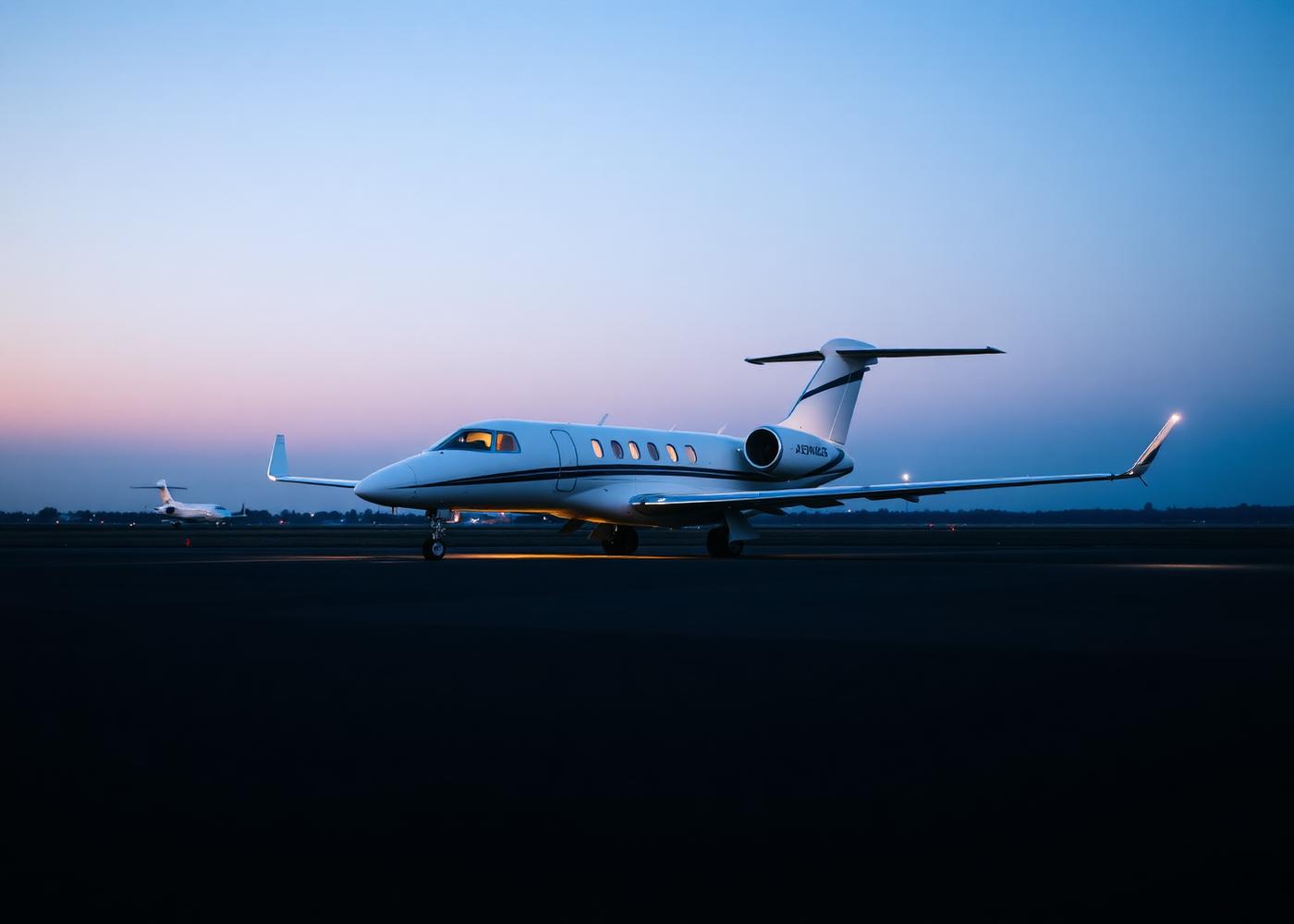
LIGHT JET
Cessna
The benchmark light jet for short European hops.
VIEW AIRCRAFT →LIGHT JET
Cessna
Light-jet economics, midsize cabin comfort.
VIEW AIRCRAFT →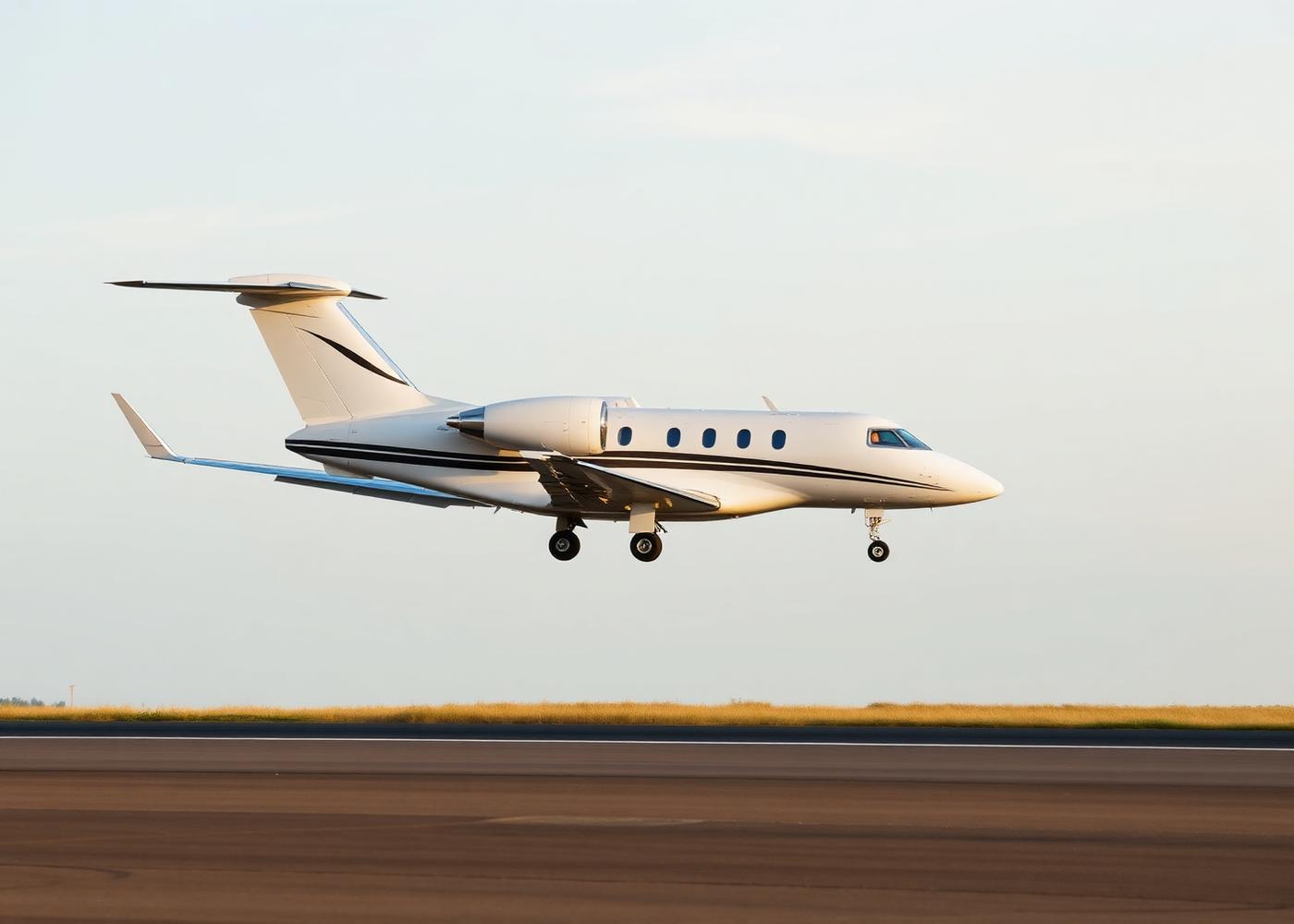
MIDSIZE JET
Hawker Beechcraft
The proven workhorse of midsize charter.
VIEW AIRCRAFT →MIDSIZE JET
Cessna
Six-foot flat-floor cabin at midsize prices.
VIEW AIRCRAFT →HELICOPTER CHARTER — TOKYO
Pair a jet arrival with a same-day helicopter transfer. These are the models our desk most often books on the Tokyo leg — specifications and live availability sit on the dedicated helicopter fleet page.
HEAVY HELICOPTER · 19 PAX
Sikorsky
VIEW SIKORSKY S-92 →CHARTER GUIDES
PRICING & COST
12 min read
OPERATIONS & TRAVEL
12 min read
AIRCRAFT & FLEET
6 min read
AIRCRAFT & FLEET
5 min read
OPERATIONS & TRAVEL
5 min read
FAQ
A chauffeured transfer from Tokyo Haneda to central Tokyo is about 30 minutes (22 km). Typical modes are chauffeured sedan, helicopter to roppongi. Limitless Sky pre-positions ground transport so the car is waiting planeside.
A chauffeured transfer from Tokyo Narita to central Tokyo is about 75 minutes (60 km). Typical modes are chauffeured sedan, n'ex private rail. Limitless Sky pre-positions ground transport so the car is waiting planeside.
Tokyo is served by HND, NRT. Choice depends on aircraft class, where you're staying, and slot availability. We pick the field that puts you closest to your hotel or yacht with the least ground time — see each airport guide for runway, customs and FBO detail.
Usually yes — many operators permit pets in the cabin, subject to aircraft-owner approval, destination rules, documentation and any operator-specific charges. Let us know the size and species when you request a quote and we will confirm per aircraft.
For most major airports we can have an aircraft positioned within 4 hours. Last-minute bookings are our specialty — we operate 24/7.
One-way prices estimated, confirmed quote within 1–2 hours: Tokyo → Hong Kong from €13,000 (midsize jet); Tokyo → Singapore from €52,700 (heavy jet). Send your dates and passengers and you get an estimated price per aircraft class straight away, then two or three confirmed options with aircraft photos within 1–2 hours.
RELATED DESTINATIONS
EXPLORE THE CLUSTER
HUB GUIDES
BEST AIRCRAFT FOR TOKYO
EMPTY LEGS · TO TOKYO
Repositioning flights to Tokyo come up occasionally and rarely stay available for long. Set an alert and we will tell you if one matches.
EMPTY-LEG ALERTS
We scan operator inventory every 12 hours. The moment a leg matches your route, date window and budget, we email you with a direct booking link.
MALLORCA · GERMANY, NRW, FRANKFURT
SKI SEASON · ALPS
An estimated price per aircraft class straight away, then two or three confirmed options with aircraft photos within 1–2 hours. 24/7, worldwide.
REQUEST A QUOTEAIRPORT COMPARISON
2 airports serve Tokyo. HND is primary; NRT act as alternates when slots or runway constraints dictate.
HND · PREMIER
HND
HND — primary jet gateway; 11,024 ft runway; in-town.
NRT · PREMIER
NRT
NRT — primary jet gateway; 13,123 ft runway; 64 km transfer.
RECOMMENDED AIRCRAFT
Super Midsize Jet
Heavy Jet
Ultra Long Range
POPULAR ROUTES
SEASONALITY
GROUND TRANSPORT
HELICOPTER
CUSTOMS
VISA
WEATHER
RECOMMENDED STAY
MEDICAL / MEDEVAC
DESTINATION PROFILE
luxury
40
business
60
family
30
ski
0
beach
0
golf
0
medical
40
heli
30
marina
0
NEARBY DESTINATIONS
AI CONCIERGE
Structured knowledge object with 2 airports, 4 corridor routes, 0 named event windows, 5 nearby destinations and a full scoring profile — designed to answer concierge-level questions in real time.
FAQ
HND (HND) is the primary gateway. NRT
Ultra Long Range is the best fit for most missions; short-runway constraints may push smaller groups to a Light Jet.
Pricing scales with aircraft class and the departure city (for example TEB). Send your dates and passengers to see an estimated price per aircraft class straight away; two or three confirmed options with aircraft photos follow within 1–2 hours.
See the seasonality panel — demand is driven by corporate and event calendars.
Not standard for this destination; chauffeur car service is the primary transfer option.
AVIATION FACTS · AVI-GO 2025
Desk-verified market figures linked to this page — drawn from Avi-Go analytics reports and surfaced for charter planning context.
Tokyo Haneda (RJTT) ranked #6 Asia Pacific business aviation airport Jan–Aug 2025 with 2,778 movements (2.49% share) and 535 unique aircraft.
structured · confidence 95% · verified 2026-07-28
Tokyo Haneda (RJTT) ranked #5 in Asia Pacific hub connectivity Jan–Aug 2025 with 210 connected cities.
structured · confidence 94% · verified 2026-07-28
Tokyo ranked #3 Asia Pacific business aviation destination city Jan–Aug 2025 — top origin Hong Kong at 6.29% of arrivals.
structured · confidence 94% · verified 2026-07-28
Japan–United States ranked #5 Asia Pacific cross-border country pair Jan–Aug 2025 with 952 bidirectional movements.
structured · confidence 94% · verified 2026-07-28
China–Japan ranked #2 Asia Pacific cross-border country pair Jan–Aug 2025 with 1,490 bidirectional movements.
structured · confidence 94% · verified 2026-07-28
Japan ranked #3 in Asia Pacific with 5,238 business jet departures Jan–Aug 2025 (9.39% share).
structured · confidence 94% · verified 2026-07-28
Sapporo–Tokyo ranked #4 fastest-growing Asia Pacific city pair Jan–Aug 2025 at +17.62% (193 → 227).
structured · confidence 93% · verified 2026-07-28
Osaka–Tokyo ranked #2 fastest-growing Asia Pacific city pair Jan–Aug 2025 at +31.47% (143 → 188).
structured · confidence 93% · verified 2026-07-28
Japan & Australia gateways (RJTT, YMEN, YSSY) combined for 8,234 movements Jan–Aug 2025 — 7.37% market share.
structured · confidence 93% · verified 2026-07-28
Tokyo Narita (RJAA) ranked #3 fastest-growing Asia Pacific airport Jan–Aug 2025 at +56.37% (1075 → 1681 movements).
structured · confidence 93% · verified 2026-07-28
Japan ranked #5 fastest-growing Asia Pacific origin market Jan–Aug 2025 at +25.94% (4,159 → 5,238 departures).
structured · confidence 93% · verified 2026-07-28
Japan ranked #34 globally by business jet departures in June 2026 with 505 flights.
structured · confidence 92% · verified 2026-07-28
KNOWLEDGE GRAPH
Airports serving this destination, routes clients fly here on, aircraft that operate them, and nearby destinations you can pair it with.