Bombardier Global 5000 private jet charter

Bombardier Global 5000 Charter

Heavy-jet capability optimised for high-speed missions.

PAX13RANGE5,200 nmSPEEDMach 0.89BAGGAGE195 cu ftCABIN6'2" × 8'2"TYPICALGeneva → Tokyo · from CHF 165,000

OVERVIEW

Bombardier Global 5000

The Bombardier Global 5000 offers heavy-jet space and ultra-long-range capability optimised for high-speed missions. Three living zones, 5,200 nm range and Mach 0.89 cruise make it ideal for transatlantic and trans-Asian operations.

Bombardier Global 5000

IN DEPTH

The complete guide to chartering the Bombardier Global 5000

The story behind the Bombardier Global 5000

Bombardier's Global family has long represented the gold standard of Canadian engineering ambition in business aviation — a lineage that traces its roots to the Global Express of 1996, a jet that proved beyond all reasonable doubt that an ultra-long-range business aircraft could also be the most comfortable in its class. The Global 5000 emerged from that lineage in 2001 as a formally announced programme, taking its maiden flight in March 2003 and entering charter and owner-operator service in 2005.

The rationale behind the Global 5000 was straightforward but commercially astute: the Global Express had been engineered with almost reckless generosity in terms of range, connecting virtually any two cities on earth. A significant segment of operators and charter clients, however, required roughly 5,200 nautical miles of range rather than the full 6,000-plus of the Express, and were willing to accept a slightly shortened fuselage in exchange for lower operating costs and access to a somewhat broader range of airports.

The Global 5000 was that aircraft. By reducing the fuselage length and adjusting the fuel capacity of the Global Express platform, Bombardier created a jet that could still fly London to New York non-stop, London to Hong Kong with a single efficient fuel stop, and London to most Gulf and African destinations without restriction — all whilst burning less fuel and demanding shorter runways than its larger sibling.

Production of the Global 5000 continued for fifteen years, ceasing in 2020 following the introduction of the re-engined Global 5500. The result is a mature, well-understood fleet with an excellent maintenance and parts support infrastructure, making the Global 5000 one of the most reliably available heavy-jet options in the European charter market to this day. Operators benefit from decades of accumulated data, and charter clients benefit from competitive rates on an aircraft that remains genuinely capable.
On board: the cabin

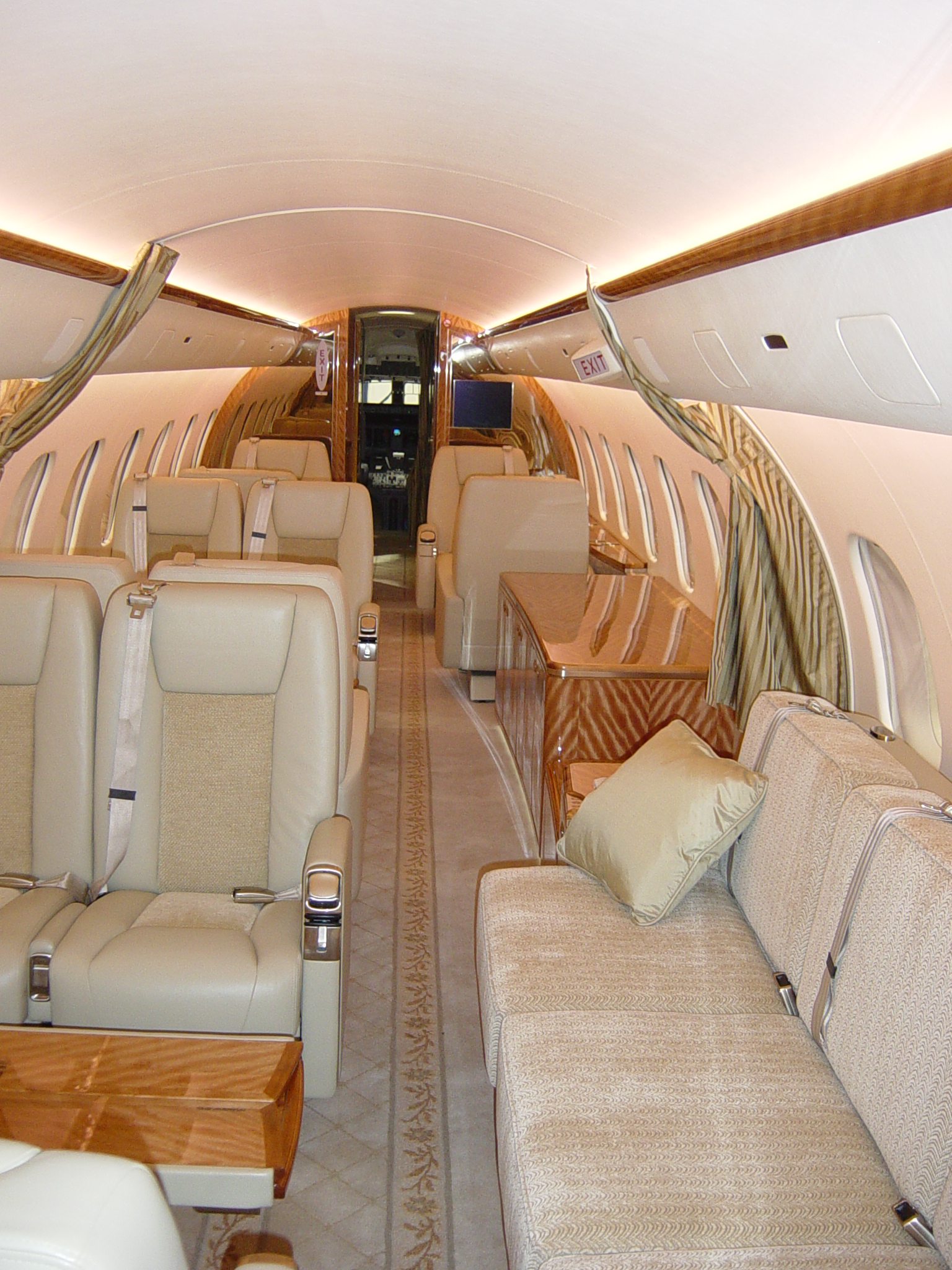
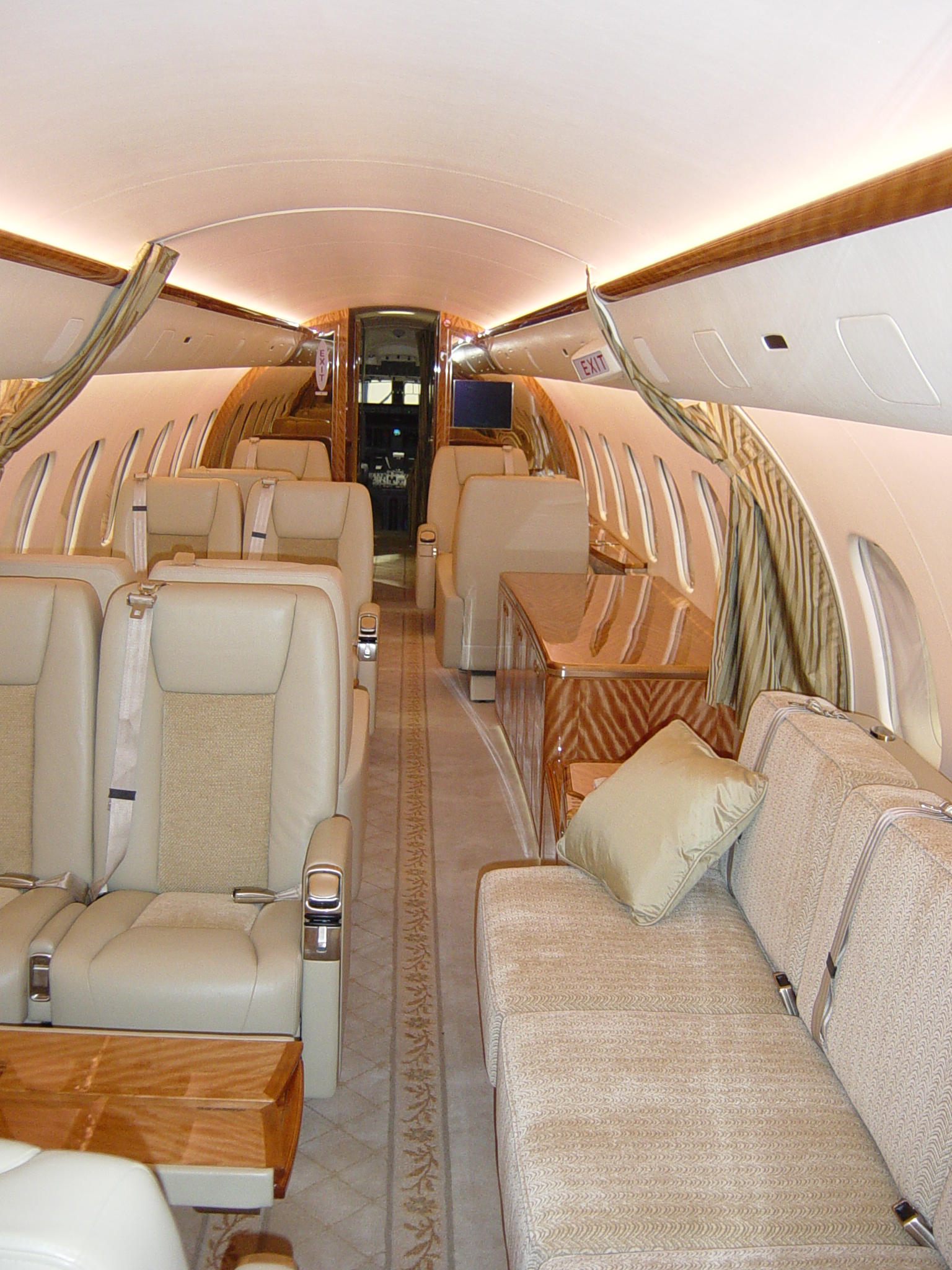
The Global 5000's cabin spans 45.1 ft (13.75 m) in length, 8.2 ft (2.49 m) in width and stands a comfortable 6.1 ft (1.87 m) in height — dimensions that place it firmly in the large-cabin category and make it one of the widest aircraft in its class. Bombardier configures the interior as three distinct zones separated by pocket doors, allowing independent management of lighting, temperature and sound levels across the length of the cabin.

A typical three-zone configuration opens with a forward club suite of four seats arranged face-to-face around a central table, ideal for working lunches or small meetings at altitude. The midship zone transitions to a more relaxed lounge arrangement, with a divan and additional club chairs that convert to flat-bed sleeping positions. The aft zone typically houses the galley and a private lavatory with wash basin, with some configurations extending to a partial stand-up shower enclosure.

The Global 5000 accommodates up to 16 passengers in a high-density seating arrangement, though the sweet spot for transatlantic comfort is 10 to 13 passengers. Four passengers can sleep in full flat-bed position simultaneously on standard configurations, making overnight sectors of six to nine hours entirely practical — the aircraft is frequently used for the London to New York routing precisely because passengers can eat, work for two hours and then sleep for four before arriving refreshed.

Bombardier's proprietary Nuage business seat — introduced on later Global 5000 deliveries — is widely regarded as the most comfortable business aviation seat ever fitted to an aircraft of this class, featuring a floating base that follows the body's movement through turbulence and a recline mechanism that achieves a perfectly flat sleeping surface without the passenger ever needing to shift position. Connectivity is provided by high-speed Ka-band internet as standard on most charter-available aircraft, with Bombardier's Live TV option available on configured examples.

Performance, range and runway access

Bombardier certifies the Global 5000 to a maximum range of 5,200 nautical miles at its long-range cruise speed — a figure achieved with eight passengers, international reserves and NBAA IFR alternates. In practical terms this means the aircraft can connect London Farnborough (EGLF) to New York Teterboro (KTEB) — 3,459 NM — non-stop in approximately 7 hours 45 minutes, and can reach Dubai (3,405 NM) with ample reserves in under eight hours.

Two Rolls-Royce BR710A2-20 turbofan engines, each producing 14,750 lbf of thrust, power the Global 5000 to a maximum cruise speed of Mach 0.89 and a service ceiling of 51,000 ft — the same altitude ceiling as its larger Global 6000 sibling, and significantly higher than either the ACJ319 or the BBJ. At FL510, the aircraft is above virtually all commercial traffic and weather, minimising diversions and maximising the predictability of block times.

Maximum take-off weight of 92,500 lb and runway requirements of approximately 5,900 ft at sea level mean the Global 5000 can use a wide range of European airports beyond the major hubs. Samedan (St Moritz), Chambéry (French Alps), Ibiza, Olbia and Marrakech Menara are all accessible, as are many of the smaller Scandinavian city airports that are routinely used by business travellers originating in northern Europe. This flexibility is a genuine operational advantage in a charter market where clients frequently originate from or destine for leisure locations rather than primary airports.

The cabin altitude is maintained at 6,000 ft at maximum cruise altitude — notably lower than commercial airline standards of 8,000 ft — contributing to lower fatigue levels and better hydration on longer sectors. For the eight to ten passenger configuration that represents the aircraft's primary use case in the charter market, fuel consumption and operating efficiency are optimised in a way that makes the Global 5000 one of the best value-per-mile propositions in the heavy-jet category.

Signature missions and best routes

The Global 5000's 5,200 NM range defines a routing portfolio that covers the overwhelming majority of the business-critical city pairs operated from the United Kingdom and Western Europe. London to New York (3,459 NM) is its signature transatlantic mission, completed non-stop in approximately seven hours 45 minutes westbound — a sector short enough to permit a full dinner service, four to five hours of sleep and a proper breakfast before landing.

London to Dubai (3,405 NM) and London to Riyadh (3,575 NM) sit within comfortable non-stop range, making the Global 5000 a highly efficient choice for clients with Gulf-region business interests who travel six to twelve times per year. The flight economics on these sectors are significantly more attractive than an ACJ319 or BBJ, and the cabin quality is essentially equivalent for parties of up to 12 passengers.

London to Lagos (3,058 NM), London to Nairobi (4,108 NM) and London to Johannesburg (4,964 NM) — all important routes for resource-sector principals and Africa-focused funds — are achievable non-stop or with a brief technical stop respectively, making the Global 5000 a practical tool for Sub-Saharan Africa access from the UK.

For routes beyond 5,200 NM, the Global 5000 remains viable with a single well-planned technical stop. London to Hong Kong (5,990 NM) can be accomplished with a refuelling stop in Baku or Tashkent — adding less than an hour to the journey time. London to Singapore (6,760 NM) requires a slightly longer intermediate stop, typically Dubai, which also conveniently gives passengers a chance to refresh mid-journey. For clients who do not require non-stop capability beyond 5,200 NM and who value lower hourly rates, the Global 5000 is frequently the most rational choice in the heavy-jet segment.

Operating economics and charter pricing

The Bombardier Global 5000 commands charter rates of approximately £9,000 to £13,000 per flight hour in the 2024–25 market, reflecting its position as a mature, widely available aircraft with a well-understood maintenance cost structure. These rates translate into trip costs that deliver exceptional value for the heavy-jet category: a London Farnborough to New York Teterboro sector typically invoices at £75,000 to £100,000 all-in, depending on aircraft age, operator, and whether the aircraft is being repositioned from its home base or is already in the correct region.

London to Dubai runs approximately £60,000 to £80,000 one-way. London to Johannesburg, requiring more careful fuel planning and potentially one technical stop, will typically cost £95,000 to £130,000 all-in depending on routing. For clients chartering for leisure purposes to European destinations — Nice, Ibiza, Mykonos, Malaga — the short-sector rate economics of the Global 5000 are competitive, with sectors in the two-to-three-hour range typically invoicing at £20,000 to £35,000.

Annual operating costs for the Global 5000 under a managed Part 135 programme average approximately $2.4 million to $2.8 million (c. £1.9 million to £2.2 million), encompassing engine overhaul reserves for the Rolls-Royce BR710, scheduled inspections under Bombardier's Smart Services maintenance programme, crew training and hull insurance. The aircraft's mature maintenance ecosystem means that parts availability is excellent and unscheduled maintenance events are both rare and rapidly resolved.

For corporate clients operating a managed fleet or considering a fractional interest, the Global 5000 represents one of the most liquid assets in business aviation — a characteristic that directly benefits the charter market, as operators are willing to make aircraft available at competitive rates rather than leave them idle between owner trips. The net effect for the charter client is consistent supply, reliable pricing and a selection of well-maintained, modern-interior examples across the major European bases.

How the Global 5000 compares

The Global 5000's principal competition in the European charter market comes from the Gulfstream G550, the Dassault Falcon 7X and the Bombardier Global 6000 itself. Against the G550 — which carries a range figure of 6,750 NM — the Global 5000 concedes approximately 1,550 NM of range but offers a marginally wider cabin cross-section and more ergonomic seat geometry on many configurations. For clients whose missions stay within 5,200 NM, the Global 5000 frequently offers lower hourly rates than the G550 whilst matching it on cabin comfort.

Against the Global 6000, the comparison is a straightforward range-versus-cost equation. The Global 6000 adds 800 NM of range and approximately £1,000 to £2,000 per hour in charter rate, along with a slightly longer cabin that accommodates one additional living zone. For clients who regularly fly routes of 5,200 to 6,000 NM, the step up to the Global 6000 pays for itself in eliminated technical stops; for those whose primary missions are under 5,000 NM, the Global 5000 delivers essentially identical utility at lower cost.

Against newer-generation competitors such as the Global 5500 and the Gulfstream G600, the Global 5000 is at a slight technological disadvantage in terms of engine efficiency and avionics modernity. The Global 5500 introduces Rolls-Royce Pearl 15 engines and the Bombardier Vision Flight Deck, offering measurable improvements in fuel burn and range. However, the Global 5000's significantly lower charter rate often compensates for this gap, particularly for clients whose primary criterion is value rather than cutting-edge technology.

The Global 5000 is not the right aircraft for missions requiring more than 5,200 NM non-stop, for parties larger than 13 passengers in comfort, or for clients who specifically require a private stateroom with a dedicated shower suite. For everything else within the heavy-jet category, it remains a thoroughly compelling choice.

Verdict: who should charter the Global 5000?

The Bombardier Global 5000 occupies an enviably practical position in the charter market: capable enough to handle the vast majority of intercontinental missions from Western Europe, yet priced at a level that makes it accessible to a far broader range of corporate and private clients than the ultra-premium tier above it. It is the aircraft for the sophisticated traveller who understands exactly how much aircraft they need — and who sees no virtue in paying for range they will never use.

Corporate legal and advisory firms routinely charter the Global 5000 for London to New York working trips, typically in a four-to-eight passenger configuration. The aircraft's three cabin zones allow quiet working in the forward club, relaxed discussion in the mid-cabin, and private rest in the aft divan area — a spatial logic that mirrors the professional hierarchy of many executive travel parties and facilitates productivity throughout the flight.

Families chartering for leisure find the Global 5000 a natural fit for Mediterranean, Caribbean and East African itineraries. Up to 12 can travel in comfort on sectors under four hours, and the aircraft's runway flexibility makes it practical for Sardinia's Olbia airport, Greece's Santorini, and the smaller Caribbean strips that require careful performance planning from larger jets.

Clients who are chartering a heavy jet for the first time — stepping up from a super-midsize — will find the Global 5000's cabin a revelation without the sticker shock of the ultra-premium tier. It is, in the most complimentary sense, an aircraft that delivers exactly what it promises: long range, wide cabin, high altitude and exceptional reliability. Those qualities, consistently delivered, are precisely what a first-time heavy-jet charter client needs to understand why they will never fly anything smaller again.

PHOTO GALLERY

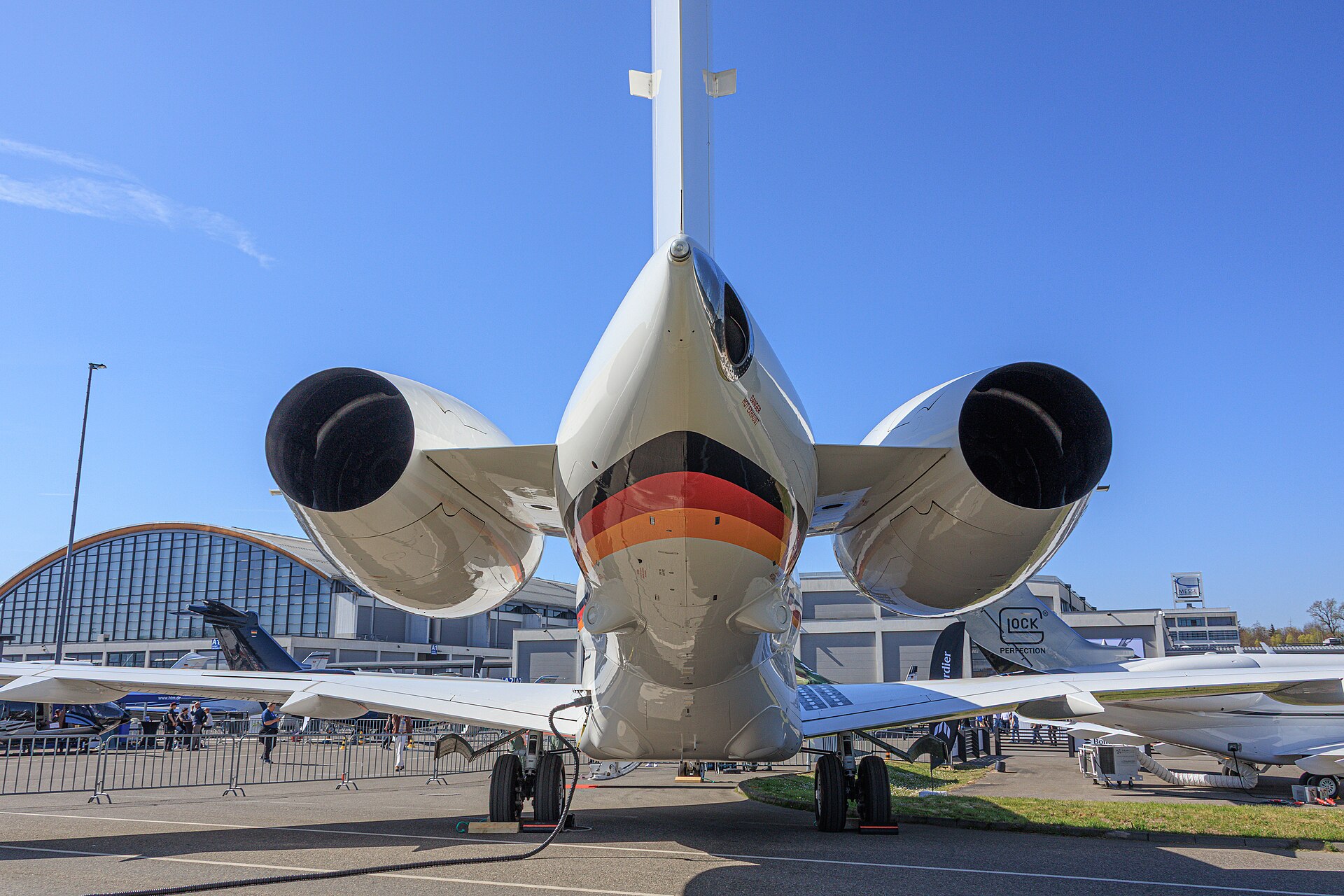
Bombardier Global 5000 — exterior & cabin

Reference photography of the Bombardier Global 5000 (and sister types within the same cabin family where noted). Images sourced from Wikimedia Commons under Creative Commons licences.

EXTERIOR

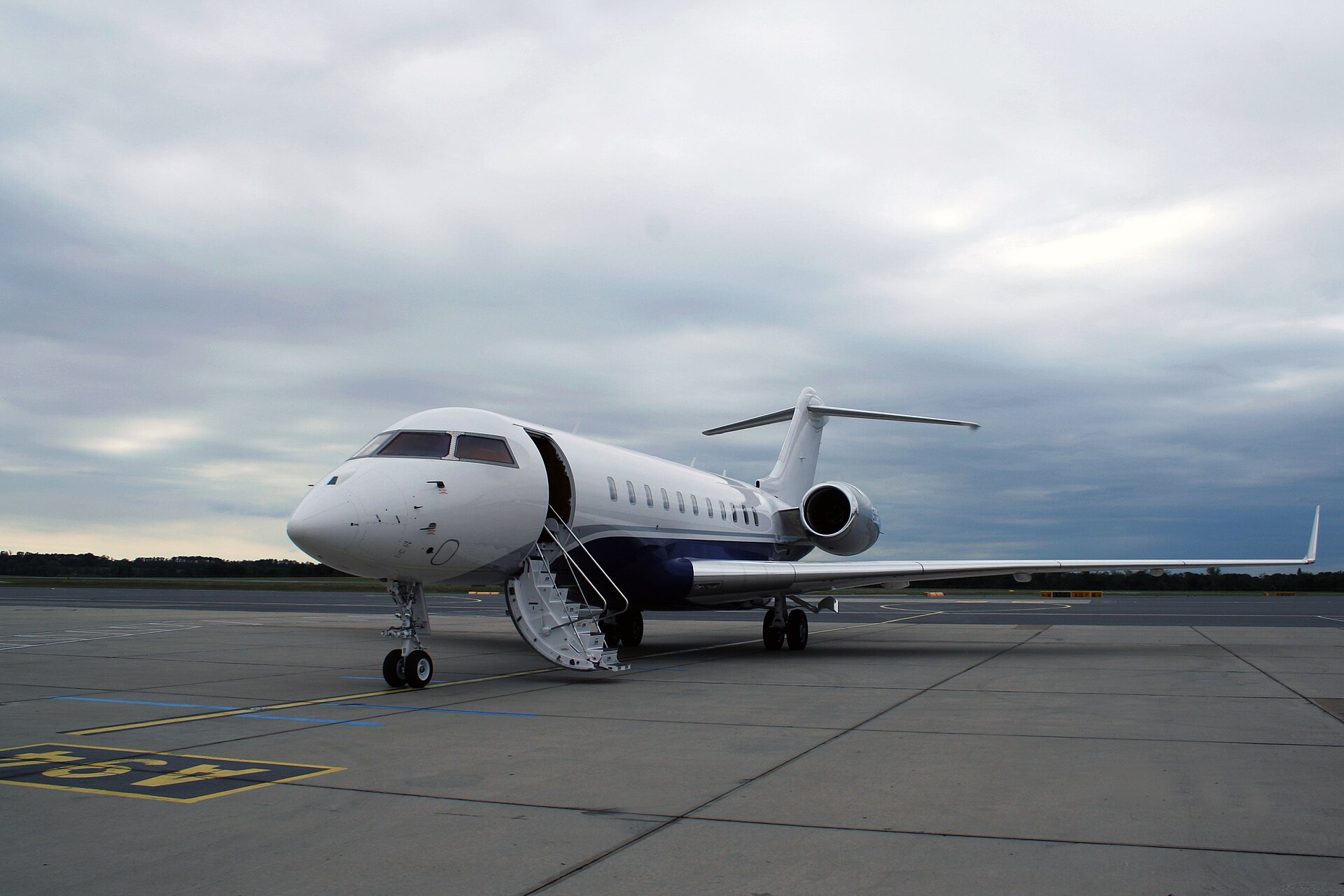
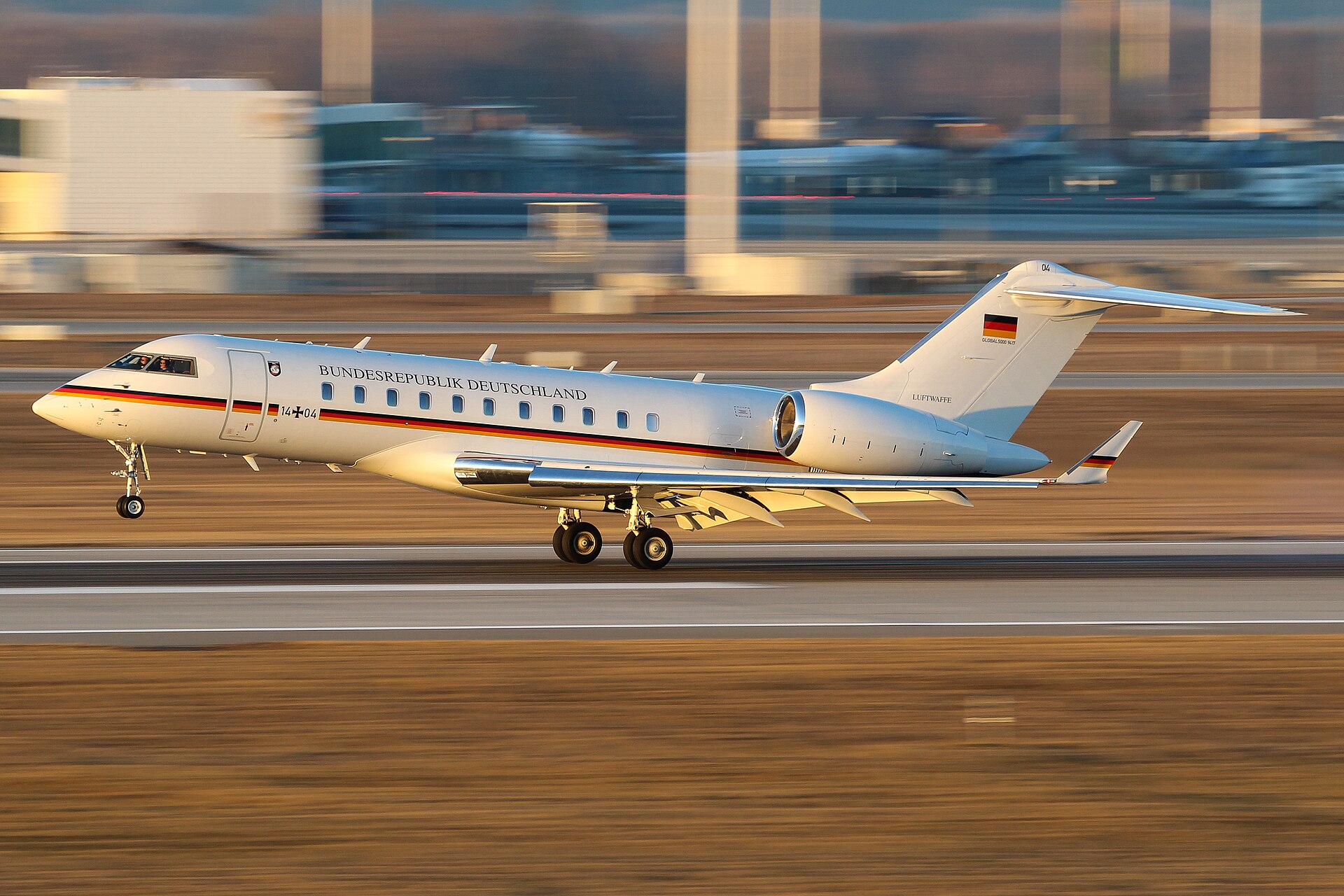
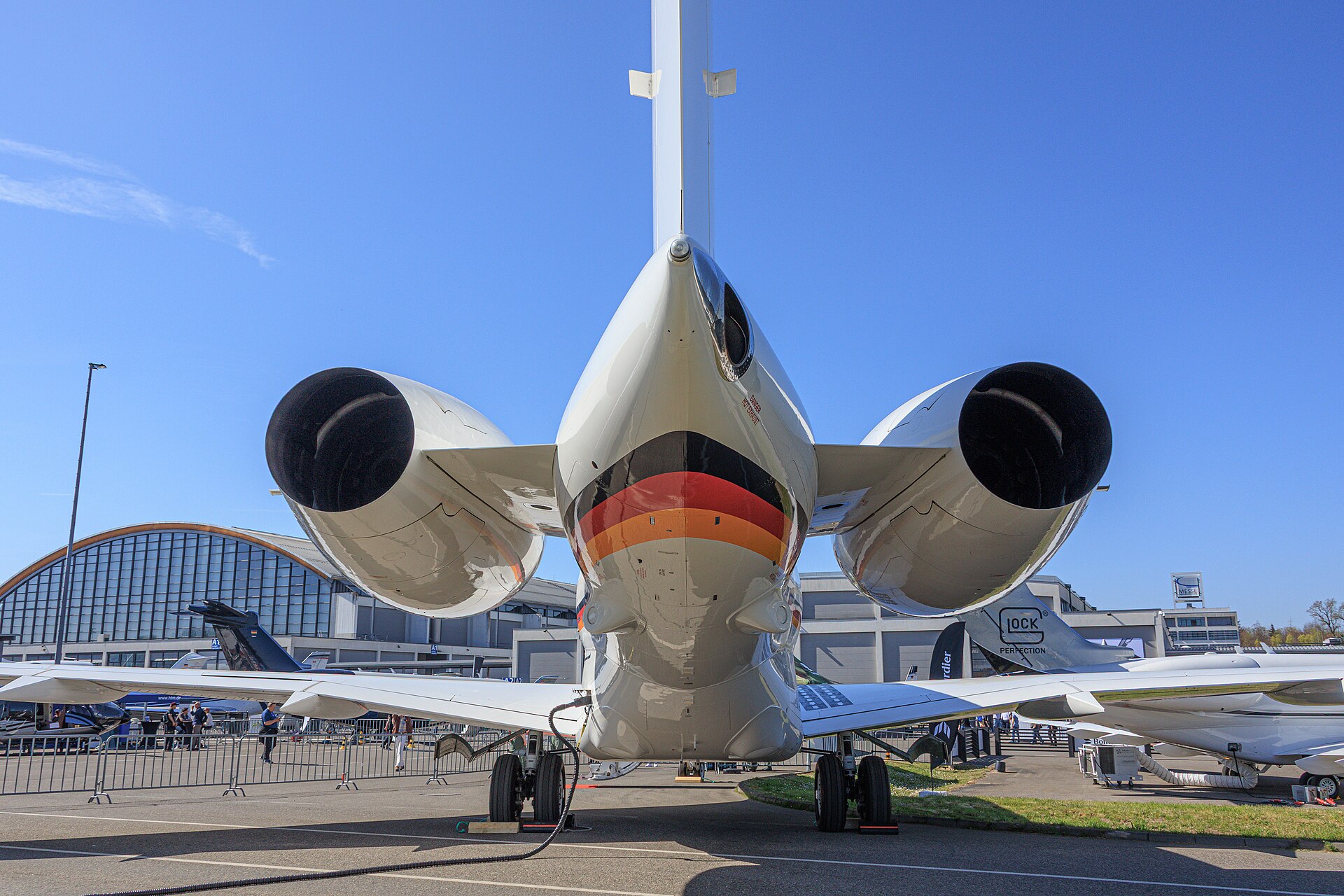
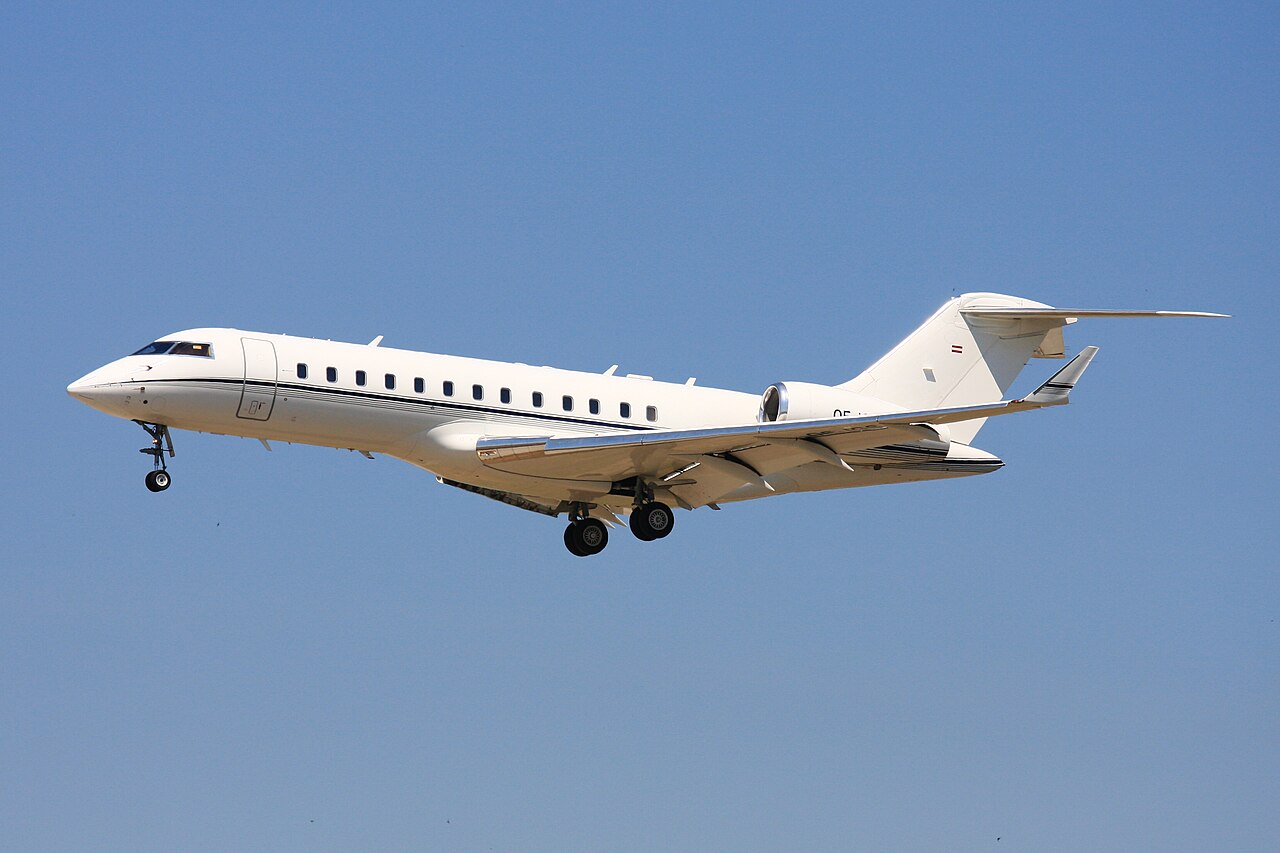
Bombardier Global 5000
Bombardier Global 5000 · Juergen Lehle · CC BY-SA 3.0 via Wikimedia Commons
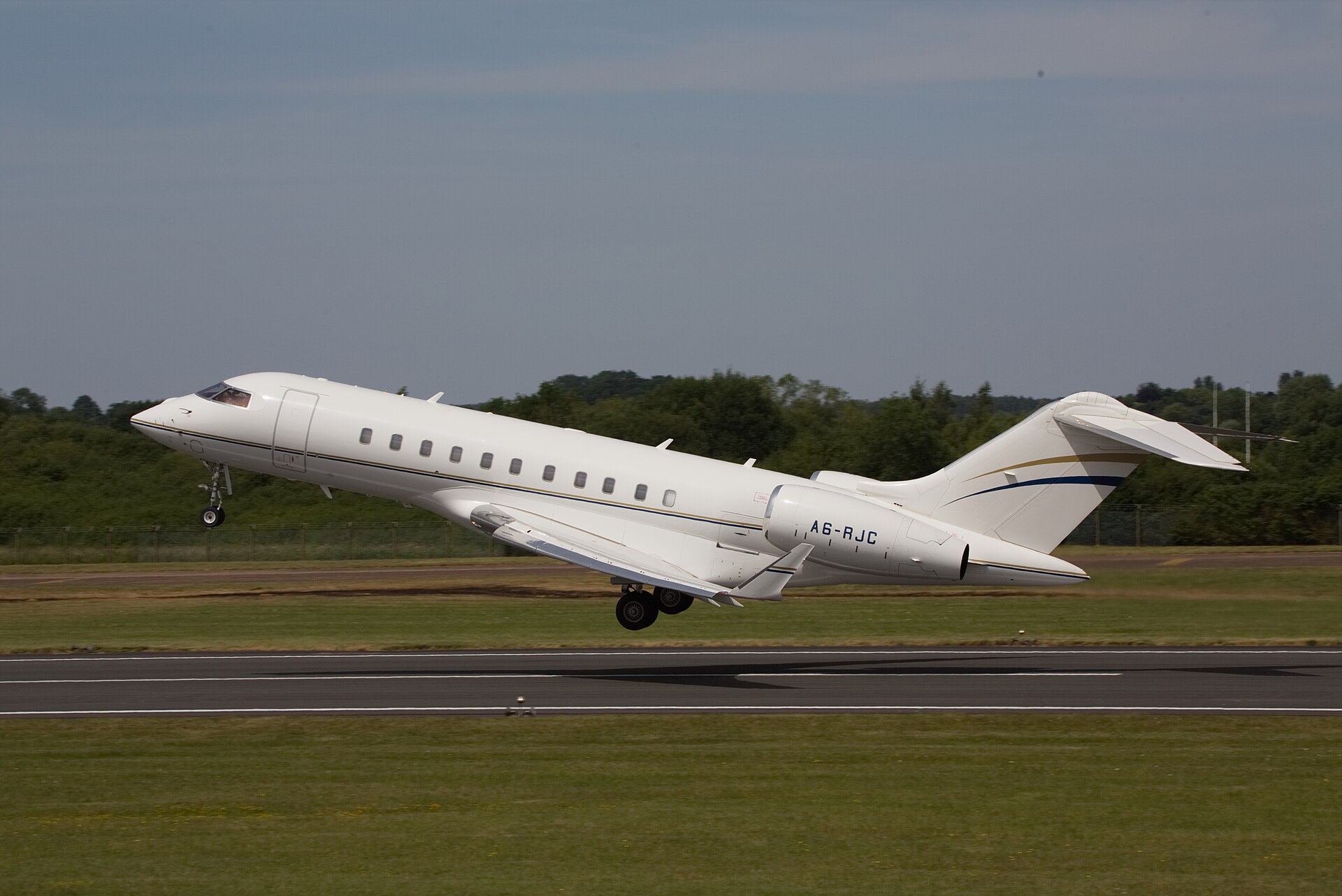
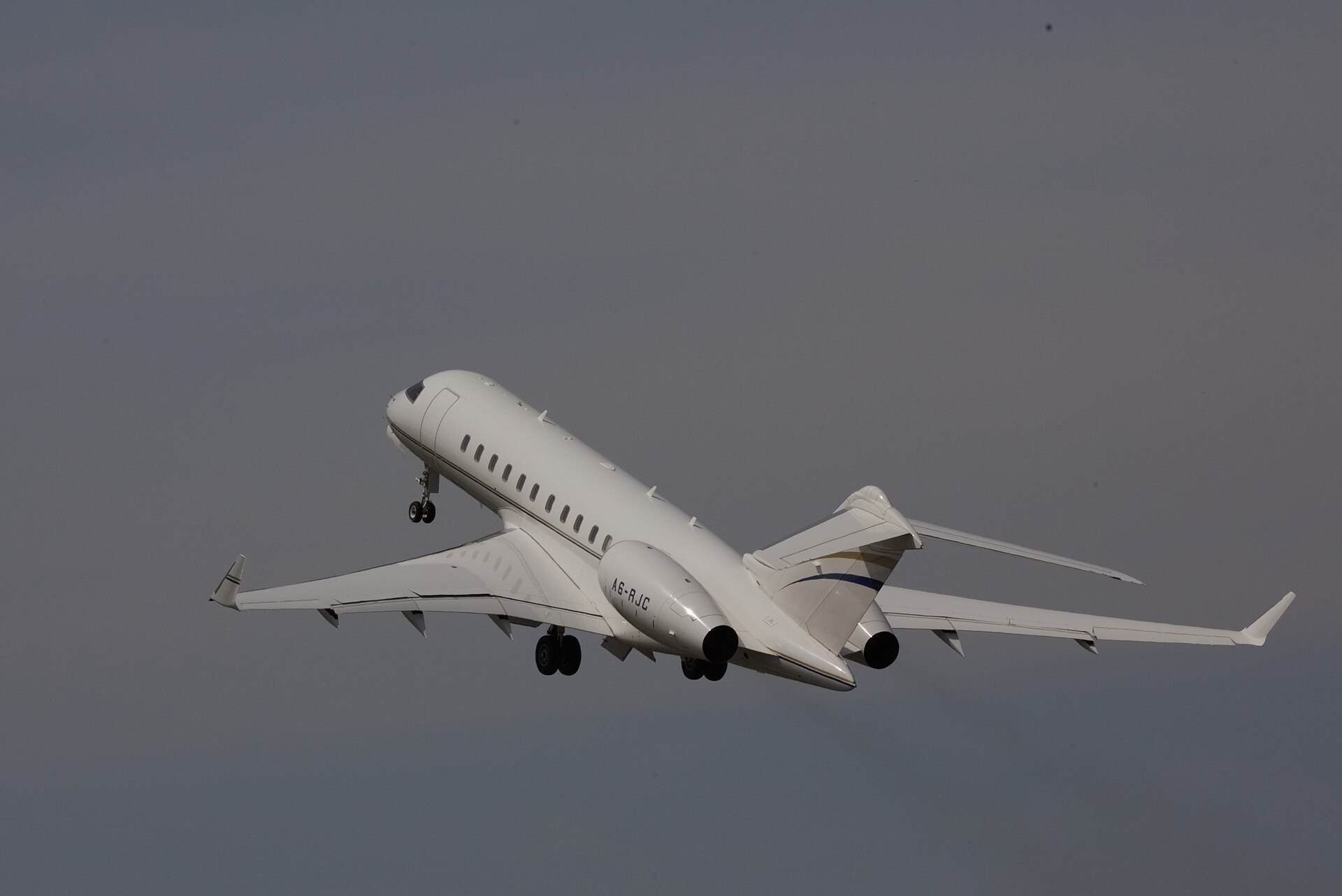
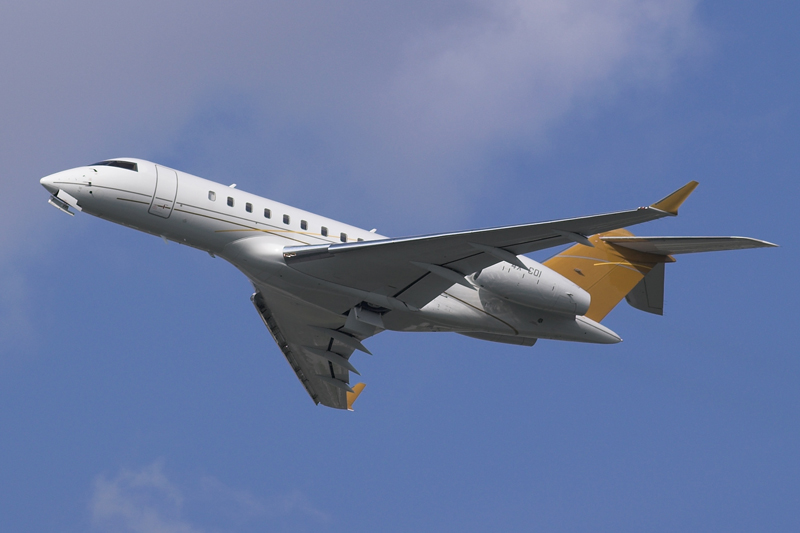
Bombardier Global 5000 AERO Friedrichshafen 2025-0381
Bombardier Global 5000 AERO Friedrichshafen 2025-0381 · New York-air · CC BY-SA 4.0 via Wikimedia Commons

INTERIOR

Global 5000 interior
Global 5000 interior · Cpthmsimpson at English Wikipedia · Public domain via Wikimedia Commons

SPECIFICATIONS

Bombardier Global 5000 specifications

Passengers13
Range5,200 nm
SpeedMach 0.89
Cabin height6'2"
Cabin width8'2"
Baggage195 cu ft
Runway5,540 ft

CABIN EXPERIENCE

On board the Bombardier Global 5000

  • Three living zones
  • Sleeps eight in lie-flat berths
  • Full galley with crew rest

BEST ROUTES

Where the 5000 flies best

London → New York

from £49,200

Dubai → London

from $51,600

BROWSE ALL ROUTES →

CHARTER PRICING

Bombardier Global 5000 charter pricing

ROUTEESTIMATED PRICE
Geneva → Tokyofrom CHF 165,000
Miami → Londonfrom $58,800

Indicative all-inclusive one-way pricing — aircraft, crew, fuel, handling, catering and taxes. Confirmed quote in 10 minutes.

WHO SHOULD CHARTER THIS

Why choose the Bombardier Global 5000?

The right client profile for the 5000: 13 passengers, missions inside its 5,200 nm range, and routes where the ultra long range cabin size is the sweet spot between cost and comfort.

  • High-speed transatlantic capability
  • Wide three-zone cabin
  • Optimised for shorter ultra-long missions

RANGE & LIMITATIONS

What the 5000 can — and can't — do

Non-stop range

5,200 nm with typical payload. Missions beyond this figure require a technical fuel stop — expect 30–45 minutes on the ground and a modest re-quote. On strong headwinds or full-cabin days the practical range trims by 5–10%.

Runway requirement

Balanced-field length around 5,540 ft. Rules out very short-strip airfields (Courchevel, Lugano, London City steep-approach) unless the airframe is specifically certified — our ops team validates every airport pairing before we confirm the quote.

Payload & baggage

195 cu ft of hold space with 13 passengers. Ski, golf and dive equipment fit for most parties; larger groups with full luggage should size up one category to preserve the range figure above.

FAQ

Frequently asked

Is Wi-Fi available onboard?

Yes — most aircraft in this class offer high-speed Ka-band or Starlink connectivity suitable for video calls and streaming throughout cruise.

Can pets fly on board?

Many operators permit pets in the cabin, subject to aircraft-owner approval, destination rules, documentation and any operator-specific charges. Tell us the species and weight when you request a quote.

How quickly can the aircraft be ready?

Once a quote is confirmed, this aircraft can typically be positioned within 2–4 hours anywhere in its home region, and within 24 hours globally.

FURTHER READING

Planning the 5000 for business or leisure

SIMILAR AIRCRAFT

Also in Ultra Long Range

ULTRA LONG RANGE FAMILY

Every ultra-long-range jet, one click away

The Bombardier Global 5000 sits in the ultra-long-range class alongside the Bombardier Global, Gulfstream and Dassault Falcon ULR families. Compare cabin, range and hourly cost across every peer below, or jump straight to a curated hub.

ULR FLEET COMPARISON

Bombardier Global 5000 vs the ultra-long-range field

Range, speed, cabin and runway numbers side-by-side. The full model-by-model comparison — every ULR jet in the Limitless Sky network — lives on the hub.

AIRCRAFTRANGESPEEDPAX
Bombardier Global 5000 THIS AIRCRAFT5,200 nmMach 0.8913
Gulfstream G5506,750 nmMach 0.88516
Gulfstream G650ER7,500 nmMach 0.92513–16
Gulfstream G7007,750 nmMach 0.93519
Bombardier Global 60006,000 nmMach 0.8913
Bombardier Global 75007,700 nmMach 0.92519
Dassault Falcon 7X5,950 nmMach 0.9014
Dassault Falcon 8X6,450 nmMach 0.9014–16
Bombardier Global 80008,000 nmMach 0.9417–19
Gulfstream G8008,000 nmMach 0.92513–19
Dassault Falcon 10X7,500 nmMach 0.92516–19
Bombardier Global 55005,900 nmMach 0.9013–16
Gulfstream GV6,500 nmMach 0.8014–16
Dassault Falcon 6X5,500 nmMach 0.8512–16
Bombardier Global Express XRS6,150 nmMach 0.8814–16

HEAD-TO-HEAD

Compare the 5000

ALL COMPARISONS →

BOMBARDIER GLOBAL 5000 CLUSTER

Everything connected to the Bombardier Global 5000

Ready to charter the Bombardier Global 5000?

Quotes in 10 minutes. Aircraft positioned within hours. 24/7, worldwide.

REQUEST A QUOTE

Bombardier Global 5000 gallery

Exterior and cabin photography of the Bombardier Global 5000 type.

Limitless Sky ownership desk

What it costs to buy, operate and charter out a Bombardier Global 5000

A five-year planning model on the same assumptions as our ownership vs charter vs fractional analysis: 100 owner-occupied hours a year, 15% owner positioning, 150 third-party charter hours sold on a managed certificate at an 85% owner revenue share, and 25% market depreciation over the hold.

Acquisition

Indicative market value€12.30m – €18.30m
Model purchase price used€15,000,000
Inspection, legal and delivery (2%)€300,000
Residual value after 5 years€11,250,000

Annual cost of operation

Fixed cost (crew, hangar, insurance, management)€650,000
Direct operating cost per aircraft hour€2,500
Owner missions (114.99999999999999 aircraft hours)€287,500
Annual cash operating cost before charter€937,500

What renting it out brings in

Charter sold (150 occupied hours at €6,200)€930,000
Owner share at 85%€790,500
Direct cost of those flights (180 aircraft hours)(€450,000)
Net annual contribution to fixed costs€340,500
Share of fixed costs covered52%
Charter hours needed to cover all fixed costs286 hours

Five-year verdict

Net five-year cash cost, with charter income€7,372,500
Cost per owner-occupied hour€14,745
Cost per hour if never chartered out€18,150
Opportunity cost of tied-up capital (4%/yr)€3,000,000
Methodology and sources— how these numbers are built

Purchase price band

The €12.30m€18.30m band is an indicative pre-owned range for a well-maintained, mid-life Bombardier Global 5000 on a current maintenance and engine programme, in a typical European charter specification. It is built from published asking prices and retail transaction ranges (Duncan Aviation market letters, AvBuyer and Controller listings, VREF and Aircraft Bluebook retail guidance), then narrowed against what our desk sees pay-and-close in Europe. The model uses a single point inside that band, €15,000,000, so the five-year output is reproducible. Serial number, total time, cycles, engine-programme enrolment, avionics mandates, interior age and import/VAT status routinely move a real transaction outside the band in either direction.

Fixed cost assumptions

€650,000 a year covers two (or, for larger cabins, three) crew with training and recurrent sim, hangarage at a European base, hull and liability insurance, the management fee on a third-party AOC, navigation and weather subscriptions, and scheduled non-flying charges. It excludes financing, tax, extraordinary maintenance events and cabin refurbishment. Sources are operator and management-company budget templates for the type, cross-checked against NBAA and Conklin & de Decker fixed-cost structures.

Direct operating cost per hour

€2,500 per aircraft hour is fuel at prevailing European Jet A-1 pricing, engine and airframe programme accruals, APU and landing-gear reserves, landing, handling and navigation fees, catering and crew expenses. It is applied to actual aircraft hours, not occupied hours: owner trips carry a 15% positioning uplift and third-party charter carries 20%, which is what repositioning empty legs cost in practice.

Charter revenue estimate

150 third-party occupied hours a year at a wholesale base rate of €6,200 per hour is what a managed Bombardier Global 5000 realistically sells in Europe once owner availability, maintenance downtime and seasonality are taken out — not the retail rate a client pays. The rate is the operator-level rate band we transact at on Avinode and directly with operators; the owner keeps 85% under a standard management agreement, with the balance retained by the operator. Ferry, fuel surcharges, de-icing and overnights on charter missions are captured in the direct-cost line rather than netted off the rate.

Depreciation and the five-year frame

25% market depreciation is applied over a 5-year hold, with 2% acquisition costs (inspection, legal, delivery) at entry and 3% selling costs at exit. Owner utilisation is held at 100 occupied hours a year across every aircraft so types can be compared like for like. Capital opportunity cost is shown separately at 4% simple per year and is not added into the cash cost. The same frame drives our ownership vs charter vs fractional analysis and the most profitable jets to own ranking, so the three never disagree.

Review cadence

Values are reviewed each quarter against the same sources and re-published in one dataset, so every aircraft page moves together. Read our editorial standards for how we source and correct figures.

Indicative planning estimates prepared by the Limitless Sky desk — not an appraisal, charter quotation, offer or tax advice. Figures are pre-tax and pre-financing and exclude recoverable VAT, extraordinary maintenance and substitute lift during downtime. Actual values depend on serial number, hours, maintenance and engine-programme status, specification, base and charter demand. Ask the desk for a tail-specific forecast, or charter the Bombardier Global 5000 instead and skip the balance sheet entirely.

Interactive · ownership desk

Run your own numbers on the Bombardier Global 5000

Move your annual flying, the charter hours you are willing to release, the management fee your operator charges and how long you intend to hold the aircraft. Buy versus charter-out break-even updates instantly.

Your assumptions

Buy versus charter out

Net cost of owning over 5 years€7,372,500
Cost per owner-occupied hour€14,745
Same hours bought on the charter market€3,658,000
Indicative retail charter rate per hour€7,316
Owning costs more€3,714,500

Break-even

Owner hours a year where owning beats chartering267 h
Charter hours a year to cover the whole fixed budget286 h
Charter income after the cost of flying it€340,500 / yr
Share of fixed costs covered52%

At 100 hours a year, chartering is cheaper than owning the Bombardier Global 5000 by €3,714,500 over the hold. Owning turns cheaper from around 267 hours a year.

Pre-tax, pre-financing planning estimates on the same frame as the tables above: 15% owner positioning, 20% positioning on charter, 2% acquisition cost, 3% selling cost, and published five-year depreciation scaled linearly to your resale horizon. Retail comparison rate is the wholesale base rate plus 18%. Ask the desk for a tail-specific forecast.

KNOWLEDGE GRAPH

Where the Bombardier Global 5000 fits in our aviation graph

Routes, destinations and airports this aircraft typically serves — plus peers in the same class and family.

Book HereDo you have a question?