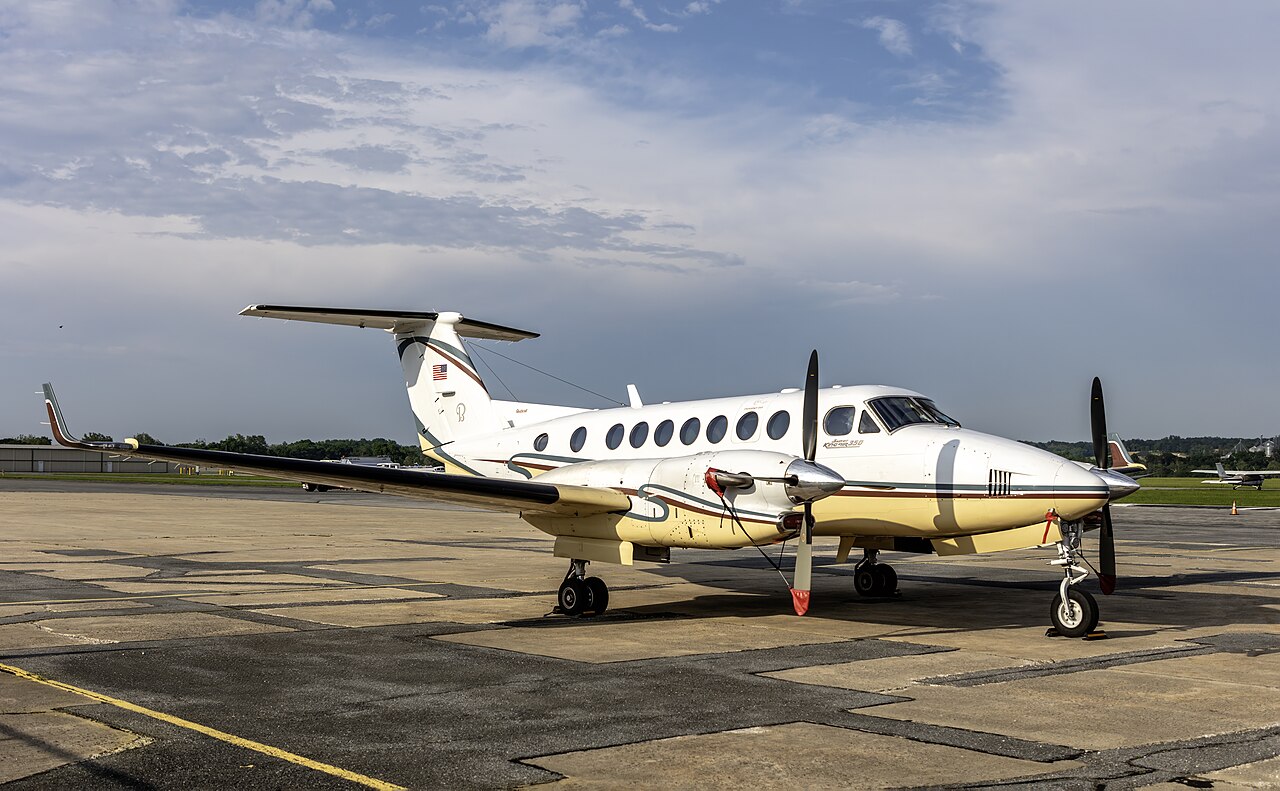
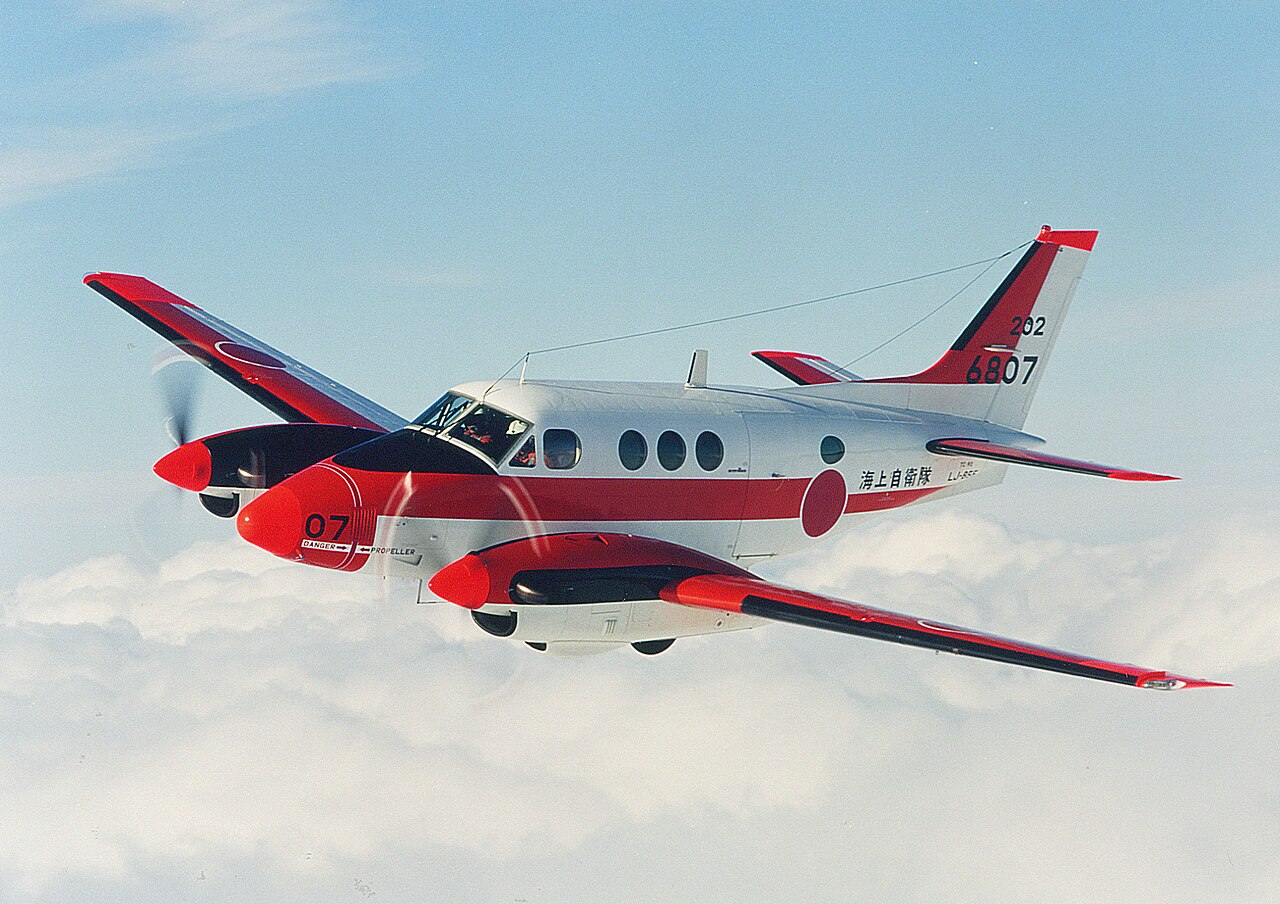
Beechcraft King Air 200 private jetBeechcraft King Air 350i private jet

King Air 200 vs King Air 350i

King Air 350i speed, range and cabin compared to the King Air 200 — the two most-chartered turboprops in the world, head-to-head on cruise speed, payload and runway performance.

Beechcraft King Air 200

BEECHCRAFT

Beechcraft King Air 200

The Beechcraft King Air 200 is the original executive turboprop — over 50 years in service and still one of the most-chartered regional aircraft. Seven seats, short-runway access and outstanding charter value.

FULL BEECHCRAFT KING AIR 200 PAGE →
Beechcraft King Air 350i

BEECHCRAFT

Beechcraft King Air 350i

The Beechcraft King Air 350i is the most-chartered twin turboprop in the world. Nine passengers, short-runway access and the proven economics of the King Air platform make it ideal for regional missions to airports jets simply cannot use.

FULL BEECHCRAFT KING AIR 350I PAGE →

SPECIFICATIONS

Side-by-side specifications

METRICKing Air 200King Air 350i
Passengers79
Range1,580 nm1,806 nm
Cruise speed292 kts312 kts
Cabin height4'9"4'9"
Cabin width4'6"4'6"
Baggage55 cu ft55 cu ft
Runway3,200 ft3,300 ft

Beechcraft King Air 200 — strengths

  • Most-produced business turboprop in history
  • Exceptional charter value
  • Short-runway capability

Beechcraft King Air 350i — strengths

  • Short and unpaved runway access
  • Lowest seat-mile cost in segment
  • Proven 50-year platform

CHARTER PRICING

Indicative pricing

BEECHCRAFT KING AIR 200
London → Jerseyfrom £2,300
Phoenix → Sedonafrom $2,900
BEECHCRAFT KING AIR 350I
London → Cardifffrom £2,900
Denver → Telluridefrom $5,700

All-inclusive indicative one-way pricing. Confirmed quote in 10 minutes.

EXPERT VERDICT

Two closely-matched turboprops — the right pick depends entirely on the mission, not the spec sheet.

The King Air 200 pulls ahead on airport access; the King Air 350i answers with range / non-stop reach and group capacity. Both sit in the turboprop class, so charter pricing is broadly aligned — let the use case (range, group size, airport pair) drive the final call.

Range / non-stop reach

King Air 350i

1,806 nm of range — the better choice for transcontinental and intercontinental missions.

Cabin comfort

Even

Matched specifications.

Group capacity

King Air 350i

Seats up to 9 — the right pick when the manifest grows.

Airport access

King Air 200

Shorter 3,200 ft balanced-field requirement — opens up restricted alpine, island and city-adjacent airfields.

Speed & block time

Even

Comparable on this dimension.

Verdict based on published manufacturer specifications, charter market data and Limitless Sky brokerage experience.

REQUEST A CHARTER QUOTE

Charter the King Air 200 or the King Air 350i.

Tell us your route — our desk returns a confirmed quote on both aircraft within 10 minutes, so you can compare like-for-like on your exact mission.

CHOOSE WITH CONFIDENCE

Top reasons to choose — and who each aircraft is best for

A tailored summary for the King Air 200 and King Air 350i: the deciding reasons in this matchup, plus the buyer archetypes each aircraft serves best.

BEECHCRAFT

Top reasons to choose the King Air 200

  • Most-produced business turboprop in history
  • Exceptional charter value
  • Short-runway capability

BEST FOR

  • Island & alpine access

    Short, unpaved or high-altitude strips that jets simply cannot use.

  • Sub-500 nm hops

    Operating cost per seat-mile beats every jet on quick regional legs.

  • Cargo-heavy missions

    Large cabin door and floor loading for ski, dive and field-kit travel.

  • Medevac & utility

    Stretcher and rapid-reconfig layouts for time-critical lifts.

BEECHCRAFT

Top reasons to choose the King Air 350i

  • Reaches 1,806 nm non-stop — 14% more range than the King Air 200, opening city pairs that would otherwise need a tech stop.
  • Seats up to 9 passengers vs 7 on the King Air 200 — better for full-group charters and family travel.
  • Short and unpaved runway access
  • Lowest seat-mile cost in segment
  • Proven 50-year platform

BEST FOR

  • Longer non-stop reach

    When the mission is on the edge of the King Air 200's envelope, the 1,806 nm legs of the King Air 350i keep reserves intact.

  • Larger party charters

    Up to 9 seats vs 7 on the King Air 200 — the natural pick when the manifest grows last-minute.

  • Island & alpine access

    Short, unpaved or high-altitude strips that jets simply cannot use.

  • Sub-500 nm hops

    Operating cost per seat-mile beats every jet on quick regional legs.

PROS & CONS

Honest assessment

BEECHCRAFT

Beechcraft King Air 200

PROS

  • +Most-produced business turboprop in history
  • +Exceptional charter value
  • +Short-runway capability

CONS

  • Shorter range than the King Air 350i (1,580 nm vs 1,806 nm) — may require a tech stop on long sectors.
  • Maximum 7-seat layout is tight if you regularly travel with more than 7 — the King Air 350i adds 2 seats.

BEECHCRAFT

Beechcraft King Air 350i

PROS

  • +Short and unpaved runway access
  • +Lowest seat-mile cost in segment
  • +Proven 50-year platform
  • +Longer legs than the King Air 200 (1,806 nm vs 1,580 nm) — fewer fuel stops on intercontinental missions.
  • +Carries up to 9 passengers vs 7 on the King Air 200 — better for larger groups.

CONS

  • Marginally more expensive per block hour than the King Air 200 on typical charter quotes — confirm with a live quote for your route.

REAL-WORLD MISSIONS

Which aircraft for which mission

Four scenarios our charter desk sees regularly — and which of these two we would actually quote.

SCENARIO 01

Ski-week shuttle into a short alpine strip

OUR PICKKing Air 200

Shorter runway requirement (3,200 ft) opens up the airfield.

SEE FULL AIRCRAFT →

SCENARIO 02

Coastal island hop with bicycles and dive gear

OUR PICKKing Air 200

Shorter runway requirement (3,200 ft) opens up the airfield.

SEE FULL AIRCRAFT →

SCENARIO 03

Regional medevac repositioning with stretcher kit

OUR PICKKing Air 200

Shorter runway requirement (3,200 ft) opens up the airfield.

SEE FULL AIRCRAFT →

SCENARIO 04

Field-visit tour across three regional airports in one day

OUR PICKKing Air 200

Shorter runway requirement (3,200 ft) opens up the airfield.

SEE FULL AIRCRAFT →

ROUTE RECOMMENDATIONS

Best pick per route

ROUTEDISTANCERECOMMENDEDWHY
London → Le Touquet120 nmKing Air 350iBoth reach it, but the longer-legged option keeps more fuel reserves for weather and routing changes.
Zurich → St Moritz95 nmKing Air 350iBoth reach it, but the longer-legged option keeps more fuel reserves for weather and routing changes.
Aspen → Telluride115 nmKing Air 350iBoth reach it, but the longer-legged option keeps more fuel reserves for weather and routing changes.
Nantucket → Teterboro180 nmKing Air 350iBoth reach it, but the longer-legged option keeps more fuel reserves for weather and routing changes.

Distances are great-circle approximations; actual fuel planning accounts for winds, weather and reserves.

ANALYST NOTES

King Air 200 vs King Air 350 — analyst deep dive

The Beechcraft King Air 200 (later B200 / B200GT) and the King Air 350i are the two most-chartered turboprops in the world, and the choice between them is almost always driven by three variables: payload, cabin length and short-runway performance. Both aircraft share the same PT6A-family engines and a nearly identical cockpit philosophy, so pilot handling and dispatch reliability are effectively a tie. Where they separate is in useful load, cabin real estate and true speed at typical cruise altitudes.

Speed — what the King Air 350i actually delivers

The King Air 350i has a maximum cruise speed of ~312 knots true (Mach 0.53) at FL270, versus ~289 kts for the B200GT. On a 500-nm sector that difference translates to roughly 8–10 minutes saved, not the marketing-brochure 20+ minutes. Above FL280, both aircraft see similar true airspeeds because the 350i's higher weight offsets its stronger engines. If speed is the deciding factor you should be looking at a light jet (Phenom 300, Citation CJ3+), not a bigger King Air.

  • King Air 350i max cruise: 312 KTAS at FL270 (~Mach 0.53)
  • King Air 200 / B200GT max cruise: 289 KTAS at FL280
  • Real-world block-time delta on 500 nm: 8–10 min in favour of the 350i
  • Both aircraft cruise most efficiently between FL240 and FL280

Cabin, payload and passenger comfort

The King Air 350i is 34 inches longer in the passenger cabin, seats up to 11 in a high-density layout (typical charter config: 8–9 club seats) and offers a private aft lavatory with a full door and window. The B200 seats 6–8, and its lavatory is a curtain-partitioned bench — acceptable for short sectors, tight on 3-hour flights. Full-fuel payload on the 350i is 1,890 lb versus 1,410 lb on the B200 — meaningful when a group of six + luggage + skis needs to be flown out of a short field.

  • King Air 350i cabin length: 16 ft 8 in — 8–9 club seats + aft lavatory
  • King Air 200 cabin length: 12 ft 7 in — 6–8 seats, curtained lavatory
  • Full-fuel payload: 1,890 lb (350i) vs 1,410 lb (B200)
  • Both feature stand-up-when-boarding aisle height (~4 ft 9 in)

Runway performance and airport access

This is where the smaller B200 quietly wins. Its balanced field length at MTOW is ~2,580 ft versus ~3,300 ft for the 350i. Combined with lower approach speeds, the B200 opens up strips and mountain fields (Aspen, Courchevel, St. Barth, remote Scottish airfields) that the 350i simply cannot use at full payload. Owner-operators flying into unimproved or high-elevation strips almost always choose the B200 or its Blackhawk-upgraded variants.

  • Balanced field length (MTOW): B200 ~2,580 ft · 350i ~3,300 ft
  • Approach speed: B200 ~103 KIAS · 350i ~110 KIAS
  • Landing distance over 50 ft: B200 ~2,845 ft · 350i ~3,205 ft
  • Both aircraft are certified for grass, gravel and short-paved surfaces

Charter cost and operating economics

2026 hourly charter rates run $2,600–$3,400 for the King Air 200 and $3,200–$4,200 for the 350i. Fuel burn is ~90 gph on the B200 versus ~115 gph on the 350i in cruise. On a 1.5-hour hop with four passengers, the King Air 200 usually wins on total cost. On a 2.5-hour, 8-passenger sector — Milan → Ibiza, London → Chambéry — the 350i is often the better value per seat.

  • King Air 200 charter rate (2026): $2,600–$3,400 / hr
  • King Air 350i charter rate (2026): $3,200–$4,200 / hr
  • Fuel burn (cruise): ~90 gph (B200) · ~115 gph (350i)
  • Direct operating cost gap on a 2-hour sector: ~$1,200 in favour of B200

Charter the King Air 350i when you have 7+ passengers, need a private aft lavatory, or fly sectors above 500 nm. Charter the King Air 200 when the runway is short, the group is 4–6 people, or the sector is under 90 minutes — the cost saving is real and the missing 20-odd knots don't matter.

FAQ

King Air 200 vs King Air 350i — frequently asked

King Air 200 vs King Air 350i: which has the longer range?OPEN

The Beechcraft King Air 200 has a published range of 1,580 nm; the Beechcraft King Air 350i is rated at 1,806 nm. The longer-range aircraft opens up more non-stop city pairs without a tech stop.

Which is faster — King Air 200 or King Air 350i?OPEN

Cruise speeds are 292 kts for the Beechcraft King Air 200 and 312 kts for the Beechcraft King Air 350i. On a London → Jersey-style mission the faster aircraft typically saves 10–25 minutes block time.

How many passengers does each aircraft carry?OPEN

The Beechcraft King Air 200 seats 7; the Beechcraft King Air 350i seats 9. Charter prices below assume a typical executive layout — high-density configurations are available on request.

What does it cost to charter the Beechcraft King Air 200 vs the Beechcraft King Air 350i?OPEN

Indicative one-way pricing on a benchmark mission: Beechcraft King Air 200 from from £2,300, Beechcraft King Air 350i from from £2,900. Confirmed quote in 10 minutes — pricing varies with empty-leg availability, season and routing.

Which aircraft is better for transatlantic or long-range missions?OPEN

Both belong to the Turboprop category, but range, payload and runway performance differ. See the route-recommendations table on this page for our specific pick per corridor.

Is the King Air 350i faster than the King Air 200?OPEN

Yes, but only by ~20 knots at typical cruise altitudes. Max cruise is 312 KTAS (350i) vs 289 KTAS (B200GT). On a 500-nm sector that saves about 8–10 minutes — real, but rarely decisive.

How many passengers can the King Air 350i seat vs the 200?OPEN

The King Air 350i seats up to 11 passengers (typical charter config: 8–9 club) with a private aft lavatory. The King Air 200 seats 6–8 with a curtained lavatory.

Which King Air is better for short mountain runways like Aspen or Courchevel?OPEN

The King Air 200. Its ~2,580 ft balanced field length at MTOW (vs ~3,300 ft for the 350i) and lower approach speeds make it the preferred pick for tight strips and high-elevation fields.

How much does it cost to charter a King Air 200 vs 350i in 2026?OPEN

Indicative 2026 charter rates: King Air 200 $2,600–$3,400 per hour, King Air 350i $3,200–$4,200 per hour. Total cost depends on sector length, positioning and empty-leg availability.

Do both aircraft use the same engines?OPEN

Both are powered by Pratt & Whitney Canada PT6A-family turboprops. The B200GT uses PT6A-52 (850 shp each), the 350i uses PT6A-60A (1,050 shp each) to handle the higher MTOW.
MORE COMPARISONS

Compare more turboprops

KING AIR 200 × KING AIR 350I CLUSTER

Continue researching King Air 200 or King Air 350i

Not sure which to charter?

Tell us your route and party size — we'll recommend the right aircraft and send a confirmed quote in 10 minutes.

REQUEST A QUOTE
Enquire now