FBO meaning — what does FBO stand for?
FBO stands for Fixed Base Operator. If you searched “FBO meaning” or “what is an FBO at an airport,” that is the answer: the private-aviation terminal and ground-services business on the field — separate from the airline terminal.
The term dates back to the 1920s, when the US Air Commerce Act required commercial aviation businesses to operate from a 'fixed base' at an airport — as opposed to itinerant operators that travelled from field to field. The name stuck. Today an FBO is the commercial business at an airport that provides aircraft fuel, hangarage, maintenance, ramp services and a dedicated passenger terminal for general and business aviation — everything outside scheduled airline operations.
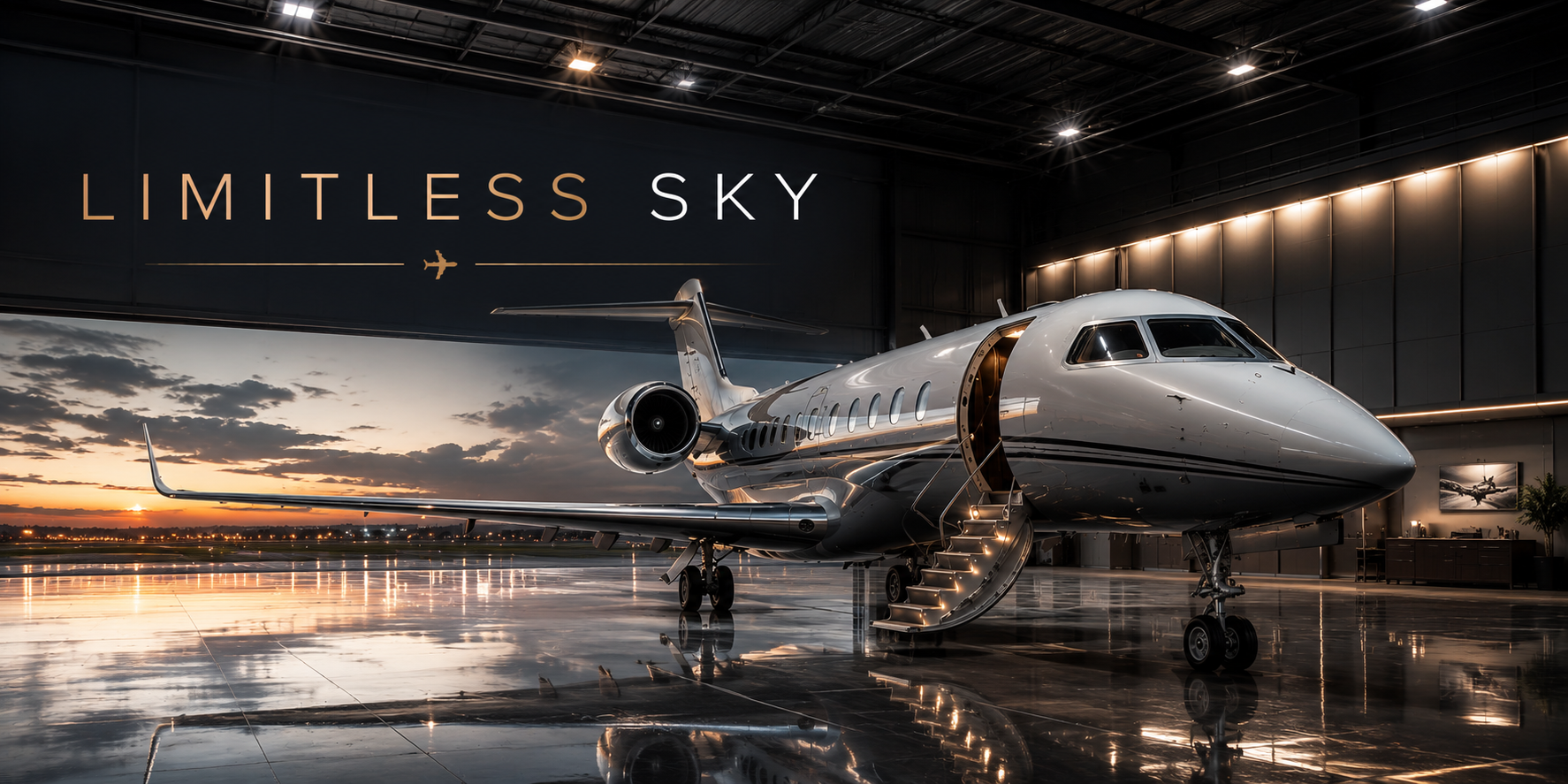
In everyday charter language, 'the FBO' simply means the private jet terminal at an airport. When your driver asks 'which FBO?' at Geneva or Teterboro, they want to know which building on the airfield to deliver you to. Most large airports host several competing FBOs, each with its own lounge, ramp and pricing.
What an FBO does — the full service list
An FBO is a one-stop shop for everything that needs to happen on the ground when a private jet arrives or departs. Some services are visible to passengers; others happen entirely on the airside.
- —Passenger lounge with private meeting rooms, showers, espresso bar and high-speed Wi-Fi
- —Airside vehicle access — your car drops you metres from the aircraft steps
- —Customs and immigration processed inside the FBO for international flights
- —Jet fuel (Jet A / Jet A-1) and into-plane fuelling
- —Aircraft parking, hangarage, de-icing and lavatory servicing
- —Crew rest areas, flight planning rooms, weather briefings and slot coordination
- —Concierge: catering, ground transport, helicopter transfer, hotel and chauffeur arrangements
- —Light maintenance, oxygen, GPU power and tug services on the ramp
- —Security screening of passengers, baggage and aircraft
FBO vs commercial terminal — the practical difference
The commercial terminal is built around volume. The FBO is built around speed. A typical FBO arrival from car door to airborne takes 15 to 20 minutes; a commercial business-class departure rarely beats 90 minutes from door to seat. The reason is structural: no fixed scheduled departures, no shared security queue, no boarding-pass infrastructure, and no waiting for other passengers.
On the arrival side the gap widens further. International arrivals at a busy FBO clear customs in the lounge while bags are unloaded onto a waiting car — typically eight to twelve minutes from touchdown to door-to-door transfer. The same flight into a commercial terminal can absorb an hour or more between gate, immigration queue, baggage hall and curbside.
How a typical FBO departure works
- —T-15 min: car drops you at the FBO door — no airport entrance, no parking
- —T-12 min: ID checked at reception, bags taken directly to the aircraft hold
- —T-10 min: optional espresso, restroom and final calls in the lounge
- —T-7 min: airside escort to the aircraft (drive or short walk)
- —T-5 min: greeted by the captain at the steps, board, settle, brief
- —T-0: pushback, taxi and slot release
Customs and immigration at an FBO
For international flights, customs and immigration officers come to the FBO. On departure, passports are checked in the lounge or at the aircraft. On arrival, officers board the aircraft or process passengers in a discreet glass-walled room inside the FBO. There are no public queues, and the entire process is normally complete within ten minutes of engines down.
Some FBOs host permanent CIQ (Customs / Immigration / Quarantine) staffing; smaller fields call officers from the main terminal and require a few hours' notice. Your broker arranges this when filing the flight plan.
VIP lounges and amenities
FBO lounges are designed for short stays in small groups. Expect leather seating, large windows looking onto the ramp, espresso and fresh-juice bars, full bathrooms with showers, dedicated meeting rooms with video-conference equipment, and quiet 'phone-room' booths. The best lounges feel closer to a private members' club than to anything in a commercial terminal.
For families, most FBOs offer a play area, kids' snacks and stroller-friendly access. Pets travel in the cabin off-leash and can run on the ramp in supervised areas before boarding.
Crew services — the invisible half of an FBO
Pilots and cabin crew use the FBO for flight planning, weather and NOTAMs, slot coordination, oxygen top-up and crew rest. A well-equipped FBO has flight planning rooms with current charts and connectivity, a quiet crew lounge separate from passengers, and contracted hotel rates for layovers. These services are why crews prefer particular FBOs at any given airport — and why operators sometimes route around fields with weak crew facilities.
How much does an FBO cost?
FBO fees are baked into your charter quote — you never pay the FBO directly. For context: a single FBO handling fee for a midsize jet typically runs $400–$1,500 depending on airport and time of day. Major hub FBOs (Teterboro, Van Nuys, London Luton, Le Bourget, Nice) sit at the upper end; secondary fields are far cheaper. Ramp fees, overnight parking and de-icing are billed separately.
Two FBOs at the same airport can quote materially different handling totals on the same aircraft. Brokers shop the FBOs as part of building your final quote — see our guide on how private jet pricing is built.
How to choose the right FBO at a busy airport
- —Location on field — closer to the runway exit saves taxi minutes on busy days
- —Customs availability and hours — critical for international
- —Fuel price and contract pricing — affects total cost on long legs
- —Slot allocation track record — busy hubs (Nice in summer, Aspen in winter) prioritise certain FBOs
- —Lounge quality if you're hosting clients or family
- —Heli-pad availability for onward transfer
- —Hangarage availability if the aircraft overnights
Famous FBOs around the world
- —Signature TAG Farnborough — London's purpose-built business-aviation airport
- —Universal Aviation / Advanced Air Le Bourget — Paris's main private gateway
- —Jet Aviation Geneva — the Swiss benchmark, ski-season flagship
- —Signature Nice Côte d'Azur — Riviera summer hub
- —Sky Valet Olbia — Sardinia in season
- —Jet Aviation Teterboro — the Manhattan-area reference
- —Million Air White Plains — the discreet New York alternative
- —Signature Van Nuys (Castle & Cooke) — Hollywood's private terminal
- —Atlantic Aviation Miami / Opa-Locka — Florida and Latin America gateway
- —ExecuJet Dubai (Al Maktoum DWC) — Gulf flagship
- —Hadid VIP Marrakech — Morocco's private terminal of choice
- —Universal Aviation Vienna — Eastern European hub
FBO chains and networks
Several large groups operate FBO networks across multiple countries — Signature Aviation, Jet Aviation, Universal Aviation, Atlantic Aviation, Million Air, Sky Valet, TAG Aviation and ExecuJet. Frequent flyers benefit from consistent service standards, contract-fuel discounts and recognition across the network. Your broker can prioritise specific chains where it makes financial or experiential sense.
FBO vs handler — clarifying the terms
In Europe and parts of Asia, the term 'ground handler' is sometimes used in place of or alongside 'FBO'. A ground handler may operate from inside a commercial terminal complex and provide only the airside services (fuel, ramp, customs coordination) without a dedicated lounge — common at airports like London Heathrow, Frankfurt or Madrid where there is no standalone private terminal. The distinction matters when your trip needs lounge facilities: confirm with your broker whether your departure airport offers a full FBO experience or only handler services.
FBOs and the booking process
When you request a charter, your broker chooses the FBO based on the aircraft operator's preferences, contract-fuel agreements, lounge quality, customs availability and your own arrival logistics (e.g. helicopter transfer). The FBO is confirmed on your flight brief 24 hours before departure. If you have a preference — quietest lounge, fastest customs, closest to a specific meeting venue — tell your broker; almost any major airport offers a choice.
Major airport FBO guides on Limitless Sky
Each airport page lists the FBOs clients actually use, plus runway, slot and customs notes. Start here for the busiest private-aviation hubs, then open the full airport guide for handling detail.
- Teterboro (TEB) →Manhattan-area private gateway
- Farnborough (FAB) →London purpose-built business aviation
- London Luton (LTN) →North London private-jet gateway
- Geneva (GVA) →Swiss ski-season flagship
- Nice Côte d'Azur (NCE) →Riviera summer hub
- Cannes Mandelieu (CEQ) →Côte d'Azur light/midsize field
- Van Nuys (VNY) →Los Angeles private terminal
- Dubai Al Maktoum (DWC) →Gulf business-aviation base
- Palma de Mallorca (PMI) →Balearic summer hub
- How much does a private jet charter cost? →Hourly bands and route examples — FBO fees included in quotes
FAQ
Frequently asked
What does FBO stand for?
FBO stands for Fixed Base Operator — the term for the private terminal and ground-services business at an airport that supports general and business aviation.
What does FBO mean at an airport?
At an airport, the FBO is the private terminal where business and private jets handle check-in, customs, fuel, parking and passenger lounges — separate from the commercial terminal.
What is the FBO meaning in aviation?
In aviation, FBO means Fixed Base Operator: the on-airport company that fuels, parks and handles general and business aviation aircraft, and usually runs the private passenger lounge.
Do I pay the FBO directly?
No — all FBO handling, ramp and fuel fees are included in your charter quote and paid by the aircraft operator on your behalf.
Are FBO lounges free to use?
Yes, for confirmed private jet passengers and crew on a flight that is using the FBO. There is no separate access fee.
How early should I arrive at the FBO?
Fifteen to twenty minutes before departure for domestic flights and twenty-five to thirty minutes for international, to allow time for customs processing.
Can I bring guests to see me off at the FBO?
Yes — guests can stay in the lounge and walk to the aircraft steps with you, subject to the FBO's security policy.
Are pets allowed in the FBO lounge?
Yes — pets travel cabin-class on private jets and are welcomed in FBO lounges, typically off-leash in supervised areas.
What is the difference between an FBO and a private terminal?
The terms are used interchangeably. An FBO is the company that operates the private terminal; the private terminal is the building itself.
How do I get a private jet quote?
Send your route, dates and party size via the Limitless Sky contact form. A confirmed all-inclusive options within 1–2 hours, 24/7.