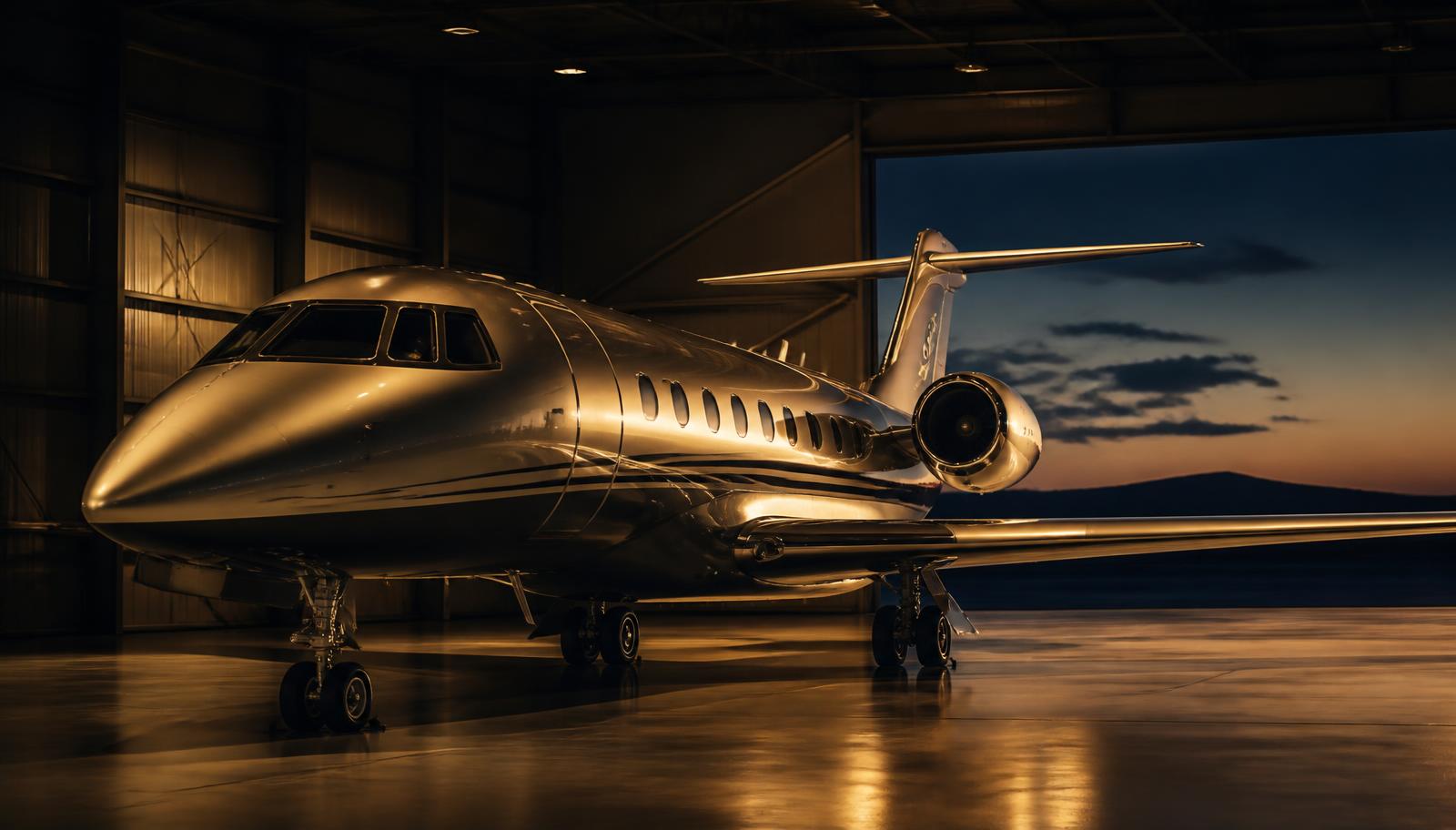
The honest answer to 'how much does a private jet cost' depends on how you fly. A four-hour Mediterranean hop on a light jet sits around $12,000 all-in. A transatlantic flight on a Global 7500 can clear $130,000. Outright ownership of a new midsize jet runs $1.4–2.2 million per year before you fly anywhere. This guide gives the real 2026 numbers — by aircraft category, by booking model, and including the fees that quietly add 15–25% to almost every quote.
Hourly charter rates by aircraft category (2026)
Hourly rates are the simplest way to compare aircraft, but they are only the starting line. They cover the aircraft and crew in flight — not positioning, fees, catering or taxes (we get to those below). These ranges reflect actual operator floors and ceilings across Europe and North America in early 2026.
| Category | Typical aircraft | Seats | Hourly rate (USD) |
|---|---|---|---|
| Turboprop | King Air 350, Pilatus PC-12 | 6–8 | $2,200 – $3,500 |
| Very light jet | Phenom 100, Citation M2 | 4–5 | $3,200 – $4,500 |
| Light jet | Phenom 300, Citation CJ3+, Learjet 75 | 6–8 | $4,500 – $6,500 |
| Midsize jet | Citation XLS+, Hawker 900XP, Learjet 60XR | 7–9 | $5,500 – $7,500 |
| Super-midsize | Challenger 350/3500, Praetor 600, G280 | 8–10 | $7,000 – $9,500 |
| Heavy jet | Falcon 2000LXS, Challenger 605, G450 | 10–14 | $9,500 – $13,500 |
| Ultra-long-range | G650ER, Global 7500, Falcon 8X | 13–19 | $13,500 – $20,500 |
| VVIP airliner | ACJ TwoTwenty, BBJ MAX, ACJ319neo | 16–50 | $28,000 – $42,000 |
What a real charter quote actually looks like
Below is a realistic 2026 quote for a London → Ibiza one-way on a Citation XLS+ (midsize, 8 passengers, 2.5 flight hours). This is the kind of breakdown a transparent broker will hand you; if your quote is a single number, ask for the line-items.
| Line item | Amount (USD) |
|---|---|
| Aircraft & crew (2.5 hrs @ $6,500) | $16,250 |
| Positioning (1.5 hrs from operator base) | $9,750 |
| Landing & handling fees (LTN + IBZ) | $2,400 |
| European emissions (EU ETS) | $900 |
| Catering (premium) | $650 |
| Crew overnight & per diem | $1,200 |
| UK Air Passenger Duty (8 PAX, long-haul band) | $1,750 |
| Broker fee (typically 5–10%) | $2,100 |
| All-in one-way total | $34,000 – $36,000 |
A return trip on the same aircraft, with the jet staying in Ibiza for three days, lands closer to $58,000–$64,000 — because positioning is paid once and crew waiting time is cheaper than positioning the aircraft home and back.
Jet cards: what you actually pay per hour
A jet card is a prepaid block of flight hours at a fixed hourly rate, usually purchased in 25-hour increments. In 2026, a 25-hour light-jet card from a major US program (NetJets Marquis, Sentient Jet, Wheels Up) typically costs $175,000–$225,000 ($7,000–$9,000 per hour all-in). A midsize card runs $225,000–$275,000. A super-midsize card $300,000–$360,000. And a heavy-jet card $400,000–$500,000. The headline 'hourly rate' is honest — but verify whether positioning, fuel surcharges and peak-day premiums (typically 40–60 days a year) are included or layered on top. The best cards include all of those; the cheapest cards exclude most of them.
Fractional ownership: the real annual number
A 1/16th share (50 flight hours per year) of a modern light jet costs roughly $625,000 to acquire, plus a monthly management fee of $11,000–$14,000 and an occupied hourly rate of $3,500–$4,500. The simplest way to think about it: a 1/16th share costs $200,000–$240,000 per year all-in for 50 hours of flying — about $4,500 per hour effective.
| Share size | Hours / year | Light jet (annual all-in) | Super-midsize (annual all-in) |
|---|---|---|---|
| 1/16th | 50 | $200,000 – $240,000 | $340,000 – $400,000 |
| 1/8th | 100 | $360,000 – $440,000 | $620,000 – $750,000 |
| 1/4th | 200 | $680,000 – $820,000 | $1.15M – $1.40M |
| 1/2 share | 400 | $1.30M – $1.55M | $2.20M – $2.65M |
The math works out in favour of fractional once you cross roughly 50 hours of flying a year on the same aircraft category; below that, on-demand charter or a jet card is almost always cheaper.
Outright ownership: the all-in cost most brokers won't show you
A brand-new Embraer Phenom 300E costs around $11.5 million off the line. A pre-owned 2019 Challenger 350 sits at roughly $19 million. A new Global 7500 lists at $78 million. But acquisition is roughly half the lifetime cost. Annual fixed costs (crew salaries for two pilots and a flight attendant, hangarage, insurance, training, subscriptions) run $850K–$1.4M depending on aircraft size. Variable costs (fuel, maintenance reserves, navigation fees) add another $2,200–$5,500 per flight hour. A Phenom 300 owner flying 200 hours a year ends up at roughly $1.6–2.0 million all-in annually. A Global 7500 owner flying 400 hours a year crosses $7.5 million annually. The break-even versus chartering is typically 300+ hours per year on the same category of aircraft.
Which model is right for you (and when to switch)
The honest framework, after several thousand client engagements: under 25 hours per year, on-demand charter is the only model that makes financial sense. From 25 to 100 hours, a jet card or fractional 1/16th share is the sweet spot — predictable pricing, guaranteed availability, no operational headache. From 100 to 300 hours, fractional ownership or a heavier jet card delivers the best cost-per-hour. Above 300 hours per year on the same aircraft category, whole-aircraft ownership becomes financially defensible — though the operational complexity is rarely worth it under 400 hours unless the mission profile is unusually specific. Our desk runs this analysis at no cost: share your last 18 months of trips and we return a model recommendation with hard numbers inside one business day.