Cessna Citation X+ private jet charter

Cessna Citation X+ Charter

The fastest civilian aircraft in the world.

PAX8RANGE3,460 nmSPEEDMach 0.935BAGGAGE82 cu ftCABIN5'7" × 5'5"TYPICALTeterboro → San Francisco · from $35,400

OVERVIEW

Cessna Citation X+

The Cessna Citation X+ holds the record as the fastest civilian aircraft in the world — Mach 0.935 cruise, just shy of the speed of sound. Eight passengers, transcontinental US capability and unmatched speed advantage.

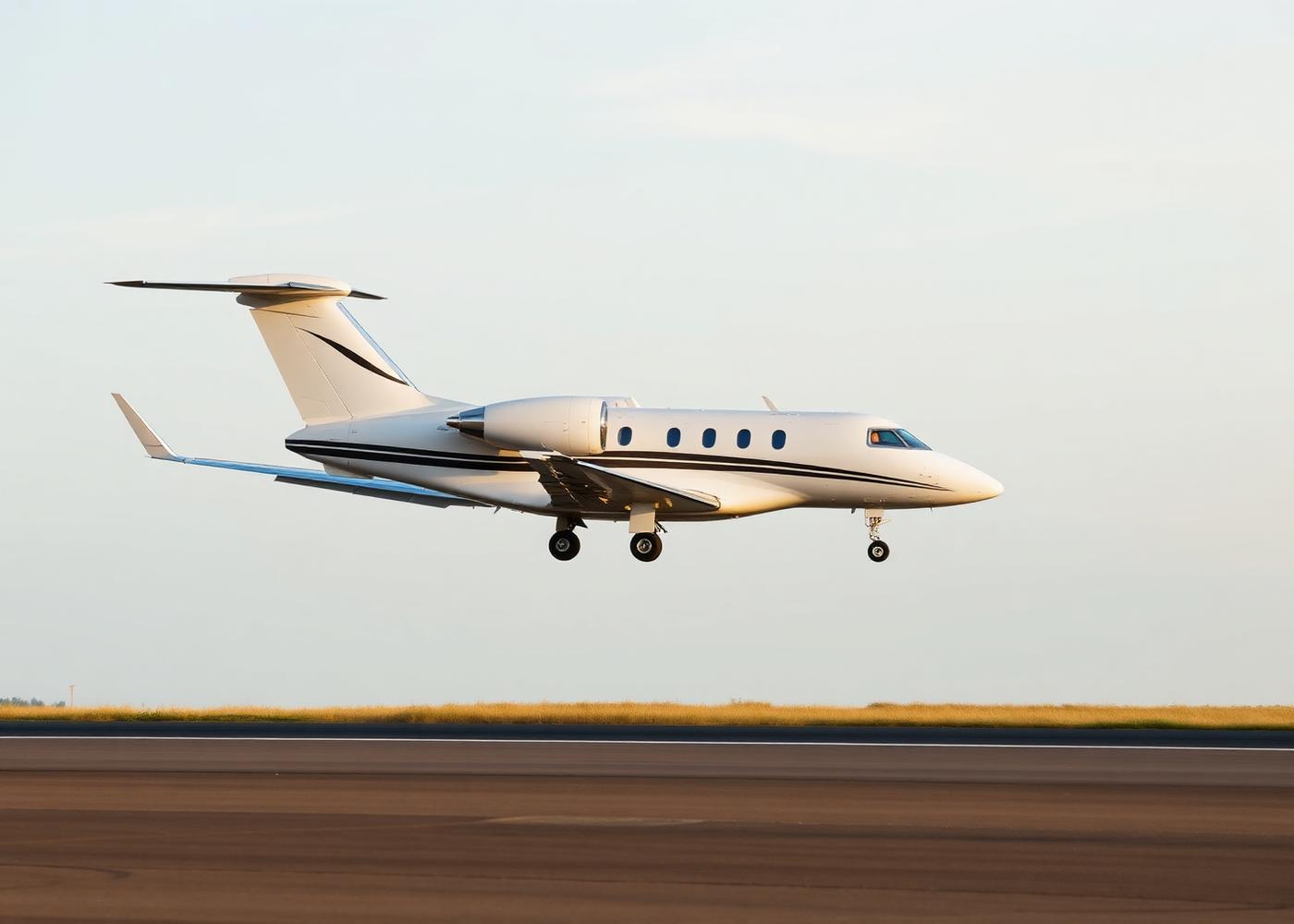
Cessna Citation X+ cabin and exterior

IN DEPTH

The complete guide to chartering the Cessna Citation X+

The story behind the Citation X+

The Cessna Citation X+ is a 2014 stretch and re-engine of the original Citation X — the aircraft that at its 1996 launch held (and still holds, formally) the title of fastest civilian aircraft in production, with a Mach 0.935 maximum operating limit. The X+ (marketed as Model 750) added a 15-inch fuselage stretch, more powerful Rolls-Royce AE 3007C2 engines, redesigned winglets, Garmin G5000 avionics and a 400 nm range increase, without giving up any of the original's headline speed. Production ran until 2018, giving a fleet of just under 340 aircraft worldwide.

The X+ was Cessna's answer to the Gulfstream G280 and Bombardier Challenger 350 in the super-midsize category, but it competed on speed rather than cabin volume. A New York to LA sector in an X+ is 20–40 minutes faster than in almost any rival, and on longer missions the aggregate time saving compounds — London to Dubai in five hours instead of six, or Frankfurt to New York in about eight hours in favourable winds.

For charter clients the X+ is a specialist: the aircraft you charter when arriving materially sooner is worth paying for. On most missions the difference is measured in minutes, but on transcontinental sectors where flight time is over four hours, the X+ can genuinely shift a same-day return itinerary from impossible to routine.

On board: cabin trade-offs for speed

The X+ cabin is 25 feet 2 inches long — the stretch made it competitive on length — but only 5 feet 6 inches wide and 5 feet 8 inches tall. That is meaningfully narrower and lower than any modern super-midsize peer: the Longitude and Challenger 3500 are 7 feet 2 inches wide; the Praetor 600 is 6 feet 10 inches. You feel the difference immediately on stepping aboard.

Layout is a nine-passenger double-club with an aft two-place divan. Seats are full leather, fully reclining, and appointed to a high standard on late-production aircraft; earlier X's often show their age in trim and cabin management systems. Cessna equipped the X+ with Clairity XT cabin displays and Ka-band Wi-Fi on newer builds. Baggage volume is 82 cubic feet — competitive with the Challenger 350 but well short of the Longitude.

The lavatory is enclosed but compact. The aft area accepts a small crew rest position, but there is no true galley of the sort the Longitude and Challenger 3500 offer. Where the X+ compensates is in flight time: a five-hour transatlantic in the X+ is a shorter penalty in a smaller cabin than a six-hour equivalent in a wider one.

Performance: the fastest civilian aircraft in production

The X+'s twin Rolls-Royce AE 3007C2 engines produce 7,034 pounds of thrust each. Maximum operating Mach is 0.935 — approaching the transonic buffet region of larger airliners, and the highest Mmo of any civilian aircraft currently in production. Long-range cruise settles at Mach 0.82; typical charter cruise runs Mach 0.87–0.88. Certified ceiling is FL510, higher than any peer.

NBAA IFR range with four passengers is 3,460 nautical miles — enough for New York to London (with reserves and typical winds), Los Angeles to Honolulu, Miami to São Paulo or London to Dubai. Real-world range with eight passengers is closer to 3,100 nm. Balanced field length is 5,140 ft, longer than Longitude and Challenger 350 — the X+ needs a proper runway, and does not do genuinely short strips.

Fuel burn in fast cruise (Mach 0.88) runs 300 US gallons per hour first hour, settling around 270 gph — meaningfully higher than the Longitude and about 15 per cent higher than a Challenger 350 over the same sector. The X+'s pitch is not efficiency; it is arrival time.

Signature missions

The X+ is at its sharpest on transcontinental US, London to New York (both directions with favourable winds), London to Dubai, Dubai to Kuala Lumpur, and Los Angeles to Honolulu. On each of these routes it saves 30–60 minutes over the next-fastest rival, which for time-sensitive clients (deal teams, entertainers, professional sports) is the reason to charter it.

It is also the aircraft of choice for owners who insisted on same-day round-trip transcontinental capability — a New York client attending a same-day meeting in Los Angeles or a London client with a same-day return to Moscow, Dubai or Athens. On sub-two-hour missions the X+'s speed advantage is invisible and its narrower cabin actively disadvantageous; use a Latitude, Praetor 500 or Challenger 350 instead.

Economics and how it compares

Charter hourly rates for the X+ run $8,500–$10,500 in North America; €9,000–€11,000 in Europe. Empty-leg availability is thin because the fleet is small and concentrated with a few operators. Indicative pricing: New York to Los Angeles from $42,000; London to New York from £75,000; London to Dubai from £55,000.

Against the Longitude, the X+ arrives 30–60 minutes earlier at 10 per cent higher hourly cost with a smaller cabin. Against the Praetor 600, the X+ is faster and shorter-legged (3,460 vs 4,018 nm) with a narrower cabin. Against the Challenger 350/3500, the X+ is faster and less comfortable. On every direct comparison the X+ is the choice for clients where minutes matter.

Operating cost per hour is competitive on paper but works out higher per mile than the more efficient Longitude because of higher fuel burn. For most operators the X+ commercial case depends on customers specifically requesting the aircraft for its speed.

Verdict: who should charter the Citation X+?

Charter the X+ when arriving 30–60 minutes earlier on a transcontinental mission is worth a modest price premium and a slightly narrower cabin, and when the mission is genuinely long enough (three hours plus) that the speed advantage compounds. It is the right aircraft for professional sports, entertainment and finance clients whose itineraries are timed to the minute.

Step across to a Longitude or Challenger 3500 when cabin comfort matters more than absolute speed; step up to a G280 or Praetor 600 when longer range with headwinds is the priority. For pure arrival-time optimisation, no other business jet in production comes close.

SPECIFICATIONS

Cessna Citation X+ specifications

Passengers8
Range3,460 nm
SpeedMach 0.935
Cabin height5'7"
Cabin width5'5"
Baggage82 cu ft
Runway5,140 ft

CABIN EXPERIENCE

On board the Cessna Citation X+

  • Eight executive seats in double-club configuration
  • Aft galley with espresso machine
  • Enclosed lavatory with vanity

BEST ROUTES

Where the X+ flies best

New York → Los Angeles

from $34,200

London → Moscow

from £22,500

BROWSE ALL ROUTES →

CHARTER PRICING

Cessna Citation X+ charter pricing

ROUTEESTIMATED PRICE
Teterboro → San Franciscofrom $35,400
Geneva → Dubaifrom CHF 38,000

Indicative all-inclusive one-way pricing — aircraft, crew, fuel, handling, catering and taxes. Confirmed quote in 10 minutes.

WHO SHOULD CHARTER THIS

Why choose the Cessna Citation X+?

The right client profile for the X+: 8 passengers, missions inside its 3,460 nm range, and routes where the super-midsize jet cabin size is the sweet spot between cost and comfort.

  • Fastest civilian aircraft in the world
  • True transcontinental US range
  • Significant time savings on long missions

RANGE & LIMITATIONS

What the X+ can — and can't — do

Non-stop range

3,460 nm with typical payload. Missions beyond this figure require a technical fuel stop — expect 30–45 minutes on the ground and a modest re-quote. On strong headwinds or full-cabin days the practical range trims by 5–10%.

Runway requirement

Balanced-field length around 5,140 ft. Rules out very short-strip airfields (Courchevel, Lugano, London City steep-approach) unless the airframe is specifically certified — our ops team validates every airport pairing before we confirm the quote.

Payload & baggage

82 cu ft of hold space with 8 passengers. Ski, golf and dive equipment fit for most parties; larger groups with full luggage should size up one category to preserve the range figure above.

FAQ

Frequently asked

Is Wi-Fi available onboard?

Yes — most aircraft in this class offer high-speed Ka-band or Starlink connectivity suitable for video calls and streaming throughout cruise.

Can pets fly on board?

Many operators permit pets in the cabin, subject to aircraft-owner approval, destination rules, documentation and any operator-specific charges. Tell us the species and weight when you request a quote.

How quickly can the aircraft be ready?

Once a quote is confirmed, this aircraft can typically be positioned within 2–4 hours anywhere in its home region, and within 24 hours globally.

FURTHER READING

Planning the X+ for business or leisure

SIMILAR AIRCRAFT

Also in Super-Midsize Jet

HEAD-TO-HEAD

Compare the X+

ALL COMPARISONS →

CESSNA CITATION X+ CLUSTER

Everything connected to the Cessna Citation X+

Ready to charter the Cessna Citation X+?

Quotes in 10 minutes. Aircraft positioned within hours. 24/7, worldwide.

REQUEST A QUOTE

Limitless Sky ownership desk

What it costs to buy, operate and charter out a Cessna Citation X+

A five-year planning model on the same assumptions as our ownership vs charter vs fractional analysis: 100 owner-occupied hours a year, 15% owner positioning, 150 third-party charter hours sold on a managed certificate at an 85% owner revenue share, and 25% market depreciation over the hold.

Acquisition

Indicative market value€8.00m – €11.89m
Model purchase price used€9,750,000
Inspection, legal and delivery (2%)€195,000
Residual value after 5 years€7,312,500

Annual cost of operation

Fixed cost (crew, hangar, insurance, management)€440,000
Direct operating cost per aircraft hour€1,800
Owner missions (114.99999999999999 aircraft hours)€207,000
Annual cash operating cost before charter€647,000

What renting it out brings in

Charter sold (150 occupied hours at €4,600)€690,000
Owner share at 85%€586,500
Direct cost of those flights (180 aircraft hours)(€324,000)
Net annual contribution to fixed costs€262,500
Share of fixed costs covered60%
Charter hours needed to cover all fixed costs251 hours

Five-year verdict

Net five-year cash cost, with charter income€4,774,375
Cost per owner-occupied hour€9,549
Cost per hour if never chartered out€12,174
Opportunity cost of tied-up capital (4%/yr)€1,950,000
Methodology and sources— how these numbers are built

Purchase price band

The €8.00m€11.89m band is an indicative pre-owned range for a well-maintained, mid-life Cessna Citation X+ on a current maintenance and engine programme, in a typical European charter specification. It is built from published asking prices and retail transaction ranges (Duncan Aviation market letters, AvBuyer and Controller listings, VREF and Aircraft Bluebook retail guidance), then narrowed against what our desk sees pay-and-close in Europe. The model uses a single point inside that band, €9,750,000, so the five-year output is reproducible. Serial number, total time, cycles, engine-programme enrolment, avionics mandates, interior age and import/VAT status routinely move a real transaction outside the band in either direction.

Fixed cost assumptions

€440,000 a year covers two (or, for larger cabins, three) crew with training and recurrent sim, hangarage at a European base, hull and liability insurance, the management fee on a third-party AOC, navigation and weather subscriptions, and scheduled non-flying charges. It excludes financing, tax, extraordinary maintenance events and cabin refurbishment. Sources are operator and management-company budget templates for the type, cross-checked against NBAA and Conklin & de Decker fixed-cost structures.

Direct operating cost per hour

€1,800 per aircraft hour is fuel at prevailing European Jet A-1 pricing, engine and airframe programme accruals, APU and landing-gear reserves, landing, handling and navigation fees, catering and crew expenses. It is applied to actual aircraft hours, not occupied hours: owner trips carry a 15% positioning uplift and third-party charter carries 20%, which is what repositioning empty legs cost in practice.

Charter revenue estimate

150 third-party occupied hours a year at a wholesale base rate of €4,600 per hour is what a managed Cessna Citation X+ realistically sells in Europe once owner availability, maintenance downtime and seasonality are taken out — not the retail rate a client pays. The rate is the operator-level rate band we transact at on Avinode and directly with operators; the owner keeps 85% under a standard management agreement, with the balance retained by the operator. Ferry, fuel surcharges, de-icing and overnights on charter missions are captured in the direct-cost line rather than netted off the rate.

Depreciation and the five-year frame

25% market depreciation is applied over a 5-year hold, with 2% acquisition costs (inspection, legal, delivery) at entry and 3% selling costs at exit. Owner utilisation is held at 100 occupied hours a year across every aircraft so types can be compared like for like. Capital opportunity cost is shown separately at 4% simple per year and is not added into the cash cost. The same frame drives our ownership vs charter vs fractional analysis and the most profitable jets to own ranking, so the three never disagree.

Review cadence

Values are reviewed each quarter against the same sources and re-published in one dataset, so every aircraft page moves together. Read our editorial standards for how we source and correct figures.
Indicative planning estimates prepared by the Limitless Sky desk — not an appraisal, charter quotation, offer or tax advice. Figures are pre-tax and pre-financing and exclude recoverable VAT, extraordinary maintenance and substitute lift during downtime. Actual values depend on serial number, hours, maintenance and engine-programme status, specification, base and charter demand. Ask the desk for a tail-specific forecast, or charter the Cessna Citation X+ instead and skip the balance sheet entirely.

Interactive · ownership desk

Run your own numbers on the Cessna Citation X+

Move your annual flying, the charter hours you are willing to release, the management fee your operator charges and how long you intend to hold the aircraft. Buy versus charter-out break-even updates instantly.

Your assumptions

Buy versus charter out

Net cost of owning over 5 years€4,774,375
Cost per owner-occupied hour€9,549
Same hours bought on the charter market€2,714,000
Indicative retail charter rate per hour€5,428
Owning costs more€2,060,375

Break-even

Owner hours a year where owning beats chartering223 h
Charter hours a year to cover the whole fixed budget251 h
Charter income after the cost of flying it€262,500 / yr
Share of fixed costs covered60%

At 100 hours a year, chartering is cheaper than owning the Cessna Citation X+ by €2,060,375 over the hold. Owning turns cheaper from around 223 hours a year.

Pre-tax, pre-financing planning estimates on the same frame as the tables above: 15% owner positioning, 20% positioning on charter, 2% acquisition cost, 3% selling cost, and published five-year depreciation scaled linearly to your resale horizon. Retail comparison rate is the wholesale base rate plus 18%. Ask the desk for a tail-specific forecast.

KNOWLEDGE GRAPH

Where the Cessna Citation X+ fits in our aviation graph

Routes, destinations and airports this aircraft typically serves — plus peers in the same class and family.

Book HereDo you have a question?