Barcelona-El Prat
BCNSky Valet & Universal Aviation FBOs.
- TRANSFER
- 25 min · 15 km
- TO
- Passeig de Gràcia
- MODES
- Chauffeured sedan

Business-class access to Europe's capitals.
Barcelona-El Prat's executive terminal serves both leisure and business demand, with strong outbound flow to Ibiza, Mallorca and the south of France through summer.
See full private jet charter pricing, read the London → Barcelona route guide.
BEST TIME TO CHARTER
Steady year-round demand driven by business travel; spikes around fashion weeks, motor shows and major sporting events.
AIRPORTS, FBOs & TRANSFERS
Each option below shows the executive airport, drive time to Barcelona, and typical ground options. Tap an airport for the full guide — runways, FBOs, customs, slot rules and arrival workflow.
Sky Valet & Universal Aviation FBOs.
GA airport, light jets only.
New to private terminals? What is an FBO? · Private jet charter cost guide — FBO choice and charter pricing for Barcelona
POPULAR ROUTES
| ROUTE | FLIGHT TIME | TYPICAL AIRCRAFT | FROM |
|---|---|---|---|
| Barcelona → Ibiza | 0h 35m | Light Jet | from €2,800 |
| Barcelona → London | 2h 15m | Midsize Jet | from €7,200 |
One-way prices for the aircraft class listed are estimated, confirmed quote within 1–2 hours. You get an estimate per aircraft class straight away, then two or three confirmed options with aircraft photos.
COSTS TO EXPECT
ENTRY POINT
from €2,800
Lowest estimated one-way price across the routes above — estimated, confirmed quote within 1–2 hours.
TYPICAL AIRCRAFT
Light Jet · Midsize Jet
Cabin selected against range, runway and party size. We confirm the exact tail before contracting.
WHAT'S INCLUDED
All-inclusive quote
Crew, fuel, handling, landing and de-icing fees, standard catering and FBO access. Peak-period positioning and overnight crew may apply on one-ways — flagged upfront.
Charter pricing is route- and date-sensitive. For a binding number, share dates, pax and luggage in the quote form.
CHARTER BUYER'S GUIDE
Barcelona serves as the primary aviation gateway to Catalonia, balancing a high-output industrial economy with a globally recognised leisure profile. The city is a critical node for the pharmaceutical, automotive, and technology sectors, drawing consistent year-round corporate traffic. However, its positioning as a Mediterranean luxury hub means that from May through September, the profile shifts significantly toward private leisure travel. During these months, the city acts as a major pivot point for those transiting between mainland Europe and the Balearic Islands or the South of France. Owners and charterers frequently use Barcelona-El Prat (BCN) as a technical stop or a staging ground for multi-leg Mediterranean itineraries.
The demand for private jet charter to Barcelona is driven by its unique combination of deep-water ports, which accommodate some of the world's largest superyachts, and its status as a premier destination for international summits and sporting events, including the Spanish Grand Prix and major sailing regattas. Unlike the seasonal volatility of smaller Mediterranean airports, Barcelona maintains a high level of operational readiness and infrastructure throughout the year, making it a reliable destination even in the mid-winter months when other coastal hubs may scale back services. The proximity of the airport to the central business district and the luxury hotel corridor along the beachfront ensures that the transition from the aircraft cabin to the city centre is among the most efficient in Southern Europe.
Seasonality in Barcelona is less about weather constraints—since the Mediterranean climate offers relatively stable conditions year-round—and more about slot availability and local event pressure. The peak season for private aviation aligns with the broader European summer, from late May to the end of September. During this window, the demand for slots at the General Aviation Terminal (GAT) at El Prat spikes. It is not uncommon for parking spaces to be restricted to 'drop-and-go' status during peak weekends, necessitating that aircraft reposition to nearby smaller airfields once passengers have disembarked.
The busiest single week for the Barcelona charter market is typically during the Mobile World Congress (late February or early March). During this period, aircraft parking at BCN is almost impossible to secure without significant lead time, and pricing for charter reflects the extreme scarcity of nearby available tails. Similarly, the Spanish Grand Prix at the Circuit de Barcelona-Catalunya attracts a surge of light and midsize jets from across Europe.
For those seeking the most competitive rates and the highest flexibility in scheduling, the shoulder seasons of April-May and October-November offer the best balance. The weather remains mild, and the pressure on the FBOs is significantly reduced. In these months, empty-leg opportunities are more frequent as aircraft reposition to accommodate the shift in seasonal demand between Northern Europe and the Mediterranean hubs. Winter remains busy for business traffic but lacks the recreational congestion, ensuring that short-notice bookings—often available within 4 to 6 hours—are feasible for the Barcelona-London or Barcelona-Paris corridors.
Barcelona-El Prat (BCN) is the primary choice for over 95% of private aviation traffic into the region. It is located approximately 15 kilometres southwest of the city centre. The airport features two main runways: 07L/25R and 07R/25L, capable of handling every class of aircraft from the smallest Mustang to the largest Boeing Business Jets (BBJ) or Airbus Corporate Jets (ACJ).
The General Aviation Terminal (GAT) is situated away from the main commercial terminals, providing a secluded environment for arrivals and departures. There are two primary FBO operators on-site: Sky Valet and Universal Aviation. Both offer high-specification passenger lounges, crew facilities, and dedicated customs and immigration clearance. Because the GAT is separate from the commercial infrastructure, passengers can typically transit from the car to the aircraft in under 15 minutes. BCN is a 24-hour airport, which is a significant advantage over many European hubs that suffer from night-flight bans or strict curfews. However, while the airport is open around the clock, slots (PPR) are mandatory and can be difficult to secure during peak congestion windows. Parking is the primary constraint here; in mid-summer, aircraft are often limited to 2-hour stays on the ramp.
Sabadell (QSA) is the secondary option, located about 20 kilometres north of Barcelona. This is a dedicated general aviation airport, but it comes with significant operational limitations. The runway is relatively short (roughly 1,000 metres), which restricts usage to turboprops and very light jets (VLJs) like the Phenom 100 or the Citation Mustang. It also operates under strictly VFR (Visual Flight Rules) in certain conditions and has limited operating hours compared to El Prat. For most charter buyers, the logistical complexity and aircraft size restrictions make Sabadell a less attractive choice compared to the efficiency of El Prat.
As a diversion or overflow airport, Girona-Costa Brava (GRO) is situated 90 kilometres north of the city. It is used when parking at BCN is completely saturated or during extreme weather events. The drive from Girona to Barcelona takes approximately 75 minutes, making it a viable but less-than-ideal alternative for those focused on the city centre.
Selecting the right aircraft for a Barcelona mission depends largely on the passenger count and the origin point. For regional hops, light jets remain the workhorse of the fleet. The Embraer Phenom 300 and the Cessna Citation CJ3 are the most frequent sightings on the Barcelona ramp. They are ideal for missions to Ibiza, Palma, or Nice, offering a flight time of under 45 minutes for the Balearic routes. These aircraft are cost-effective but have luggage limitations, which can be an issue if passengers are carrying heavy suitcases or golf clubs.
For trans-European flights, such as Barcelona to London or Barcelona to Geneva, Midsize and Super-Midsize jets are the gold standard. The Cessna Citation XLS+ is highly regarded for its cabin height and reliability on these 2-hour sectors. For those requiring more range and a stand-up cabin, the Embraer Praetor 600 or the Bombardier Challenger 350 provide superior performance and comfort. These aircraft are particularly suited for flights from the UK or Scandinavia, offering enough range to reach Barcelona comfortably against headwinds while carrying 8 to 9 passengers.
Ultra-long-range (ULR) aircraft are necessary for clients arriving from the Americas, the Middle East, or Asia. Models such as the Gulfstream G650ER, the Bombardier Global 7500, and the Dassault Falcon 8X frequently utilise Barcelona-El Prat. These aircraft can perform non-stop missions from New York or Dubai with ease. The G650ER, in particular, is favoured for its low cabin altitude and high cruise speeds, which significantly reduce jet lag upon arrival. When chartering these larger frames into Barcelona, the 24-hour nature of BCN is a critical factor, allowing these long-haul missions to arrive or depart in the middle of the night to suit the passenger’s schedule.
Charter pricing for Barcelona is highly sensitive to the 'empty leg' market due to the city’s role as a major European transit point. A one-way flight from Barcelona to Ibiza in a Light Jet can start from €5,800. This is a common route for weekend departures, and prices can fluctuate based on whether the aircraft needs to position in from another Spanish base like Madrid or Palma.
For longer routes, such as Barcelona to London, a Midsize Jet typically starts from €12,200. This pricing usually assumes a 2.5-hour block time and includes European landing fees and standard handling. However, several factors can drive these costs upward. During peak periods like the Mobile World Congress, daily rates for aircraft increase, and positioning costs—where an aircraft must fly empty to Barcelona to collect the passengers—can add 20% to 40% to the total bill.
Conversely, savvy buyers can find empty-leg savings of 30% to 60% if they are flexible with their departure times. Because Barcelona is a frequent destination for corporate jets returning to their home bases in London, Paris, or Zurich, there is often a high volume of 'one-way' availability. It is important to note that these prices are indicative; final quotes depend on the year of manufacture of the aircraft, the specific FBO used, and whether de-icing or high-intent catering is required.
The arrival experience at Barcelona-El Prat is designed for speed. Once the aircraft reaches the blocks, passengers are usually met on the tarmac by a designated FBO vehicle and driven the short distance to the GAT. Customs and immigration are handled within minutes in a private environment. For those with pets, Barcelona is a PETS-compliant entry point, though all documentation must be pre-cleared at least 24 hours in advance to ensure the vet on duty is notified.
Ground transportation from the GAT into the city is straightforward. A chauffeur-driven vehicle to the prime hotels like the Hotel Arts or the Mandarin Oriental typically takes between 20 and 30 minutes, depending on traffic along the C-31 motorway. For those heading directly to the superyacht marinas (OneOcean Port Vell or Marina Vela), the transfer is even shorter, often taking less than 20 minutes.
Helicopter transfers are less common for city-centre arrivals due to the proximity of the airport, but they are frequently utilised for clients heading to the Costa Brava or the Pyrenees for skiing. A helicopter transfer from BCN to a private estate in Begur or Palafrugell takes approximately 35 minutes, bypassing the often-congested coastal roads. For luggage flow, the FBO staff handle all transfers from the aircraft to the waiting vehicle, and for groups with significant baggage, we recommend a dedicated luggage van to follow the primary passenger vehicle.
Barcelona’s layout is a blend of the historic Gothic Quarter and the structured Eixample district, where much of the city’s luxury commerce is concentrated. Most private jet travellers focus their stay around the Passeig de Gràcia, the city’s equivalent to the Champs-Élysées, which hosts the flagship boutiques of major fashion houses and the most architecturally significant buildings by Antoni Gaudí.
The hotel landscape is dominated by three main archetypes. For those who prefer a seaside location with immediate access to the marinas, the beachfront offers high-rise luxury with expansive views of the Mediterranean. For those focused on business or high-end shopping, the Eixample offers more traditional, refined hospitality within walking distance of the financial district.
Dining in Barcelona is a major draw, with the city boasting a high density of Michelin stars. The culinary scene is divided between innovative Catalan 'techno-cuisine' and high-end seafood establishments located near the Barceloneta district. Many clients choose to dine at the marinas, where the restaurants cater specifically to the yachting community, offering discretion and high-speed service. For evening entertainment, the beach clubs along the Port Olímpic provide a more high-energy environment, while the hidden bars of the Gothic Quarter offer a more secluded experience.
For maritime enthusiasts, OneOcean Port Vell is one of the only superyacht marinas in the world located in the heart of a major city. This allows for a seamless transition from a private flight to a waiting vessel, often within 45 minutes of touchdown. The proximity of the airport to the port makes Barcelona a primary turnaround port for Mediterranean yacht charters.
One of the most frequent errors is underestimating the parking constraints at BCN during the summer months. Clients often assume that because they have booked a flight, the aircraft will remain on the ground waiting for their return. In reality, the airport often enforces 'drop-and-go' rules, meaning the aircraft must fly to another airport (like Reus or Girona) to park, and then fly back to collect the passengers. This 'positioning' flight effectively doubles the landing fees and fuel costs, which are passed on to the charterer. Booking early is the only way to secure a parking spot at the GAT.
Another common mistake is choosing Sabadell (QSA) based on its proximity to certain business parks without checking aircraft compatibility. Many modern midsize jets cannot safely operate out of Sabadell due to the runway length, leading to last-minute rerouting to El Prat which can disrupt ground transport plans.
Thirdly, many buyers overlook the traffic congestion between the airport and the city during peak commute times (08:00–10:00 and 17:00–19:00). While the distance is short, the C-31 can become heavily congested, turning a 20-minute transfer into a 60-minute journey. We recommend scheduling arrivals or departures outside of these windows whenever possible.
Finally, for those flying with pets, failing to provide the specific Spanish Annex IV health certificate can result in the pet being refused entry at the FBO. Unlike some other European ports, the Spanish authorities at BCN are particularly stringent about the exact format of veterinary paperwork.
For standard missions, we recommend booking at least 7 to 10 days in advance to ensure the widest selection of aircraft and to secure favourable slots at El Prat. For high-demand events like the Mobile World Congress or the Grand Prix, the booking window should ideally open 3 to 6 months in advance.
However, the Barcelona market is highly reactive. Urgent 'go-now' charters can be arranged in as little as 2 to 4 hours, provided an aircraft is already positioned on the ramp at BCN. This is often the case for medical repositions or urgent business meetings. When requesting a quote, clients should provide the exact passenger count and an estimate of the luggage volume; this allows us to filter out smaller light jets that may have the range but lack the cubic capacity for a Mediterranean holiday’s worth of suitcases.
Empty legs are a viable strategy for those with flexible schedules. Typically, these appear on our system 24 to 72 hours before departure. While they offer significant cost benefits, they are essentially 'one-way' repositioning flights and carry a higher risk of cancellation if the primary charterer changes their plans. For a reliable, guaranteed service, a standard on-demand charter remains the recommended choice for the Barcelona corridor.
ON THE GROUND
A coastal landmark in the Port Olímpic, offering iconic blue glass architecture and 28 penthouses with panoramic Mediterranean views. It is the preferred choice for those seeking a high-service resort feel within minutes of the superyacht marinas and the city's premier beach clubs.
Located on the prestigious Passeig de Gràcia, this hotel occupies a converted mid-20th-century bank. It provides a highly discreet, ultra-luxury experience with immediate proximity to high-end boutiques and Gaudí's masterpieces. The rooftop dipping pool and world-class spa are ideal for post-flight recovery.
Positioned at the entrance to the port, the 'Sail' hotel offers a vibrant, contemporary atmosphere with unmatched views of the shoreline. It is particularly popular with a younger, international jet-set crowd who value its beach access and high-energy rooftop bar, Eclipse, for evening socialising.
AIRCRAFT
4–6 passengers, up to 3h
Citation CJ3, Phenom 300 — ideal for short European hops with quick turnarounds.
7–9 passengers, up to 5h
Citation XLS+, Hawker 900XP — stand-up cabin, full galley, transcontinental Europe.
10–14 passengers, 6h+
Challenger 605, Gulfstream G450, Falcon 7X — intercontinental with bedroom-class comfort.
FLEET FOR BARCELONA

LIGHT JET
Cessna
The benchmark light jet for short European hops.
VIEW AIRCRAFT →LIGHT JET
Cessna
Light-jet economics, midsize cabin comfort.
VIEW AIRCRAFT →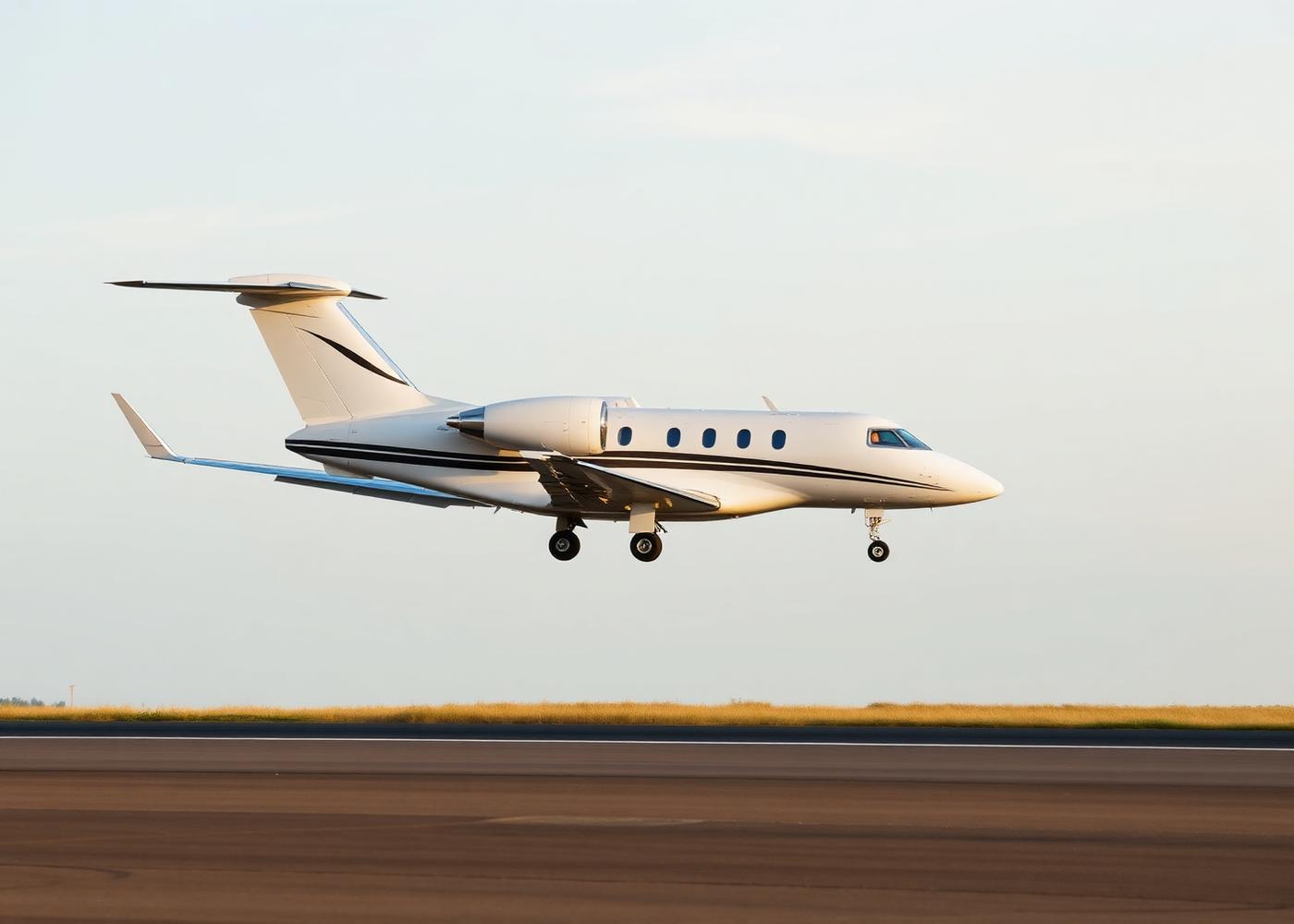
MIDSIZE JET
Hawker Beechcraft
The proven workhorse of midsize charter.
VIEW AIRCRAFT →MIDSIZE JET
Cessna
Six-foot flat-floor cabin at midsize prices.
VIEW AIRCRAFT →ROUTES SERVING BARCELONA
2h 10m · 1,170 km
London to Barcelona pairs corporate finance traffic with leisure flow into the Costa Brava and onward to Ibiza or Mallorca. MWC (Mobile World Congress) week sees the highest-pressure slots of the year.
VIEW ROUTE →1h 19m · 830 km
Paris–Barcelona is one of Europe's most-requested private aviation corridors. Charter bypasses the punishing scheduled-airline queues at Barcelona and clears customs in minutes at the Paris Le Bourget business aviation centre.
VIEW ROUTE →1h 42m · 1,130 km
Barcelona–London is one of Europe's most-requested private aviation corridors. Charter bypasses the punishing scheduled-airline queues at London and clears customs in minutes at the Sabadell business aviation centre.
VIEW ROUTE →1h 19m · 830 km
Barcelona–Paris is one of Europe's most-requested private aviation corridors. Charter bypasses the punishing scheduled-airline queues at Paris and clears customs in minutes at the Sabadell business aviation centre.
VIEW ROUTE →2h 51m · 2,030 km
Barcelona–Mykonos is one of Europe's most-requested private aviation corridors. Charter bypasses the punishing scheduled-airline queues at Mykonos and clears customs in minutes at the Sabadell business aviation centre.
VIEW ROUTE →CHARTER GUIDES
PRICING & COST
12 min read
OPERATIONS & TRAVEL
12 min read
AIRCRAFT & FLEET
9 min read
OPERATIONS & TRAVEL
6 min read
PRICING & COST
6 min read
FAQ
A chauffeured transfer from Barcelona-El Prat to Passeig de Gràcia is about 25 minutes (15 km). Typical modes are chauffeured sedan. Limitless Sky pre-positions ground transport so the car is waiting planeside.
Our concierge pre-arranges a chauffeured transfer to your address in Barcelona. Cars wait planeside at the FBO so guests step from cabin to car in under five minutes. Helicopter or yacht handoffs can be coordinated on request.
Barcelona is served by BCN, QSA. Choice depends on aircraft class, where you're staying, and slot availability. We pick the field that puts you closest to your hotel or yacht with the least ground time — see each airport guide for runway, customs and FBO detail.
Usually yes — many operators permit pets in the cabin, subject to aircraft-owner approval, destination rules, documentation and any operator-specific charges. Let us know the size and species when you request a quote and we will confirm per aircraft.
For most major airports we can have an aircraft positioned within 4 hours. Last-minute bookings are our specialty — we operate 24/7.
One-way prices estimated, confirmed quote within 1–2 hours: Barcelona → Ibiza from €2,800 (light jet); Barcelona → London from €7,200 (midsize jet). Send your dates and passengers and you get an estimated price per aircraft class straight away, then two or three confirmed options with aircraft photos within 1–2 hours.
RELATED DESTINATIONS
EXPLORE THE CLUSTER
HUB GUIDES
ROUTES SERVING BARCELONA
BEST AIRCRAFT FOR BARCELONA
MORE IN EUROPE — CITIES
EMPTY LEGS · TO BARCELONA
Repositioning flights to Barcelona come up occasionally and rarely stay available for long. Set an alert and we will tell you if one matches.
EMPTY-LEG ALERTS
We scan operator inventory every 12 hours. The moment a leg matches your route, date window and budget, we email you with a direct booking link.
MALLORCA · GERMANY, NRW, FRANKFURT
SKI SEASON · ALPS
An estimated price per aircraft class straight away, then two or three confirmed options with aircraft photos within 1–2 hours. 24/7, worldwide.
REQUEST A QUOTEAIRPORT COMPARISON
2 airports serve Barcelona. BCN is primary; SBA act as alternates when slots or runway constraints dictate.
BCN · PREMIER
BCN
BCN — primary jet gateway; 11,000 ft runway; in-town.
SBA · GOOD
SBA
SBA — good private-jet access; 6,037 ft runway; 9715 km transfer.
RECOMMENDED AIRCRAFT
Light Jet
Super Midsize Jet
SEASONALITY
GROUND TRANSPORT
HELICOPTER
CUSTOMS
VISA
WEATHER
RECOMMENDED STAY
MEDICAL / MEDEVAC
DESTINATION PROFILE
luxury
55
business
45
family
30
ski
0
beach
15
golf
0
medical
40
heli
40
marina
15
NEARBY DESTINATIONS
AI CONCIERGE
Structured knowledge object with 2 airports, 8 corridor routes, 0 named event windows, 5 nearby destinations and a full scoring profile — designed to answer concierge-level questions in real time.
FAQ
BCN (BCN) is the primary gateway. SBA
Light Jet is the best fit for most missions; short-runway constraints may push smaller groups to a Light Jet.
Pricing scales with aircraft class and the departure city (for example FAB). Send your dates and passengers to see an estimated price per aircraft class straight away; two or three confirmed options with aircraft photos follow within 1–2 hours.
See the seasonality panel — demand is driven by corporate and event calendars.
Not standard for this destination; chauffeur car service is the primary transfer option.
CONTINUE YOUR JOURNEY AT SEA
Our sister platform, Blue Ocean Club, curates crewed yachts across Balearics. When the live yacht feed is connected, availability and pricing will appear here.
NEAREST YACHT MARINAS
Marina Ibiza
Balearics
Puerto Portals
Balearics
Data source status: connecting to Blue Ocean Club…
AVIATION FACTS · AVI-GO 2025
Desk-verified market figures linked to this page — drawn from Avi-Go analytics reports and surfaced for charter planning context.
LEBL ranked #3 origin into LEIB in June 2026 with 51 flights (4.78% of that hub's analyzed arrivals).
structured · confidence 93% · verified 2026-07-28
ProAir Aviation GmbH's #1 route in Europe in June 2026 was Barcelona ↔ Madrid (2.11% of that operator's regional departures).
structured · confidence 92% · verified 2026-07-28
ProAir Aviation GmbH's #4 route in Europe in June 2026 was Barcelona ↔ Valencia (1.22% of that operator's regional departures).
structured · confidence 92% · verified 2026-07-28
1.22%
Verified aviation metric
ProAir Aviation GmbH concentrated 1.22% of its Europe June 2026 departures on Barcelona ↔ Valencia (route rank #4).
structured · confidence 91% · verified 2026-07-28
2.01%
Verified aviation metric
Spain held 2.01% of global business jet departures in June 2026.
structured · confidence 95% · verified 2026-07-28
Spain ranked #6 by absolute MoM flight change in June 2026: +787 (5,114 → 5,901).
structured · confidence 95% · verified 2026-07-28
Spain ranked #8 globally by business jet departures in June 2026 with 5,901 flights (2.01% share).
structured · confidence 95% · verified 2026-07-28
+6.81%
Verified aviation metric
Italy (+6.81%) and Spain (+6.55%) were Europe's strongest large-market growers in 2025 with 63,838 and 52,434 departures respectively.
structured · confidence 95% · verified 2026-07-28
2026
Verified aviation metric
MoM comparison: Spain departures June 2026 5,901 vs May 2026 5,114 (delta +787, +15.39%).
structured · confidence 94% · verified 2026-07-28
36,069
Verified aviation metric
Spain posted 36,069 business jet departures Jan–Aug 2025 — 10.15% European share (+5.05% YoY).
structured · confidence 93% · verified 2026-07-28
Spain ranked #5 Europe by country utilization rate in June 2026 at 11.04%.
structured · confidence 92% · verified 2026-07-28
2.11%
Verified aviation metric
ProAir Aviation GmbH concentrated 2.11% of its Europe June 2026 departures on Barcelona ↔ Madrid (route rank #1).
structured · confidence 91% · verified 2026-07-28
KNOWLEDGE GRAPH
Airports serving this destination, routes clients fly here on, aircraft that operate them, and nearby destinations you can pair it with.