Madrid-Barajas
MADExecutive Aviation Terminal (T4).
- TRANSFER
- 25 min · 18 km
- TO
- the Salamanca district
- MODES
- Chauffeured sedan

Business-class access to Europe's capitals.
Madrid-Barajas is Spain's largest business aviation hub, feeding the Iberian peninsula and the cross-Atlantic corridor to Latin America.
See full private jet charter pricing, read the London → Madrid route guide.
BEST TIME TO CHARTER
Steady year-round demand driven by business travel; spikes around fashion weeks, motor shows and major sporting events.
AIRPORTS, FBOs & TRANSFERS
Each option below shows the executive airport, drive time to Madrid, and typical ground options. Tap an airport for the full guide — runways, FBOs, customs, slot rules and arrival workflow.
Executive Aviation Terminal (T4).
GA airport closer to central Madrid for light jets.
New to private terminals? What is an FBO? · Private jet charter cost guide — FBO choice and charter pricing for Madrid
POPULAR ROUTES
| ROUTE | FLIGHT TIME | TYPICAL AIRCRAFT | FROM |
|---|---|---|---|
| Madrid → London | 2h 10m | Midsize Jet | from €6,900 |
| Madrid → Ibiza | 1h 05m | Light Jet | from €3,100 |
One-way prices for the aircraft class listed are estimated, confirmed quote within 1–2 hours. You get an estimate per aircraft class straight away, then two or three confirmed options with aircraft photos.
COSTS TO EXPECT
ENTRY POINT
from €6,900
Lowest estimated one-way price across the routes above — estimated, confirmed quote within 1–2 hours.
TYPICAL AIRCRAFT
Midsize Jet · Light Jet
Cabin selected against range, runway and party size. We confirm the exact tail before contracting.
WHAT'S INCLUDED
All-inclusive quote
Crew, fuel, handling, landing and de-icing fees, standard catering and FBO access. Peak-period positioning and overnight crew may apply on one-ways — flagged upfront.
Charter pricing is route- and date-sensitive. For a binding number, share dates, pax and luggage in the quote form.
CHARTER BUYER'S GUIDE
Madrid serves as the primary strategic gateway for business aviation in the Iberian Peninsula, functioning both as a massive financial hub and a critical technical stop for transatlantic flights between Northern Europe and Latin America. Unlike coastal Spanish destinations that see extreme seasonal fluctuations, Madrid-Barajas (MAD) maintains high-volume business traffic year-round, driven by the IBEX 35 corporate headquarters, government diplomatic missions, and a robust luxury tourism sector centred on art and gastronomy. Private jet charter to Madrid is predominantly utilised by executive teams, property investors, and high-net-worth individuals who maintain residences in the upscale Salamanca or La Moraleja districts.
The infrastructure here is designed for high-capacity flow. While the commercial sectors of Barajas are among the world's busiest, the dedicated Executive Aviation Terminal (Terminal de Aviación Ejecutiva) provides a shielded experience, separated from the main passenger terminals. This separation ensures that even during peak European traffic hours, private arrivals and departures can maintain a high level of efficiency. Geographically, Madrid's central location on the Meseta plateau makes it an ideal logistics hub; it is within a two-hour flight of almost all major Western European capitals and just over an hour from the high-demand balearic routes. For those originating in Asia or the Americas, Madrid often serves as the first point of entry into the Schengen Area, offering efficient customs clearance before continuing to secondary Spanish airfields.
Madrid does not suffer the extreme slot congestion of Ibiza or Nice during the summer, but it does experience distinct pressure points. The primary peak for business charter occurs between September and November, and again from March to June. These periods coincide with the major trade fairs at IFEMA and the height of the boardroom season. From an operational standpoint, June and July can occasionally present performance challenges due to high density altitude. Madrid sits at approximately 2,000 feet above sea level, and summer temperatures frequently exceed 35°C. For heavy aircraft departing with high fuel loads for long-haul sectors, these 'hot and high' conditions must be factored into payload and range calculations by your flight department.
Leisure traffic peaks around major sporting events, most notably when Real Madrid or Atlético Madrid host high-profile Champions League fixtures. During these windows, parking at the General Aviation Terminal becomes extremely scarce. If you are planning a trip during a major match or a large-scale international summit, booking at least 14 days in advance is essential to secure overnight parking; otherwise, aircraft may be forced to 'drop and go,' repositioning to nearby airports like Valladolid (VLL) or Salamanca (SLM), which adds significant positioning costs to the charter contract. The winter months, while quieter, can occasionally see fog-related delays, though Barajas is equipped with advanced Category III Instrument Landing Systems (ILS), meaning cancellations are rare compared to smaller regional airfields.
Madrid is served principally by two airports for private operations, each catering to different aircraft classes and mission profiles.
Adolfo Suárez Madrid-Barajas is the primary entry point for 95% of private jet charters to the city. It features four runways, with lengths ranging from 3,500m to 4,100m, easily accommodating any aircraft in existence including the Airbus ACJ319 or Boeing BBJ. The airport operates 24/7, making it the only choice for late-night arrivals or early-morning departures to the Middle East or US. All private operations are handled at the Executive Aviation Terminal located south of Terminal 4. This terminal is managed by several FBOs, with Gestair and Sky Valet being the primary handlers. These facilities offer private lounges, crew rest areas, and on-site customs and immigration. The transfer to the city centre (Paseo de la Castellana) typically takes 20 to 25 minutes by road. Parking is the main constraint here; while the ramp is large, it fills quickly during peak business weeks. Slots (PPR - Prior Permission Required) are mandatory and should be applied for as early as possible.
Cuatro Vientos is Spain's oldest airport and is located much closer to the city centre (approximately 8km south-west of the centre). However, its utility is limited. The runway is significantly shorter (1,500m) and it is primarily used for light jets, turboprops, and piston aircraft. It is a strictly daytime-only airport, operating generally from 09:00 until sunset. There are no 24-hour customs facilities on-site for non-Schengen arrivals without prior arrangement, and even then, Barajas remains the more reliable choice for international flights. It is, however, an excellent option for domestic Spanish hops in a Citation Mustang or Phenom 100 if your meeting is in the southern business districts.
While primarily a military base, Torrejón was formerly the main hub for private aviation before the new executive terminal at Barajas opened. It can still be used for certain government or diplomatic flights and serves as a primary diversion if Barajas were to close. It offers a 4,800m runway, one of the longest in Europe, but lacks the refined FBO amenities found at the Barajas executive terminal.
The choice of aircraft for Madrid depends heavily on the stage length and passenger count, but the 'hot and high' summer conditions often favour aircraft with superior climb performance.
For domestic routes like Madrid to Ibiza or Seville, the Phenom 300 and Citation CJ3 are the market leaders. The Phenom 300 is particularly well-suited for the climb out of Madrid in summer. These aircraft are cost-effective for 1-hour to 2-hour durations and can comfortably carry 6 passengers with moderate luggage. If the mission is purely local and price-sensitive, the Citation Mustang is a frequent sight on the Madrid-Valencia corridor.
For the popular Madrid to London (2h 10m) or Madrid to Paris routes, the Citation XLS+ and the Challenger 350 are the standard recommendations. The XLS+ is favoured for its generous stand-up cabin and excellent short-field performance, making it versatile for both Barajas and smaller regional airfields. The Challenger 350 or the Praetor 600 are better suited for flights to Moscow or the Middle East, offering significantly more range and a more sophisticated cabin environment for 8-9 passengers.
Madrid is a major departure point for transatlantic missions. For flights to New York, Miami, or São Paulo, aircraft such as the Gulfstream G550/G650ER or the Bombardier Global 6000/7500 are required. These aircraft provide the necessary legs to cross the Atlantic without a fuel stop, even against strong winter headwinds. The Falcon 8X is also a common choice for these routes due to its three-engine safety margin and its ability to land at restrictive airports elsewhere in Europe after the return leg. These cabins are typically configured with a forward galley, crew rest area, and a rear stateroom for overnight comfort.
Charter pricing to Madrid is influenced by aircraft type, availability, and the 'empty leg' market.
Operational costs in Madrid include landing fees, handling charges at the Executive Terminal, and airway fees. During peak periods such as the Madrid Open (tennis) or major UEFA matches, a 'peak surcharge' or higher handling fees may apply. For long-haul charters, positioning costs are the largest variable; if a Global 6000 needs to fly from London to Madrid just to pick you up for a flight to Mexico, the client absorbs the cost of that 'ferry flight'.
Upon landing at Madrid-Barajas, the aircraft will taxi directly to the Executive Aviation Terminal. Passengers are met airside by FBO staff. If you are arriving from a Schengen country, the transition from aircraft to chauffeured vehicle can take as little as 5–10 minutes. For non-Schengen arrivals (e.g., from the UK, USA, or Switzerland), customs and passport control are handled within the private terminal, avoiding the main airport queues.
Ground transportation is typically handled via pre-arranged chauffeur services. The drive to the 'Golden Triangle' of hotels (The Ritz, Four Seasons, Villa Magna) takes approximately 20 minutes via the M-11 or M-30 motorways. Unlike some European cities, helicopter transfers from the airport to the city are rare because the airport is so close to the central business districts and Spanish airspace regulations in the capital are extremely strict. For those heading to the suburbs like La Moraleja, the transfer is even shorter, often under 15 minutes. Pet travel is well-supported at Barajas, provided all Spanish PETS scheme documentation is in order; the FBOs are accustomed to handling domestic animals with minimal fuss.
Madrid’s luxury landscape is concentrated in the Salamanca district and along the Paseo de la Castellana. This is a city of late schedules; lunch rarely begins before 14:00, and dinner is a 21:00 affair. For business travellers, the northern end of Castellana hosts the CTBA (Cuatro Torres Business Area), where the city’s most significant corporate dealings occur.
The hotel scene has undergone a massive transformation recently. The arrival of brands like the Four Seasons and the total renovation of the Ritz have shifted the focus toward the Plaza de Canalejas and the Jerónimos district. For shopping, Calle de Serrano is the primary artery, housing international flagship stores and Spanish heritage brands. Gastronomy is the pillar of Madrid life; from three-Michelin-starred establishments like DiverXO to the traditional 'tabernas' of Chamberí, the city offers more high-end dining variety than perhaps any other European capital. For relaxation, the Retiro Park provides 350 acres of green space in the city centre, while the 'Art Triangle' consisting of the Prado, Reina Sofía, and Thyssen-Bornemisza museums remains a mandatory stop for any visitor.
During the off-peak season, a private jet can be positioned and ready for departure from Madrid in as little as 3 to 4 hours, provided the aircraft is already based on the tail at Barajas. For most business users, a 48-hour lead time is sufficient to ensure a choice of the best-performing aircraft and preferred FBO handling.
However, for peak periods—such as the UEFA Champions League season or major fashion and art weeks—we recommend a lead time of at least two to three weeks. This is not just to secure the aircraft, but to guarantee a parking slot at the Executive Terminal. Empty leg opportunities are very common on the Madrid-London and Madrid-Geneva routes due to the high volume of banking and corporate traffic. These can offer savings of up to 60%, but they require the client to be flexible with their departure time, as the primary charter dictates the schedule. When requesting a quote, ensure you have the passenger weights and total luggage volume ready, as this allows the operators to calculate the precise fuel burn and performance margins required for the Madrid departure.
ON THE GROUND
Located in the heart of the Golden Triangle, this Belle Époque palace has been meticulously restored. Its proximity to the Prado Museum makes it the definitive choice for art lovers, while its sophisticated garden bar offers a discreet setting for post-flight meetings in the Jerónimos district.
A landmark development occupying seven historic buildings near Sol, this hotel represents the new face of Madrid luxury. The rooftop terrace by chef Dani García is a primary draw for high-net-worth travellers, offering exceptional views and a vibrant atmosphere for dining after a clear-air arrival.
Situated on the prestigious Paseo de la Castellana, the Villa Magna is the preferred residence for corporate executives. Following a comprehensive redesign, it offers a refined, contemporary sanctuary with excellent privacy and direct access to the high-end shopping and financial houses of the Salamanca neighbourhood.
AIRCRAFT
4–6 passengers, up to 3h
Citation CJ3, Phenom 300 — ideal for short European hops with quick turnarounds.
7–9 passengers, up to 5h
Citation XLS+, Hawker 900XP — stand-up cabin, full galley, transcontinental Europe.
10–14 passengers, 6h+
Challenger 605, Gulfstream G450, Falcon 7X — intercontinental with bedroom-class comfort.
FLEET FOR MADRID

LIGHT JET
Cessna
The benchmark light jet for short European hops.
VIEW AIRCRAFT →LIGHT JET
Cessna
Light-jet economics, midsize cabin comfort.
VIEW AIRCRAFT →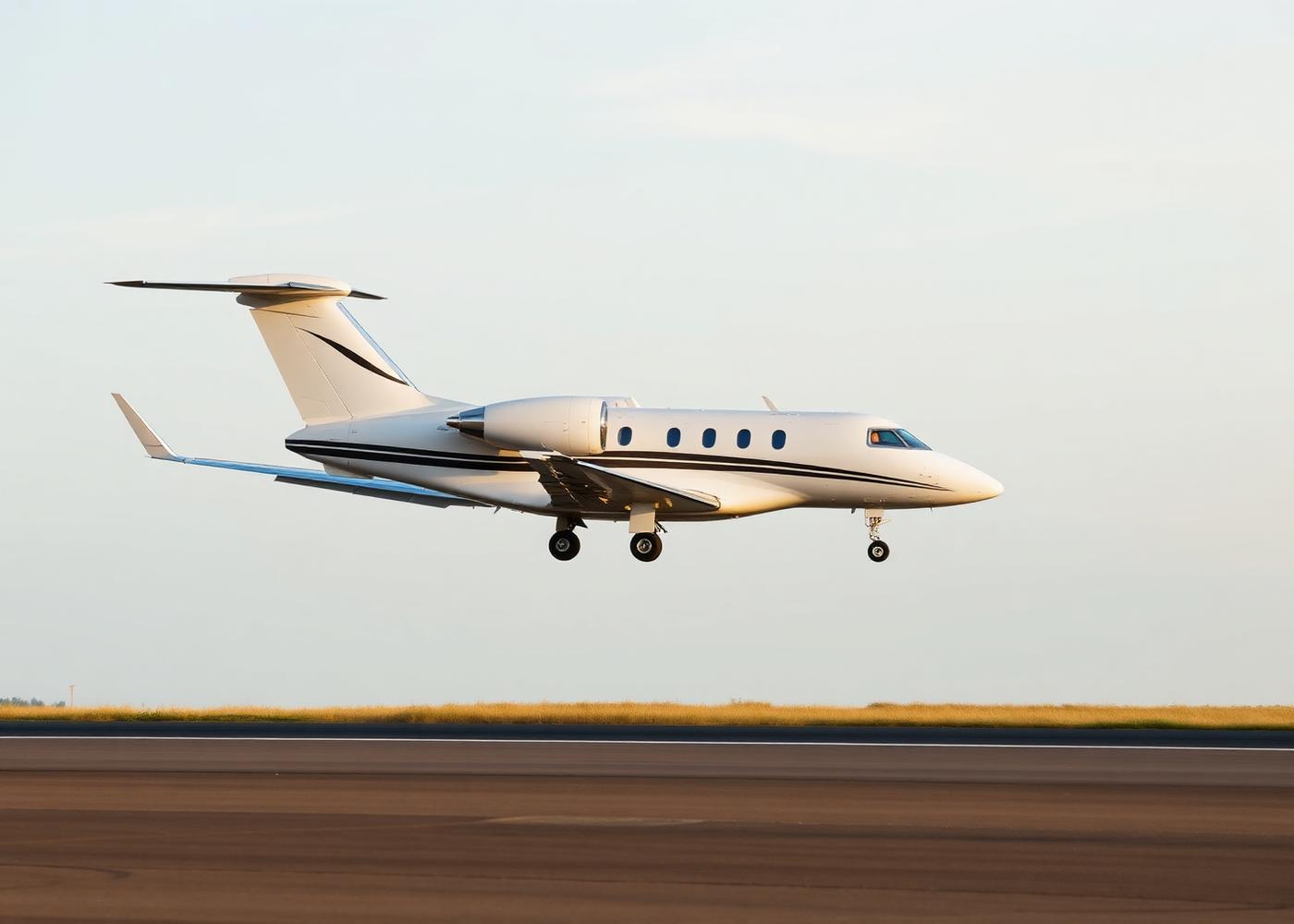
MIDSIZE JET
Hawker Beechcraft
The proven workhorse of midsize charter.
VIEW AIRCRAFT →MIDSIZE JET
Cessna
Six-foot flat-floor cabin at midsize prices.
VIEW AIRCRAFT →ROUTES SERVING MADRID
2h 15m · 1,260 km
London to Madrid is a year-round business corridor handling sustained finance, energy and luxury-retail traffic. Barajas's executive aviation terminal sits separately from commercial flow.
VIEW ROUTE →1h 10m · 500 km
Madrid to Ibiza is a domestic Spanish summer headline route — fast turnaround for weekend escapes and yacht crew changeovers.
VIEW ROUTE →CHARTER GUIDES
PRICING & COST
12 min read
OPERATIONS & TRAVEL
12 min read
AIRCRAFT & FLEET
9 min read
OPERATIONS & TRAVEL
6 min read
PRICING & COST
6 min read
FAQ
A chauffeured transfer from Madrid-Barajas to the Salamanca district is about 25 minutes (18 km). Typical modes are chauffeured sedan. Limitless Sky pre-positions ground transport so the car is waiting planeside.
Our concierge pre-arranges a chauffeured transfer to your address in Madrid. Cars wait planeside at the FBO so guests step from cabin to car in under five minutes. Helicopter or yacht handoffs can be coordinated on request.
Madrid is served by MAD, LECU. Choice depends on aircraft class, where you're staying, and slot availability. We pick the field that puts you closest to your hotel or yacht with the least ground time — see each airport guide for runway, customs and FBO detail.
Usually yes — many operators permit pets in the cabin, subject to aircraft-owner approval, destination rules, documentation and any operator-specific charges. Let us know the size and species when you request a quote and we will confirm per aircraft.
For most major airports we can have an aircraft positioned within 4 hours. Last-minute bookings are our specialty — we operate 24/7.
One-way prices estimated, confirmed quote within 1–2 hours: Madrid → London from €6,900 (midsize jet); Madrid → Ibiza from €3,100 (light jet). Send your dates and passengers and you get an estimated price per aircraft class straight away, then two or three confirmed options with aircraft photos within 1–2 hours.
RELATED DESTINATIONS
EXPLORE THE CLUSTER
HUB GUIDES
ROUTES SERVING MADRID
BEST AIRCRAFT FOR MADRID
MORE IN EUROPE — CITIES
EMPTY LEGS · TO MADRID
Repositioning flights to Madrid come up occasionally and rarely stay available for long. Set an alert and we will tell you if one matches.
EMPTY-LEG ALERTS
We scan operator inventory every 12 hours. The moment a leg matches your route, date window and budget, we email you with a direct booking link.
MALLORCA · GERMANY, NRW, FRANKFURT
SKI SEASON · ALPS
An estimated price per aircraft class straight away, then two or three confirmed options with aircraft photos within 1–2 hours. 24/7, worldwide.
REQUEST A QUOTEAIRPORT COMPARISON
2 airports serve Madrid. MAD is primary; TOJ act as alternates when slots or runway constraints dictate.
MAD · PREMIER
MAD
MAD — primary jet gateway; 14,271 ft runway; in-town.
TOJ · PREMIER
TOJ
TOJ — primary jet gateway; 15,807 ft runway; in-town.
RECOMMENDED AIRCRAFT
Super Midsize Jet
SEASONALITY
GROUND TRANSPORT
HELICOPTER
CUSTOMS
VISA
WEATHER
RECOMMENDED STAY
MEDICAL / MEDEVAC
DESTINATION PROFILE
luxury
40
business
85
family
30
ski
0
beach
0
golf
0
medical
40
heli
30
marina
0
NEARBY DESTINATIONS
AI CONCIERGE
Structured knowledge object with 2 airports, 8 corridor routes, 0 named event windows, 5 nearby destinations and a full scoring profile — designed to answer concierge-level questions in real time.
FAQ
MAD (MAD) is the primary gateway. TOJ
Light Jet is the best fit for most missions; short-runway constraints may push smaller groups to a Light Jet.
Pricing scales with aircraft class and the departure city (for example FAB). Send your dates and passengers to see an estimated price per aircraft class straight away; two or three confirmed options with aircraft photos follow within 1–2 hours.
See the seasonality panel — demand is driven by corporate and event calendars.
Not standard for this destination; chauffeur car service is the primary transfer option.
AVIATION FACTS · AVI-GO 2025
Desk-verified market figures linked to this page — drawn from Avi-Go analytics reports and surfaced for charter planning context.
2.01%
Verified aviation metric
Spain held 2.01% of global business jet departures in June 2026.
structured · confidence 95% · verified 2026-07-28
Spain ranked #6 by absolute MoM flight change in June 2026: +787 (5,114 → 5,901).
structured · confidence 95% · verified 2026-07-28
Madrid Barajas (LEMD) was Europe's fastest-growing top-10 airport in 2025 at +10.43% YoY (17,060 movements).
structured · confidence 95% · verified 2026-07-28
2026
Verified aviation metric
MoM comparison: Spain departures June 2026 5,901 vs May 2026 5,114 (delta +787, +15.39%).
structured · confidence 94% · verified 2026-07-28
LEMD ranked #2 origin into LEIB in June 2026 with 57 flights (5.34% of that hub's analyzed arrivals).
structured · confidence 93% · verified 2026-07-28
LEMD ranked #1 origin into LEPA in June 2026 with 64 flights (6.97% of that hub's analyzed arrivals).
structured · confidence 93% · verified 2026-07-28
Madrid (LEMD) ranked #9 among European business aviation airports in Jan–Aug 2025 with 10,861 movements (1.53% regional share).
structured · confidence 93% · verified 2026-07-28
36,069
Verified aviation metric
Spain posted 36,069 business jet departures Jan–Aug 2025 — 10.15% European share (+5.05% YoY).
structured · confidence 93% · verified 2026-07-28
ProAir Aviation GmbH's #2 route in Europe in June 2026 was Madrid ↔ Valencia (1.44% of that operator's regional departures).
structured · confidence 92% · verified 2026-07-28
Spain ranked #5 Europe by country utilization rate in June 2026 at 11.04%.
structured · confidence 92% · verified 2026-07-28
1.44%
Verified aviation metric
ProAir Aviation GmbH concentrated 1.44% of its Europe June 2026 departures on Madrid ↔ Valencia (route rank #2).
structured · confidence 91% · verified 2026-07-28
Morocco ↔ Spain ranked #2 among fastest-growing European country pairs in Jan–Aug 2025 at +31.95% YoY (1,014 → 1,338).
structured · confidence 90% · verified 2026-07-28
KNOWLEDGE GRAPH
Airports serving this destination, routes clients fly here on, aircraft that operate them, and nearby destinations you can pair it with.