Vienna International
VIEVIP & General Aviation Centre; 24h customs.
- TRANSFER
- 25 min · 18 km
- TO
- the Innere Stadt
- MODES
- Chauffeured sedan · Private rail (ÖBB)
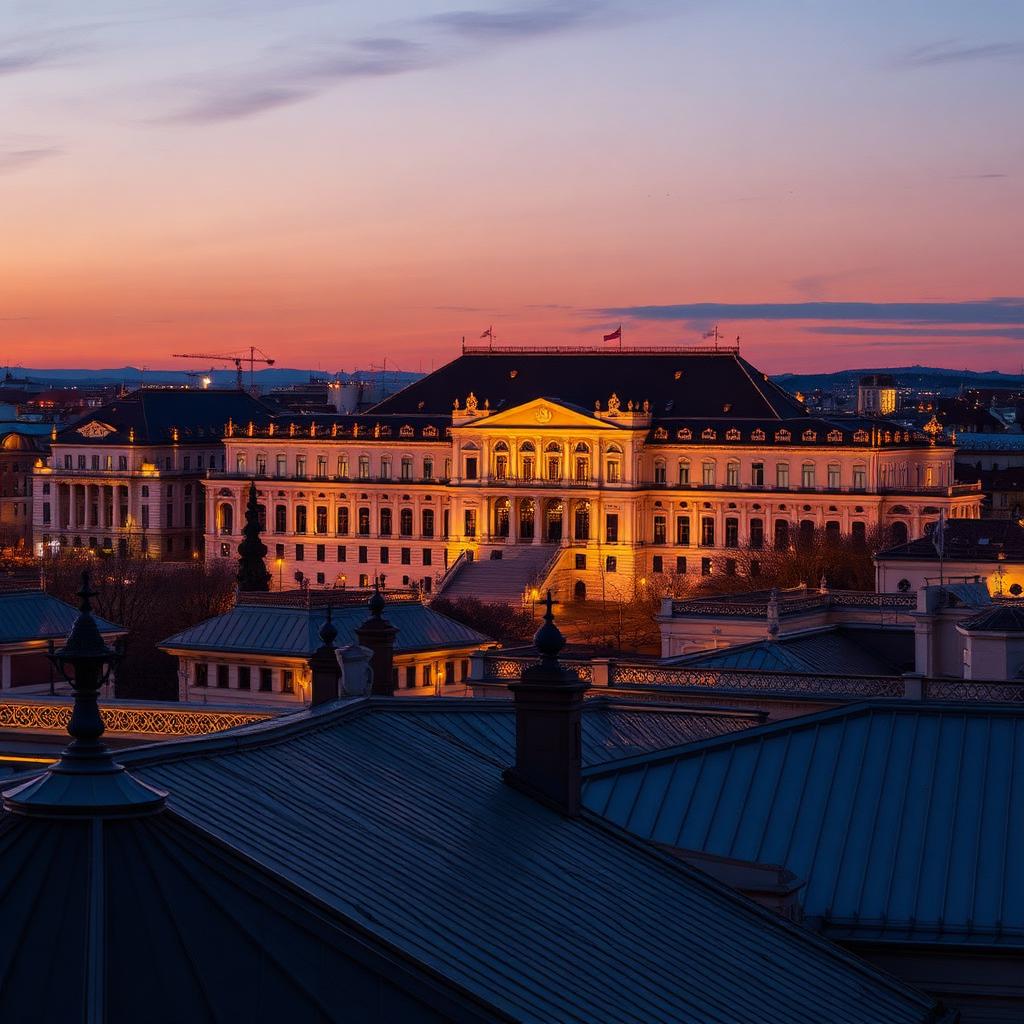
Business-class access to Europe's capitals.
Vienna is the natural gateway to Central and Eastern Europe. The General Aviation Centre at VIE handles the steady flow of business and cultural traffic — the Opera Ball alone fills every executive parking slot in February.
See full private jet charter pricing, read the Vienna → Sardinia route guide.
BEST TIME TO CHARTER
Steady year-round demand driven by business travel; spikes around fashion weeks, motor shows and major sporting events.
AIRPORTS, FBOs & TRANSFERS
Each option below shows the executive airport, drive time to Vienna, and typical ground options. Tap an airport for the full guide — runways, FBOs, customs, slot rules and arrival workflow.
VIP & General Aviation Centre; 24h customs.
New to private terminals? What is an FBO? · Private jet charter cost guide — FBO choice and charter pricing for Vienna
POPULAR ROUTES
| ROUTE | FLIGHT TIME | TYPICAL AIRCRAFT | FROM |
|---|---|---|---|
| Vienna → London | 2h 15m | Light Jet | from €5,400 |
| Vienna → Zurich | 1h 15m | Light Jet | from €3,400 |
One-way prices for the aircraft class listed are estimated, confirmed quote within 1–2 hours. You get an estimate per aircraft class straight away, then two or three confirmed options with aircraft photos.
COSTS TO EXPECT
ENTRY POINT
from €5,400
Lowest estimated one-way price across the routes above — estimated, confirmed quote within 1–2 hours.
TYPICAL AIRCRAFT
Light Jet
Cabin selected against range, runway and party size. We confirm the exact tail before contracting.
WHAT'S INCLUDED
All-inclusive quote
Crew, fuel, handling, landing and de-icing fees, standard catering and FBO access. Peak-period positioning and overnight crew may apply on one-ways — flagged upfront.
Charter pricing is route- and date-sensitive. For a binding number, share dates, pax and luggage in the quote form.
CHARTER BUYER'S GUIDE
Vienna serves as the primary strategic hub for business aviation at the intersection of Western and Eastern Europe. While historically recognised for its diplomatic importance as one of the four headquarters of the United Nations, the modern charter requirement for Vienna is largely driven by institutional finance, energy sectors, and a robust high-end tourism circuit. Unlike seasonal Mediterranean destinations, Vienna maintains a high volume of jet traffic year-round, peaking during the winter ball season and the pre-Christmas period. The city is the natural gateway for clients transiting between the Eurozone and the developing markets of the Balkans and the CIS region.
Operationally, Vienna is a high-efficiency environment. The General Aviation Centre (GAC) at Vienna International Airport (VIE) is the focal point for all non-commercial arrivals, managed with a degree of precision typical of Austrian infrastructure. For the private traveller, Vienna offers a seamless transition from ramp to the Inner Stadt (1st District) in under 20 minutes. It is a destination where the corporate and the cultural frequently overlap; it is common for a single day's flight manifest to include both a state visit and a principal attending the opening of a major opera house production. The infrastructure is designed to handle this duality, offering both discreet, high-security handling and the capacity to manage the concentrated surges of traffic associated with global events like the Vienna Opera Ball.
Vienna is a four-season destination with distinct operational pressures at specific intervals. The period between November and February is arguably the most complex from a logistics perspective. The Advent season brings heavy volume from regional European cities, with the Christmas markets attracting high numbers of Light and Midsize jet flights. However, the true peak occurs during the 'Ball Season' in January and February. The Vienna Opera Ball, in particular, represents the highest concentration of private aviation movements in Central Europe. During this window, aircraft parking at VIE becomes exceptionally tight. Operators frequently face 'drop-and-go' requirements if parking is not secured weeks in advance.
Weather is an operational factor during the winter months. While Vienna International is highly proficient at de-icing and snow clearance, sub-zero temperatures can lead to de-icing delays and increased operational costs. Clients should factor in 'de-icing holds' when planning tight schedules. The spring and autumn months (May, June, September, and October) provide the most stable weather and are preferred by corporate travellers for the absence of tourist-led airport congestion. Summer remains busy with the festival circuit and leisure arrivals, but it lacks the parking constraints of the ball season. If planning a charter for early February, a lead time of at least three weeks is advisable to ensure a guaranteed parking spot at the General Aviation Centre.
Vienna International Airport (VIE / LOWW) is the only commercially viable option for private jet charter directly into the city. Located 18 km southeast of the city centre, it features two major runways: 11/29 (3,500m) and 16/34 (3,600m). These lengths ensure that any aircraft class, from a Citation Mustang to a Global 7500 or a converted Boeing Business Jet (BBJ), can operate with full fuel loads and no performance limitations.
The General Aviation Centre (GAC) is a dedicated terminal located separately from the main passenger buildings. It offers 24-hour customs and immigration services, which is a significant advantage over regional airports in neighbouring countries. Within the GAC, there are several Fixed Base Operators (FBOs), including the Vienna Aircraft Handling (the primary integrated provider) and other international brands such as Jet Aviation. These facilities offer private lounges, crew rest areas, and direct ramp access for vehicles where security permits.
One of VIE's primary advantages is its 24-hour operational status. Unlike Zurich or Frankfurt, which suffer from strict night-time curfews, Vienna is relatively flexible, although quiet-flying procedures are in effect during late hours. This makes it a preferred alternate for travellers arriving from long-haul sectors (North America or Asia) who may face delays.
In terms of diversions, Bratislava Airport (BTS / LZIB) in Slovakia is the most practical backup. It is located only 80 km from Vienna and is often used for aircraft parking when VIE is full during the Opera Ball. The ground transfer from Bratislava to central Vienna takes approximately 45 to 60 minutes via the A4 motorway, making it a viable, if slightly less convenient, secondary option.
For regional European missions, Light Jets are the backbone of the Vienna market. The Cessna Citation CJ3 and CJ4 series are frequently used for routes like Zurich to Vienna (approx. 1h 15m), offering a balance of efficiency and cabin comfort for up to six passengers. The Embraer Phenom 300 is another top-tier choice, favoured for its luggage capacity and modern aesthetics, which appeal to the younger demographic of tech entrepreneurs visiting Vienna’s growing startup hubs.
Midsize and Super-Midsize jets are recommended for flights from London, Moscow, or Tel Aviv. From London Biggin Hill or Farnborough to Vienna (approx. 2h 15m), the Cessna Citation XLS+ remains a reliable, cost-effective option for groups of up to eight. However, for those requiring a stand-up cabin and more galley space, the Bombardier Challenger 350 or the Embraer Praetor 600 are superior. The Praetor 600, in particular, is noted for its low cabin altitude, which reduces fatigue—a crucial factor for business travellers heading straight into afternoon meetings.
For ultra-long-range requirements, such as direct flights from New York, Dubai, or Hong Kong, the Gulfstream G650ER and the Bombardier Global 7500 are the industry leaders. These aircraft can fly non-stop to Vienna with total mission reliability, offering full-service galleys, master suites, and advanced noise-reduction technology. The Dassault Falcon 8X is also a frequent visitor to the GAC, prized for its ability to handle steep approaches and shorter runways elsewhere in the region while providing three-zone cabin comfort for long-haul sectors.
Charter pricing to Vienna is influenced by aircraft type, positioning, and seasonal demand. A one-way charter from Zurich to Vienna on a Light Jet typically starts at €7,500. This route is highly frequent, and there is often a high probability of finding an empty leg, which could reduce the cost by 30% to 50%. A flight from London to Vienna on a similar Light Jet starts from approximately €11,200.
These indicative prices are based on a 'standard' booking window. During peak events such as the Opera Ball or the United Nations General Assembly sessions, prices increase significantly. This is not necessarily due to a hike in the hourly rate of the aircraft, but rather the 'positioning costs'—if the airport is out of parking spaces, the operator must fly the aircraft to a nearby airport (like Bratislava or Graz) and return to collect the passengers. This 'repositioning' adds two additional flight legs to the bill. To avoid these costs, booking well in advance to secure one of the limited parking slots at the GAC is essential. Empty legs are most commonly found on the Vienna-London and Vienna-Geneva corridors due to the high volume of corporate shuttling between these financial centres.
The arrival experience at the Vienna GAC is designed for speed. Once the aircraft chocks are in place, passengers typically clear customs and immigration in under ten minutes. The GAC is physically separated from the main terminal congestion, meaning no queues and a high degree of privacy.
Ground transportation is primarily road-based. A pre-arranged chauffeur service is the standard for Vienna arrivals. The drive from the GAC to the 1st District (Hotel Sacher / Park Hyatt area) takes between 20 and 25 minutes depending on traffic. For those heading to the business districts in the 22nd District (VIC / Donauturm), the journey is slightly shorter, around 15–20 minutes. Helicopter transfers are less common in Vienna due to the proximity of the airport to the city, but they can be arranged for transfers to alpine resorts such as Kitzbühel or Lech, with flight times averaging 60 to 90 minutes.
Pet handling at VIE is straightforward, provided all EU pet passport requirements and vaccinations are documented correctly. The GAC staff are experienced with high-value animal transport, and the transition through the terminal is generally stress-free for both owner and pet. Luggage handling is similarly efficient, with porters moving bags directly from the aircraft hold to the waiting limousine in a single fluid motion.
Vienna’s core is the Innere Stadt (1st District), where the majority of high-net-worth travellers remain during their stay. This area is home to the most significant architectural landmarks and the luxury retail artery of the Kohlmarkt and Tuchlauben. The district is compact enough to navigate on foot, but most guests prefer a dedicated car and driver for moving between meetings or evening events.
For accommodation, the city offers three distinct 'grand' styles. The Hotel Sacher is the choice for those seeking traditional Viennese heritage, located directly opposite the State Opera. The Hotel Imperial, originally built as a royal residence, offers a similarly classical atmosphere on the Ringstrasse. In contrast, the Park Hyatt Vienna, situated in the former headquarters of a bank in the 'Golden Quarter', provides a more contemporary, spacious luxury that is particularly popular with American and Middle Eastern travellers.
Dining in Vienna has evolved significantly. While the traditional coffee house culture—epitomised by Café Central or Café Landtmann—remains essential for informal meetings, the high-end culinary scene is dominated by places like Steirereck in the Stadtpark, which consistently ranks among the world's best. For business dinners requiring more discretion, the private rooms at the various Palais scattered throughout the 1st District are frequently utilised.
A frequent error when chartering to Vienna is underestimating the parking shortage during the winter peaks. Buyers often assume that because Vienna is a large international airport, space will be available. In reality, the GAC ramp is relatively small, and during the Opera Ball, it can reach capacity weeks in advance. If you book late, be prepared for 'repositioning fees' as your aircraft flies to a secondary airport for the night.
Another mistake involves the night-time noise regulations. While VIE is technically 24 hours, older aircraft that do not meet specific noise certificates can be restricted or hit with significant surcharges during late-night hours (23:00 to 06:00). Always confirm your aircraft’s noise category if you plan to arrive or depart in the middle of the night.
Thirdly, luggage capacity is often miscalculated for winter trips. Vienna is a shopping destination, and visitors during the ball season often carry voluminous formal wear. A Light Jet, such as a Citation CJ2, may struggle with the weight and volume of four passengers' winter gear and formal attire. Upgrading to a Midsize jet with an external baggage compartment, like the Citation XLS+, is often a safer operational choice.
Lastly, failing to specify 'ramp access' requirements can be an issue. While the GAC allows for quick transfers, if your security profile requires your chauffeur to meet you directly at the aircraft steps, this must be coordinated well in advance with the airport authorities and the FBO. It is not a standard service and involves additional vet check procedures for the driver and vehicle.
For a standard business trip during the shoulder season, a lead time of 48 to 72 hours is usually sufficient to secure the preferred aircraft type and departure time. Same-day 'go-now' charters are feasible at VIE due to the 24-hour customs and the high number of aircraft based there, though the selection of jets may be limited to what is physically on the ramp.
For peak periods—specifically the second half of February (Ball Season) and the weeks leading up to Christmas—we recommend a booking window of at least 21 days. This ensures not only the aircraft availability but also the vital parking slot at the GAC. Without a confirmed parking slot, the logistics of your trip become dependent on the aircraft’s ability to drop and reposition, which adds cost and potential timing complexities if the aircraft is delayed in heavy traffic at a secondary base.
When requesting a quote, please specify your total luggage count and if you require ramp access for a vehicle. This allows our operations team to select the appropriate FBO and aircraft that can accommodate the specific logistical nuances of the Vienna General Aviation Centre.
ON THE GROUND
An iconic Viennese institution located opposite the State Opera, offering a quintessentially traditional experience. Renowned for its heritage décor and the legendary Sachertorte, it remains the first choice for guests attending the Opera Ball who require immediate proximity to the city's cultural heart.
Housed in a meticulously restored former bank building in the Golden Quarter, this hotel blends historic architecture with modern, oversized suites. It is the premier choice for corporate travellers who prefer contemporary amenities, a world-class subterranean spa, and being steps away from the city's high-end retail district.
Originally constructed as a royal residence for Prince Philipp of Württemberg, this hotel provides an unparalleled sense of majesty on the Ringstrasse. With its palatial rooms and personal butler service, it caters to those seeking an atmosphere of old-world Viennese aristocracy and absolute discretion.
AIRCRAFT
4–6 passengers, up to 3h
Citation CJ3, Phenom 300 — ideal for short European hops with quick turnarounds.
7–9 passengers, up to 5h
Citation XLS+, Hawker 900XP — stand-up cabin, full galley, transcontinental Europe.
10–14 passengers, 6h+
Challenger 605, Gulfstream G450, Falcon 7X — intercontinental with bedroom-class comfort.
FLEET FOR VIENNA

LIGHT JET
Cessna
The benchmark light jet for short European hops.
VIEW AIRCRAFT →LIGHT JET
Cessna
Light-jet economics, midsize cabin comfort.
VIEW AIRCRAFT →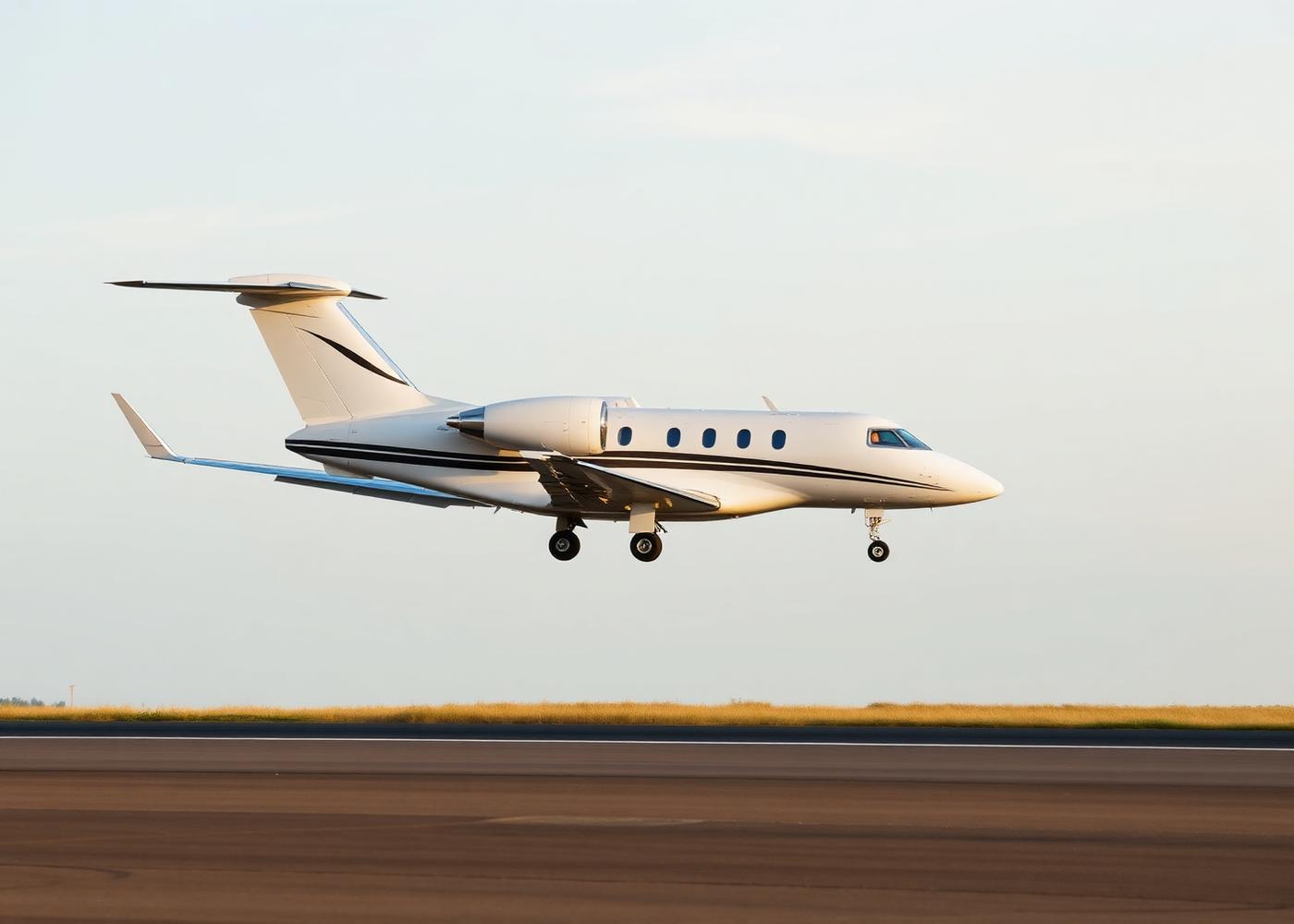
MIDSIZE JET
Hawker Beechcraft
The proven workhorse of midsize charter.
VIEW AIRCRAFT →MIDSIZE JET
Cessna
Six-foot flat-floor cabin at midsize prices.
VIEW AIRCRAFT →ROUTES SERVING VIENNA
2h 30m · 1,520 km
Vienna–Sardinia is the preferred Austrian-Italian summer route into the Costa Smeralda. Olbia operates slot-controlled FBO traffic from mid-June through early September, with peak demand around the Porto Cervo regatta calendar.
VIEW ROUTE →38 minutes · 300 km
Vienna–Kitzbühel is one of Europe's most-requested private aviation corridors. Charter bypasses the punishing scheduled-airline queues at Kitzbühel and clears customs in minutes at the Vienna business aviation centre.
VIEW ROUTE →CHARTER GUIDES
PRICING & COST
12 min read
OPERATIONS & TRAVEL
12 min read
AIRCRAFT & FLEET
9 min read
OPERATIONS & TRAVEL
6 min read
PRICING & COST
6 min read
FAQ
A chauffeured transfer from Vienna International to the Innere Stadt is about 25 minutes (18 km). Typical modes are chauffeured sedan, private rail (öbb). Limitless Sky pre-positions ground transport so the car is waiting planeside.
Usually yes — many operators permit pets in the cabin, subject to aircraft-owner approval, destination rules, documentation and any operator-specific charges. Let us know the size and species when you request a quote and we will confirm per aircraft.
For most major airports we can have an aircraft positioned within 4 hours. Last-minute bookings are our specialty — we operate 24/7.
One-way prices estimated, confirmed quote within 1–2 hours: Vienna → London from €5,400 (light jet); Vienna → Zurich from €3,400 (light jet). Send your dates and passengers and you get an estimated price per aircraft class straight away, then two or three confirmed options with aircraft photos within 1–2 hours.
RELATED DESTINATIONS
EXPLORE THE CLUSTER
HUB GUIDES
ROUTES SERVING VIENNA
BEST AIRCRAFT FOR VIENNA
MORE IN EUROPE — CITIES
EMPTY LEGS · TO VIENNA
Repositioning flights to Vienna come up occasionally and rarely stay available for long. Set an alert and we will tell you if one matches.
EMPTY-LEG ALERTS
We scan operator inventory every 12 hours. The moment a leg matches your route, date window and budget, we email you with a direct booking link.
MALLORCA · GERMANY, NRW, FRANKFURT
SKI SEASON · ALPS
An estimated price per aircraft class straight away, then two or three confirmed options with aircraft photos within 1–2 hours. 24/7, worldwide.
REQUEST A QUOTEAIRPORT COMPARISON
VIE is the single realistic gateway for Vienna charters.
VIE · PREMIER
VIE
VIE — primary jet gateway; 11,811 ft runway; in-town.
RECOMMENDED AIRCRAFT
Super Midsize Jet
SEASONALITY
GROUND TRANSPORT
HELICOPTER
CUSTOMS
VISA
WEATHER
RECOMMENDED STAY
MEDICAL / MEDEVAC
DESTINATION PROFILE
luxury
40
business
65
family
30
ski
0
beach
0
golf
0
medical
40
heli
30
marina
0
NEARBY DESTINATIONS
AI CONCIERGE
Structured knowledge object with 1 airports, 8 corridor routes, 0 named event windows, 5 nearby destinations and a full scoring profile — designed to answer concierge-level questions in real time.
FAQ
VIE (VIE) is the primary gateway. There are no realistic alternatives on the ground.
Light Jet is the best fit for most missions; short-runway constraints may push smaller groups to a Light Jet.
Pricing scales with aircraft class and the departure city (for example VIE). Send your dates and passengers to see an estimated price per aircraft class straight away; two or three confirmed options with aircraft photos follow within 1–2 hours.
See the seasonality panel — demand is driven by corporate and event calendars.
Not standard for this destination; chauffeur car service is the primary transfer option.
AVIATION FACTS · AVI-GO 2025
Desk-verified market figures linked to this page — drawn from Avi-Go analytics reports and surfaced for charter planning context.
0.50%
Verified aviation metric
Austria held 0.50% of global business jet departures in June 2026.
structured · confidence 95% · verified 2026-07-28
Austria ranked #16 globally by business jet departures in June 2026 with 1,463 flights (0.50% share).
structured · confidence 95% · verified 2026-07-28
Avcon Jet Ag's #2 route in Europe in June 2026 was Grad Vrazdin ↔ Vienna (1.08% of that operator's regional departures).
structured · confidence 92% · verified 2026-07-28
1.08%
Verified aviation metric
Avcon Jet Ag concentrated 1.08% of its Europe June 2026 departures on Grad Vrazdin ↔ Vienna (route rank #2).
structured · confidence 91% · verified 2026-07-28
Austria ranked #3 among absolute decline markets in 2025 at -355 flights (-2.38% YoY).
structured · confidence 90% · verified 2026-07-28
KNOWLEDGE GRAPH
Airports serving this destination, routes clients fly here on, aircraft that operate them, and nearby destinations you can pair it with.