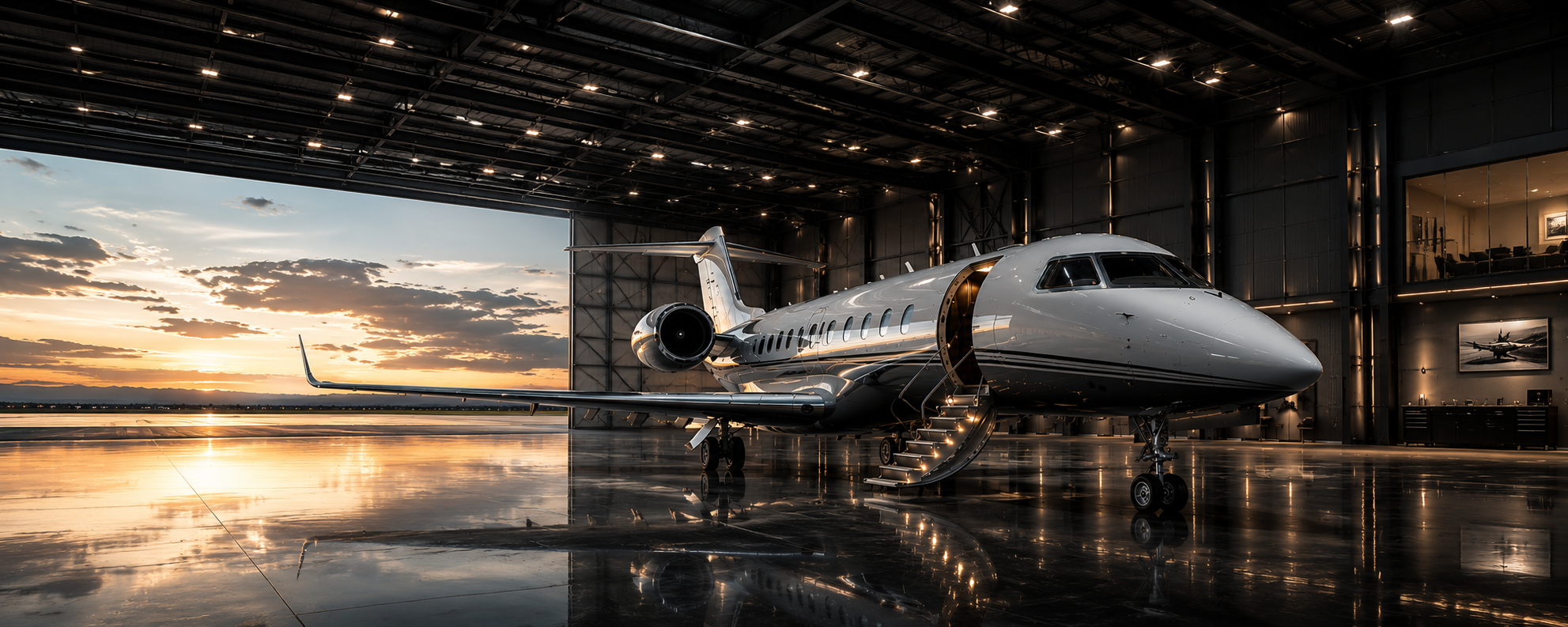
Flying private jets offers a unique travel experience. It combines luxury, convenience and efficiency in one package for travellers who choose to fly private via charter flights or air charter services. Skip the long security lines, board at your leisure and set the pace of your own itinerary — when you fly private with a reputable charter carrier, the schedule bends around you rather than the other way around.
Private jets also unlock access to thousands of smaller airports the commercial world never touches, meaning you can land materially closer to your final destination. On board, the comfort and privacy are unmatched: personalised service, high-end amenities, uninterrupted work, confidential meetings. Cost is a real consideration, but options exist for a wide range of budgets — from on-demand charter and jet cards to shared seats and empty leg flights.
What Is Flying Private?
Flying private involves booking an aircraft for exclusive use. Unlike commercial flights, you dictate the schedule and destination, usually through a broker or private charter company. Private jets cater to individual requirements and offer flexibility: travellers pick flight times, reducing the stress of rigid airline timetables, and often access smaller, less-crowded airports that shorten the door-to-door journey.
The experience also includes personalised service — custom catering, preferred seating and curated entertainment. Options range from fractional ownership to one-time rentals, so travellers can charter a private jet or use a membership depending on how often they fly.
- Customised flight itineraries
- Access to remote and executive airports
- Luxurious onboard amenities and personalised service
Key Benefits of Flying Private
Flying private jets offers numerous advantages over commercial travel. Convenience stands out as the primary benefit — with a private charter, you pick the departure time and bypass airline scheduling. Flexibility follows closely: private jets allow last-minute booking changes without the restrictions of commercial fares. Privacy and security give real peace of mind for principals and executive travellers, and the comfort — plush seating, ample legroom, quiet cabins — is on a different plane from a commercial first-class seat.
Convenience and Flexibility
You choose the airport, departure time and arrival point. Last-minute meetings or urgent travel stop being a problem. Smaller airports are less congested and often closer to your final destination, which is where most of the door-to-door time saving actually comes from.
Privacy, Security and Comfort
On a private flight, you control the environment. There are no interruptions, allowing focused work or genuine relaxation. Passenger screening is more discreet, and there is minimal exposure to crowds. Luxurious seating and cabin space allow for ultimate rest or a productive working environment — which is why the aircraft ends up functioning as a mobile extension of the office for many principals.
Time Savings and Efficiency
Time is the real product. Private jets offer swift boarding and significantly reduced overall travel hours. There is no queueing, no crowded terminal, and access to smaller airports compresses transfer times at both ends. For frequent travellers, the hours saved translate directly into productive time or additional meetings the same day.
Luxury and Personalised Service
Luxury is designed in from the first phone call. High-end furnishings, bespoke menus, customisable seating and dedicated cabin crew. Requests are attended to promptly; the aircraft is set up around your itinerary, not the other way around.
Types of Private Jets and Aircraft Options
When considering private jet travel, it helps to understand the aircraft classes available. Each type serves different mission profiles, and the right choice materially changes both cost and comfort. Explore the full Limitless Sky fleet for the models we operate most frequently.
Light, Midsize and Heavy Jets
Light jets are optimal for trips of up to about three hours — a strong balance of efficiency and cost for short-distance travel. Midsize jets extend both range and cabin comfort, well suited to longer flights that need more space. Heavy jets are the top of the ladder: transoceanic range, plush interiors and exceptional service for long-haul missions.
- Light jets: 5–8 passengers, roughly 2,000 mile range
- Midsize jets: around 9 passengers, up to about 3,000 miles
- Heavy jets: 12–18 passengers, 6,000+ miles
Turboprops, Ultra-Long-Range and Specialty Aircraft
Turboprops are versatile and cost-effective for shorter distances, and access smaller runways that jets cannot. Ultra-long-range jets cover intercontinental distances non-stop. Specialty aircraft — configured for medical missions or cargo — fill the edge cases; our MedEvac desk covers that in detail.
How Much Does It Cost to Fly Private?
Private jet pricing depends on several dynamic factors: flight distance, aircraft size, mission duration, fuel burn, crew availability and airport fees. Smaller jets are cheaper to operate and make sense for short regional flights; larger jets carry more people further, at a higher hourly rate. Typical hourly bands look like this:
- Light jets: around $2,000–$3,000 per hour
- Midsize jets: approximately $3,000–$6,000 per hour
- Heavy jets: typically $6,000–$12,000 per hour
The economics can be surprisingly advantageous. For groups, the cost spreads across passengers and can compare closely with first-class commercial. For frequent travellers, jet cards and membership programmes provide predictable pricing. Full cost mechanics — including positioning, fuel surcharges and taxes — are covered in our jet cost guide.
Factors Affecting Charter Prices
Aircraft type is the largest single driver. Distance and flight time follow: longer flights consume more fuel and increase overall expense. Airport fees vary meaningfully by departure and arrival. Seasonality matters — peak travel weeks command premium rates when operator supply tightens.
Using a Charter Cost Estimator
Online estimators simplify budgeting. Input a departure and destination, aircraft class and any additional services, and you get a fast approximation for a specific route. Try the live empty leg feed as a reference — the visible prices are a useful benchmark for what real routes cost today.
Charter Companies and Booking Options
Charter companies differ meaningfully by fleet, geography and service model. Some run membership programmes for frequent flyers; others provide on-demand charter for spontaneous travel. Booking platforms can aggregate operators and simplify comparison, but the trade-off is that a broker desk sees the whole live market and can price a specific route the same day.
- Membership and jet cards: ideal for frequent flyers — fixed pricing and pre-paid flight hours.
- On-demand charter: best for irregular travel — full flexibility on schedule and itinerary.
When comparing providers, look at fleet variety, service range, response time and customer support quality. Reviews and testimonials are a useful filter for reliability.
How to Book a Private Jet
Booking a private jet is straightforward once you know the steps.
- Identify needs: dates, passengers, destination.
- Select a provider: research reputable charter companies and brokers.
- Request quotes: ask for detailed pricing based on your requirements.
- Review contracts: read terms, conditions and cancellation policies before booking.
- Finalise the booking: confirm the flight and prepare for departure.
Once quotes arrive, compare price alongside amenities. The lowest number is rarely the best trip. Our charter desk returns confirmed all-inclusive quotes typically within the same working day.
Business vs. Leisure Travel
Private jets cater to both. For business, the aircraft functions as a quiet, confidential workspace that allows meetings and preparation to continue in the air, and flexible scheduling ensures the day is used efficiently. For leisure, private travel becomes a restful, indulgent experience — with access to remote or exclusive destinations that commercial airlines simply do not serve.
- Business: privacy, efficiency, productivity, flexible scheduling.
- Leisure: luxury, personalisation, exclusive destinations, real rest.
Semi-Private Flights and Cost-Saving Alternatives
Semi-private flights offer a balance between private jet luxury and commercial flight costs. Passengers share the aircraft with a few others, cutting the per-seat expense significantly. Cost-saving alternatives like empty leg flights — repositioning flights sold at a discount when an aircraft would otherwise fly empty — expand access to private aviation for more travellers.
- Semi-private flights (shared cabin)
- Empty leg deals
- Shared charters and group bookings
Frequently Asked Questions
How much does it cost to charter a private jet?
Costs vary by aircraft class, distance, duration, airport fees and season. As a working range: light jets $2,000–$3,000 per hour, midsize jets $3,000–$6,000, heavy jets $6,000–$12,000. Group travel materially improves per-seat value.
How soon can I book a flight?
Private charter routinely accommodates same-day and next-day travel. Our desk regularly turns confirmed quotes in about 10 minutes and positions aircraft in short windows.
Can I bring pets on a private jet?
Yes. Pets are generally welcome and travel in the cabin — one of the practical reasons families choose private over commercial for long-haul.
Which aircraft type should I choose?
Match the aircraft to trip length, passenger count and comfort needs. Light for short hops of up to about three hours; midsize for longer regional flights with more space; heavy for long-haul and transoceanic; turboprops for short runways and remote fields; ultra-long-range for non-stop intercontinental.
Are there budget-friendly ways to fly private?
Yes — semi-private flights, empty leg deals and shared charters all reduce cost. For groups, splitting the total charter can bring the per-seat number close to first-class commercial on many routes.
Is Flying Private Right for You?
The decision depends on your priorities. Private jet travel offers unmatched convenience, flexibility and luxury, and for frequent travellers or tight schedules the benefits typically outweigh the cost. Weigh the advantages against the numbers, and — if it fits — private aviation becomes the most efficient way to move.