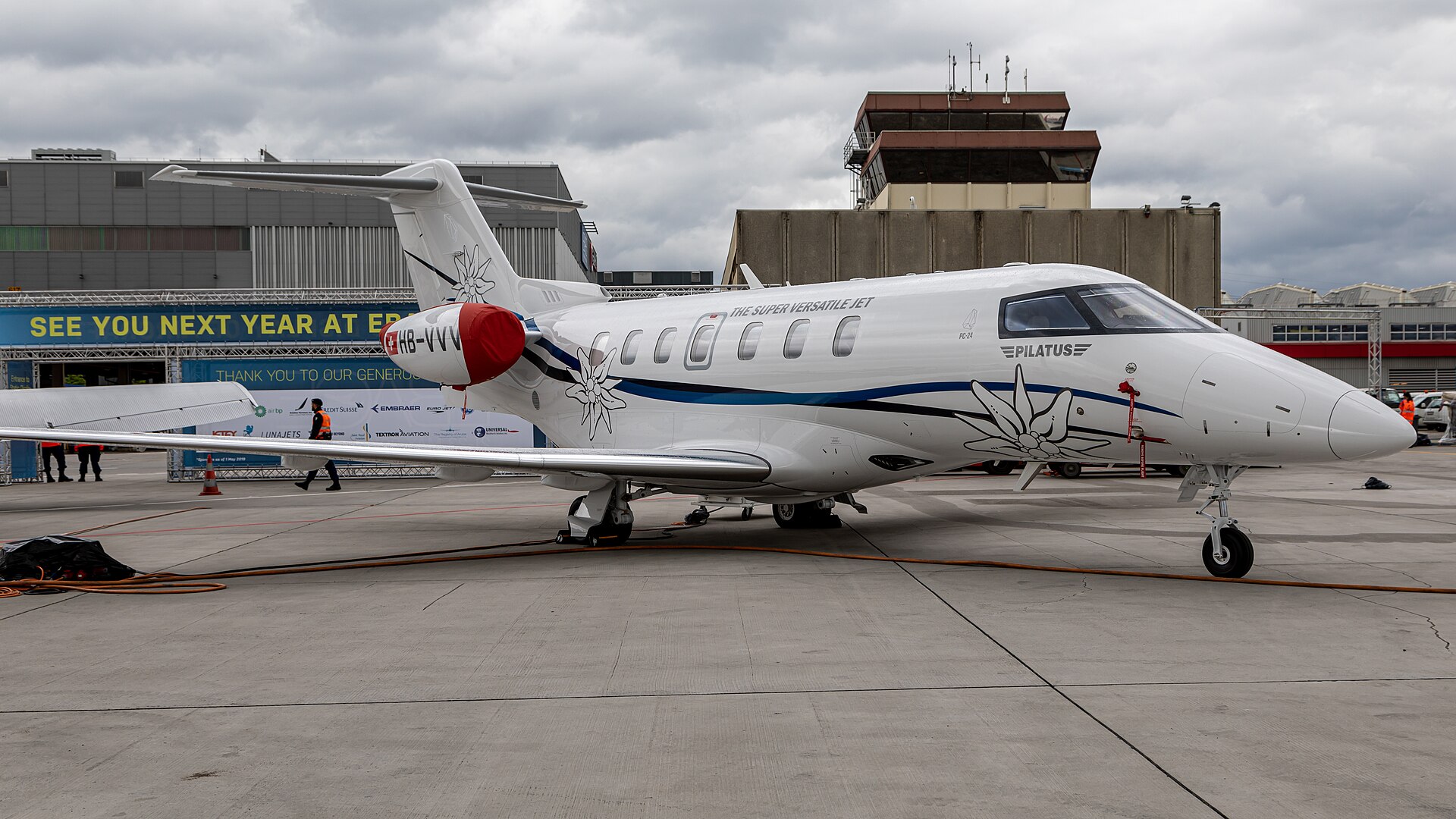
Pilatus PC-24 private jet charter

Pilatus PC-24 Charter

The Super Versatile Jet — short-runway and unimproved-field access.

PAX8RANGE2,000 nmSPEEDMach 0.74BAGGAGE90 cu ftCABIN5'1" × 5'6"TYPICALGeneva → St Moritz · from CHF 8,200

OVERVIEW

Pilatus PC-24

The Pilatus PC-24 is the only business jet in the world certified for short, unimproved and gravel runways. With a flat cabin floor, large cargo door and class-leading flexibility, it accesses 21,000 airports — far more than any rival.

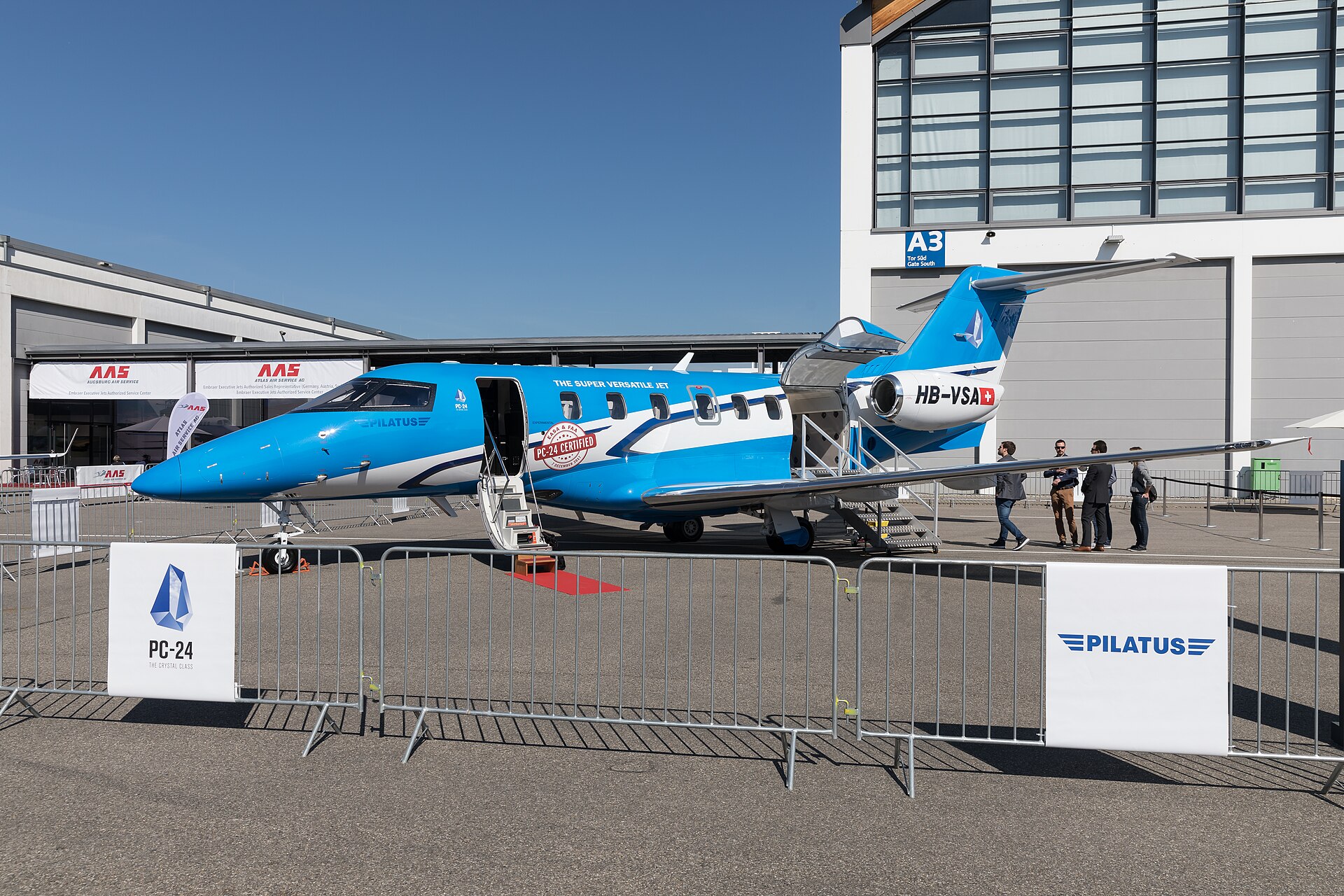
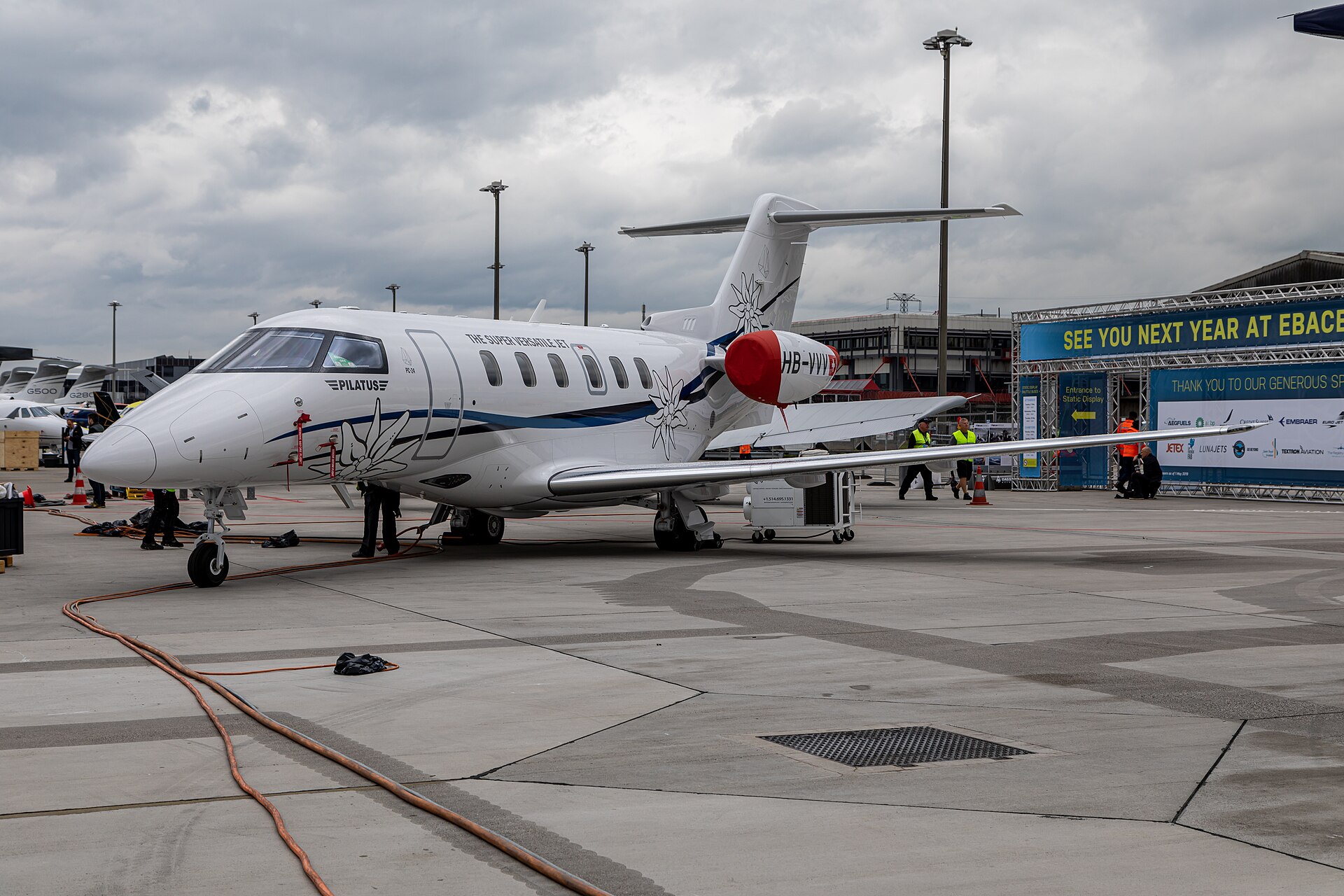
EBACE 2019, Le Grand-Saconnex (EB190160)

IN DEPTH

The complete guide to chartering the Pilatus PC-24

The story behind the Pilatus PC-24

Pilatus Aircraft of Stans, Switzerland has a singular engineering tradition: the company builds aircraft that go places other aircraft cannot. The PC-6 Porter turboprop, capable of landing on a glacier or a jungle clearing, was the original expression of that philosophy. The PC-12 NG, now the world's best-selling pressurised single-engine turboprop, carried the ethos into the commercial and charter market with considerable success. When Pilatus's engineers began developing the company's first jet in 2013, the mandate was explicit: it would not be a conventional business jet that happened to be Swiss. It would be the only jet in the world certified for unprepared, unpaved runways — a Super Versatile Jet in Pilatus's own terminology.

The PC-24 made its first flight on 11 May 2015 and received EASA and FAA certification in December 2017. It entered service in January 2018, initially with the Royal Flying Doctor Service of Australia, whose need for a jet capable of operating from remote outback airstrips was the archetype of the PC-24's design brief. In the years since, the aircraft has found a diverse global operator base spanning executive charter, medevac, government transport and special missions. Pilatus delivered the 200th PC-24 in 2023, and the type continues in production with a waiting list that reflects persistent demand from operators across every continent.

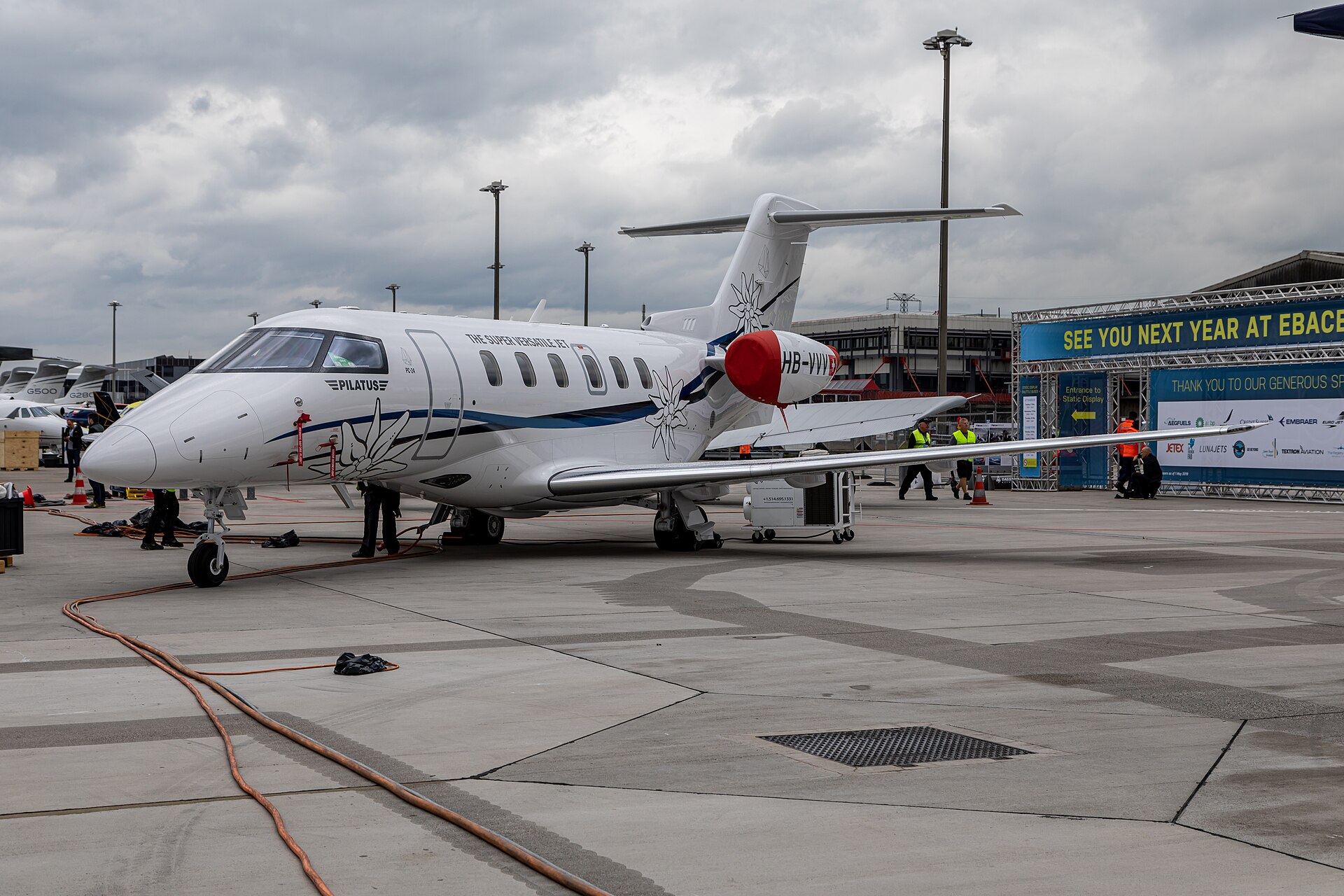
The engineering decisions that enable the PC-24's unpaved-runway capability — a reinforced undercarriage designed to absorb the loads of ungroomed surfaces, a fuselage mounted high above the ground to protect the engines from foreign object ingestion, and carefully managed low-speed handling characteristics — are invisible to the charter passenger but underpin every aspect of the aircraft's versatility. The PC-24 is also the first jet to carry a large cargo door as standard equipment: a 49-inch by 51-inch aperture that accommodates a medical stretcher, a motorcycle, a piece of industrial equipment or an oversized artwork without modification to the airframe.
On board: the cabin

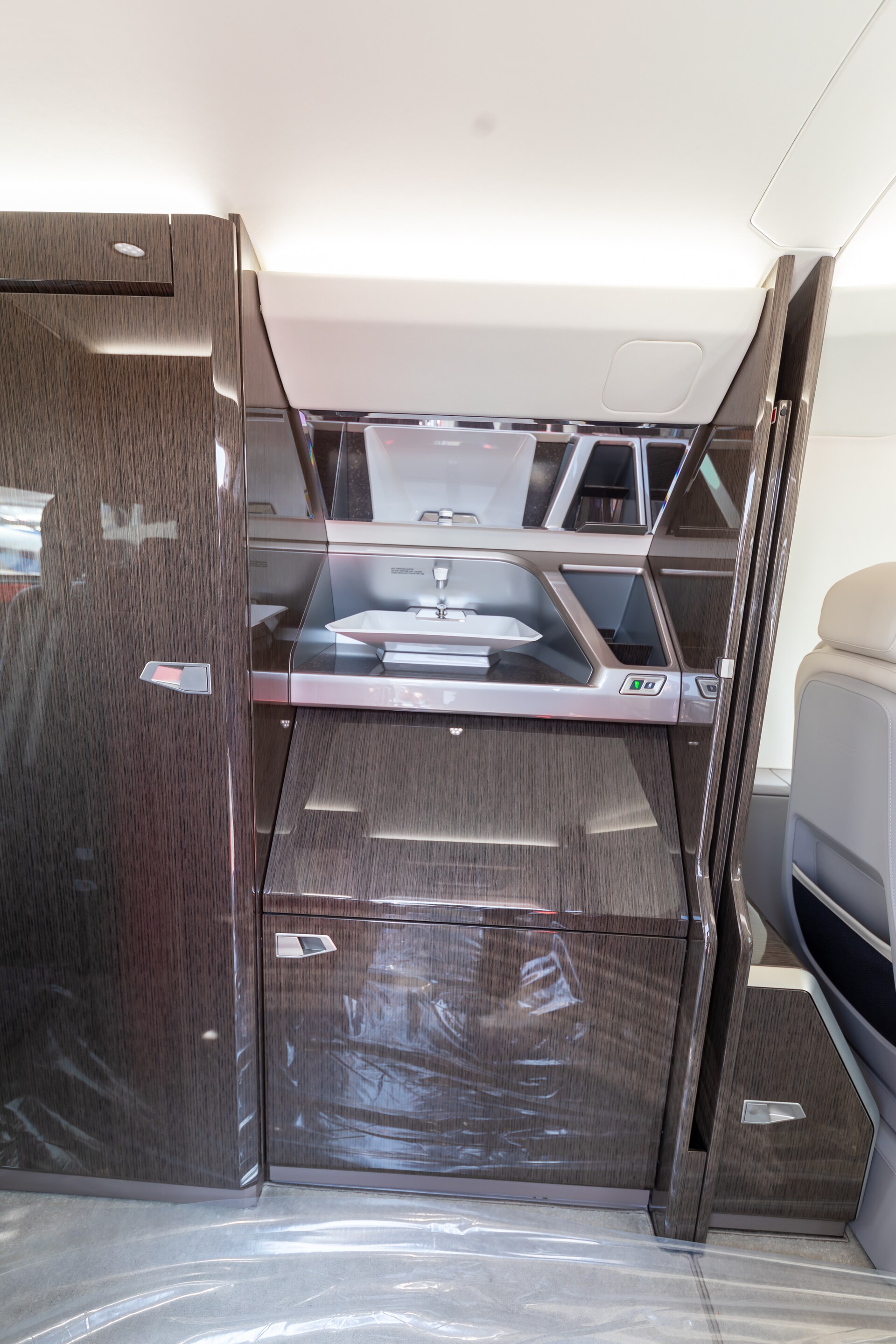
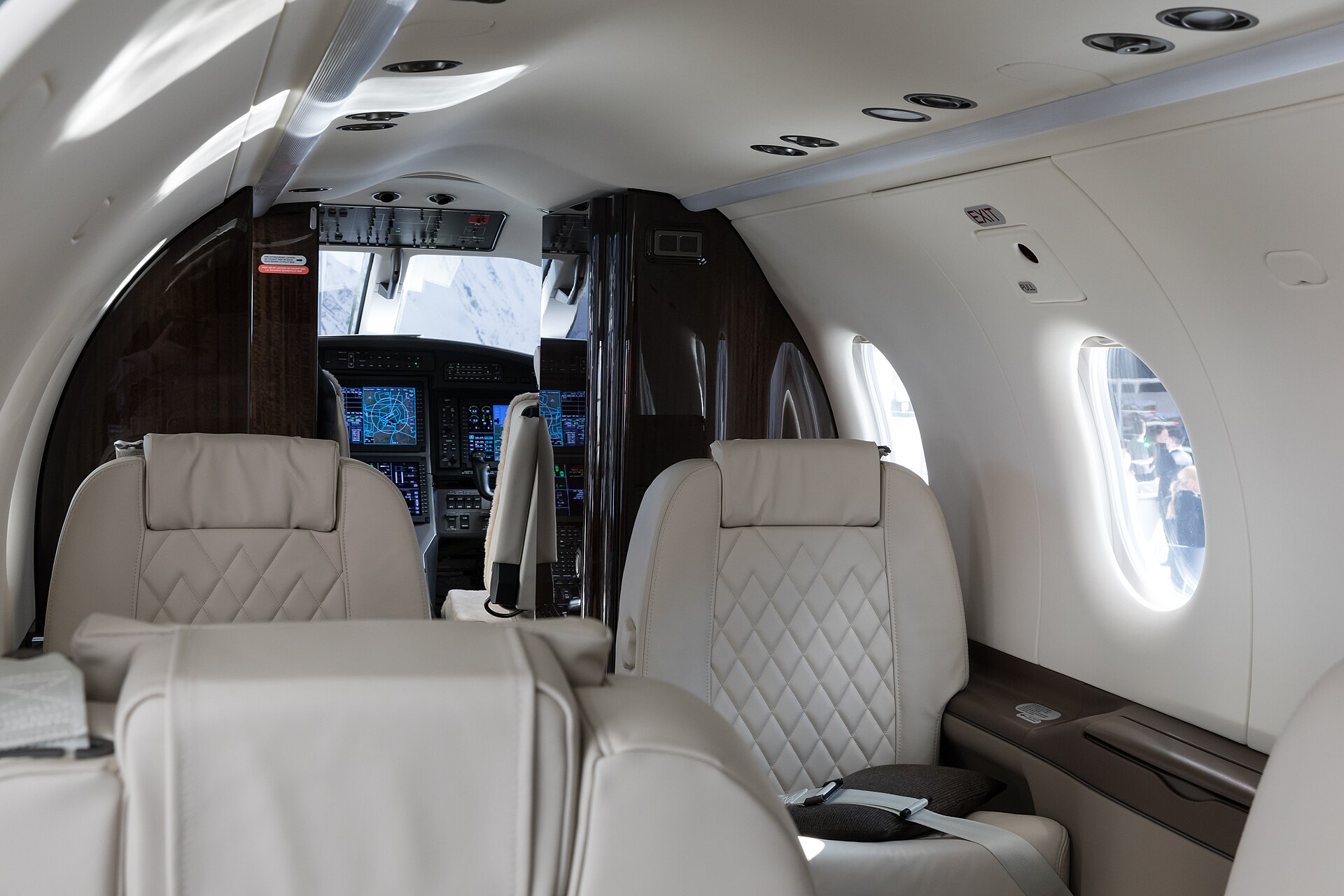
The PC-24's cabin is the largest in the light jet category by a meaningful margin. It measures 23 feet 9 inches in length — longer than some midsize jets — with a width of 5 feet 1 inch and a height of 5 feet 1 inch. The combination of length and the flat, continuous floor from cockpit bulkhead to aft pressure bulkhead gives the cabin a spatial generosity that no competitor at this charter price point approaches. Eight passengers in a standard double-club-plus-rear-bench configuration have adequate elbow room, legroom and aisle clearance; six passengers in a pure double-club arrangement are genuinely comfortable for journeys of up to four hours.

The interior is produced by Pilatus in-house to Swiss quality standards, with each aircraft delivered in a bespoke configuration specified by the operator. Charter examples typically feature full leather seating, real-wood or carbon-fibre veneer panels, a fully enclosed aft lavatory and a forward refreshment centre capable of accommodating full hot catering prepared on the ground. The cargo door configuration allows the aft cabin to be rapidly converted to a stretcher or cargo layout, making the PC-24 the most operationally flexible charter aircraft in this review by a considerable margin.

Connectivity is standard on the majority of European charter examples, with Satcom or air-to-ground Wi-Fi, USB-C outlets at each seat and optional in-seat entertainment screens on premium operators' aircraft. Cabin altitude at the FL450 service ceiling is a comfortable 6,800 feet, below the threshold at which most passengers notice any physiological effect, and the Williams FJ44-4A engines produce a quiet, smooth cruise environment. The Garmin G3000 Intrinzic flight deck, certified for single-pilot operations, provides the cockpit crew with weather radar, synthetic vision and a full suite of FMS and safety alerting capabilities.

Performance, range and runway access

The PC-24 achieves a maximum cruise speed of 440 knots true airspeed and a service ceiling of FL450. NBAA IFR range with four passengers is 2,106 nautical miles and with six passengers approximately 1,800 nautical miles — figures that enable non-stop routing from London to Marrakech (1,460 nm), to Reykjavik (1,175 nm), to Tel Aviv (2,085 nm at four-passenger payload) or to Tromsø for the Northern Lights season (840 nm). Rate of climb at sea level is an impressive 3,960 feet per minute, reaching FL450 in a direct climb of 27 minutes.

The PC-24's runway performance specifications are the statistics that set it apart from every other aircraft in this review. Balanced field length at maximum take-off weight at sea level on a standard day is 3,090 feet — shorter than the CJ3+ at comparable weight, and short enough to access Courchevel in appropriate seasonal conditions, Innsbruck in summer, Inverness on a cold day, and a very long list of secondary airfields across Africa, Central Asia and Latin America that remain effectively inaccessible to conventional light jets. The aircraft is certified for unpaved gravel, grass and compacted-dirt runways, subject to operator approval and surface assessment.

Landing distance is 2,100 feet over a 50-foot obstacle at maximum landing weight — an approach capability that opens mountain airfields and short coastal strips that would be operationally marginal or entirely unavailable to the Learjet 75 Liberty, the Citation XLS+ or any other jet in this review. Fuel burn averages 200–215 US gallons per hour at cruise power, comparable to the XLS+ but producing significantly higher destination versatility for a similar operating cost.

Signature missions and best routes

The PC-24's defining mission is any routing that combines the need for jet speed and jet cabin standards with access to an airfield that no other jet can use. In practical European terms: Samedan (St Moritz, elevation 5,600 feet, runway 5,905 feet) in winter conditions, where the PC-24's short-field performance and single-engine-out go-around capability provide margins that heavier jets cannot match. Or Mwanza in Tanzania for a safari extension, Ouarzazate in Morocco for a desert itinerary, or a private grass strip in the English home counties for a truly door-to-destination service. In the British Isles, Kirkwall in the Orkneys, Tiree under appropriate approval, and several Scottish Highland strips are within the PC-24's certified operating envelope.

Beyond airfield access, the PC-24's cargo door makes it the charter aircraft of choice for a specific category of client: the art collector transporting a work to a regional fair, the expedition team with specialist equipment, the medical operator moving a critical patient on a stretcher. The ability to configure the rear cabin as a cargo hold and the forward cabin as a passenger compartment within minutes of landing is a capability that no other jet in this category offers. Medevac operators across Europe and the Middle East are adopting the PC-24 as their primary aircraft for exactly this reason.

For conventional executive and leisure charter, the PC-24 excels on routes of 1,200–2,000 nm with five to seven passengers: London to Marrakech for a long weekend, Farnborough to Tromsø for a January Northern Lights excursion, or Geneva to Muscat with a fuel stop at Larnaca. The cabin size, the luggage capacity and the cargo door combine to create a charter experience genuinely closer to a midsize jet than to a light jet, at a price point that reflects the light jet category.

Operating economics and charter pricing

The PC-24 commands a charter premium relative to the CJ3+ and HondaJet that reflects its larger cabin, greater versatility and continued production status. Typical all-in European hourly rates in 2024–25 fall between £5,000 and £6,500 per flight hour, with the higher end applying to peak-season positioning-heavy bookings or specialist unpaved-runway missions requiring additional operator preparation. European pricing from some operators is quoted in euros, typically in the range of €3,600–€7,500 per flight hour.

Example route pricing: London Farnborough to Marrakech (1,460 nm), approximately £18,000–£38,000 one-way. London to Nice (900 nm), approximately £13,200–£28,000. A Samedan ski weekend return — London outbound Friday, London inbound Sunday, including the short-field access capability — typically prices at £25,200–£54,000. A London to Tromsø round trip for six passengers with two nights on the ground runs approximately £33,000–£68,000 all-in. Against an equivalent midsize jet charter, these figures represent savings of 30–40% whilst delivering a cabin that, on most criteria, is fully competitive.

For clients with a specific short-field or cargo requirement, the PC-24's charter cost should be benchmarked not against other light jets but against the combined cost of a conventional jet to the nearest commercial hub plus surface transfer to the final destination — a comparison that frequently makes the PC-24 the more economical option by a meaningful margin, once the value of saved time is factored into the calculation. Limitless Sky advises clients to assess total door-to-door journey cost rather than hourly rate alone when evaluating the PC-24 against alternatives.

How the Pilatus PC-24 compares

The PC-24 occupies a unique market position that makes direct comparison difficult. Against the Citation CJ3+, it offers a dramatically larger cabin, greater range, similar cruise speed and the unpaved-runway capability, at a charter cost approximately 40–50% higher. Against the Citation XLS+, it offers a longer cabin, the cargo door, the airstrip access capability and similar performance, at a premium of approximately 10–25% depending on route and positioning. For missions where the XLS+ cabin is sufficient and only established airports are required, the XLS+ remains the more cost-effective choice; for any mission involving short or unpaved airfields, the PC-24 has no jet competitor.

Against the Embraer Phenom 300E, the PC-24 trades approximately 30 knots of cruise speed for a substantially larger cabin, cargo door and short-field capability. The Phenom is the faster, more aerodynamically refined aircraft; the PC-24 is the more capable and versatile tool operationally. Phenom charter rates are broadly comparable in European markets, making the choice primarily a function of mission profile and passenger count. Against the Learjet 75 Liberty, the PC-24 is slower by 25 knots but offers a taller, wider, longer cabin, cargo capability and the defining airstrip advantage that no other jet can match.

Perhaps the most instructive comparison is with the Pilatus PC-12 NG turboprop, which the PC-24 was in part designed to complement. The PC-12 burns less fuel, costs less to charter and can access shorter and more technically demanding strips, but its cruise speed of 280 knots is approximately 160 knots slower than the PC-24. For routes of 600 nm or more where time matters, the PC-24 delivers the destination 40–50% faster at a proportionately higher cost — a trade-off that most time-conscious executives resolve firmly in the jet's favour.

Verdict: who should charter the Pilatus PC-24?

The PC-24 is the right aircraft when versatility, cabin volume and destination access are more important than achieving the lowest possible hourly rate. It is the first choice for any client whose itinerary includes an airfield below 4,000 feet, an unpaved surface, or a destination reachable only by turboprop in the conventional charter fleet. It is the natural choice for expedition travellers, field researchers, NGO logistics teams and high-net-worth leisure clients whose preferred destinations happen to be underserved by commercial aviation and impractical for conventional jets.

For more conventional European charter — executives commuting between major cities, leisure groups heading to Mediterranean resorts — the PC-24's premium over the CJ3+ or XLS+ needs to be justified by the cabin volume advantage. For six to eight passengers travelling together, that justification is straightforward. For two to four passengers on a standard airport-to-airport routing, the economics may favour a lighter aircraft unless the specific destination or cargo requirement provides the deciding factor.

Pilatus's order backlog and the PC-24's proven operational record give confidence that the type will be well-supported, actively maintained and continuously improved throughout the next decade. For clients who want the most capable and genuinely distinctive light jet available for charter in Europe today, the PC-24 is the definitive answer. Contact Limitless Sky at charter@thelimitlesssky.com to discuss routing, airfield access and availability for your specific mission.

PHOTO GALLERY

Pilatus PC-24 — exterior & cabin

Reference photography of the Pilatus PC-24 (and sister types within the same cabin family where noted). Images sourced from Wikimedia Commons under Creative Commons licences.

EXTERIOR

EBACE 2019, Le Grand-Saconnex (EB190160)
EBACE 2019, Le Grand-Saconnex (EB190160) · Matti Blume · CC BY-SA 4.0 via Wikimedia Commons
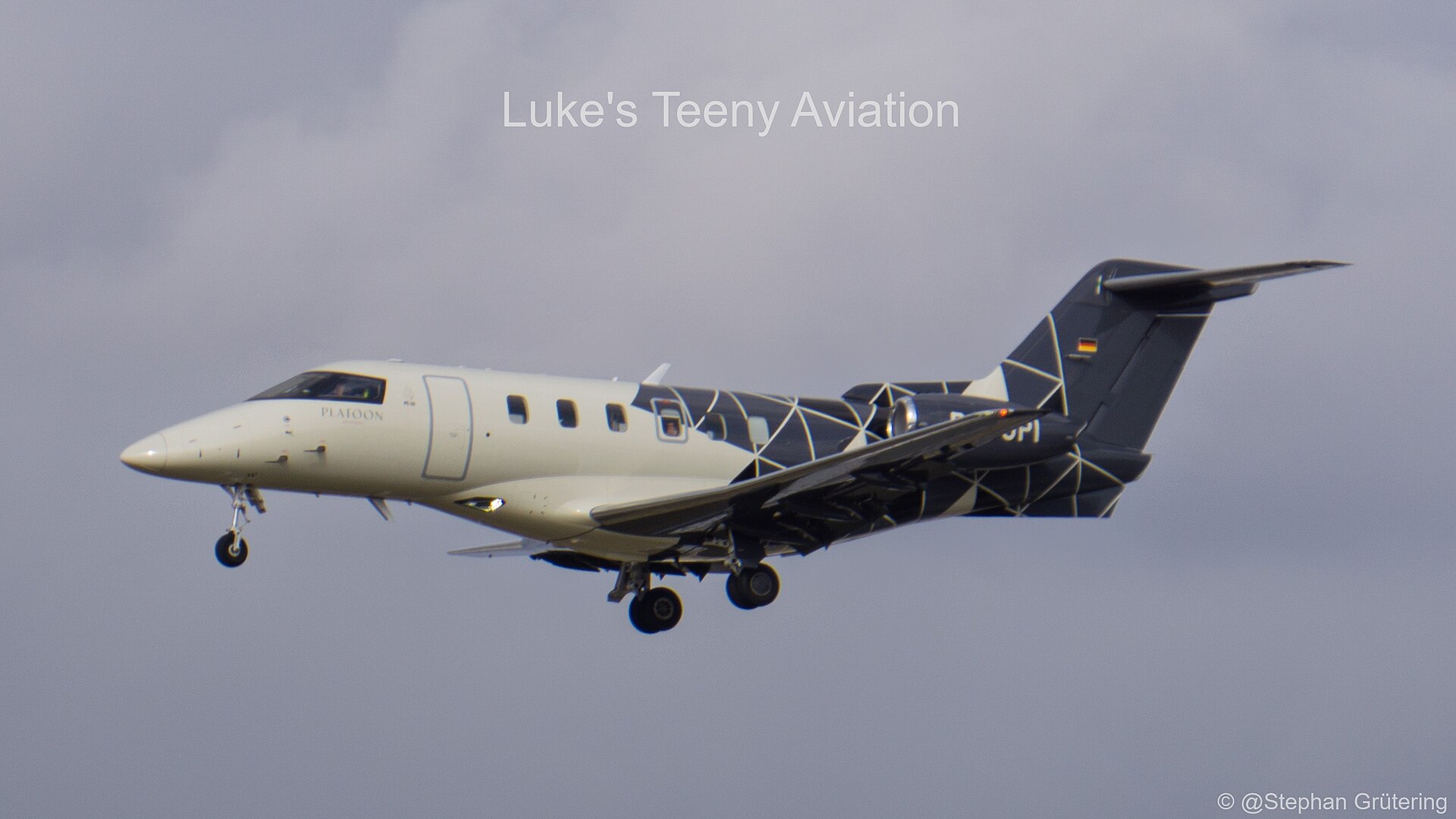
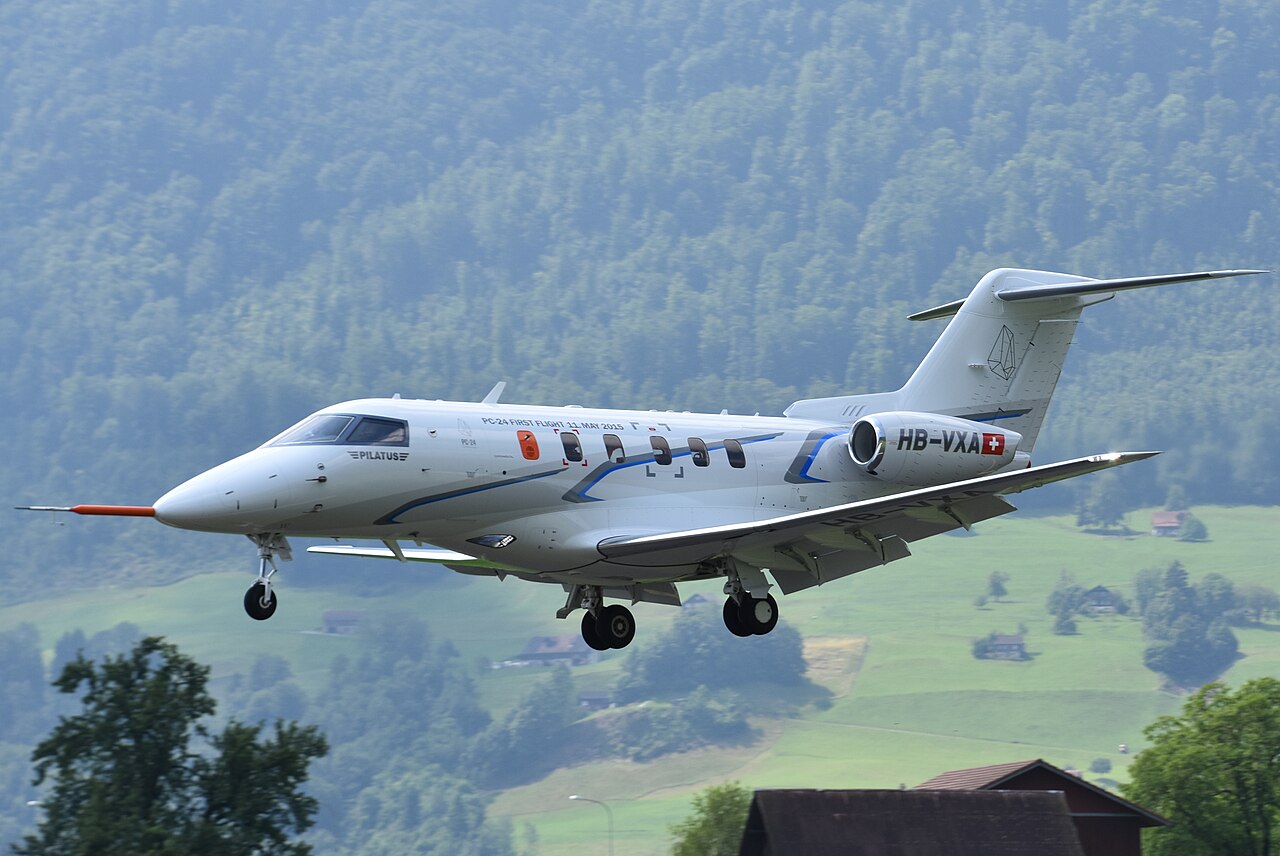
EBACE 2019, Le Grand-Saconnex (EB190188)
EBACE 2019, Le Grand-Saconnex (EB190188) · Matti Blume · CC BY-SA 4.0 via Wikimedia Commons

INTERIOR

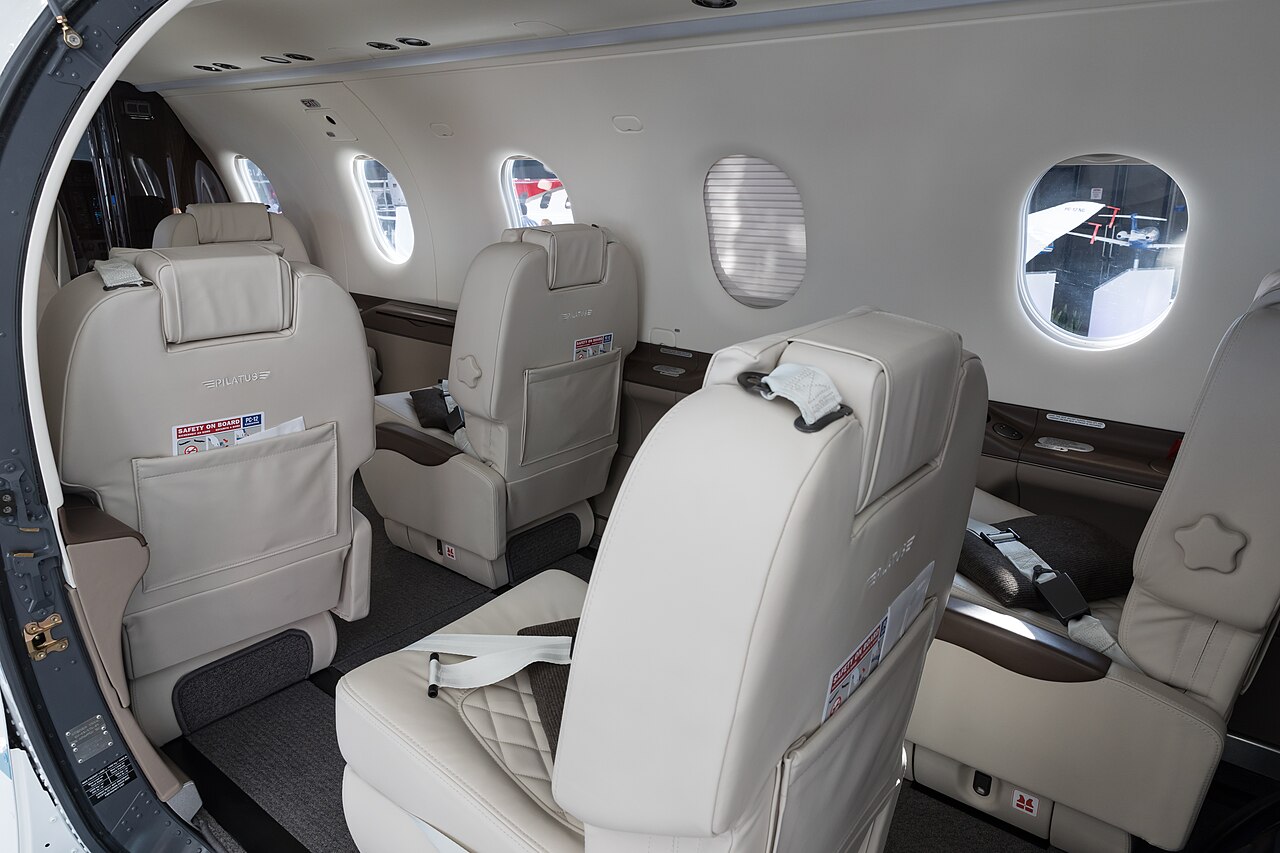
AERO Friedrichshafen 2018, Friedrichshafen (1X7A4247)
AERO Friedrichshafen 2018, Friedrichshafen (1X7A4247) · Matti Blume · CC BY-SA 4.0 via Wikimedia Commons
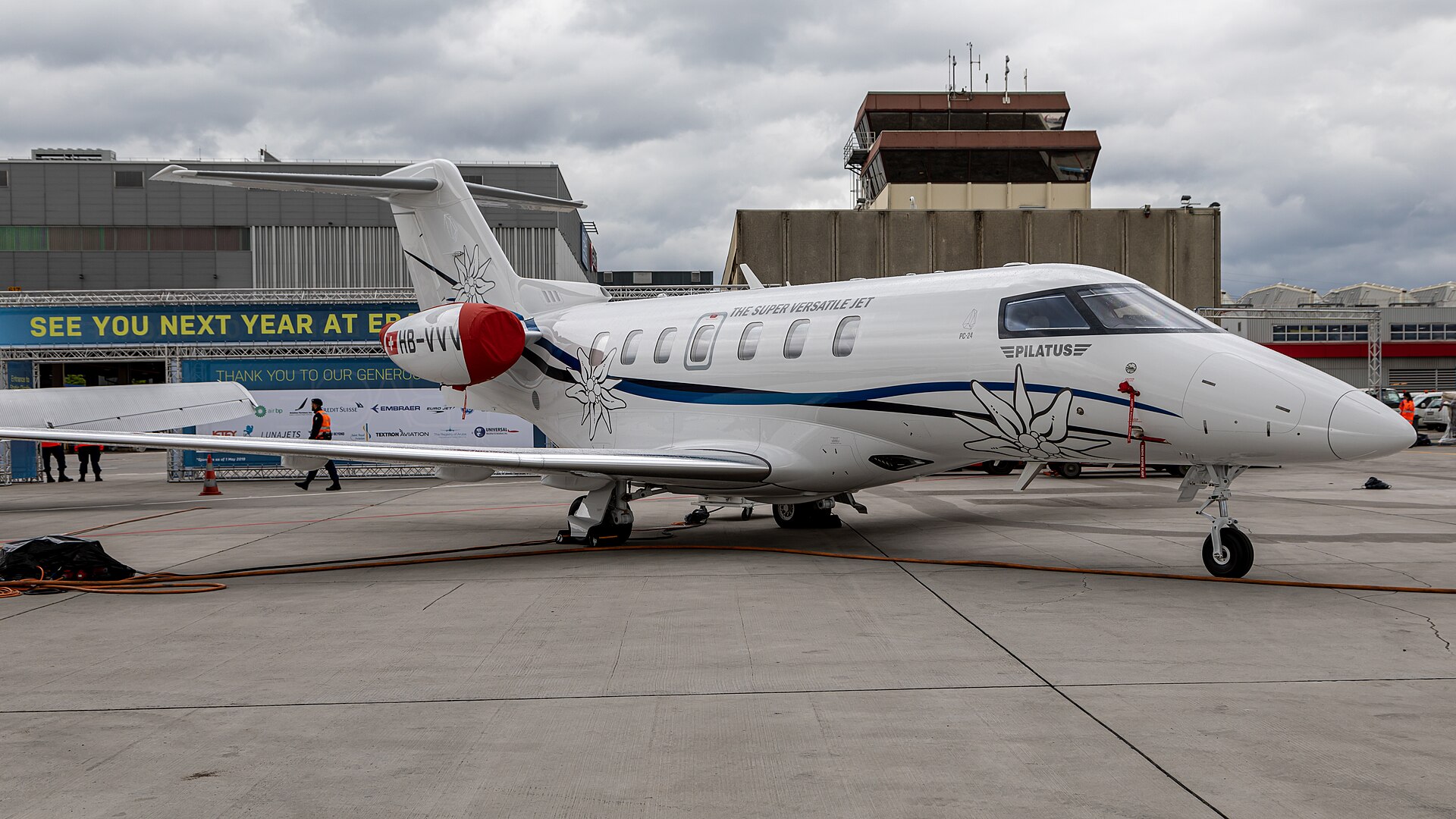
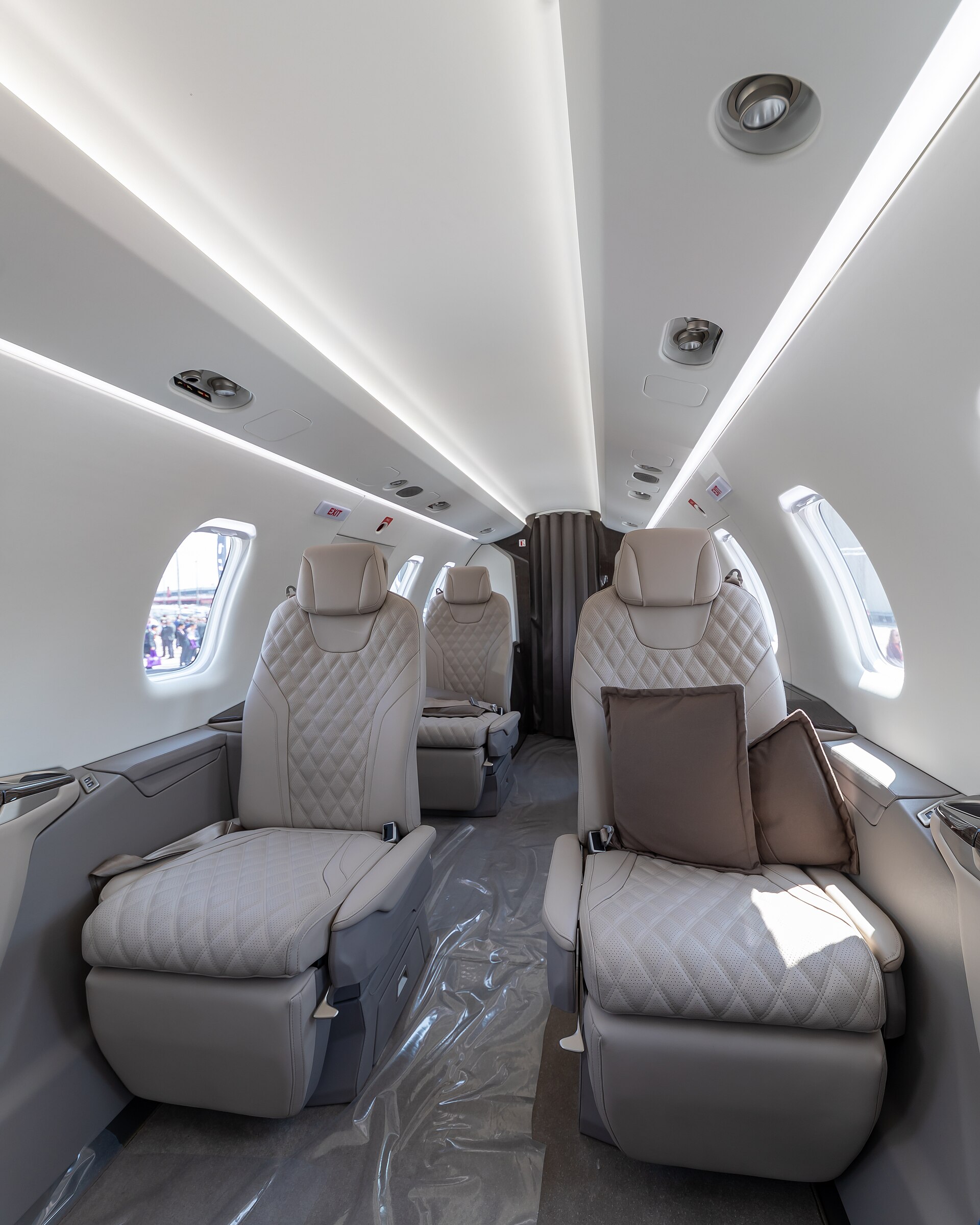
EBACE 2023, Le Grand-Saconnex (EB237695)
EBACE 2023, Le Grand-Saconnex (EB237695) · Matti Blume · CC BY-SA via Wikimedia Commons

SPECIFICATIONS

Pilatus PC-24 specifications

Passengers8
Range2,000 nm
SpeedMach 0.74
Cabin height5'1"
Cabin width5'6"
Baggage90 cu ft
Runway2,930 ft

CABIN EXPERIENCE

On board the Pilatus PC-24

  • Flat floor cabin — largest in light-jet class
  • Cargo door for skis, golf bags and bulky equipment
  • Quick-change executive, combi or freight configurations

BEST ROUTES

Where the PC-24 flies best

Zurich → Courchevel

from CHF 9,800

London → Innsbruck

from £6,300

BROWSE ALL ROUTES →

CHARTER PRICING

Pilatus PC-24 charter pricing

ROUTEESTIMATED PRICE
Geneva → St Moritzfrom CHF 8,200
Denver → Telluridefrom $8,700

Indicative all-inclusive one-way pricing — aircraft, crew, fuel, handling, catering and taxes. Confirmed quote in 10 minutes.

WHO SHOULD CHARTER THIS

Why choose the Pilatus PC-24?

The right client profile for the PC-24: 8 passengers, missions inside its 2,000 nm range, and routes where the light jet cabin size is the sweet spot between cost and comfort.

  • Only jet certified for unimproved runways
  • Largest flat-floor cabin in class
  • Access to 21,000 airports worldwide

RANGE & LIMITATIONS

What the PC-24 can — and can't — do

Non-stop range

2,000 nm with typical payload. Missions beyond this figure require a technical fuel stop — expect 30–45 minutes on the ground and a modest re-quote. On strong headwinds or full-cabin days the practical range trims by 5–10%.

Runway requirement

Balanced-field length around 2,930 ft. Rules out very short-strip airfields (Courchevel, Lugano, London City steep-approach) unless the airframe is specifically certified — our ops team validates every airport pairing before we confirm the quote.

Payload & baggage

90 cu ft of hold space with 8 passengers. Ski, golf and dive equipment fit for most parties; larger groups with full luggage should size up one category to preserve the range figure above.

FAQ

Frequently asked

Is Wi-Fi available onboard?

Yes — most aircraft in this class offer high-speed Ka-band or Starlink connectivity suitable for video calls and streaming throughout cruise.

Can pets fly on board?

Many operators permit pets in the cabin, subject to aircraft-owner approval, destination rules, documentation and any operator-specific charges. Tell us the species and weight when you request a quote.

How quickly can the aircraft be ready?

Once a quote is confirmed, this aircraft can typically be positioned within 2–4 hours anywhere in its home region, and within 24 hours globally.

FURTHER READING

Planning the PC-24 for business or leisure

SIMILAR AIRCRAFT

Also in Light Jet

HEAD-TO-HEAD

Compare the PC-24

ALL COMPARISONS →

PILATUS PC-24 CLUSTER

Everything connected to the Pilatus PC-24

Ready to charter the Pilatus PC-24?

Quotes in 10 minutes. Aircraft positioned within hours. 24/7, worldwide.

REQUEST A QUOTE

Pilatus PC-24 gallery

Exterior and cabin photography of the Pilatus PC-24 type.

Limitless Sky ownership desk

What it costs to buy, operate and charter out a Pilatus PC-24

A five-year planning model on the same assumptions as our ownership vs charter vs fractional analysis: 100 owner-occupied hours a year, 15% owner positioning, 185 third-party charter hours sold on a managed certificate at an 85% owner revenue share, and 24% market depreciation over the hold.

Acquisition

Indicative market value€7.58m – €11.29m
Model purchase price used€9,250,000
Inspection, legal and delivery (2%)€185,000
Residual value after 5 years€7,030,000

Annual cost of operation

Fixed cost (crew, hangar, insurance, management)€340,000
Direct operating cost per aircraft hour€1,250
Owner missions (114.99999999999999 aircraft hours)€143,750
Annual cash operating cost before charter€483,750

What renting it out brings in

Charter sold (185 occupied hours at €3,600)€666,000
Owner share at 85%€566,100
Direct cost of those flights (222 aircraft hours)(€277,500)
Net annual contribution to fixed costs€288,600
Share of fixed costs covered85%
Charter hours needed to cover all fixed costs218 hours

Five-year verdict

Net five-year cash cost, with charter income€3,591,650
Cost per owner-occupied hour€7,183
Cost per hour if never chartered out€10,069
Opportunity cost of tied-up capital (4%/yr)€1,850,000
Methodology and sources— how these numbers are built

Purchase price band

The €7.58m€11.29m band is an indicative pre-owned range for a well-maintained, mid-life Pilatus PC-24 on a current maintenance and engine programme, in a typical European charter specification. It is built from published asking prices and retail transaction ranges (Duncan Aviation market letters, AvBuyer and Controller listings, VREF and Aircraft Bluebook retail guidance), then narrowed against what our desk sees pay-and-close in Europe. The model uses a single point inside that band, €9,250,000, so the five-year output is reproducible. Serial number, total time, cycles, engine-programme enrolment, avionics mandates, interior age and import/VAT status routinely move a real transaction outside the band in either direction.

Fixed cost assumptions

€340,000 a year covers two (or, for larger cabins, three) crew with training and recurrent sim, hangarage at a European base, hull and liability insurance, the management fee on a third-party AOC, navigation and weather subscriptions, and scheduled non-flying charges. It excludes financing, tax, extraordinary maintenance events and cabin refurbishment. Sources are operator and management-company budget templates for the type, cross-checked against NBAA and Conklin & de Decker fixed-cost structures.

Direct operating cost per hour

€1,250 per aircraft hour is fuel at prevailing European Jet A-1 pricing, engine and airframe programme accruals, APU and landing-gear reserves, landing, handling and navigation fees, catering and crew expenses. It is applied to actual aircraft hours, not occupied hours: owner trips carry a 15% positioning uplift and third-party charter carries 20%, which is what repositioning empty legs cost in practice.

Charter revenue estimate

185 third-party occupied hours a year at a wholesale base rate of €3,600 per hour is what a managed Pilatus PC-24 realistically sells in Europe once owner availability, maintenance downtime and seasonality are taken out — not the retail rate a client pays. The rate is the operator-level rate band we transact at on Avinode and directly with operators; the owner keeps 85% under a standard management agreement, with the balance retained by the operator. Ferry, fuel surcharges, de-icing and overnights on charter missions are captured in the direct-cost line rather than netted off the rate.

Depreciation and the five-year frame

24% market depreciation is applied over a 5-year hold, with 2% acquisition costs (inspection, legal, delivery) at entry and 3% selling costs at exit. Owner utilisation is held at 100 occupied hours a year across every aircraft so types can be compared like for like. Capital opportunity cost is shown separately at 4% simple per year and is not added into the cash cost. The same frame drives our ownership vs charter vs fractional analysis and the most profitable jets to own ranking, so the three never disagree.

Review cadence

Values are reviewed each quarter against the same sources and re-published in one dataset, so every aircraft page moves together. Read our editorial standards for how we source and correct figures.

Indicative planning estimates prepared by the Limitless Sky desk — not an appraisal, charter quotation, offer or tax advice. Figures are pre-tax and pre-financing and exclude recoverable VAT, extraordinary maintenance and substitute lift during downtime. Actual values depend on serial number, hours, maintenance and engine-programme status, specification, base and charter demand. Ask the desk for a tail-specific forecast, or charter the Pilatus PC-24 instead and skip the balance sheet entirely.

Interactive · ownership desk

Run your own numbers on the Pilatus PC-24

Move your annual flying, the charter hours you are willing to release, the management fee your operator charges and how long you intend to hold the aircraft. Buy versus charter-out break-even updates instantly.

Your assumptions

Buy versus charter out

Net cost of owning over 5 years€3,591,650
Cost per owner-occupied hour€7,183
Same hours bought on the charter market€2,124,000
Indicative retail charter rate per hour€4,248
Owning costs more€1,467,650

Break-even

Owner hours a year where owning beats chartering204 h
Charter hours a year to cover the whole fixed budget218 h
Charter income after the cost of flying it€288,600 / yr
Share of fixed costs covered85%

At 100 hours a year, chartering is cheaper than owning the Pilatus PC-24 by €1,467,650 over the hold. Owning turns cheaper from around 204 hours a year.

Pre-tax, pre-financing planning estimates on the same frame as the tables above: 15% owner positioning, 20% positioning on charter, 2% acquisition cost, 3% selling cost, and published five-year depreciation scaled linearly to your resale horizon. Retail comparison rate is the wholesale base rate plus 18%. Ask the desk for a tail-specific forecast.

KNOWLEDGE GRAPH

Where the Pilatus PC-24 fits in our aviation graph

Routes, destinations and airports this aircraft typically serves — plus peers in the same class and family.

Book HereDo you have a question?