Miami-Opa Locka Executive
OPFSignature & Atlantic Aviation FBOs; closest to Miami Beach.
- TRANSFER
- 20 min · 16 km
- TO
- Miami Beach
- MODES
- Chauffeured SUV

Coast to coast on your schedule.
Miami is the largest private aviation market in the southeastern US. Three executive airports — Opa-locka, Miami Executive and Fort Lauderdale Executive — share the load, plus Miami International for ultra-long-range arrivals.
See full private jet charter pricing, read the Palm Beach → the Bahamas route guide.
BEST TIME TO CHARTER
Demand follows the social calendar — Art Basel, Super Bowl, Masters, Hamptons summer, Aspen ski season. Plan four weeks ahead for peak weekends.
AIRPORTS, FBOs & TRANSFERS
Each option below shows the executive airport, drive time to Miami, and typical ground options. Tap an airport for the full guide — runways, FBOs, customs, slot rules and arrival workflow.
Signature & Atlantic Aviation FBOs; closest to Miami Beach.
Quieter alternative for south-Miami arrivals.
24h customs; favoured for Caribbean repositioning.
New to private terminals? What is an FBO? · Private jet charter cost guide — FBO choice and charter pricing for Miami
POPULAR ROUTES
| ROUTE | FLIGHT TIME | TYPICAL AIRCRAFT | FROM |
|---|---|---|---|
| New York → Miami | 2h 45m | Midsize Jet | from €8,600 |
| Los Angeles → Miami | 4h 50m | Heavy Jet | from €38,500 |
| London → Miami | 8h 45m | Ultra Long Range | from €61,600 |
| Miami → Aspen | 4h 15m | Midsize Jet | from €13,900 |
One-way prices for the aircraft class listed are estimated, confirmed quote within 1–2 hours. You get an estimate per aircraft class straight away, then two or three confirmed options with aircraft photos.
COSTS TO EXPECT
ENTRY POINT
from €8,600
Lowest estimated one-way price across the routes above — estimated, confirmed quote within 1–2 hours.
TYPICAL AIRCRAFT
Midsize Jet · Heavy Jet · Ultra Long Range
Cabin selected against range, runway and party size. We confirm the exact tail before contracting.
WHAT'S INCLUDED
All-inclusive quote
Crew, fuel, handling, landing and de-icing fees, standard catering and FBO access. Peak-period positioning and overnight crew may apply on one-ways — flagged upfront.
Charter pricing is route- and date-sensitive. For a binding number, share dates, pax and luggage in the quote form.
CHARTER BUYER'S GUIDE
Miami serves as the primary hub for private aviation in the southeastern United States, functioning as the critical nexus for traffic moving between the northeast corridor, Latin America, and the Caribbean. For the ultra-high-net-worth individual, Miami is not merely a seasonal destination but a year-round operational base for both business and leisure. The market is defined by high flight volumes and a sophisticated infrastructure comprised of several dedicated executive airports, each serving distinct geographical and logistical needs. While many global destinations rely on a single primary international airport, the Miami metropolitan area utilizes a distributed model that allows operators to bypass the congestion of Miami International (MIA) in favour of purpose-built executive facilities like Opa-locka (OPF) and Miami Executive (TMB).
Traffic patterns are predominantly driven by the financial sectors of New York and Greenwich, the tech hubs of California, and the sovereign wealth and industrial capital of Europe and the Middle East. During the winter months, the influx of narrow and wide-body private aircraft is immense, necessitating precise operational planning. The buyer profile varies from the day-tripping corporate executive to families relocating for the winter season with significant baggage and staff requirements. Understanding the nuances of the South Florida airspace is essential for efficient travel; the proximity of these airports to one another means that while options are plentiful, the choice of touchdown point significantly impacts ground transit times and overall mission cost.
The peak charter season in Miami commences in late November, coinciding with the Thanksgiving holiday, and extends through late April. The highest concentration of movements occurs during Art Basel in early December, the Christmas and New Year period, and the Miami Boat Show and South Beach Wine & Food Festival in February. During these windows, demand for midsize and large-cabin aircraft often outstrips local supply, leading to higher positioning costs as jets must be brought in from secondary markets. Slots for arrivals and departures are not officially mandated by the FAA in the same way as Heathrow or Charles de Gaulle, but FBO ramp space becomes a critical bottleneck. If you are planning to arrive during Art Basel, securing a hangar or parking spot at Opa-locka should be finalised at least four weeks in advance.
Weather is a secondary but vital consideration. The hurricane season runs from June through November, with the highest probability of convective activity and afternoon thunderstorms in August and September. While modern business jets are equipped with sophisticated weather radar to navigate these cells, sudden ground stops at MIA or OPF can occur, causing ripple effects across the schedule. The shoulder seasons—May and October—offer a pragmatic balance of reliable weather and better aircraft availability. During these months, charter buyers can often find more competitive pricing as operators are more willing to waive repositioning fees to keep their fleets moving in a less saturated market.
Miami-Opa Locka Executive (OPF) Opa-locka is the premier choice for private jet travellers heading to Miami Beach, Bal Harbour, or the Design District. Located roughly 11 miles north of Downtown Miami, it handles the bulk of the region’s executive traffic. It features three runways, the longest being 8,002 feet (2,439 metres), capable of accommodating the largest ultra-long-range aircraft including the Global 7500 and Gulfstream G700. The airport operates 24 hours a day and hosts several high-end FBOs, most notably Signature Flight Support and Atlantic Aviation. Both offer discreet, rapid processing, on-site customs, and the ability for chauffeured vehicles to meet passengers directly on the ramp (subject to TSA and airport security protocols). Parking is extensive but fills rapidly during peak events. OPF is preferred for its lack of commercial airline traffic, which ensures faster taxi times and more predictable arrival/departure slots compared to MIA.
Miami Executive (TMB) Formerly known as Kendall-Tamiami, Miami Executive is situated 13 miles southwest of the central business district. With a primary runway length of 5,003 feet (1,525 metres), it is better suited for light to midsize jets and turboprops, though it can handle some super-midsize aircraft under certain weight configurations. It is the logical choice for travellers staying in Coral Gables, Pinecrest, or the Florida Keys. Signature Flight Support and Reliance Aviation manage the ground handling here. The airport is generally quieter and less prone to the congestion found at OPF, though its distance from Miami Beach (approximately 45–60 minutes in traffic) makes it less desirable for those heading to the barrier islands.
Fort Lauderdale Executive (FXE) FXE is one of the busiest general aviation airports in the country and serves as a vital alternative for those staying in Northern Miami-Dade or Broward County. It is particularly favoured for aircraft repositioning due to its robust maintenance ecosystem and 24-hour Customs and Border Protection (CBP) facility. The main runway is 6,002 feet (1,830 metres). FXE is often used by owners and charterers who want to avoid the higher landing fees and fuel surcharges associated with Opa-locka. It is a roughly 35-minute drive to the northern reaches of Miami, such as Aventura or Sunny Isles Beach.
Miami International (MIA) While MIA is the primary gateway for commercial flights, it is rarely the first choice for private charters unless a passenger is connecting to an international commercial flight or arriving on a heavy jet that requires the massive 13,000-foot runways and 24/7 heavy-duty handling. The Signature Flight Support FBO at MIA is excellent, but taxi times can exceed 30 minutes during peak commercial arrival banks, and air traffic control delays are frequent.
Alternative Diversion: Palm Beach International (PBI) In the event of severe weather or total ramp saturation in Miami, Palm Beach International is the primary diversion. While it is 70 miles north of Miami, it offers substantial infrastructure and is a common drop-off point for travellers who then take a short helicopter transfer south to the Miami Watson Island Heliport.
Light Jets and Turboprops For regional hops from the Bahamas, Orlando, or Naples, light jets like the Phenom 300 or Citation CJ3 are the industry standards. The Phenom 300 is particularly prized in the Miami market for its speed and sleek interior, making it ideal for groups of up to 7 passengers with moderate luggage. However, for short-field performance or lower-cost positioning, the Pilatus PC-12 remains a robust choice for reaching island strips in the Caribbean.
Midsize and Super-Midsize Jets For the high-volume New York to Miami route, midsize jets like the Citation XLS+ or the Hawker 800XP offer a balance of efficiency and comfort. However, for those requiring more headroom and a full galley, the super-midsize category is the sweet spot. The Challenger 350 and Praetor 600 are frequently requested for flights coming from the Midwest or Texas. These aircraft provide the range to reach Miami from almost anywhere in the continental US without a fuel stop, even against strong headwinds.
Heavy Jets When flying from the West Coast, such as Los Angeles (VNY) to Miami (OPF), a heavy jet is required for non-stop performance and transcontinental comfort. The Gulfstream G450 and Challenger 605 are stalwarts of this route, offering spacious cabins for 10–14 passengers and a flight attendant for full-service catering. These aircraft are also the minimum requirement for those heading south to major Latin American capitals like São Paulo or Buenos Aires.
Ultra-Long-Range Jets For trans-Atlantic missions, such as London to Miami, ultra-long-range aircraft like the Gulfstream G650ER, Global 6000, or Falcon 8X are essential. These jets offer three-zone cabins, full lie-flat bedding, and advanced soundproofing to mitigate jet lag. On a route like London (LTN/FAB) to Miami (OPF), an 8-hour 45-minute flight time is typical, requiring an aircraft with a minimum range of 5,000+ nautical miles to ensure safety margins and weather deviations. The Global 7500 is the current flagship for this segment, providing the smoothest ride through turbulence and the most sophisticated air filtration systems.
Charter pricing in the Miami market is highly fluid and influenced by the ‘empty-leg’ economy. Because Miami is a major terminus, many aircraft fly in full and depart empty, or vice versa.
Factors driving these prices include landing fees—which are notably higher at OPF and MIA than at FXE—and fuel surcharges. Empty-leg opportunities can offer savings of 30% to 60%, particularly on the New York–Miami corridor on Tuesday or Wednesday, when demand is lowest. Conversely, expect a 20-30% premium for bookings made less than 72 hours before departure during Art Basel or the Super Bowl.
Upon arrival at an FBO like Signature at Opa-locka, the transition from aircraft to ground transport is designed for speed. For domestic arrivals, passengers are typically in their vehicles within 5 to 10 minutes of the aircraft chocks being set. For international arrivals, Customs and Border Protection (CBP) officers will either board the aircraft or meet passengers at the FBO’s dedicated customs desk. Miami is a ‘Designated Airport’ for pet imports, but ensure all USDA veterinary certificates are in order at least 48 hours prior to arrival.
Ground transfer times vary significantly by time of day. A chauffeured SUV from Opa-locka to the Faena Hotel in Miami Beach takes approximately 35–50 minutes depending on I-95 traffic. For those looking to bypass traffic entirely, helicopter transfers from OPF to Watson Island (near Downtown/Port of Miami) take roughly 8 minutes. If you are staying at a private villa in Indian Creek or Key Biscayne, a helicopter transfer is often the most efficient route. For those arriving for a yacht charter, many FBOs can arrange direct transport to major marinas such as Island Gardens Deep Harbour or the Miami Beach Marina. Luggage flow is managed by the FBO ramp team; if you are travelling with excessive baggage (common on long-range arrivals), ensure a Mercedes-Benz Sprinter or similar high-capacity vehicle is pre-booked, as standard SUVs may struggle with more than 6-7 large cases.
Miami is a city of distinct enclaves. Miami Beach, specifically the areas of South of Fifth and Mid-Beach, remains the primary draw for the international social set. The Design District and Wynwood have evolved into the city’s cultural and luxury retail heart, while Brickell serves as the financial powerhouse—often referred to as 'Wall Street South'.
For high-net-worth travellers, the accommodation landscape is dominated by ultra-luxury resorts that offer high levels of privacy and service. The Surf Club in Surfside is the current benchmark for understated elegance, while the hotel scene in South Beach offers more high-energy environments. The dining scene is exceptionally competitive; securing tables at the city's top-tier establishments requires advanced planning, often handled by the charter broker’s concierge desk or the hotel’s head concierge. The city’s marinas are world-class, capable of hosting vessels up to 500 feet, making Miami one of the few global cities where a seamless private jet-to-superyacht transition is a daily occurrence. Business travellers will find the Brickell area increasingly sophisticated, with a density of private members’ clubs and high-end office towers that reflect the city’s growing stature in global private equity and hedge fund management.
For standard domestic missions (e.g., New York to Miami), a booking window of 7 to 14 days is sufficient to secure a specific preferred aircraft type. However, for peak dates in December and February, we recommend a lead time of at least 45 to 60 days. This ensures not just the aircraft availability, but the securing of preferred arrival and departure slots at the FBO.
Same-day feasibility is high in Miami due to the large number of based aircraft. A 'Go' within 4 hours is possible, provided the aircraft and crew are not already out on a mission. For international long-haul arrivals, a minimum of 24 hours is required to file the necessary CBP manifests and secure overflight permits if applicable. When requesting a quote, please provide the total passenger count, an accurate weight estimate for luggage, and any specific catering requirements to ensure the initial quote is operationally viable.
ON THE GROUND
Located in Mid-Beach, this property is famous for its opulent Alan Faena design and Damien Hirst art. It offers a high-drama aesthetic and world-class service, making it a favorite for those arriving via Opa-locka who want a vibrant, culturally-rich coastal stay.
An oceanfront staple in South Beach known for its discreet atmosphere and Asian-inspired serenity. Its multi-bedroom suites and three infinity pools offer the privacy required by high-profile travellers, providing a tranquil contrast to the energy of the surrounding district.
Set in Surfside, this is the most prestigious address for those seeking understated luxury away from the South Beach crowds. The historic club has been meticulously restored, offering a refined, residential feel with exceptional culinary options and direct beach access.
Situated in Sunny Isles Beach, this Mediterranean-style retreat is ideal for families. It provides expansive multi-room suites and one of the best beach club experiences in South Florida, conveniently located for those utilizing Fort Lauderdale Executive or Opa-locka airports.
The Miami outpost of the New York legendary establishment in South of Fifth. It remains one of the most difficult reservations to secure in the city, offering high-end Italian-American cuisine in a room designed for the international elite.
Located in the Design District, this Michelin-starred Korean Steakhouse combines the precision of high-end dining with a high-energy atmosphere. It is a premier choice for a post-shopping dinner or a business power-lunch after landing at nearby Opa-locka.
A discreet, members-club style villa in South Beach that functions as both a boutique hotel and a Northern Italian restaurant. It offers an intimate, residential vibe that makes it a perfect sanctuary for private jet travellers seeking an escape from the public eye.
A sophisticated beach club located on Watson Island, accessible by yacht or car. It offers a Mediterranean-inspired menu and a curated sunset atmosphere, making it a popular first stop for those arriving in Miami by air or sea.
AIRCRAFT
4–6 passengers, up to 3h
Citation CJ3, Phenom 300 — ideal for short European hops with quick turnarounds.
7–9 passengers, up to 5h
Citation XLS+, Hawker 900XP — stand-up cabin, full galley, transcontinental Europe.
10–14 passengers, 6h+
Challenger 605, Gulfstream G450, Falcon 7X — intercontinental with bedroom-class comfort.
FLEET FOR MIAMI

LIGHT JET
Cessna
The benchmark light jet for short European hops.
VIEW AIRCRAFT →LIGHT JET
Cessna
Light-jet economics, midsize cabin comfort.
VIEW AIRCRAFT →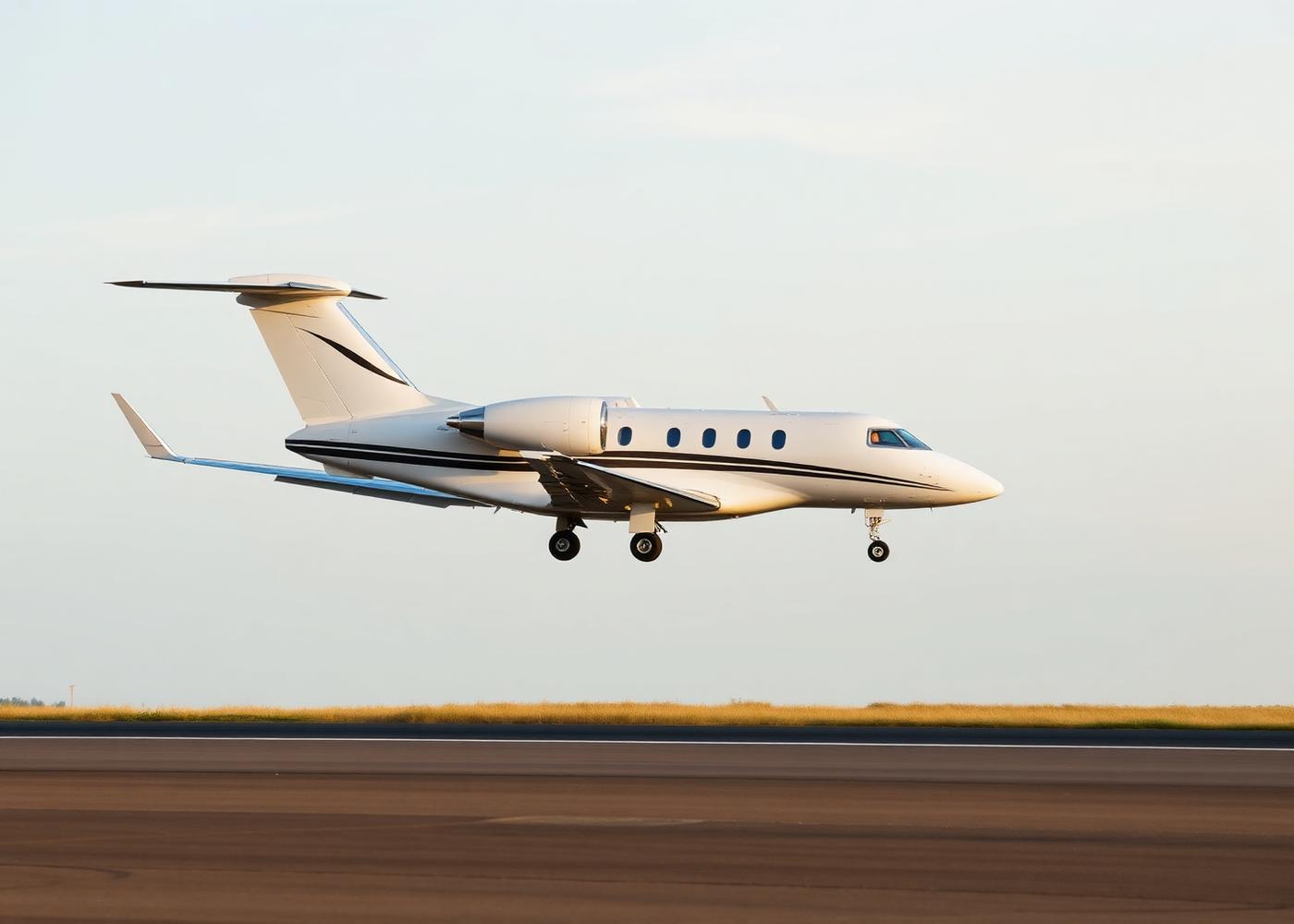
MIDSIZE JET
Hawker Beechcraft
The proven workhorse of midsize charter.
VIEW AIRCRAFT →MIDSIZE JET
Cessna
Six-foot flat-floor cabin at midsize prices.
VIEW AIRCRAFT →HELICOPTER CHARTER — MIAMI
Pair a jet arrival with a same-day helicopter transfer. These are the models our desk most often books on the Miami leg — specifications and live availability sit on the dedicated helicopter fleet page.
LIGHT HELICOPTER · 6 PAX
Bell Helicopter
VIEW BELL 407GX →ROUTES SERVING MIAMI
45 minutes · 330 km
Palm Beach–Bahamas is the most-flown private aviation route in the Caribbean, supported by US pre-clearance at PBI and an extensive island FBO network. Winter season (December–April) demand is intense.
VIEW ROUTE →38 minutes · 300 km
Miami–Bahamas is a Caribbean staple — sub-90-minute hops from Florida and the US East Coast. US pre-clearance at the island airport means re-entry into the US as a domestic flight.
VIEW ROUTE →2h 49m · 2,000 km
Miami–St Barts is a Caribbean staple — sub-90-minute hops from Florida and the US East Coast. US pre-clearance at the island airport means re-entry into the US as a domestic flight.
VIEW ROUTE →CHARTER GUIDES
PRICING & COST
12 min read
OPERATIONS & TRAVEL
12 min read
AIRCRAFT & FLEET
11 min read
AIRCRAFT & FLEET
5 min read
PRICING & COST
6 min read
FAQ
A chauffeured transfer from Miami-Opa Locka Executive to Miami Beach is about 20 minutes (16 km). Typical modes are chauffeured suv. Limitless Sky pre-positions ground transport so the car is waiting planeside.
A chauffeured transfer from Miami Executive to Coral Gables and Miami Beach is about 30 minutes (25 km). Typical modes are chauffeured suv. Limitless Sky pre-positions ground transport so the car is waiting planeside.
A chauffeured transfer from Fort Lauderdale Executive to Fort Lauderdale and Miami Beach is about 30 minutes (30 km). Typical modes are chauffeured suv. Limitless Sky pre-positions ground transport so the car is waiting planeside.
Miami is served by OPF, TMB, FXE. Choice depends on aircraft class, where you're staying, and slot availability. We pick the field that puts you closest to your hotel or yacht with the least ground time — see each airport guide for runway, customs and FBO detail.
Usually yes — many operators permit pets in the cabin, subject to aircraft-owner approval, destination rules, documentation and any operator-specific charges. Let us know the size and species when you request a quote and we will confirm per aircraft.
For most major airports we can have an aircraft positioned within 4 hours. Last-minute bookings are our specialty — we operate 24/7.
One-way prices estimated, confirmed quote within 1–2 hours: New York → Miami from €8,600 (midsize jet); Los Angeles → Miami from €38,500 (heavy jet); London → Miami from €61,600 (ultra long range); Miami → Aspen from €13,900 (midsize jet). Send your dates and passengers and you get an estimated price per aircraft class straight away, then two or three confirmed options with aircraft photos within 1–2 hours.
RELATED DESTINATIONS
EXPLORE THE CLUSTER
HUB GUIDES
ROUTES SERVING MIAMI
BEST AIRCRAFT FOR MIAMI
EMPTY LEGS · TO MIAMI
Repositioning flights to Miami come up occasionally and rarely stay available for long. Set an alert and we will tell you if one matches.
EMPTY-LEG ALERTS
We scan operator inventory every 12 hours. The moment a leg matches your route, date window and budget, we email you with a direct booking link.
MALLORCA · GERMANY, NRW, FRANKFURT
SKI SEASON · ALPS
An estimated price per aircraft class straight away, then two or three confirmed options with aircraft photos within 1–2 hours. 24/7, worldwide.
REQUEST A QUOTEAIRPORT COMPARISON
4 airports serve Miami. MIA is primary; OPF, TMB, FLL act as alternates when slots or runway constraints dictate.
MIA · PREMIER
MIA
MIA — primary jet gateway; 13,016 ft runway; in-town.
OPF · EXCELLENT
OPF
OPF — excellent private-jet access; 8,002 ft runway; in-town.
TMB · GOOD
TMB
TMB — good private-jet access; 6,000 ft runway; 27 km transfer.
FLL · EXCELLENT
FLL
FLL — excellent private-jet access; 9,000 ft runway; 35 km transfer.
RECOMMENDED AIRCRAFT
Light Jet
Super Midsize Jet
Heavy Jet
SEASONALITY
MAJOR EVENTS
Art Basel Miami
OPF and TMB fill first — plan 6+ weeks ahead.
Miami Grand Prix
OPF/FLL slots premium; consider Fort Lauderdale Executive.
GROUND TRANSPORT
HELICOPTER
CUSTOMS
VISA
WEATHER
RECOMMENDED STAY
MEDICAL / MEDEVAC
DESTINATION PROFILE
luxury
55
business
85
family
30
ski
0
beach
15
golf
0
medical
40
heli
40
marina
15
NEARBY DESTINATIONS
AI CONCIERGE
Structured knowledge object with 4 airports, 8 corridor routes, 2 named event windows, 5 nearby destinations and a full scoring profile — designed to answer concierge-level questions in real time.
FAQ
MIA (MIA) is the primary gateway. OPF, TMB
Light Jet is the best fit for most missions; short-runway constraints may push smaller groups to a Light Jet.
Pricing scales with aircraft class and the departure city (for example OPF). Send your dates and passengers to see an estimated price per aircraft class straight away; two or three confirmed options with aircraft photos follow within 1–2 hours.
See the seasonality panel — demand is driven by corporate and event calendars.
Not standard for this destination; chauffeur car service is the primary transfer option.
CONTINUE YOUR JOURNEY AT SEA
Our sister platform, Blue Ocean Club, curates crewed yachts across South Florida & Bahamas. When the live yacht feed is connected, availability and pricing will appear here.
NEAREST YACHT MARINAS
Island Gardens Deep Harbour
South Florida
Miami Beach Marina
South Florida
Data source status: connecting to Blue Ocean Club…
FROM YOUR JET TO THE YACHT
Chauffeur transfer to Island Gardens Deep Harbour
17–27 minDirect and reliable at short distances — often faster than a helicopter once rotor start and disembark are counted.
Subject to: seasonal traffic · coastal road closures
Chauffeur transfer to Miami Beach Marina
20–32 minDirect and reliable at short distances — often faster than a helicopter once rotor start and disembark are counted.
Subject to: seasonal traffic · coastal road closures
Durations are distance-derived estimates. Live pricing and confirmed availability are provided at enquiry.
AVIATION FACTS · AVI-GO 2025
Desk-verified market figures linked to this page — drawn from Avi-Go analytics reports and surfaced for charter planning context.
Miami ↔ New York ranked #9 North America city pair in June 2026 with 395 bidirectional flights (-30.21% MoM, +13.51% YoY).
structured · confidence 95% · verified 2026-07-28
Miami ↔ New York ranked #5 North America absolute volume change in June 2026: -171 (566 → 395).
structured · confidence 94% · verified 2026-07-28
1,086
Verified aviation metric
KOPF (Miami) saw 1,086 unique aircraft in June 2026 (#9 North America city-coverage table).
structured · confidence 93% · verified 2026-07-28
KOPF (Miami) connected 434 unique origin cities in June 2026 (#9 North America).
structured · confidence 93% · verified 2026-07-28
KFLL ranked #3 origin into KPBI in June 2026 with 46 flights (2.57% of that hub's analyzed arrivals).
structured · confidence 93% · verified 2026-07-28
KOPF ranked #2 origin into KPBI in June 2026 with 53 flights (2.96% of that hub's analyzed arrivals).
structured · confidence 93% · verified 2026-07-28
KOPF (Miami) ranked #9 North America by unique origin-city coverage in June 2026 — 434 cities / 1,086 aircraft.
structured · confidence 93% · verified 2026-07-28
Miami-Opa Locka (KOPF) ranked #8 among North American business aviation airports in Jan–Aug 2025 with 35,737 movements (1.04% regional share).
structured · confidence 93% · verified 2026-07-28
2025
Verified aviation metric
July 2025 posted the strongest monthly YoY growth in North America at +7.98% — counter-seasonal strength versus typical summer slowdowns.
structured · confidence 93% · verified 2026-07-28
FlyExclusive's #1 route in North America in June 2026 was Marsh Harbour ↔ Miami (0.32% of that operator's regional departures).
structured · confidence 92% · verified 2026-07-28
17,048
Verified aviation metric
The Bahamas logged 17,048 business jet departures Jan–Aug 2025 (1.00% share) — a South Florida wealth corridor extension 50 miles from Miami.
structured · confidence 92% · verified 2026-07-28
The Sun Belt hub cluster — West Palm Beach (KPBI), Miami Opa-locka (KOPF), and Scottsdale (KSDL) — combined for 112,930 movements Jan–Aug 2025 (26.7% of top-hub share).
structured · confidence 92% · verified 2026-07-28
KNOWLEDGE GRAPH
Airports serving this destination, routes clients fly here on, aircraft that operate them, and nearby destinations you can pair it with.