Abu Dhabi International
AUHRoyal Jet Terminal.
- TRANSFER
- 35 min · 30 km
- TO
- Abu Dhabi Corniche
- MODES
- Chauffeured SUV

Gateway between East and West.
Abu Dhabi's executive terminal at AUH and the dedicated business aviation airport at Al Bateen serve government, royal and ultra-high-net-worth traffic with bespoke handling.
See full private jet charter pricing.
BEST TIME TO CHARTER
October to April is peak. Summer months are quieter but offer significant empty leg value for outbound routes.
AIRPORTS, FBOs & TRANSFERS
Each option below shows the executive airport, drive time to Abu Dhabi, and typical ground options. Tap an airport for the full guide — runways, FBOs, customs, slot rules and arrival workflow.
Royal Jet Terminal.
Dedicated business aviation airport, closer to central Abu Dhabi.
New to private terminals? What is an FBO? · Private jet charter cost guide — FBO choice and charter pricing for Abu Dhabi
POPULAR ROUTES
| ROUTE | FLIGHT TIME | TYPICAL AIRCRAFT | FROM |
|---|---|---|---|
| Abu Dhabi → London | 7h 15m | Heavy / Ultra Long Range | from €50,900 |
| Abu Dhabi → Mumbai | 3h 00m | Midsize Jet | from €9,400 |
One-way prices for the aircraft class listed are estimated, confirmed quote within 1–2 hours. You get an estimate per aircraft class straight away, then two or three confirmed options with aircraft photos.
COSTS TO EXPECT
ENTRY POINT
from €50,900
Lowest estimated one-way price across the routes above — estimated, confirmed quote within 1–2 hours.
TYPICAL AIRCRAFT
Heavy / Ultra Long Range · Midsize Jet
Cabin selected against range, runway and party size. We confirm the exact tail before contracting.
WHAT'S INCLUDED
All-inclusive quote
Crew, fuel, handling, landing and de-icing fees, standard catering and FBO access. Peak-period positioning and overnight crew may apply on one-ways — flagged upfront.
Charter pricing is route- and date-sensitive. For a binding number, share dates, pax and luggage in the quote form.
CHARTER BUYER'S GUIDE
Abu Dhabi represents one of the most operationally efficient yet formal private aviation landscapes in the Middle East. As the capital of the United Arab Emirates, the city attracts a specific profile of traveller: sovereign wealth managers, government delegations, Formula 1 stakeholders, and a high-net-worth segment that prefers the administrative ease and privacy of Abu Dhabi over the higher-density traffic of neighbouring Dubai. Unlike regional alternatives where passenger congestion can impact the speed of ground departure, Abu Dhabi’s infrastructure is explicitly designed for expedited flow. The volume of state visits and diplomatic arrivals means that flight support services and ground handling agents at both international and dedicated business airports are accustomed to the highest security protocols and protocol-driven logistics.
From a charter perspective, the city serves as a critical strategic node for long-range missions connecting Europe, the Far East, and Africa. It is frequently used as a repositioning or technical stop for ultra-long-range jets moving between the Americas and Southeast Asia. For the charter buyer, the distinction between a mission to Abu Dhabi and one to Dubai lies in the arrival experience; Abu Dhabi is generally quieter, offering more straightforward slot availability and a higher ratio of dedicated executive terminals per passenger movement. Whether you are arriving for the ADNOC business districts, the burgeoning cultural zone of Saadiyat Island, or the leisure hubs of Yas Island, the choice of airport and handling agent will be the primary lever in your time-to-destination performance.
The peak season for private jet activity in Abu Dhabi runs from late October through to early April. This window coincides with the pleasant winter temperatures, typically ranging from 18°C to 28°C, making it the primary period for the city's major international events. The absolute peak for slot constraints and ramp parking pressure occurs during the Formula 1 Etihad Airways Abu Dhabi Grand Prix in November. During this week, Al Bateen Executive (AZI) often reaches capacity, and operators are frequently diverted to Abu Dhabi International (AUH) for parking, even if the primary drop-off occurs at AZI. If you are planning to attend the Grand Prix, a lead time of at least four to six weeks is recommended to secure preferred arrival and departure slots.
Another significant peak occurs during the Abu Dhabi International Petroleum Exhibition & Conference (ADIPEC) in November and the IDEX defence exhibition (held biennially in February). During these periods, the influx of governmental and corporate jets can lead to increased positioning costs as aircraft often have to drop and go, parking at secondary airports like Al Ain (AAN) to avoid high daily parking fees or lack of space. The summer months (June to September) see a drop in local charter demand due to extreme heat, with temperatures often exceeding 45°C. However, this is a prime time for outward-bound charter as local UHNW families and government officials relocate to cooler climates in Europe (London, Geneva, Paris). During this summer period, empty-leg opportunities for inbound flights to Abu Dhabi are more common as aircraft return from European drop-offs.
Al Bateen is the premier choice for charter buyers whose final destination is the city centre or the Corniche. Originally the city’s primary international airport, it was converted into the region’s first dedicated business aviation airport. Its location, just 10-15 minutes from the central business district and major government buildings, is its primary advantage. The runway length is approximately 2,200 metres (7,218 feet), which is sufficient for most midsize and heavy jets, including the Bombardier Global 6000 or Gulfstream G650, although performance limits may apply to fully loaded ultra-long-range jets on particularly hot days.
There are no scheduled commercial flights here, meaning the terminal is exclusively for private and government use. The primary FBO (Fixed Base Operator) here is often managed through Abu Dhabi Airports' VIP terminal services or third-party providers like Falcon Aviation Services. Customs and immigration are integrated directly into the lounge experience, allowing for a total transit time from aircraft to car of under 10 minutes. There is no curfew at AZI; it operates 24/7, providing significant flexibility for late-night arrivals from Europe. However, parking is at a premium and can be expensive for stays longer than 48 hours.
Located approximately 30 kilometres from the city centre (a 25-35 minute drive), AUH is the primary hub for Etihad Airways. For private aviation, the focus is the Royal Jet Terminal, located away from the main commercial terminals. This is the preferred choice for heads of state, large-group charters (using converted regional airliners or VIP Boeing 737/787s), and ultra-long-range missions that require the full 4,100-metre runway for maximum takeoff weight in high temperatures.
Royal Jet is the dominant FBO here, offering a high-security, ultra-luxury environment with private suites for passengers. AUH is less prone to the parking constraints of Al Bateen during major events due to its vast ramp space. It is also the superior choice if you are connecting from a private flight to a commercial long-haul flight. The airport operates 24/7 with no night curfews, though slot coordination is required via the UAE General Civil Aviation Authority (GCAA).
Al Ain serves as the primary diversion and long-term parking airport for Abu Dhabi. Located roughly 90 minutes by road from Abu Dhabi city, it is rarely the first choice for arrivals unless there is a complete lack of parking at AZI or AUH. In terms of logistics, AAN is useful for maintenance ferry flights or when an aircraft needs to be 'warm-parked' for a week or more during an event like the Grand Prix to avoid the high surcharges associated with the capital's main hubs.
For regional hops from Doha, Muscat, or Riyadh, Light Jets are efficient and cost-effective. The Cessna Citation CJ3 or CJ4 and the Embraer Phenom 300 are the standard-bearers here. These aircraft are well-suited to the high-temperature environment of the Gulf, offering reliable climb performance and modern avionics. They typically seat 6-7 passengers. While their range is limited, they are perfect for 'commuter' missions where the flight time is under 1.5 hours.
For flights from Mumbai, New Delhi, or Istanbul, a Midsize Jet is the minimum recommended class. The Cessna Citation XLS+ is a common workhorse for missions around 3 hours. However, the Super-Midsize category, featuring the Bombardier Challenger 350/3500 and the Embraer Praetor 600, is the preferred choice for many Abu Dhabi regulars. The Praetor 600, in particular, offers impressive range and fuel efficiency, comfortably connecting Abu Dhabi to Eastern Europe or the Mediterranean. These cabins allow for stand-up headroom and typically feature a flight attendant, which is a standard expectation for Middle Eastern charter operations.
When flying from London, Paris, or Geneva (approximately 7 to 8 hours), a Heavy Jet is required. The Bombardier Challenger 605 and 650 series are popular for their wide cabins and seating capacity for up to 12. For those prioritising cabin height and traditional luxury, the Dassault Falcon 2000LXS is an excellent choice, known for its ability to operate into tight airfields and its efficient three-engine (Falcon 900) or two-engine (2000) configurations. These aircraft offer full galley services, allowing for multi-course hot catering.
For missions from New York, Singapore, or Sydney, ULR jets are the only viable non-stop option. The Gulfstream G650ER and the Bombardier Global 7500 are the industry leaders for these routes, providing 12-14 hours of flight time in a quiet, low-altitude-pressurised cabin. These aircraft are essential for the Abu Dhabi market, particularly for government and royal family travel where non-stop capability and high-speed cruise (Mach 0.90) are paramount. The cabin is typically divided into three zones, allowing for a private bedroom or office space.
Charter costs for Abu Dhabi are influenced by aircraft positioning, the 'empty leg' market, and high local handling fees.
A one-way charter on a Heavy or Ultra-Long-Range jet (like a Global 6000 or Gulfstream G550) typically starts from $80,000. If the aircraft is already based at Al Bateen (AZI), you avoid positioning costs. However, during the summer 'exodus', prices can increase as demand for London-bound flights spikes. Conversely, in September, you can often find empty legs from London to Abu Dhabi for as low as $45,000-$55,000 as aircraft return to their home bases in the UAE.
This 3-hour route is frequently serviced by Midsize Jets. A one-way flight on a Citation XLS+ or Hawker 900XP typically starts around $32,000. Super-midsize options like the Challenger 350 may command closer to $42,000. Prices on this route are relatively stable, although India-UAE traffic is high, meaning slots at Mumbai (BOM) are often harder to secure than those at Abu Dhabi (AUH).
Several factors can add to these base prices:
The arrival process for private jet passengers in Abu Dhabi is highly streamlined. At Al Bateen, your chauffeur can often be granted 'ramp access' to collect you directly from the aircraft steps, provided all security clearances and passport details (including the chauffeur's) are submitted 24-48 hours in advance. If ramp access is not permitted or requested, the passenger transition through the VIP lounge typically takes no more than 5 minutes for immigration and customs.
Abu Dhabi’s road network is exceptionally well-maintained. Typical transfer times from Al Bateen (AZI) to central Abu Dhabi (Corniche) are 10-15 minutes. To Saadiyat Island, allow 20-25 minutes. To Yas Island, allow 15-20 minutes. From Abu Dhabi International (AUH), add approximately 15 minutes to all those times. Helicopter transfers are available but rarely necessary given the proximity of the airports and the lack of extreme traffic congestion compared to Dubai. For those staying at the Emirates Palace, the hotel has its own helipad, which can be utilised for arrivals from further afield, such as Sir Bani Yas Island.
Luggage is offloaded directly into the VIP terminal or the waiting vehicle. For those travelling with significant baggage (common on long-term family trips), a separate luggage van is usually arranged. Pet travel is strictly regulated in the UAE. Pets must arrive as 'manifested cargo' at AUH and cannot fly into the passenger cabin of a private jet unless they are service animals. However, some operators have specific approvals for small pets in the cabin; always verify the current UAE Ministry of Climate Change and Environment regulations with your charter broker at least two weeks before flight.
Abu Dhabi is structured around several distinct islands, each serving a specific function. The city centre and the Corniche are the traditional hearts of the capital, housing the major government ministries and the landmark ADNOC headquarters. For business travellers, this is the primary zone. However, the cultural and luxury residential focus has shifted toward Saadiyat Island. This is where you will find the Louvre Abu Dhabi and the upcoming Guggenheim, alongside the city’s most white-sand-oriented luxury resorts. Unlike the mainland, Saadiyat offers a more Mediterranean, serene atmosphere.
For entertainment and high-octane activity, Yas Island is the destination. Home to the Yas Marina Circuit, Ferrari World, and the Yas Marina, it is the hub during the Grand Prix. The marina is capable of hosting superyachts up to 175 metres, making it a critical point for land-air-sea transitions. For dining, the city avoids the 'mass-luxury' feel often found elsewhere in the region, focusing instead on high-end outposts of international brands like Zuma and Cipriani, alongside more discreet, residency-style dining within the principal hotels. The retail experience is centered around the Galleria Mall on Al Maryah Island, which is also the city's financial free zone (Abu Dhabi Global Market).
Confusing AZI and AUH: The most frequent error is booking a ground transfer to the 'Abu Dhabi Airport' (AUH) when the private jet is departing from Al Bateen (AZI). These are distinct airfields 20 minutes apart. Always check your tail number and terminal location on the flight brief. If your aircraft is a large VIP airliner, it will almost certainly be at AUH; if it is a standard business jet, it is likely at AZI.
Underestimating F1 Week Constraints: Many travellers wait until two weeks before the Grand Prix to book. By this time, slots at AZI are usually gone, and you will be forced to land at AUH or even Al Ain. Furthermore, positioning an aircraft into the region during this week carries a massive premium. Book your aircraft and secure your slots by September to avoid the 'event surcharge'.
Catering Over-Specification: Requesting very specific Western brands for a morning departure from Abu Dhabi can sometimes lead to disappointment or extreme cost. Local FBO catering is excellent, but sourcing specific niche European products on short notice can be difficult. It is often better to rely on the high-quality local VIP catering menus which are adapted to the heat and short-notice nature of jet travel.
Incomplete Passenger Documentation: The UAE is exceptionally strict on passport validity (minimum 6 months) and visa requirements for certain nationalities. Because private jet passengers bypass the main terminal queues, there is a misconception that documentation is lax. It is not. The FBO will require all scanned passports at least 24 hours in advance to clear the manifest with immigration. Failure to do so can result in the aircraft being held on the taxiway upon arrival.
For a standard mission during the shoulder season, a 48 to 72-hour lead time is sufficient to secure aircraft and slots. However, for peak periods such as the end of the year or major exhibitions, a three-week window is the professional standard. Same-day charters are feasible in Abu Dhabi, particularly for regional flights to Dubai or Doha, as there are many aircraft based at Al Bateen that can be mobilised within 3-4 hours if the crew is 'hot' and the manifest is simple.
Empty legs are most common in the May-June and September-October windows. To secure these, you must be flexible with your departure time, as empty legs are dictated by the 'owner' or the primary charterer’s schedule. For a bespoke quote, we require the number of passengers (to determine the weight and balance for luggage), the exact destination (to calculate fuel stops or non-stop capability), and the nature of the mission. For those flying into Abu Dhabi for the first time, we recommend providing your ground transfer requirements at the time of booking to ensure the FBO can coordinate the necessary ramp permits for your chauffeur.
ON THE GROUND
An iconic Abu Dhabi landmark located at the end of the Corniche, offering the highest level of gold-leaf luxury and security. It is favoured by heads of state and UHNW travellers for its expansive private beach and helipad, making it ideal for those requiring complete privacy after landing.
Situated on the pristine white sands of Saadiyat Island, this resort offers a Mediterranean vibe with direct beach access. It is the preferred choice for charter passengers who want to escape the business district's bustle while remaining only 20 minutes from the Al Bateen executive terminal.
An ultra-exclusive development that focuses on Italian design and understated elegance. Located within the Saadiyat Cultural District, it appeals to visitors who value architectural sophistication and a more boutique, quiet atmosphere than the larger traditional hotels in the city centre.
AIRCRAFT
4–6 passengers, up to 3h
Citation CJ3, Phenom 300 — ideal for short European hops with quick turnarounds.
7–9 passengers, up to 5h
Citation XLS+, Hawker 900XP — stand-up cabin, full galley, transcontinental Europe.
10–14 passengers, 6h+
Challenger 605, Gulfstream G450, Falcon 7X — intercontinental with bedroom-class comfort.
FLEET FOR ABU DHABI
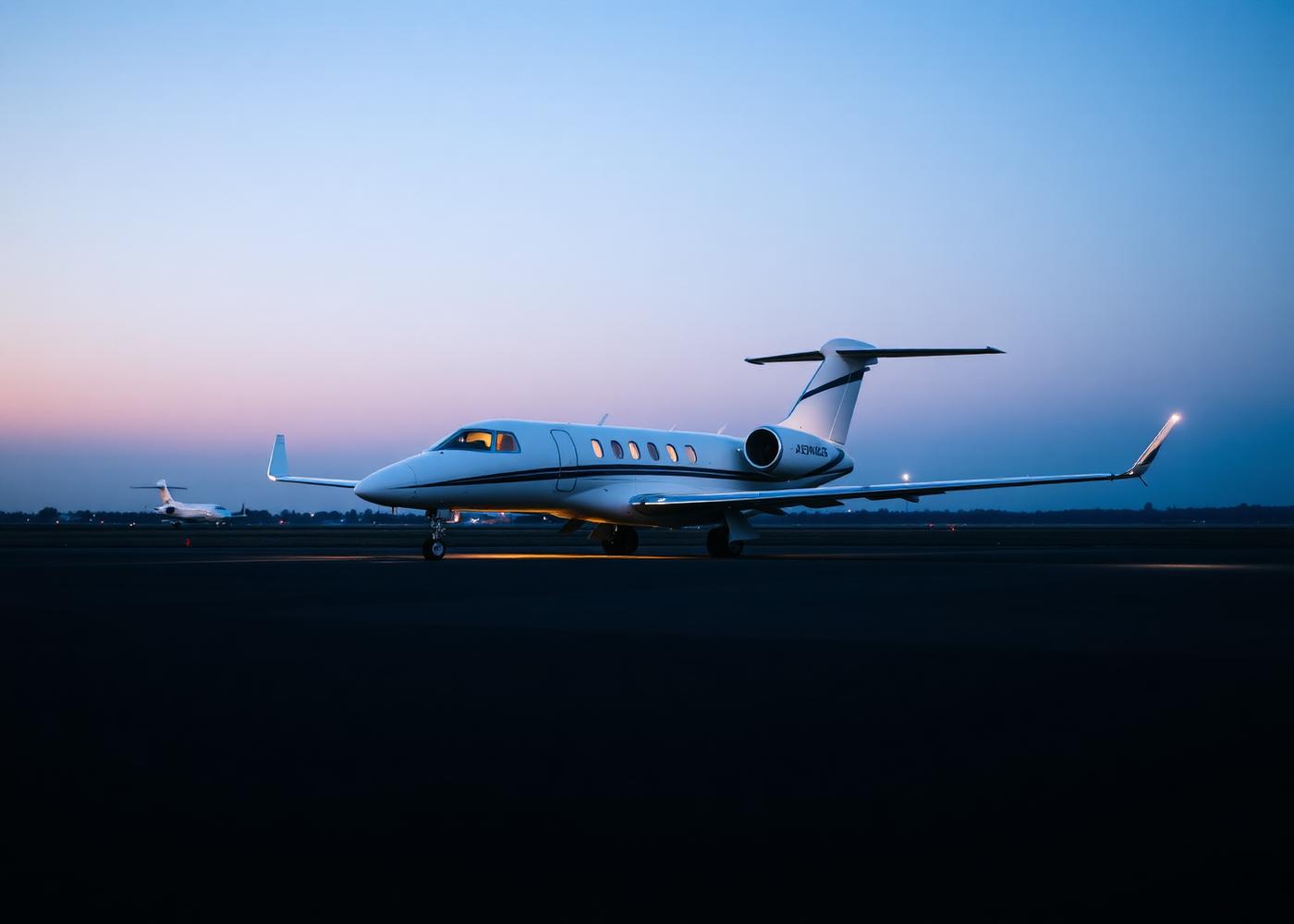
LIGHT JET
Cessna
The benchmark light jet for short European hops.
VIEW AIRCRAFT →LIGHT JET
Cessna
Light-jet economics, midsize cabin comfort.
VIEW AIRCRAFT →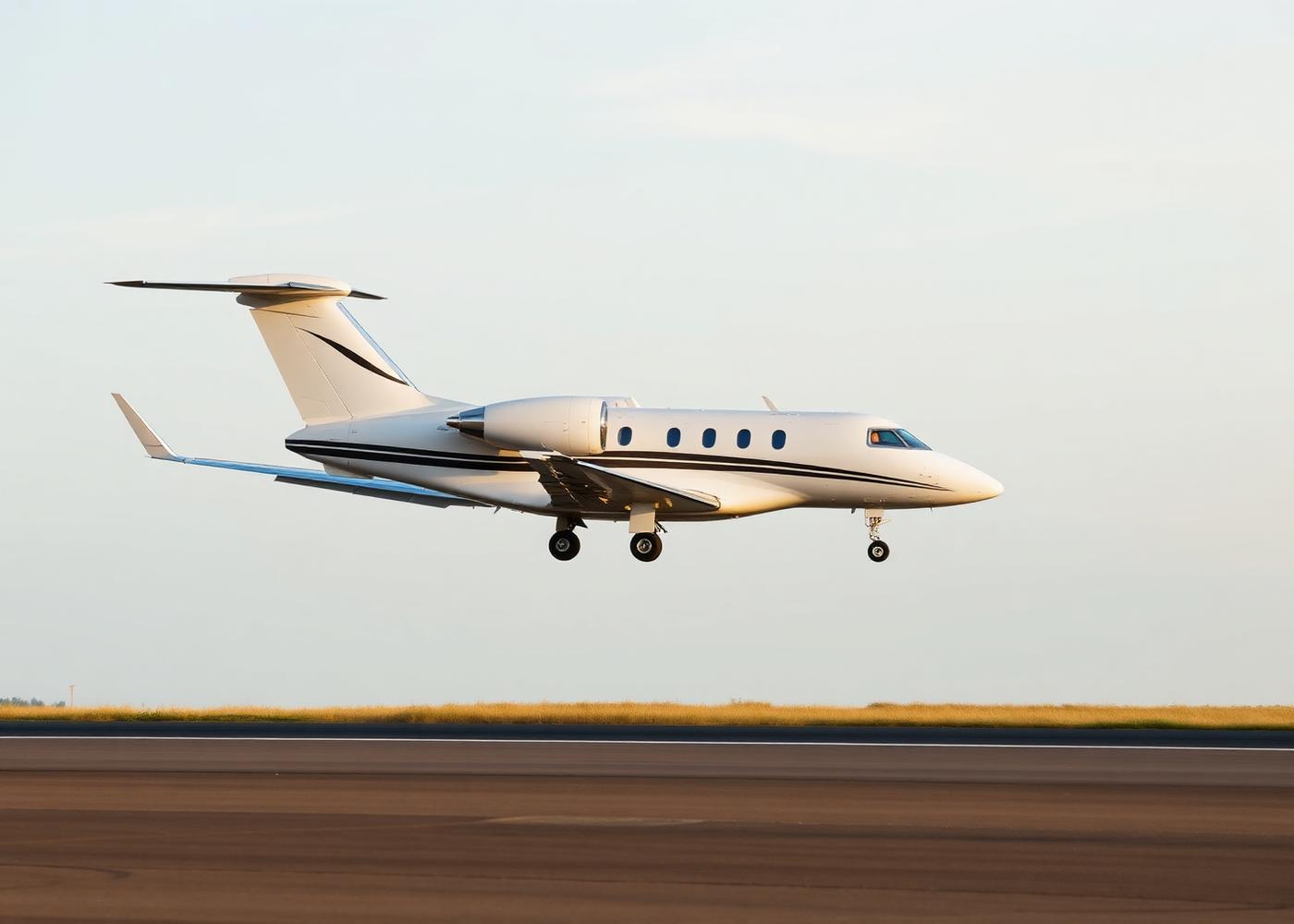
MIDSIZE JET
Hawker Beechcraft
The proven workhorse of midsize charter.
VIEW AIRCRAFT →MIDSIZE JET
Cessna
Six-foot flat-floor cabin at midsize prices.
VIEW AIRCRAFT →HELICOPTER CHARTER — ABU DHABI
Pair a jet arrival with a same-day helicopter transfer. These are the models our desk most often books on the Abu Dhabi leg — specifications and live availability sit on the dedicated helicopter fleet page.
INTERMEDIATE HELICOPTER · 9 PAX
Airbus Helicopters
VIEW H145 →CHARTER GUIDES
PRICING & COST
12 min read
OPERATIONS & TRAVEL
12 min read
AIRCRAFT & FLEET
6 min read
OPERATIONS & TRAVEL
5 min read
LIFESTYLE & ETIQUETTE
5 min read
FAQ
A chauffeured transfer from Abu Dhabi International to Abu Dhabi Corniche is about 35 minutes (30 km). Typical modes are chauffeured suv. Limitless Sky pre-positions ground transport so the car is waiting planeside.
A chauffeured transfer from Al Bateen Executive to Abu Dhabi Corniche is about 20 minutes (15 km). Typical modes are chauffeured suv. Limitless Sky pre-positions ground transport so the car is waiting planeside.
Abu Dhabi is served by AUH, AZI. Choice depends on aircraft class, where you're staying, and slot availability. We pick the field that puts you closest to your hotel or yacht with the least ground time — see each airport guide for runway, customs and FBO detail.
Usually yes — many operators permit pets in the cabin, subject to aircraft-owner approval, destination rules, documentation and any operator-specific charges. Let us know the size and species when you request a quote and we will confirm per aircraft.
For most major airports we can have an aircraft positioned within 4 hours. Last-minute bookings are our specialty — we operate 24/7.
One-way prices estimated, confirmed quote within 1–2 hours: Abu Dhabi → London from €50,900 (heavy / ultra long range); Abu Dhabi → Mumbai from €9,400 (midsize jet). Send your dates and passengers and you get an estimated price per aircraft class straight away, then two or three confirmed options with aircraft photos within 1–2 hours.
RELATED DESTINATIONS
EXPLORE THE CLUSTER
HUB GUIDES
BEST AIRCRAFT FOR ABU DHABI
EMPTY LEGS · TO ABU DHABI
Repositioning flights to Abu Dhabi come up occasionally and rarely stay available for long. Set an alert and we will tell you if one matches.
EMPTY-LEG ALERTS
We scan operator inventory every 12 hours. The moment a leg matches your route, date window and budget, we email you with a direct booking link.
MALLORCA · GERMANY, NRW, FRANKFURT
SKI SEASON · ALPS
An estimated price per aircraft class straight away, then two or three confirmed options with aircraft photos within 1–2 hours. 24/7, worldwide.
REQUEST A QUOTEAIRPORT COMPARISON
2 airports serve Abu Dhabi. AZI is primary; AUH act as alternates when slots or runway constraints dictate.
AZI · PREMIER
AZI
AZI — primary jet gateway; 10,499 ft runway; in-town.
AUH · PREMIER
AUH
AUH — primary jet gateway; 13,471 ft runway; 28 km transfer.
RECOMMENDED AIRCRAFT
Super Midsize Jet
POPULAR ROUTES
SEASONALITY
GROUND TRANSPORT
HELICOPTER
CUSTOMS
VISA
WEATHER
RECOMMENDED STAY
MEDICAL / MEDEVAC
DESTINATION PROFILE
luxury
65
business
65
family
30
ski
0
beach
0
golf
0
medical
40
heli
30
marina
0
NEARBY DESTINATIONS
AI CONCIERGE
Structured knowledge object with 2 airports, 3 corridor routes, 0 named event windows, 5 nearby destinations and a full scoring profile — designed to answer concierge-level questions in real time.
FAQ
AZI (AZI) is the primary gateway. AUH
Heavy Jet is the best fit for most missions; short-runway constraints may push smaller groups to a Light Jet.
Pricing scales with aircraft class and the departure city (for example AZI). Send your dates and passengers to see an estimated price per aircraft class straight away; two or three confirmed options with aircraft photos follow within 1–2 hours.
See the seasonality panel — demand is driven by corporate and event calendars.
Not standard for this destination; chauffeur car service is the primary transfer option.
CONTINUE YOUR JOURNEY AT SEA
Our sister platform, Blue Ocean Club, curates crewed yachts across Arabian Gulf. When the live yacht feed is connected, availability and pricing will appear here.
NEAREST YACHT MARINAS
Dubai Harbour Marina
Arabian Gulf
Data source status: connecting to Blue Ocean Club…
FROM YOUR JET TO THE YACHT
Helicopter to Dubai Harbour Marina
20–30 minBypasses coastal traffic entirely; the fastest verified option for this distance.
Subject to: weather · daylight hours · berth helipad availability
Chauffeur transfer to Dubai Harbour Marina
87–138 minPredictable pricing, no weather sensitivity, and door-to-marina service.
Subject to: seasonal traffic · coastal road closures
Durations are distance-derived estimates. Live pricing and confirmed availability are provided at enquiry.
AVIATION FACTS · AVI-GO 2025
Desk-verified market figures linked to this page — drawn from Avi-Go analytics reports and surfaced for charter planning context.
United Arab Emirates led Rest of World MoM growth in June 2026 at +59.27% (524 vs 329 in May).
structured · confidence 95% · verified 2026-07-28
United Arab Emirates ranked #1 Rest of World MoM performer in June 2026: 524 flights vs 329 in May (+59.27%).
structured · confidence 94% · verified 2026-07-28
KNOWLEDGE GRAPH
Airports serving this destination, routes clients fly here on, aircraft that operate them, and nearby destinations you can pair it with.