ENTRY POINT
from €2,800
Lowest estimated one-way price across the routes above — estimated, confirmed quote within 1–2 hours.

Business-class access to Europe's capitals.
Geneva is the global capital of private aviation in winter, feeding the Alps from December through April. The dedicated business aviation area is one of Europe's largest by ramp area.
See full private jet charter pricing, read the Geneva → Mykonos route guide.
BEST TIME TO CHARTER
Steady year-round demand driven by business travel; spikes around fashion weeks, motor shows and major sporting events.
AIRPORTS, FBOs & TRANSFERS
Each option below shows the executive airport, drive time to Geneva, and typical ground options. Tap an airport for the full guide — runways, FBOs, customs, slot rules and arrival workflow.
New to private terminals? What is an FBO? · Private jet charter cost guide — FBO choice and charter pricing for Geneva
POPULAR ROUTES
| ROUTE | FLIGHT TIME | TYPICAL AIRCRAFT | FROM |
|---|---|---|---|
| Geneva → Courchevel | 0h 40m | Light Jet (CJ rated) | from €2,800 |
| Geneva → St. Moritz | 0h 35m | Light Jet | from €2,800 |
| Geneva → London | 1h 30m | Light Jet | from €3,900 |
One-way prices for the aircraft class listed are estimated, confirmed quote within 1–2 hours. You get an estimate per aircraft class straight away, then two or three confirmed options with aircraft photos.
COSTS TO EXPECT
ENTRY POINT
from €2,800
Lowest estimated one-way price across the routes above — estimated, confirmed quote within 1–2 hours.
TYPICAL AIRCRAFT
Light Jet (CJ rated) · Light Jet
Cabin selected against range, runway and party size. We confirm the exact tail before contracting.
WHAT'S INCLUDED
All-inclusive quote
Crew, fuel, handling, landing and de-icing fees, standard catering and FBO access. Peak-period positioning and overnight crew may apply on one-ways — flagged upfront.
Charter pricing is route- and date-sensitive. For a binding number, share dates, pax and luggage in the quote form.
CHARTER BUYER'S GUIDE
Geneva serves as the primary operational hub for business aviation in Europe, particularly during the winter months. As the headquarters for numerous multinational corporations, diplomatic missions, and the United Nations, movements are consistent year-round for business. However, it is the seasonal demand from skiing enthusiasts and high-net-worth individuals heading to the Swiss and French Alps that truly defines the traffic at Geneva Airport (GVA). From December through April, the airport becomes the busiest single-runway operation in the world for private aviation.
Clients flying into Geneva are typically split between corporate travellers attending meetings in the central business district—around the Rues Basses and the banking sector—and leisure travellers using the city as a transit point. The proximity of the airport to the city centre, combined with its highly developed private terminal infrastructure, makes it one of the most efficient entry points into Switzerland. The flight duration from London, Paris, or Frankfurt is short enough to facilitate day trips, though the complexity of slot management during peak periods requires careful logistical planning by your broker.
Seasonality in Geneva is governed by the Alpine ski calendar and major trade events. The peak season begins in mid-December and reaches its zenith during the February half-term and Easter holidays. During these weeks, the demand for slots and aircraft parking at GVA is extreme. If you are planning a trip during these windows, booking several weeks—or even months—in advance is essential to secure your preferred departure times.
Weather is a significant factor. While GVA is equipped with Category III Instrument Landing Systems (ILS) for low-visibility operations, heavy snowfall can occasionally disrupt schedules. More critical is the wind; Geneva often experiences the 'Bise', a cold north-easterly wind that can cause turbulence on approach but rarely closes the airport.
In terms of business events, the Watches and Wonders exhibition (formerly SIHH) and the EBACE convention (European Business Aviation Convention & Exhibition) in May represent significant spikes in traffic. During these periods, aircraft parking is restricted, and many operators are forced to 'drop and go,' repositioning the aircraft to nearby regional airports like Annecy or Lyon, which adds to the overall charter cost.
Geneva Airport (GVA), formerly known as Cointrin, is the sole primary gateway for private jet charter into the city. It is located just 4km from the city centre, a 15-minute drive under normal traffic conditions. The airport features a single 3,900m concrete runway (04/22), capable of accommodating any size of private aircraft, from entry-level light jets to head-of-state Boeing 747s.
Operational hours are a critical constraint. GVA operates under strict noise abatement and curfew regulations. Nightly closures occur between 00:00 and 06:00 local time. Only search and rescue or medical emergency flights are generally exempt. For charter passengers, this means your arrival or departure must be scheduled with a buffer to avoid being diverted or grounded if your flight is delayed.
Slot coordination at GVA is handled by Airport Slot Coordination Switzerland. Every movement requires a slot, and during the winter season, these are allocated with precision. There is little flexibility for 'rolling' slots; if you miss your window, you may face a multi-hour delay.
Ground handling is exceptionally sophisticated. The dedicated business aviation sector, located on the south side of the runway, houses three main Fixed Base Operators (FBOs):
Customs and immigration are integrated within these FBOs, meaning you never enter the main commercial terminal. Clearance is typically completed in under 10 minutes. If GVA is at capacity for parking, the most common diversion or repositioning airport is Lyon-Bron (LBN) in France or Annecy (NCY) for smaller aircraft. However, Annecy has a shorter runway (1,630m) which precludes larger heavy jets.
Selecting the right aircraft for Geneva depends heavily on your departure point, passenger count, and the volume of luggage—especially if you are carrying ski equipment.
For short hops within Europe, such as London to Geneva (1h 30m) or Nice to Geneva (0h 50m), Light Jets are the most cost-effective choice. The Cessna Citation CJ3 or CJ4 are excellent performers with decent baggage capacity. The Embraer Phenom 300 is the market leader in this category, offering a larger cabin feel and impressive speed. Note that if you are four passengers with four large suitcases and four sets of skis, a Light Jet may be tight on space; always verify the hold dimensions with your broker.
For more comfort and stand-up cabin height, Midsize jets like the Cessna Citation XLS+ are workhorses for the Geneva route. They handle the short runways at secondary airports well and provide ample baggage space. For longer flights from the Middle East or North America, or for those desiring more luxury, Super-Midsize aircraft like the Bombardier Challenger 350 or Praetor 600 are ideal. These models possess the range to reach the Gulf while maintaining the agility to operate out of GVA efficiently.
For transcontinental journeys—such as New York to Geneva—Heavy Jets are required. The Gulfstream G450/G550 or the Legacy 650 provide the endurance and cabin volume for 10-14 passengers. For the ultimate in privacy and comfort, the Global 6000 or Global 7500 and the Gulfstream G650ER are frequently seen on the GVA ramp. These aircraft allow for non-stop travel from almost anywhere in the world and offer dedicated crew rest areas and multiple cabin zones.
Charter pricing to Geneva is influenced by aircraft positioning, stays versus ‘empty legs’, and seasonal demand premiums.
Factors driving these costs include:
The transition from aircraft to your final destination in Geneva is remarkably fluid. Upon landing, your aircraft will likely be marshalled to the FBO apron. Depending on the FBO and current security protocols, a chauffeured vehicle may be permitted to meet you on the tarmac for immediate transfer.
For those staying in the city, a pre-arranged chauffeur service is the standard. The drive to the major hotels along the Quai du Mont-Blanc takes 15 to 20 minutes. If your destination is a ski resort like Megeve, Courchevel, or Verbier, a helicopter transfer is the most efficient choice. Swift Copters and other operators run frequent shuttles from the heli-pad adjacent to the private jet terminal. A helicopter to Courchevel takes roughly 30 minutes, compared to a 2.5-hour drive.
Customs and passport control are handled within the FBO. Switzerland is part of the Schengen Area but not the EU Customs Union. For passengers, this means you must declare goods or large amounts of cash, but passport checks for those within Schengen are often expedited. Pet travel is relatively straightforward provided all PETS scheme documentation is in order and the aircraft is an approved carrier for GVA.
Geneva is a city of distinct districts. The ‘Rive Droite’ (Right Bank) is home to the major luxury hotels and the international district. The ‘Rive Gauche’ (Left Bank) contains the Old Town (Vieille Ville) and the high-end shopping streets.
For banking and business, the area surrounding Place Bel-Air and Rue du Rhône is the epicentre. This is also where you will find the highest concentration of watch boutiques and designer flagship stores. For dining, the city offers a range of Michelin-starred options, frequently found within the premier hotels.
If your visit coincides with the summer months, the focus shifts to the lake (Lac Léman). The Jet d'Eau is the iconic landmark, and the surrounding quays are popular for walking. For those interested in yachting, the Société Nautique de Genève is the premier yacht club, though most private yachting activity is concentrated further up the lake toward Lausanne and Montreux.
For a standard business trip during the week in autumn or spring, a lead time of 48 to 72 hours is usually sufficient to secure a high-quality aircraft at a competitive price. Same-day bookings are possible for urgent missions, though aircraft choice will be limited to what is currently 'on the ramp' at GVA or nearby bases like Paris or Zurich.
For the winter peak (Christmas, New Year, February half-term), the booking window should ideally be 4 to 8 weeks ahead. This doesn't just secure the aircraft—it secures the slot. Even if you own your jet, you cannot land in Geneva during these times without an allocated slot.
To provide an accurate quote, your broker needs the passenger count, exact luggage requirements (including weights for ski gear), pet details, and your preferred FBO. If you are seeking empty legs, be prepared to book within 7 days of travel, as these only become available once the 'firm' leg of the trip is confirmed by the primary charterer.
ON THE GROUND
A historic landmark on the Quai du Mont-Blanc, offering absolute discretion and classic Swiss elegance. Family-owned since 1865, it is the preferred choice for diplomats and royalty who require high-security suites and traditional service within a short drive of the private jet terminal.
Located on the banks of the Rhône, this hotel combines contemporary luxury with Swiss precision. Its proximity to the financial district makes it the ideal base for corporate travellers, while the Michelin-starred dining ensures a seamless transition from a late-night arrival to a formal business dinner.
The first hotel in Geneva, dating back to 1834, now offers a refined blend of history and modern amenities. Its rooftop spa and world-class concierge service are specifically geared toward ultra-high-net-worth guests who expect immediate, personalised attention following a long-haul private flight.
AIRCRAFT
4–6 passengers, up to 3h
Citation CJ3, Phenom 300 — ideal for short European hops with quick turnarounds.
7–9 passengers, up to 5h
Citation XLS+, Hawker 900XP — stand-up cabin, full galley, transcontinental Europe.
10–14 passengers, 6h+
Challenger 605, Gulfstream G450, Falcon 7X — intercontinental with bedroom-class comfort.
FLEET FOR GENEVA
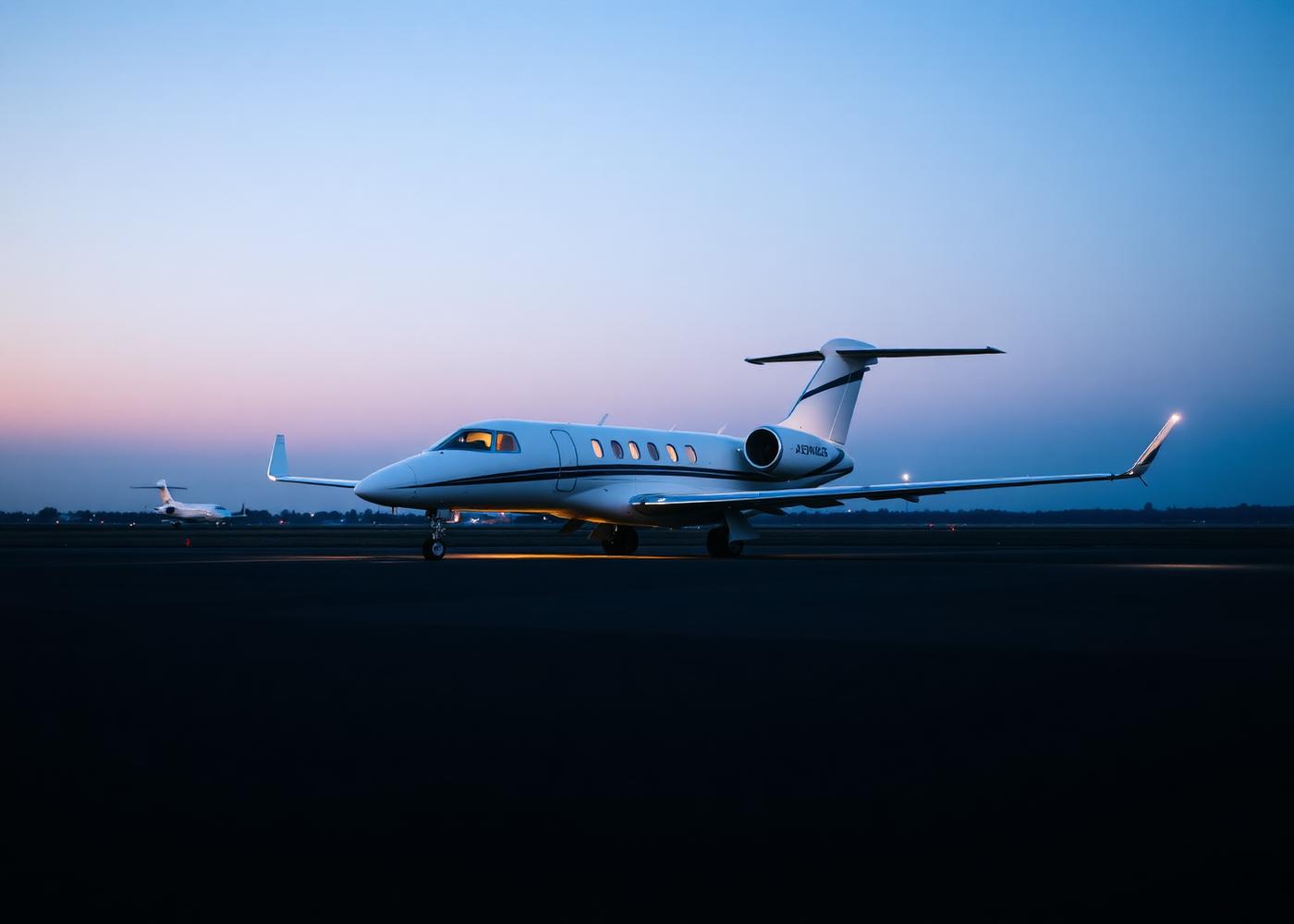
LIGHT JET
Cessna
The benchmark light jet for short European hops.
VIEW AIRCRAFT →LIGHT JET
Cessna
Light-jet economics, midsize cabin comfort.
VIEW AIRCRAFT →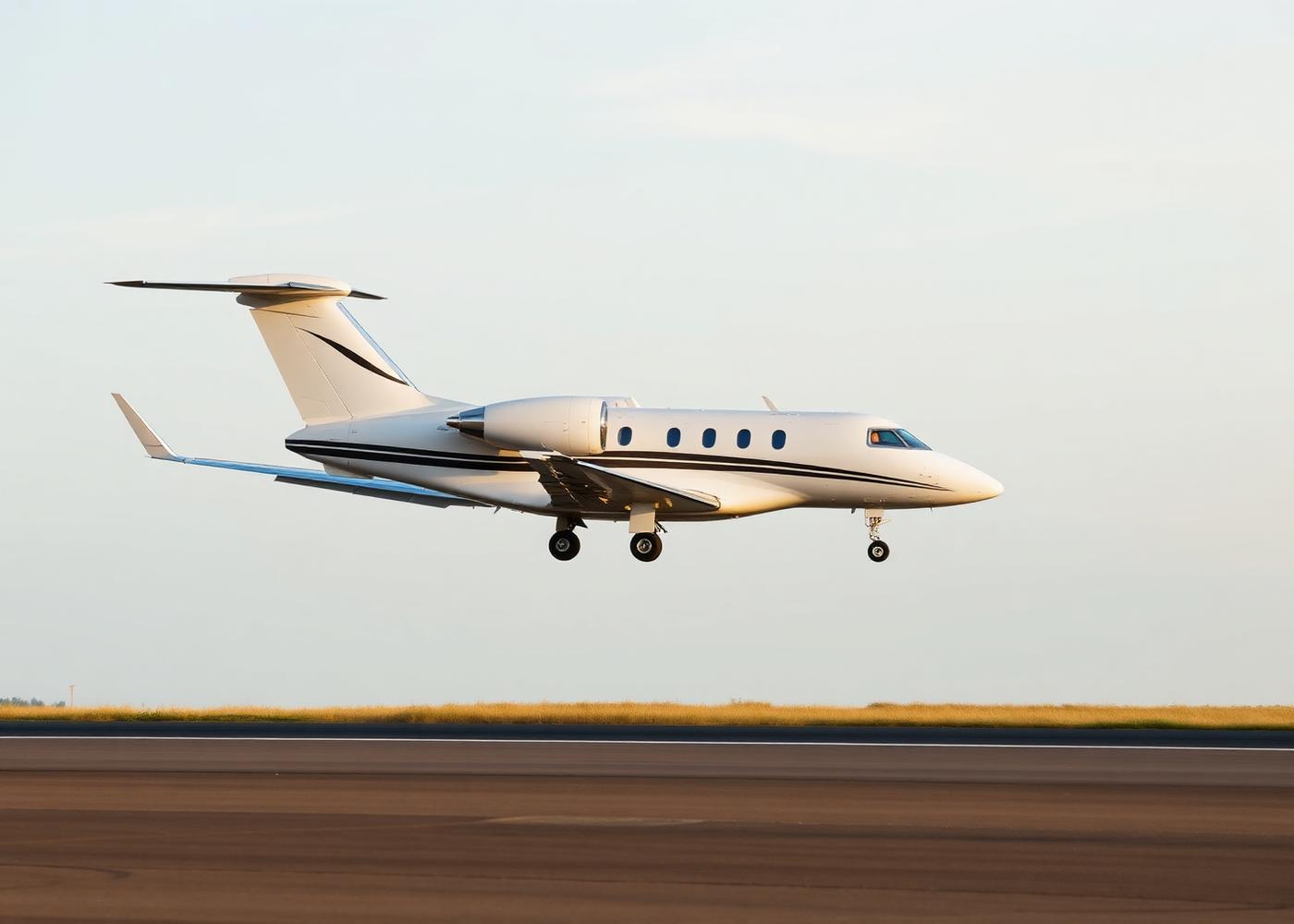
MIDSIZE JET
Hawker Beechcraft
The proven workhorse of midsize charter.
VIEW AIRCRAFT →MIDSIZE JET
Cessna
Six-foot flat-floor cabin at midsize prices.
VIEW AIRCRAFT →HELICOPTER CHARTER — GENEVA
Pair a jet arrival with a same-day helicopter transfer. These are the models our desk most often books on the Geneva leg — specifications and live availability sit on the dedicated helicopter fleet page.
LIGHT HELICOPTER · 6 PAX
Airbus Helicopters
VIEW H135 (EC135 T2) →ROUTES SERVING GENEVA
2h 50m · 1,890 km
Geneva–Mykonos is the signature Swiss-Cycladic route of the European summer. Tight slot allocations at JMK from June through September mean overnight parking is rarely available — most jets reposition to Athens between rotations. Booking 4–6 weeks ahead is essential for July and August weekends.
VIEW ROUTE →1h 35m · 750 km
London to Geneva is a year-round finance and ski-season corridor. Winter brings sustained peak demand for onward helicopter transfers into Verbier, Courchevel and Megève.
VIEW ROUTE →1h 50m · 1,050 km
Geneva to Ibiza connects Swiss finance and family travel with the Balearic summer scene. Strong Friday and Saturday demand June through mid-September.
VIEW ROUTE →7h · 4,950 km
Doha to Geneva is a private banking and ski-season corridor, with peak demand around Davos week and the December–April Alpine season.
VIEW ROUTE →47 minutes · 410 km
Paris–Geneva is one of Europe's most-requested private aviation corridors. Charter bypasses the punishing scheduled-airline queues at Geneva and clears customs in minutes at the Paris Le Bourget business aviation centre.
VIEW ROUTE →47 minutes · 410 km
Geneva–Paris is one of Europe's most-requested private aviation corridors. Charter bypasses the punishing scheduled-airline queues at Paris and clears customs in minutes at the Geneva — Business Aviation Centre business aviation centre.
VIEW ROUTE →CHARTER GUIDES
PRICING & COST
12 min read
OPERATIONS & TRAVEL
12 min read
AIRCRAFT & FLEET
9 min read
OPERATIONS & TRAVEL
6 min read
PRICING & COST
6 min read
FAQ
A chauffeured transfer from Geneva Airport to the Rive Gauche is about 10 minutes (5 km). Typical modes are chauffeured sedan, helicopter to ski resorts. 45-minute helicopter to Courchevel, Megève and Verbier in season. Limitless Sky pre-positions ground transport so the car is waiting planeside.
Usually yes — many operators permit pets in the cabin, subject to aircraft-owner approval, destination rules, documentation and any operator-specific charges. Let us know the size and species when you request a quote and we will confirm per aircraft.
For most major airports we can have an aircraft positioned within 4 hours. Last-minute bookings are our specialty — we operate 24/7.
One-way prices estimated, confirmed quote within 1–2 hours: Geneva → Courchevel from €2,800 (light jet (cj rated)); Geneva → St. Moritz from €2,800 (light jet); Geneva → London from €3,900 (light jet). Send your dates and passengers and you get an estimated price per aircraft class straight away, then two or three confirmed options with aircraft photos within 1–2 hours.
RELATED DESTINATIONS
EXPLORE THE CLUSTER
HUB GUIDES
ROUTES SERVING GENEVA
BEST AIRCRAFT FOR GENEVA
MORE IN EUROPE — CITIES
EMPTY LEGS · TO GENEVA
Repositioning flights to Geneva come up occasionally and rarely stay available for long. Set an alert and we will tell you if one matches.
EMPTY-LEG ALERTS
We scan operator inventory every 12 hours. The moment a leg matches your route, date window and budget, we email you with a direct booking link.
MALLORCA · GERMANY, NRW, FRANKFURT
SKI SEASON · ALPS
An estimated price per aircraft class straight away, then two or three confirmed options with aircraft photos within 1–2 hours. 24/7, worldwide.
REQUEST A QUOTEAIRPORT COMPARISON
Geneva Airport is the single realistic gateway for Geneva charters.
GVA · LSGG · PREMIER
Geneva Airport
Geneva Airport — primary jet gateway; 12,795 ft runway; in-town.
RECOMMENDED AIRCRAFT
Super Midsize Jet
SEASONALITY
GROUND TRANSPORT
HELICOPTER
CUSTOMS
VISA
WEATHER
RECOMMENDED STAY
MEDICAL / MEDEVAC
DESTINATION PROFILE
luxury
40
business
100
family
30
ski
0
beach
0
golf
0
medical
40
heli
30
marina
0
NEARBY DESTINATIONS
AI CONCIERGE
Structured knowledge object with 1 airports, 8 corridor routes, 0 named event windows, 5 nearby destinations and a full scoring profile — designed to answer concierge-level questions in real time.
FAQ
Geneva Airport (GVA) is the primary gateway. There are no realistic alternatives on the ground.
Midsize Jet is the best fit for most missions; short-runway constraints may push smaller groups to a Light Jet.
Pricing scales with aircraft class and the departure city (for example GVA). Send your dates and passengers to see an estimated price per aircraft class straight away; two or three confirmed options with aircraft photos follow within 1–2 hours.
See the seasonality panel — demand is driven by corporate and event calendars.
Not standard for this destination; chauffeur car service is the primary transfer option.
AVIATION FACTS · AVI-GO 2025
Desk-verified market figures linked to this page — drawn from Avi-Go analytics reports and surfaced for charter planning context.
Geneva ↔ Nice ranked #9 Europe city pair in June 2026 with 195 bidirectional flights (+3.17% MoM, +20.37% YoY).
structured · confidence 95% · verified 2026-07-28
Geneva ↔ Paris ranked #4 Europe city pair in June 2026 with 257 bidirectional flights (+22.97% MoM, -11.38% YoY).
structured · confidence 95% · verified 2026-07-28
1.22%
Verified aviation metric
Switzerland held 1.22% of global business jet departures in June 2026.
structured · confidence 95% · verified 2026-07-28
Switzerland ranked #10 by absolute MoM flight change in June 2026: +529 (3,049 → 3,578).
structured · confidence 95% · verified 2026-07-28
Switzerland ranked #10 globally by business jet departures in June 2026 with 3,578 flights (1.22% share).
structured · confidence 95% · verified 2026-07-28
Geneva ↔ Paris ranked #3 among European city pairs in 2025 with 2,820 flights (+0.97% YoY).
structured · confidence 95% · verified 2026-07-28
MoM comparison: Switzerland departures June 2026 3,578 vs May 2026 3,049 (delta +529, +17.35%).
structured · confidence 94% · verified 2026-07-28
LSGG (Geneva) changed by +75 movements MoM in June 2026.
structured · confidence 94% · verified 2026-07-28
2,417
Verified aviation metric
LSGG (Geneva) logged 2,417 movements in May 2026 (MoM baseline for June's 2,492).
structured · confidence 94% · verified 2026-07-28
LSGG (Geneva) connected 347 unique origin cities in June 2026 (#5 Europe).
structured · confidence 93% · verified 2026-07-28
LSGG (Geneva) saw 646 unique aircraft in June 2026 (#5 Europe city-coverage table).
structured · confidence 93% · verified 2026-07-28
1,244
Verified aviation metric
LSGG received 1,244 arrivals in June 2026 among analyzed Europe top-airport inbound flows.
structured · confidence 93% · verified 2026-07-28
KNOWLEDGE GRAPH
Airports serving this destination, routes clients fly here on, aircraft that operate them, and nearby destinations you can pair it with.