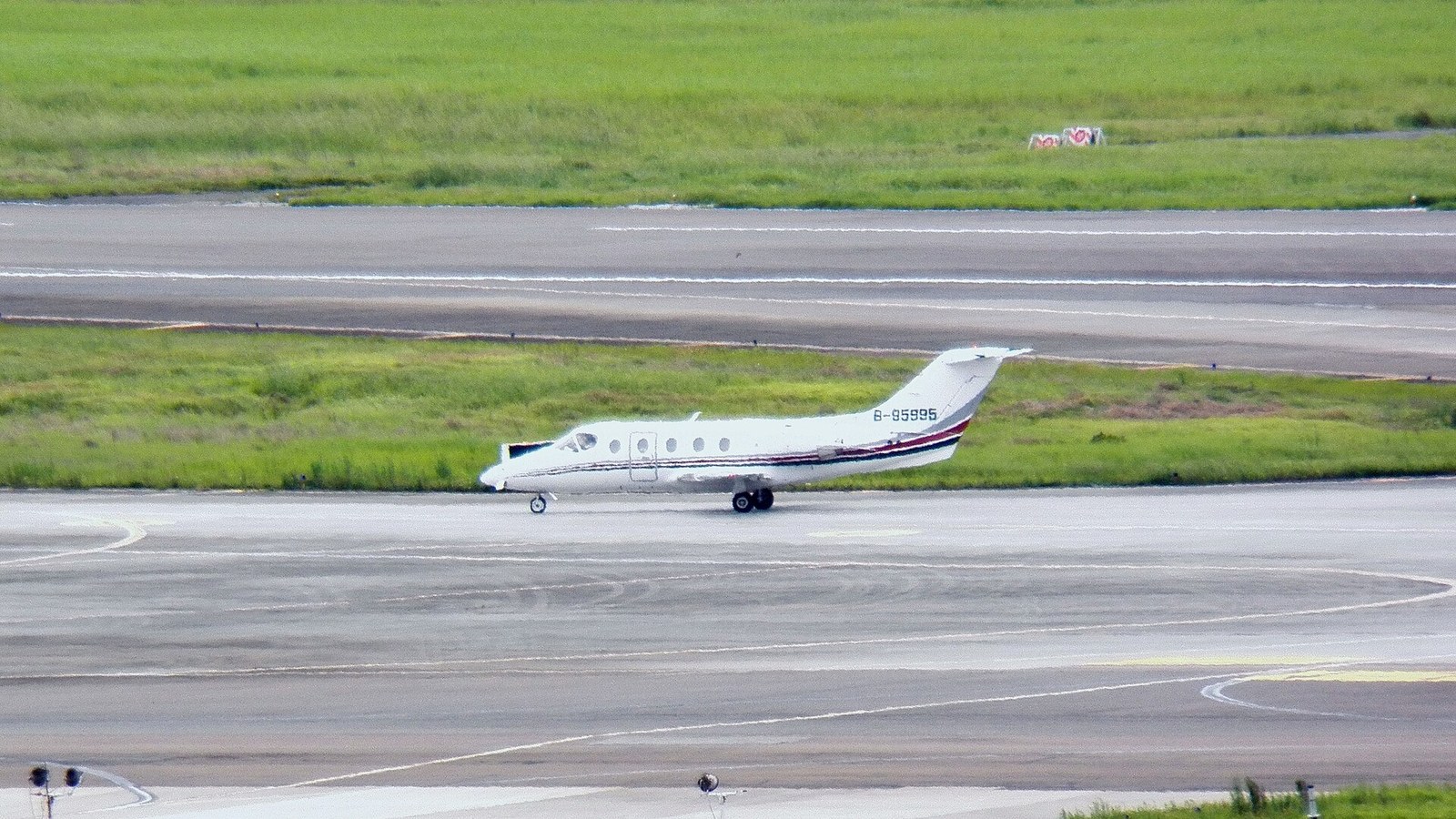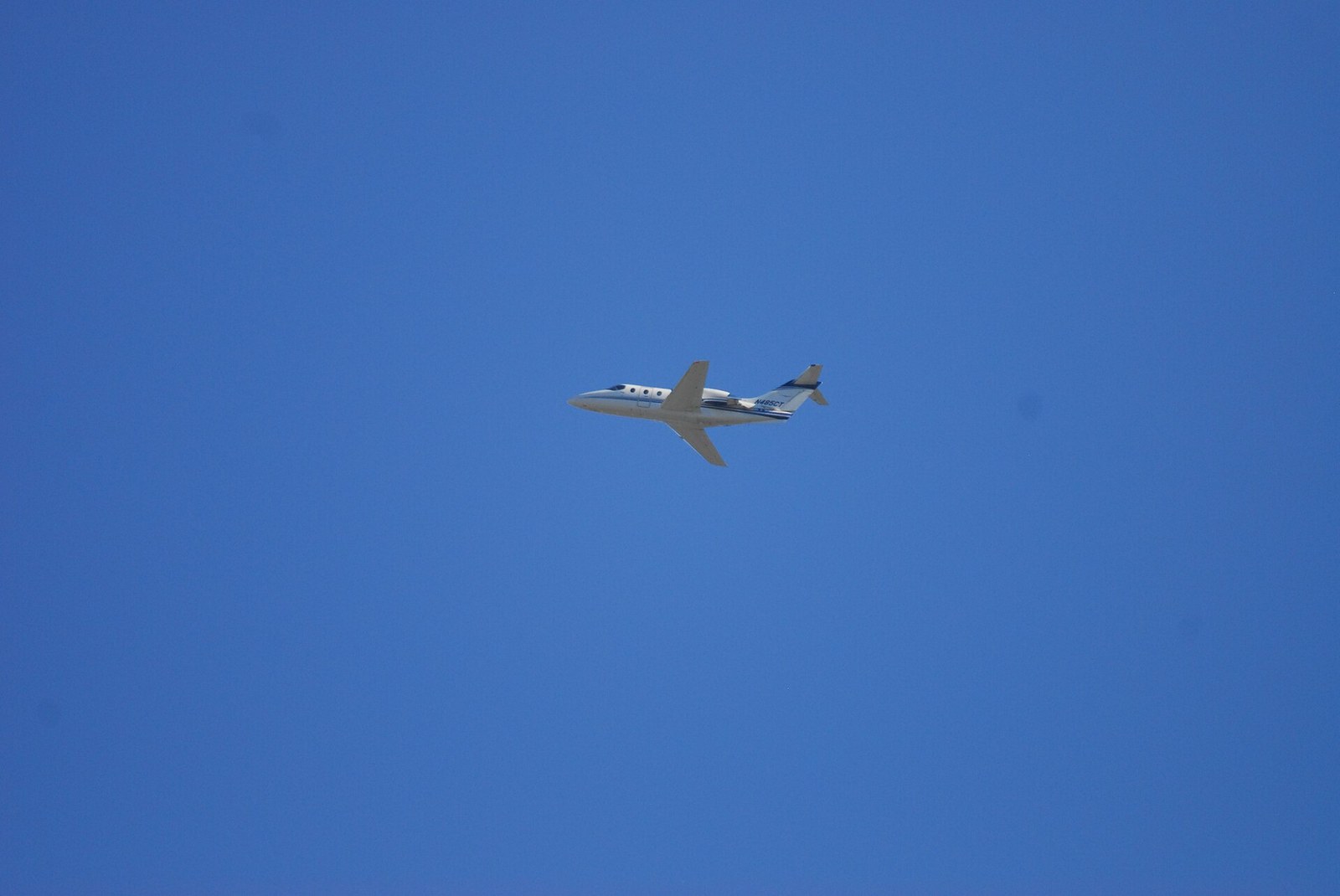
The story behind the Hawker 400XP
The Hawker 400XP has one of the most convoluted lineage stories in business aviation. It began life in 1978 as the Mitsubishi MU-300 Diamond — Japan's first purpose-built business jet, developed with a US assembly line in Texas. Beechcraft acquired the type in 1985, redesignated it the Beechjet 400 and rebranded a stretched, upgraded version the Beechjet 400A. When Raytheon consolidated its Hawker and Beechcraft holdings, the aircraft became the Hawker 400XP in 2003 with new interiors, avionics and winglets. More than 800 airframes of all variants were built between 1978 and 2011.
The 400XP is the definitive American light jet of its era. It shares almost nothing structurally with the British Hawker 800 series that shares its name — the fuselage is unmistakably the original MU-300, square-cross-sectioned and flat-floored. What made the aircraft commercially durable was that square cabin: seven seats in a genuine double-club arrangement, an aisle you can walk through without ducking (barely), and a stand-up-if-you-crouch height that felt generous compared to the tube-shaped Learjets it competed against.
Today the 400XP is out of production but heavily represented in US Part 135 fleets, where roughly 300 airframes remain in active charter service. It is one of the most-flown light jets in North America and among the cheapest true-jet charter options in the market. European availability is thinner but present through a handful of German, French and Italian operators.