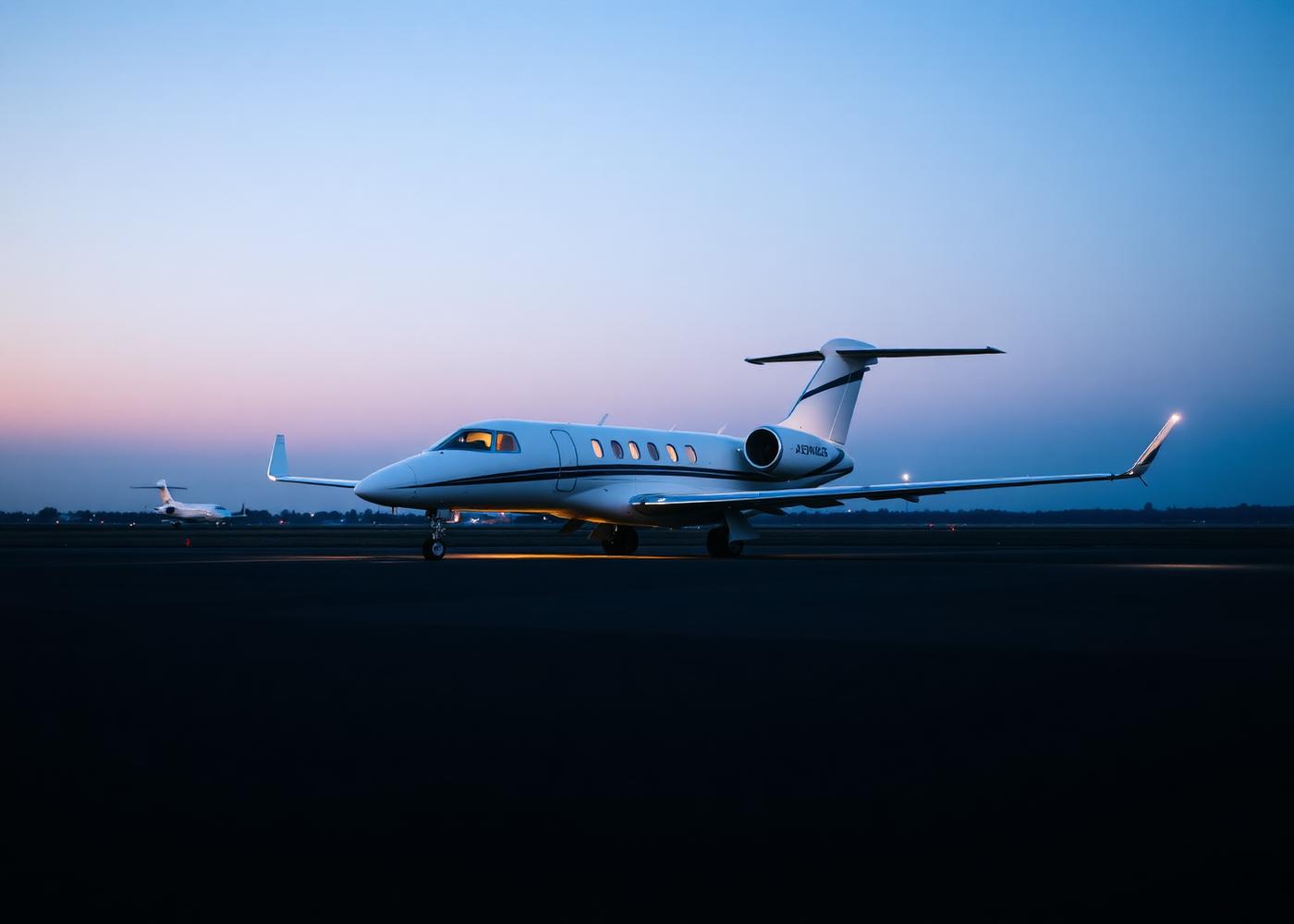
HondaJet Elite II private jet charter

HondaJet Elite II Charter

Over-the-wing engines, class-leading fuel efficiency.

PAX5–6RANGE1,547 nmSPEEDMach 0.72BAGGAGE66 cu ftCABIN4'10" × 5'0"TYPICALLondon → Amsterdam · from £3,200

OVERVIEW

Honda Aircraft Company HondaJet Elite II

The HondaJet Elite II is the most innovative light jet in production — its patented over-the-wing engine mount delivers a quieter, larger cabin and 20% better fuel efficiency than any direct competitor. Ideal for short European or US business missions.

2015 Honda HA-420 HondaJet 42000029 by D Ramey Logan

IN DEPTH

The complete guide to chartering the HondaJet Elite II

The story behind the HondaJet Elite II

The HondaJet is perhaps the most consequential piece of original engineering to enter the very light jet category since the original CitationJet. Honda's aviation research began not in a boardroom but in a wind tunnel: Michimasa Fujino, the aeronautical engineer who would become Honda Aircraft Company's chief executive, began investigating Over-The-Wing Engine Mount (OTWEM) configurations in the late 1980s as part of Honda's internal R&D programme. His research showed that mounting engines on pylons above and slightly aft of the wing root — rather than at the tail in the conventional arrangement — produced a dramatic improvement in cabin volume, a reduction in structural interference drag and a meaningful increase in cruise efficiency.

Honda formally established Honda Aircraft Company in 2006 after two decades of aeronautical research, and the production HondaJet was certificated by the FAA in December 2015. The original model was followed rapidly by the HondaJet Elite in 2018, the Elite S in 2021 and the Elite II — the current production variant — in 2022. Each successive model has refined the avionics, improved range and added cabin refinements without abandoning the fundamental OTWEM architecture that defines the type. The Elite II introduced a redesigned winglet, an upgraded Garmin G3000 avionics suite with additional safety features, and an enhanced cabin interior with new materials and colour palettes.

The aircraft is powered by GE Honda Aero Engines HF120 turbofans, a joint venture between GE Aviation and Honda, producing 2,095 pounds of thrust each. This bespoke powerplant, developed specifically for the HondaJet rather than adapted from an existing engine family, embodies the brand's commitment to designing every major system in-house — an approach that more closely resembles automotive OEM engineering than traditional aircraft manufacturing and has produced a powerplant with exceptional specific fuel consumption for its thrust class.

On board: the cabin

The OTWEM configuration's most immediate benefit is experienced the moment you board. Because the engines are mounted above the wing rather than on tail-mounted pylons, the aft fuselage is freed from the structural demands of engine attachment — allowing a more spacious cabin volume than any other aircraft in the very light jet class of similar overall dimensions. The HondaJet Elite II accommodates up to six passengers in a configuration that includes two forward-facing executive seats, a double club and a rear-facing bench, though the most common charter layout seats five in two clubs plus a single seat for a working aide or family member.

Cabin width measures 5 feet, which is competitive for the VLJ class, and cabin height is 4 feet 9 inches — marginally below standing height for average adults but notably generous for the aircraft's weight class. The interior is finished to a standard that surprised early critics: genuine leather upholstery, real-wood veneer trim panels, individual LED reading lights and a clean, contemporary aesthetic informed by Honda's automotive design language. The aft enclosed lavatory is a genuine full-function unit, rare at this size and weight category.

The baggage compartment offers 57 cubic feet of accessible external storage — the largest in the very light jet category and sufficient for five passengers' weekend bags and carry-on items. Cabin noise is notably low thanks to the OTWEM layout, which places the engines further from the passenger cabin than in tail-mounted alternatives, and the natural laminar flow wing reduces aerodynamic turbulence across a wide speed range. Connectivity is available on selected fleet examples via air-to-ground data link, and USB-A and USB-C outlets are standard at each seat position on the Elite II.

Performance, range and runway access

The HondaJet Elite II achieves a maximum cruise speed of 422 knots true airspeed and a service ceiling of FL430 (43,000 feet), making it one of the fastest aircraft in the VLJ class and capable of cruising above much of the weather encountered on European routes. NBAA IFR range is 1,547 nautical miles — adequate for non-stop London to Marrakech (1,460 nm), London to Reykjavik (1,175 nm), or any trans-European routing within Western and Central Europe. Sectors beyond approximately 1,400 nm will require a fuel stop, distinguishing the HondaJet from the longer-legged CJ3+ on routes to the eastern Mediterranean or Gulf region.

Take-off field length at maximum gross weight is 4,500 feet, and landing requires approximately 3,000 feet. These figures allow the aircraft to operate freely from all principal UK and European business aviation airports. The GE Honda HF120 engines burn approximately 105–115 US gallons per hour at typical cruise power — the most fuel-efficient powerplant in the VLJ class on a thrust-specific basis and a genuine differentiator on environmental grounds for clients who measure their aviation carbon footprint.

The aircraft is approved for flight into known icing conditions, CAT I ILS approaches, RVSM airspace and extended overwater routing under appropriate approvals. The Garmin G3000 Intrinzic avionics suite provides synthetic vision, GWX 75 weather radar, ADS-B In traffic alerting and an integrated electronic flight bag, giving the crew a situational awareness capability that was reserved for large-cabin jets a decade ago. The single-pilot type rating is retained, maintaining the HondaJet's appeal for owner-operators and contributing to the availability of well-qualified single-pilot charter crews across the European network.

Signature missions and best routes

The HondaJet Elite II is ideally suited to three core charter missions in the European market. First, short intra-European hops of 400–900 nm for two to four passengers: London to Amsterdam (230 nm, around 45 minutes), Paris to Zurich (270 nm), or Edinburgh to Dublin (175 nm) where the aircraft's per-seat cost undercuts not just commercial first class but sometimes commercial business class when all transfer times are included. Second, overnight leisure escapes to Mediterranean destinations: Farnborough to Ibiza (920 nm), to Palma de Mallorca (870 nm) or to Olbia Sardinia (1,050 nm) all fall within comfortable non-stop range.

Third, the HondaJet's compact footprint and relatively modest fuel requirements make it the preferred choice for clients who want to reach secondary or less-trafficked airfields without the slot and infrastructure demands of a larger aircraft. Smaller Italian airports, regional Spanish fields and several Adriatic coast strips that accommodate the HondaJet's take-off weight class are effectively inaccessible to heavier light jets or midsize aircraft. This opens a genuinely different set of destination options compared with the wider charter fleet.

The aircraft is also gaining recognition in the medical air transport sector for its large baggage volume and enclosed lavatory, and is used by a small number of European operators for light cargo and courier missions that require the speed of a jet but the economics of a turboprop. For the leisure traveller flying solo or with a partner, the HondaJet offers a level of cabin sophistication and technological novelty that no competitor in the VLJ class currently matches.

Operating economics and charter pricing

The HondaJet Elite II is priced at the lower end of the jet charter spectrum, with typical European all-in hourly rates ranging from £1,700 to £3,500 per flight hour depending on operator, positioning and season. This reflects the aircraft's genuine fuel economy advantage — at 105–115 US gallons per hour, it burns roughly 20% less fuel than the CJ3+ on comparable missions — and the lower capital cost of maintaining a fleet example relative to heavier turbofan jets. For a solo traveller or a couple, the per-seat economics are exceptional.

Example route pricing in the 2024–25 season: London Farnborough to Nice, approximately £7,200–£16,000 one-way. London to Amsterdam, £4,800–£10,000. Paris Le Bourget to Ibiza, £8,400–£18,000. A Cannes Film Festival round trip (London outbound, five nights on ground, London inbound) typically prices at £22,800–£48,000 all-in for four passengers. These figures represent a 15–25% discount against comparable CJ3+ pricing, and the cabin quality differential on shorter routes is negligible for most passengers.

One practical consideration: HondaJet fleet density in Europe remains lower than that of established Cessna Citation variants, which can affect last-minute availability and may introduce positioning costs for clients in certain regional UK locations. Limitless Sky maintains direct operator relationships that mitigate this, but clients planning short-notice departures are advised to enquire early. For pre-planned leisure and corporate travel, the HondaJet Elite II represents outstanding value with a level of engineering distinction that no legacy light jet can match.

How the HondaJet Elite II compares

Within the very light jet class, the HondaJet Elite II's primary competitors are the Embraer Phenom 100EV, the Cirrus Vision Jet SF50 and the Cessna Citation M2 Gen2. Against the Phenom 100EV, the HondaJet is faster (422 vs 390 knots), has longer range (1,547 vs 1,178 nm NBAA IFR) and a larger baggage compartment, but the Phenom benefits from Embraer's more extensive global service network. For European charter, pricing is broadly comparable and the choice frequently comes down to operator availability.

The Cirrus Vision Jet, the only single-engine jet in commercial charter service, is meaningfully slower, shorter-ranged and less capable in adverse weather than the HondaJet. Its appeal is primarily to owner-operators attracted by the single-engine economics; for commercial charter clients, the twin-engine HondaJet is the more appropriate choice on nearly every metric. Against the Citation M2 Gen2, the HondaJet offers superior speed, the OTWEM novelty factor and a more contemporary interior, whilst the M2 benefits from Cessna's deeper service network and lower charter rates in markets with high CJ-family operator density.

Stepping up to the Citation CJ3+, the HondaJet gives away cabin length and range in exchange for a lower charter rate and a more fuel-efficient mission profile. Clients who regularly travel in groups of five or more will find the CJ3+ the more practical tool; those flying two to four will often prefer the HondaJet's economics and engineering character. The HondaJet is also the more distinctive proposition — for clients for whom the aircraft is part of the statement, it remains the most visually striking and technologically original light jet available for charter in Europe today.

Verdict: who should charter the HondaJet Elite II?

The HondaJet Elite II is the right aircraft for the client who combines a genuine interest in engineering excellence with a need for efficient short-to-medium European routing for two to four passengers. It appeals to technology-sector founders who want the charter experience to reflect the same originality they apply to their own business, to leisure travellers who value discretion and a lower environmental footprint over a larger cabin statement, and to cost-conscious frequent flyers who want a true jet but cannot justify the hourly rate of a CJ3+ or Phenom 300E for solo or two-person travel.

It is less suited to groups of six or more, to routes beyond 1,400 nm without a fuel stop, or to clients who prioritise the depth of operator choice and last-minute availability that comes with a larger, more widely distributed fleet type. On the right mission — a couple flying Farnborough to Ibiza, a chief executive travelling solo to a Brussels board meeting, or a small family heading to Olbia for a week — the HondaJet Elite II is difficult to surpass at its price point.

Limitless Sky can source HondaJet Elite II availability across the European network and advise on operator quality, positioning logistics and suitable catering options for each itinerary. Contact charter@thelimitlesssky.com with your travel dates and we will provide a competitive, transparent quotes in about 10 minutes.

PHOTO GALLERY

HondaJet Elite II — exterior & cabin

Reference photography of the HondaJet Elite II (and sister types within the same cabin family where noted). Images sourced from Wikimedia Commons under Creative Commons licences.

EXTERIOR

2015 Honda HA-420 HondaJet 42000029 by D Ramey Logan
2015 Honda HA-420 HondaJet 42000029 by D Ramey Logan · Don Ramey Logan · CC BY-SA 4.0 via Wikimedia Commons
AERO Friedrichshafen 2018, Friedrichshafen (1X7A4829)
AERO Friedrichshafen 2018, Friedrichshafen (1X7A4829) · Matti Blume · CC BY-SA 4.0 via Wikimedia Commons

INTERIOR

HA420 HondaJet N719SJ cabin
HA420 HondaJet N719SJ cabin · Matti Blume · CC BY-SA 4.0 via Wikimedia Commons
HondaJet cabin mockup, EBACE 2018, Le Grand-Saconnex (BL7C0446)
HondaJet cabin mockup, EBACE 2018, Le Grand-Saconnex (BL7C0446) · Matti Blume · CC BY-SA 4.0 via Wikimedia Commons

SPECIFICATIONS

HondaJet Elite II specifications

Passengers5–6
Range1,547 nm
SpeedMach 0.72
Cabin height4'10"
Cabin width5'0"
Baggage66 cu ft
Runway3,699 ft

CABIN EXPERIENCE

On board the HondaJet Elite II

  • Five club-style executive seats plus belted lavatory
  • Quietest cabin in its class thanks to engine placement
  • Forward galley, fully-enclosed aft lavatory

BEST ROUTES

Where the II flies best

London → Paris

from £3,500

Nice → Geneva

from €2,900

BROWSE ALL ROUTES →

CHARTER PRICING

HondaJet Elite II charter pricing

ROUTEESTIMATED PRICE
London → Amsterdamfrom £3,200
New York → Bostonfrom $4,300

Indicative all-inclusive one-way pricing — aircraft, crew, fuel, handling, catering and taxes. Confirmed quote in 10 minutes.

WHO SHOULD CHARTER THIS

Why choose the HondaJet Elite II?

The right client profile for the II: 5–6 passengers, missions inside its 1,547 nm range, and routes where the light jet cabin size is the sweet spot between cost and comfort.

  • Over-the-wing engine mount — patented
  • Quietest light-jet cabin
  • Lowest fuel burn in class

RANGE & LIMITATIONS

What the II can — and can't — do

Non-stop range

1,547 nm with typical payload. Missions beyond this figure require a technical fuel stop — expect 30–45 minutes on the ground and a modest re-quote. On strong headwinds or full-cabin days the practical range trims by 5–10%.

Runway requirement

Balanced-field length around 3,699 ft. Rules out very short-strip airfields (Courchevel, Lugano, London City steep-approach) unless the airframe is specifically certified — our ops team validates every airport pairing before we confirm the quote.

Payload & baggage

66 cu ft of hold space with 5–6 passengers. Ski, golf and dive equipment fit for most parties; larger groups with full luggage should size up one category to preserve the range figure above.

FAQ

Frequently asked

Is Wi-Fi available onboard?

Yes — most aircraft in this class offer high-speed Ka-band or Starlink connectivity suitable for video calls and streaming throughout cruise.

Can pets fly on board?

Many operators permit pets in the cabin, subject to aircraft-owner approval, destination rules, documentation and any operator-specific charges. Tell us the species and weight when you request a quote.

How quickly can the aircraft be ready?

Once a quote is confirmed, this aircraft can typically be positioned within 2–4 hours anywhere in its home region, and within 24 hours globally.

FURTHER READING

Planning the II for business or leisure

SIMILAR AIRCRAFT

Also in Light Jet

HEAD-TO-HEAD

Compare the II

ALL COMPARISONS →

HONDAJET ELITE II CLUSTER

Everything connected to the HondaJet Elite II

Ready to charter the HondaJet Elite II?

Quotes in 10 minutes. Aircraft positioned within hours. 24/7, worldwide.

REQUEST A QUOTE

HondaJet Elite II gallery

Exterior and cabin photography of the HondaJet Elite II type.

Limitless Sky ownership desk

What it costs to buy, operate and charter out a HondaJet Elite II

A five-year planning model on the same assumptions as our ownership vs charter vs fractional analysis: 100 owner-occupied hours a year, 15% owner positioning, 180 third-party charter hours sold on a managed certificate at an 85% owner revenue share, and 25% market depreciation over the hold.

Acquisition

Indicative market value€4.22m – €6.28m
Model purchase price used€5,150,000
Inspection, legal and delivery (2%)€103,000
Residual value after 5 years€3,862,500

Annual cost of operation

Fixed cost (crew, hangar, insurance, management)€290,000
Direct operating cost per aircraft hour€900
Owner missions (114.99999999999999 aircraft hours)€103,500
Annual cash operating cost before charter€393,500

What renting it out brings in

Charter sold (180 occupied hours at €2,600)€468,000
Owner share at 85%€397,800
Direct cost of those flights (216 aircraft hours)(€194,400)
Net annual contribution to fixed costs€203,400
Share of fixed costs covered70%
Charter hours needed to cover all fixed costs257 hours

Five-year verdict

Net five-year cash cost, with charter income€2,456,875
Cost per owner-occupied hour€4,914
Cost per hour if never chartered out€6,948
Opportunity cost of tied-up capital (4%/yr)€1,030,000
Methodology and sources— how these numbers are built

Purchase price band

The €4.22m€6.28m band is an indicative pre-owned range for a well-maintained, mid-life HondaJet Elite II on a current maintenance and engine programme, in a typical European charter specification. It is built from published asking prices and retail transaction ranges (Duncan Aviation market letters, AvBuyer and Controller listings, VREF and Aircraft Bluebook retail guidance), then narrowed against what our desk sees pay-and-close in Europe. The model uses a single point inside that band, €5,150,000, so the five-year output is reproducible. Serial number, total time, cycles, engine-programme enrolment, avionics mandates, interior age and import/VAT status routinely move a real transaction outside the band in either direction.

Fixed cost assumptions

€290,000 a year covers two (or, for larger cabins, three) crew with training and recurrent sim, hangarage at a European base, hull and liability insurance, the management fee on a third-party AOC, navigation and weather subscriptions, and scheduled non-flying charges. It excludes financing, tax, extraordinary maintenance events and cabin refurbishment. Sources are operator and management-company budget templates for the type, cross-checked against NBAA and Conklin & de Decker fixed-cost structures.

Direct operating cost per hour

€900 per aircraft hour is fuel at prevailing European Jet A-1 pricing, engine and airframe programme accruals, APU and landing-gear reserves, landing, handling and navigation fees, catering and crew expenses. It is applied to actual aircraft hours, not occupied hours: owner trips carry a 15% positioning uplift and third-party charter carries 20%, which is what repositioning empty legs cost in practice.

Charter revenue estimate

180 third-party occupied hours a year at a wholesale base rate of €2,600 per hour is what a managed HondaJet Elite II realistically sells in Europe once owner availability, maintenance downtime and seasonality are taken out — not the retail rate a client pays. The rate is the operator-level rate band we transact at on Avinode and directly with operators; the owner keeps 85% under a standard management agreement, with the balance retained by the operator. Ferry, fuel surcharges, de-icing and overnights on charter missions are captured in the direct-cost line rather than netted off the rate.

Depreciation and the five-year frame

25% market depreciation is applied over a 5-year hold, with 2% acquisition costs (inspection, legal, delivery) at entry and 3% selling costs at exit. Owner utilisation is held at 100 occupied hours a year across every aircraft so types can be compared like for like. Capital opportunity cost is shown separately at 4% simple per year and is not added into the cash cost. The same frame drives our ownership vs charter vs fractional analysis and the most profitable jets to own ranking, so the three never disagree.

Review cadence

Values are reviewed each quarter against the same sources and re-published in one dataset, so every aircraft page moves together. Read our editorial standards for how we source and correct figures.

Indicative planning estimates prepared by the Limitless Sky desk — not an appraisal, charter quotation, offer or tax advice. Figures are pre-tax and pre-financing and exclude recoverable VAT, extraordinary maintenance and substitute lift during downtime. Actual values depend on serial number, hours, maintenance and engine-programme status, specification, base and charter demand. Ask the desk for a tail-specific forecast, or charter the HondaJet Elite II instead and skip the balance sheet entirely.

Interactive · ownership desk

Run your own numbers on the HondaJet Elite II

Move your annual flying, the charter hours you are willing to release, the management fee your operator charges and how long you intend to hold the aircraft. Buy versus charter-out break-even updates instantly.

Your assumptions

Buy versus charter out

Net cost of owning over 5 years€2,456,875
Cost per owner-occupied hour€4,914
Same hours bought on the charter market€1,534,000
Indicative retail charter rate per hour€3,068
Owning costs more€922,875

Break-even

Owner hours a year where owning beats chartering191 h
Charter hours a year to cover the whole fixed budget257 h
Charter income after the cost of flying it€203,400 / yr
Share of fixed costs covered70%

At 100 hours a year, chartering is cheaper than owning the HondaJet Elite II by €922,875 over the hold. Owning turns cheaper from around 191 hours a year.

Pre-tax, pre-financing planning estimates on the same frame as the tables above: 15% owner positioning, 20% positioning on charter, 2% acquisition cost, 3% selling cost, and published five-year depreciation scaled linearly to your resale horizon. Retail comparison rate is the wholesale base rate plus 18%. Ask the desk for a tail-specific forecast.

KNOWLEDGE GRAPH

Where the HondaJet Elite II fits in our aviation graph

Routes, destinations and airports this aircraft typically serves — plus peers in the same class and family.

Book HereDo you have a question?