Beechcraft King Air 200 private jet charter

Beechcraft King Air 200 Charter

The original executive turboprop, still a benchmark.

PAX7RANGE1,580 nmSPEED292 kts

OVERVIEW

Beechcraft King Air 200

The Beechcraft King Air 200 is the original executive turboprop — over 50 years in service and still one of the most-chartered regional aircraft. Seven seats, short-runway access and outstanding charter value.

Beechcraft King Air 200 cabin and exterior

IN DEPTH

The complete guide to chartering the Beechcraft King Air 200

The story behind the Beechcraft King Air 200

In the hierarchy of aviation classics, the Beechcraft King Air 200 holds a position that few aircraft of any category can match. Introduced to the market in 1974 as the Super King Air 200 — the 'Super' prefix was quietly dropped in 1996 but the aircraft's superlative qualities were never in question — it has remained in continuous production for over five decades, with more than 1,900 examples of the B200 series built and the type still active in production under the B200GT designation. No other pressurised turboprop has enjoyed this longevity; very few aircraft of any category have remained in continuous production across half a century without fundamental redesign, and the fact that the B200 has achieved this speaks directly to the soundness of its original conception.

The King Air 200 was designed by Beechcraft's engineers to fill the gap between the smaller King Air 90 and 100 series and the commercial commuter sector — a gap occupied by an aircraft that could carry eight to ten passengers in pressurised comfort over 1,200 nautical miles at speeds approaching small jets, while accessing regional airfields that commercial operators could not serve. It achieved this brief with the characteristic Beechcraft virtues of structural integrity, conservative engineering margins and a maintenance philosophy that prioritised field serviceability. The PT6A-42 engines, fitted to the B200 in their definitive 850-shp configuration, are among the most trusted and well-supported turboprop powerplants in the world, with maintenance providers and certified technicians available in virtually every country on earth.

Today, the King Air 200 occupies a particular position in the charter market: it is the established, proven, broadly available alternative to the newer and more expensive King Air 350i — offering a very similar cabin experience, similar runway access and similar range at charter rates that are typically 15 to 25 per cent lower. For the experienced private traveller who has done their research, the King Air 200 is frequently the most rational choice for European medium-sector travel — a conclusion supported by the aircraft's consistent popularity across five decades of commercial operation.
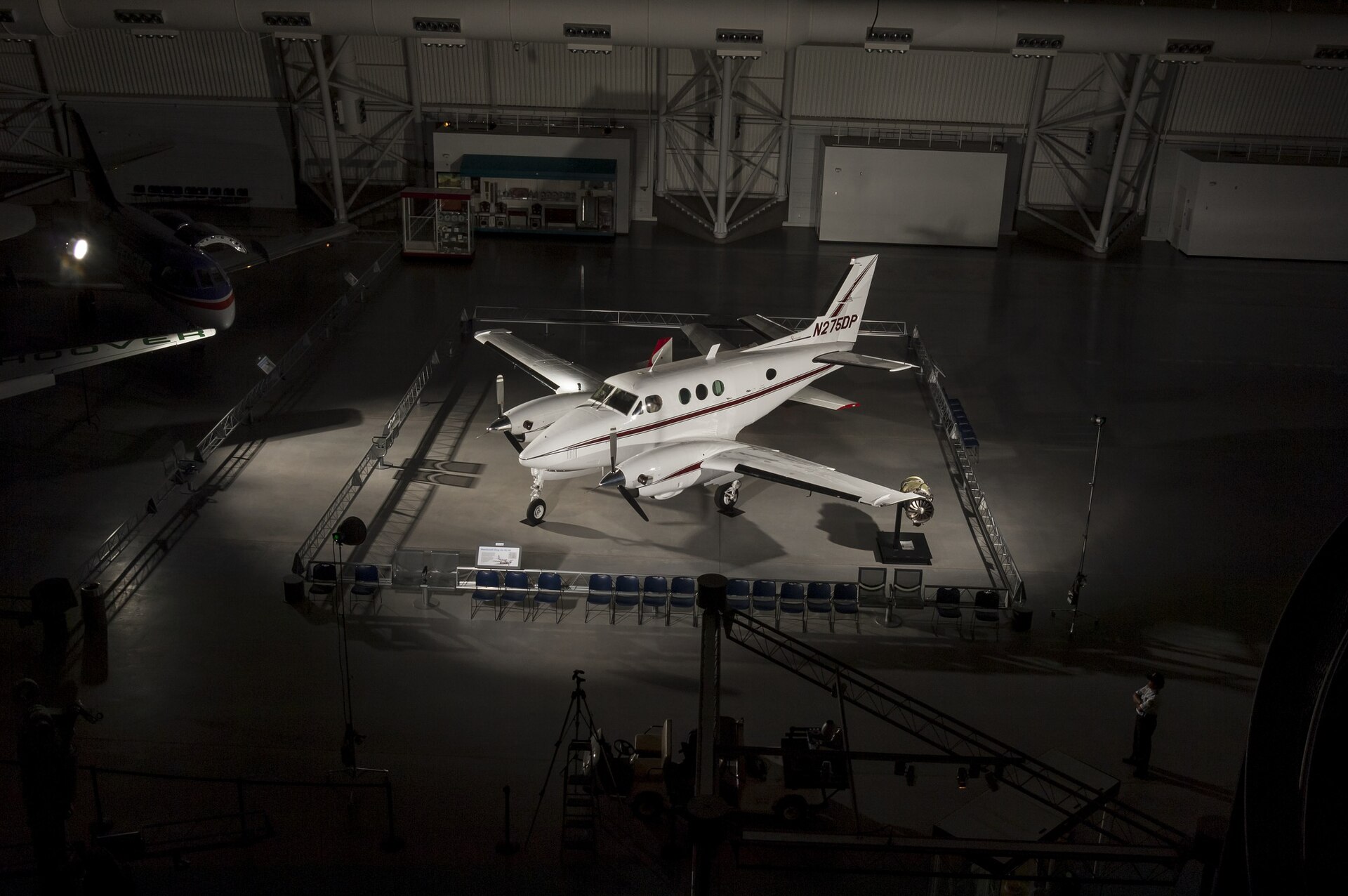
On board: the cabin

The King Air 200's cabin is dimensionally very similar to that of the 350i: 16.7 feet (5.1 metres) in length, 4 feet 6 inches (1.37 metres) in height and 4 feet 6 inches (1.37 metres) in width — very slightly narrower than the 350i's 4 feet 10 inches but essentially indistinguishable in practice. Standard executive configuration seats six to eight passengers in a club-four and a forward-facing pair arrangement, with individual armrests, adjustable headrests and fold-out tables. Cabin finishing standards on charter aircraft vary according to the age and management history of the specific airframe, but well-maintained examples — and Limitless Sky vets every aircraft in its programme — present interiors that are fully competitive with the wider turboprop category: leather seats, wood-veneer or composite trim, individual reading lights, and a rear lavatory.

The cabin pressure differential in the King Air 200 is 6.0 psi, sufficient to maintain a sea-level cabin altitude of 8,000 feet when cruising at the aircraft's typical FL250 to FL270 altitude range. This means passengers experience a comfortable, familiar cabin pressure equivalent to a moderate mountain resort — adequate for the duration of the flights the aircraft is typically used for, and meaningfully more comfortable than the unpressurised Caravan. The aircraft's cabin air is conditioned and ventilated through the bleed-air system at a rate that sustains good air quality throughout the flight.

The King Air 200 does not have the King Air 350i's ANCA active noise suppression — the 350i's 2009 introduction of that system was one of its most significant advances over the 200 series. As a result, the cabin is measurably louder in cruise, particularly at lower altitudes. Experienced King Air 200 passengers typically find this unremarkable; first-time turboprop travellers accustomed to jet aircraft should be made aware. The noise characteristic can be mitigated with quality passive ear protection or noise-cancelling headphones, and many operators supply these as standard. In all other respects — seating quality, cabin ambience, catering provision, lavatory facilities — the King Air 200 matches the 350i and in well-refurbished examples with modern cabin management systems, the difference between the two aircraft from the passenger's perspective is minimal.

Performance, range and runway access

The Beechcraft King Air B200 is powered by two Pratt & Whitney Canada PT6A-42 engines, each flat-rated at 850 shaft horsepower — lower than the 350i's PT6A-60A but producing a respectably capable aircraft with a maximum cruise speed of approximately 272 knots true airspeed at FL250. Service ceiling is 35,000 feet — identical to the 350i — and the aircraft is cleared to operate in RVSM (Reduced Vertical Separation Minimum) airspace, meaning it can use the full range of cruise altitudes available to commercial traffic on busy European routes. In practice, the King Air 200 typically operates at FL250 to FL270, where its airspeed and engine performance represent an efficient balance between fuel burn and cruise speed.

Range is the King Air 200's area of most meaningful divergence from the 350i. Maximum published range is approximately 1,580 nautical miles; practical charter range with six to eight passengers and typical fuel loads is closer to 1,074 to 1,200 nautical miles. This is adequate for the majority of intra-European charter sectors — London to Nice (602 nm), Edinburgh to Geneva (760 nm), Amsterdam to Barcelona (880 nm), Paris to Marrakech (1,440 nm, requiring a fuel stop) — but limits the aircraft on some of the longer routes that the 350i can complete non-stop. Clients planning sectors beyond 1,200 nm should discuss fuel-stop requirements with Limitless Sky's charter team at the outset.

Short-field performance is, as with all King Air variants, one of the type's defining competitive advantages. The King Air 200 requires approximately 2,400 feet of runway under standard sea-level conditions — marginally shorter than the 350i's 3,200-foot requirement, reflecting the older aircraft's lighter maximum take-off weight of approximately 12,500 pounds versus the 350i's 15,000 pounds. This performance opens access to the same network of smaller European and regional airfields that distinguishes the King Air family from the jet competition: Deauville, Innsbruck, Cannes Mandelieu, Barra, Alderney and dozens of similar destinations that make private aviation genuinely advantageous over commercial alternatives. The aircraft's twin-engine configuration provides the engine-failure safety margins that make remote-terrain and oceanic operations appropriate from a risk-management perspective.

Signature missions and best routes

The King Air 200's signature mission is the European short-to-medium sector — the 200 to 900 nautical mile range that encompasses London to Edinburgh, London to Paris, Amsterdam to Rome, Geneva to Malaga, or Munich to Dubrovnik. On these routeings, the aircraft's combination of pressurised comfort, short-field access, twin-engine reliability and available charter rate presents a compelling argument. A London Farnborough to Edinburgh charter, for instance, takes approximately 75 minutes block-to-block, uses a fraction of the fuel of a light jet and can cost 20 to 30 per cent less than the equivalent King Air 350i charter — while arriving at the same Edinburgh airport with the same runway access, and with a cabin that accommodates the same party of six.

The aircraft also serves the corporate shuttle mission with distinction. Operators managing regular weekly circuits between European offices — a Monday-morning departure from Birmingham to Paris Le Bourget, a Thursday afternoon return with a Brussels stop — find that the King Air 200's operational flexibility, lower per-hour cost and wide availability make it the rational fleet choice for medium-frequency private operations. Block-hour arrangements with King Air 200 operators can reduce the effective per-trip cost further, and several Limitless Sky partner operators offer managed membership programmes built around the B200 as the core aircraft type.

In the African market, the King Air 200 serves exactly the same safari circuit roles as the 350i, at lower charter cost. Its runway access is comparable and its twin-engine configuration makes it appropriate for overwater sectors — crossing Lake Tanganyika, transiting the Kenyan coast to the Lamu archipelago — where single-engine performance would be a constraint. In Canada, the United States and Australasia, the King Air 200 is embedded as one of the most trusted regional charter aircraft, serving outback communities, remote mineral exploration sites and wilderness lodges. Its global operator base and maintenance network is simply unmatched by any other aircraft in the turboprop category.

Operating economics and charter pricing

The Beechcraft King Air 200 charters at approximately £2,200 to £3,800 per flight hour in the UK and European market — typically 15 to 30 per cent below equivalent King Air 350i rates on the same routes. This differential reflects the B200's lower acquisition cost, lower fuel burn (approximately 380 to 400 pounds per hour versus the 350i's 450) and the depth of operator competition within the larger B200 fleet. All-inclusive one-way charter pricing for typical European sectors: London Farnborough to Edinburgh approximately £4,500 to £7,000; London to Nice approximately £7,500 to £11,000; Amsterdam to Malaga approximately £10,000 to £14,000. These figures include positioning, landing fees, handling and basic catering; fuel surcharges may apply on routes where fuel cost volatility is significant.

The King Air 200's lower per-hour operating cost is one of the most consistent advantages it holds over not only the 350i but also competing light jets. Its annual direct operating costs — fuel, maintenance, crew, insurance, landing and handling fees for a typical charter operation — run in the region of £700,000 to £950,000, producing charter rates that operators can sustain while maintaining the maintenance standards and crew qualifications that Limitless Sky requires as a condition of partnership. The aircraft's PT6A-42 engine overhaul cycle at approximately 3,600 hours TBO provides predictable maintenance costs and few unexpected maintenance events, supporting the operational reliability that charter clients depend upon.

Given the B200 fleet's size and global distribution, empty-leg opportunities are plentiful. Clients willing to travel within 12 to 48 hours of notification and able to accommodate the charter operator's routing rather than their own preferred departure point can access empty-leg rates representing reductions of 50 to 70 per cent against full charter pricing. For clients with regular, predictable travel patterns — weekly London-Edinburgh, fortnightly London-Geneva — Limitless Sky can structure block-hour agreements with partner operators that lock in per-hour rates below the open-market equivalent, providing cost certainty alongside the operational flexibility of exclusive private charter.

How the Beechcraft King Air 200 compares

The King Air 200's most immediate comparator is its own successor, the King Air 350i, and the comparison is instructive. The 350i offers a stretched fuselage, composite winglets improving efficiency and cruise altitude, the ANCA active noise system, an updated avionics suite and a more contemporary cabin fit — all for a charter premium of 15 to 30 per cent. Whether that premium is justified depends entirely on mission requirements: for a six-seat, 700-nm sector, the B200 is the economically superior choice; for a nine-seat, 1,600-nm sector with maximum comfort requirements, the 350i's advantages in range, noise suppression and capacity justify the additional cost.

Against the Pilatus PC-12 NGX, the King Air 200 offers twin-engine safety margins, a longer cabin, higher passenger capacity and better performance on longer sectors, at charter rates that are moderately higher on a per-hour basis but equivalent or lower on a per-seat basis for groups of six or more. The PC-12 NGX wins on short-field access to truly demanding surfaces and on per-hour cost for smaller parties. Against light jets — the Citation CJ3+, the Phenom 300 — the B200 provides comparable or marginally lower cabin volume at lower cost, better short-field access and significantly lower per-seat costs for groups of six to eight, whilst accepting a cruise speed disadvantage of approximately 140 to 160 knots.

The King Air 200's competitive position is ultimately defined by value: it delivers 90 per cent of the King Air 350i experience at 75 to 85 per cent of the cost, and 80 per cent of the light-jet experience at 60 to 70 per cent of the cost. For the experienced, rational charter buyer who has no ego invested in the aircraft type nameplate and every interest in optimising value across the three dimensions of cost, comfort and access, the King Air 200 frequently emerges as the right answer.

Verdict: who should charter the Beechcraft King Air 200?

The Beechcraft King Air 200 is the aircraft for the experienced private charter traveller who has moved beyond type-label status anxiety and arrived at the rational conclusion that a well-maintained, well-operated twin turboprop is often the optimal solution for European short-to-medium-sector travel. It is the aircraft for the corporate travel manager who needs to move six people from London to Edinburgh twice a week without paying jet prices. It is the aircraft for the family heading to a Scottish highland lodge whose airstrip is 2,200 feet of grass. It is the aircraft for the safari traveller whose budget is fixed and whose destination requires a twin-engine aircraft and a short-field capability.

It is not the aircraft for those requiring maximum range on a single sector — the 1,000 to 1,200 nautical mile practical range is a real constraint on routes to northern Scandinavia, the Canary Islands or the eastern Mediterranean from a UK departure point. It is not the most noise-suppressed turboprop available, and it is not the aircraft for clients whose primary requirement is the most contemporary, best-appointed cabin money can buy. For those clients, the King Air 350i or the PC-12 NGX is the appropriate recommendation.

For everyone else — and that is a very large and very sensible group — the King Air 200 represents a half-century-proven combination of reliability, accessibility, practicality and value that the private charter market has consistently rewarded. Its 1,900-plus delivered aircraft, its global maintenance network, its twin-engine safety record and its short-field access make it one of the most trusted aircraft in aviation. Chartering one through Limitless Sky means accessing that trust, that capability and that value — with the additional confidence of our operator vetting, transparent pricing and round-the-clock client support.

PHOTO GALLERY

Beechcraft King Air 200 — exterior & cabin

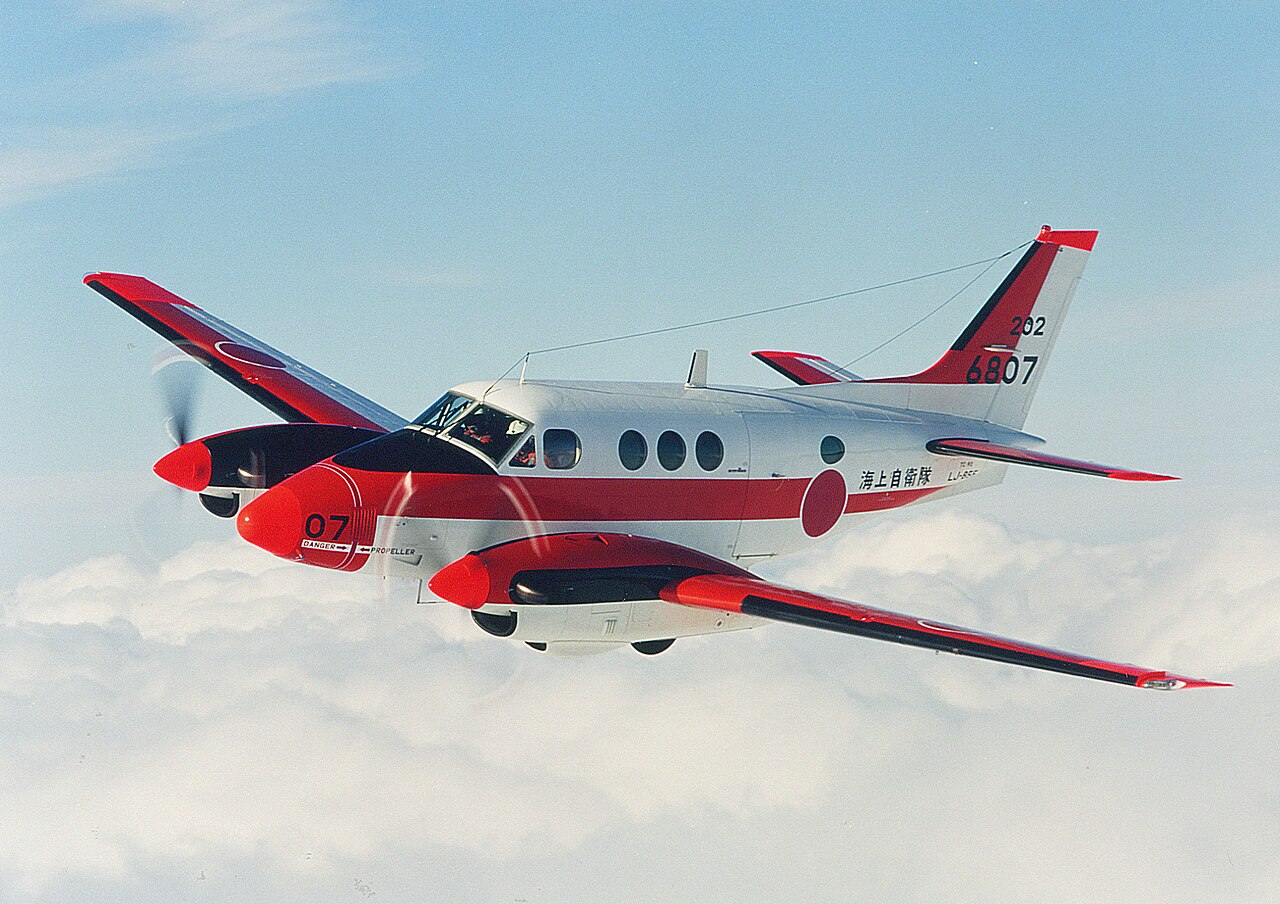
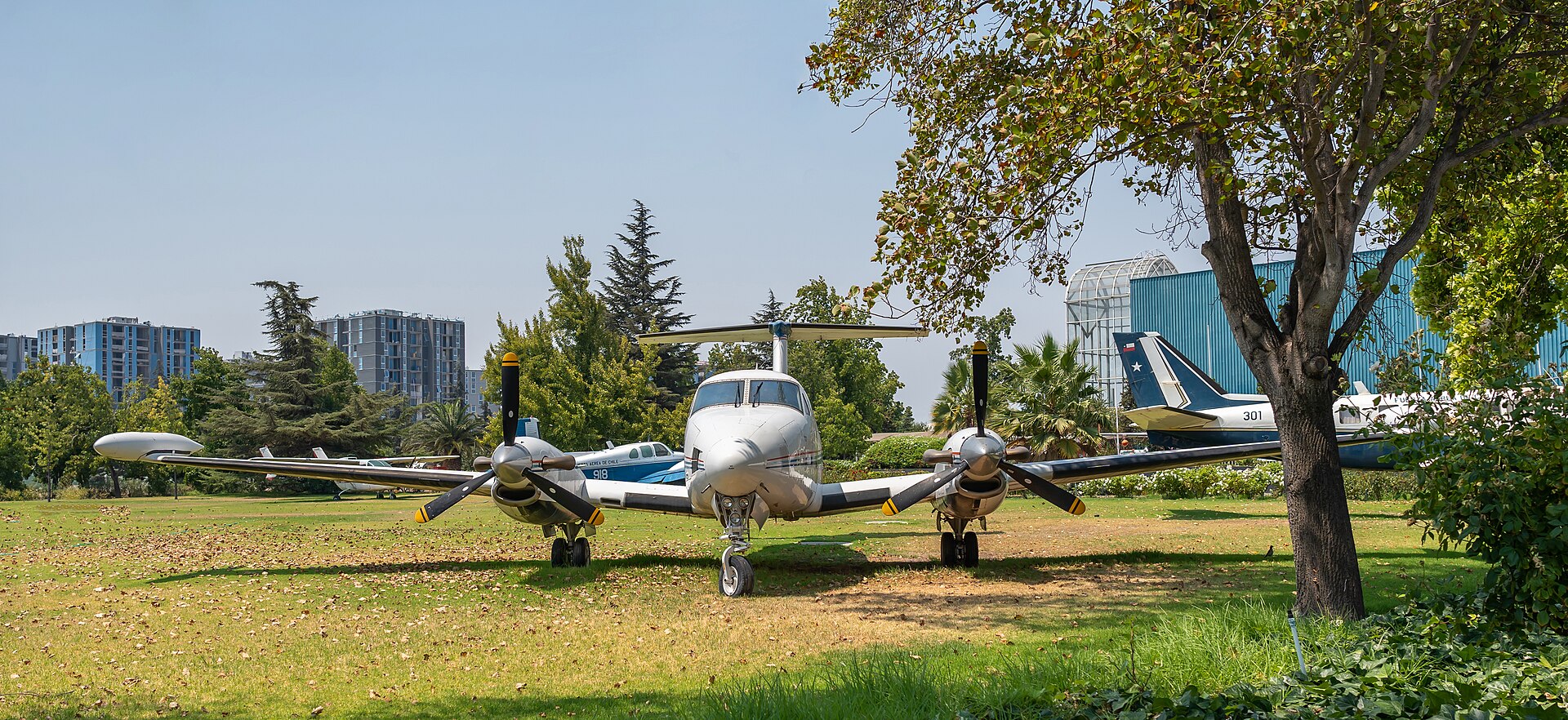
Reference photography of the Beechcraft King Air 200 (and sister types within the same cabin family where noted). Images sourced from Wikimedia Commons under Creative Commons licences.

EXTERIOR

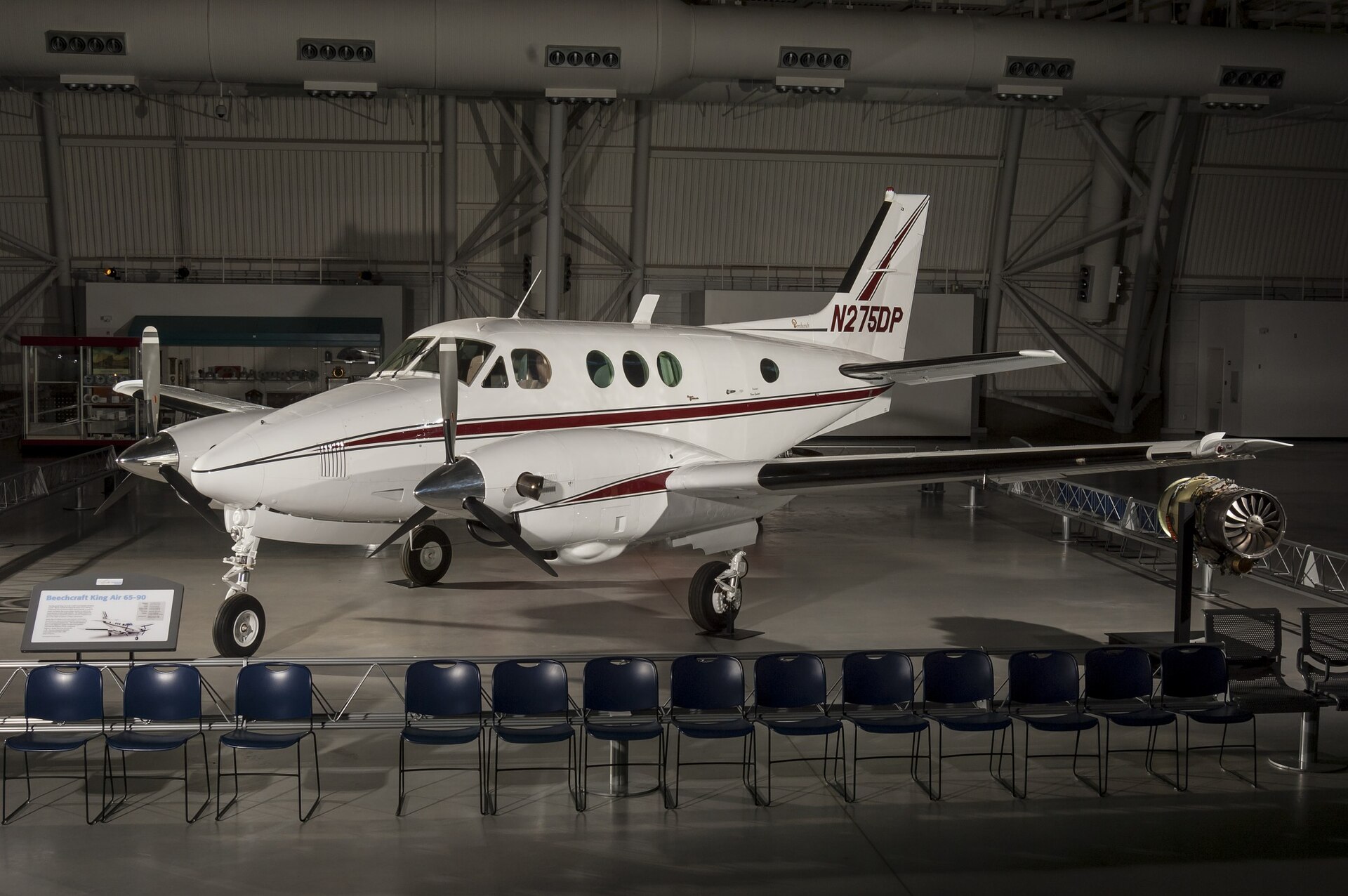
BEECHCRAFT SUPER KING AIR, A742420
BEECHCRAFT SUPER KING AIR, A742420 · Rjcastillo · CC BY-SA 4.0 via Wikimedia Commons
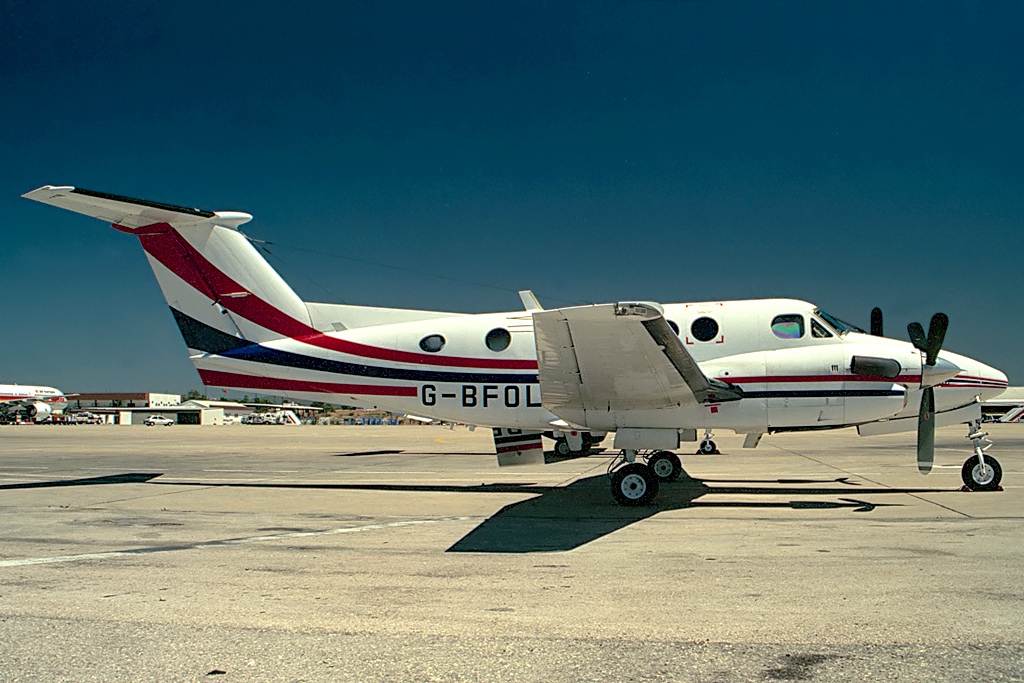
Beechcraft 200 Super King Air, Bristow Helicopters JP6168749
Beechcraft 200 Super King Air, Bristow Helicopters JP6168749 · Pedro Aragão · CC BY-SA 3.0 via Wikimedia Commons

INTERIOR

Beechcraft King Air 65-90 - DPLA - 080fc286c7edfb58f2b85f348e76cad7 (page 3)
Beechcraft King Air 65-90 - DPLA - 080fc286c7edfb58f2b85f348e76cad7 (page 3) · Beech Aircraft Corporation · CC0 via Wikimedia Commons
Beechcraft King Air 65-90 - DPLA - 080fc286c7edfb58f2b85f348e76cad7 (page 2)
Beechcraft King Air 65-90 - DPLA - 080fc286c7edfb58f2b85f348e76cad7 (page 2) · Beech Aircraft Corporation · CC0 via Wikimedia Commons

SPECIFICATIONS

Beechcraft King Air 200 specifications

Passengers7
Range1,580 nm
Speed292 kts
Cabin height4'9"
Cabin width4'6"
Baggage55 cu ft
Runway3,200 ft

CABIN EXPERIENCE

On board the Beechcraft King Air 200

  • Seven executive seats
  • Aft lavatory
  • Pratt & Whitney PT6A-42 engines

BEST ROUTES

Where the 200 flies best

London → Le Touquet

from £4,200

Aspen → Telluride

from $5,800

BROWSE ALL ROUTES →

CHARTER PRICING

Beechcraft King Air 200 charter pricing

ROUTEESTIMATED PRICE
London → Jerseyfrom £3,800
Phoenix → Sedonafrom $4,800

Indicative all-inclusive one-way pricing — aircraft, crew, fuel, handling, catering and taxes. Confirmed quote in 10 minutes.

Why choose the Beechcraft King Air 200?

  • Most-produced business turboprop in history
  • Exceptional charter value
  • Short-runway capability

FAQ

Frequently asked

Is Wi-Fi available onboard?

Yes — most aircraft in this class offer high-speed Ka-band or Starlink connectivity suitable for video calls and streaming throughout cruise.

Can pets fly on board?

Pets travel in the cabin alongside their owners on every Limitless Sky charter at no extra charge. Tell us the species and weight when you request a quote.

How quickly can the aircraft be ready?

Once a quote is confirmed, this aircraft can typically be positioned within 2–4 hours anywhere in its home region, and within 24 hours globally.

SIMILAR AIRCRAFT

Also in Turboprop

HEAD-TO-HEAD

Compare the 200

ALL COMPARISONS →

BEECHCRAFT KING AIR 200 CLUSTER

Everything connected to the Beechcraft King Air 200

Ready to charter the Beechcraft King Air 200?

Quotes in 10 minutes. Aircraft positioned within hours. 24/7, worldwide.

REQUEST A QUOTE