Bali Ngurah Rai
DPSExecuJet FBO; 24h customs and immigration.
- TRANSFER
- 30 min · 15 km
- TO
- Seminyak and Canggu
- MODES
- Chauffeured SUV

Distance, simplified.
Bali's Ngurah Rai International handles a strong flow of executive traffic from Singapore, Jakarta and Australia. Customs is on-site and ExecuJet operates a dedicated FBO.
See full private jet charter pricing.
BEST TIME TO CHARTER
November to March is peak across South-East Asia; Japan and Hong Kong run year-round on business demand.
AIRPORTS, FBOs & TRANSFERS
Each option below shows the executive airport, drive time to Bali, and typical ground options. Tap an airport for the full guide — runways, FBOs, customs, slot rules and arrival workflow.
ExecuJet FBO; 24h customs and immigration.
New to private terminals? What is an FBO? · Private jet charter cost guide — FBO choice and charter pricing for Bali
POPULAR ROUTES
| ROUTE | FLIGHT TIME | TYPICAL AIRCRAFT | FROM |
|---|---|---|---|
| Singapore → Bali | 2h 50m | Midsize Jet | from €8,900 |
| Jakarta → Bali | 1h 45m | Light Jet | from €4,400 |
One-way prices for the aircraft class listed are estimated, confirmed quote within 1–2 hours. You get an estimate per aircraft class straight away, then two or three confirmed options with aircraft photos.
COSTS TO EXPECT
ENTRY POINT
from €8,900
Lowest estimated one-way price across the routes above — estimated, confirmed quote within 1–2 hours.
TYPICAL AIRCRAFT
Midsize Jet · Light Jet
Cabin selected against range, runway and party size. We confirm the exact tail before contracting.
WHAT'S INCLUDED
All-inclusive quote
Crew, fuel, handling, landing and de-icing fees, standard catering and FBO access. Peak-period positioning and overnight crew may apply on one-ways — flagged upfront.
Charter pricing is route- and date-sensitive. For a binding number, share dates, pax and luggage in the quote form.
CHARTER BUYER'S GUIDE
Bali serves as a primary destination for executive aviation in South East Asia, attracting a consistent flow of principals, family offices, and corporate groups from hubs like Singapore, Jakarta, Hong Kong, and Australia. The use case for private charter to Bali is almost entirely leisure-driven, centred on the island's high-end wellness resorts, private villa estates, and unique cultural landscape. The client profile is typically one that values time and discretion, seeking to bypass the often congested commercial terminal at Ngurah Rai International Airport (DPS) and ensure a seamless transition from the aircraft to their final destination.
Flights are most frequent during the dry season, corresponding with major holiday periods in Europe and Australia. While the island is a year-round destination, charter demand peaks from June to August and again over the Christmas and New Year period. The primary motivation for using private aviation is not merely luxury, but operational necessity. It is the only method to circumvent significant commercial air travel friction points and guarantee direct access to a private terminal facility with on-site customs and immigration, which is a critical time-saving factor in this market.
The optimal window for chartering to Bali is during the dry season, which runs from April to October. This period offers the most favourable flying conditions with clear skies, lower humidity, and minimal weather-related operational disruptions. The absolute peak of this season is July and August, which coincides with European summer holidays and results in the highest demand for landing slots, aircraft parking, and hotel availability. Consequently, charter pricing is at its highest and booking lead times are longest during these two months.
The shoulder months of April, May, June, and September are operationally ideal. They combine excellent weather with a tangible reduction in ground congestion and airport pressure compared to the July-August peak. For clients with date flexibility, these months represent the best balance of good conditions and better availability.
The wet season, from November to March, presents operational challenges. While the island remains popular, particularly over Christmas and New Year, a charter operation must plan for tropical rainfall, which is often intense but short-lived. This can lead to potential air traffic control delays and require flight plans to be routed around significant convective weather cells. The primary operational risk is not en route, but on the ground, with the possibility of waterlogged airfields or ground handling delays.
A critical, non-negotiable scheduling constraint is Nyepi, the Balinese 'Day of Silence', which typically occurs in March. On this day, the entire island, including Ngurah Rai International Airport, shuts down completely for 24 hours. No flights are permitted to land or depart. There are no exceptions. Any travel plan that overlooks this date will be irrevocably disrupted. This is the single most important calendar event to factor into any travel planning for the first quarter of the year. Booking around Nyepi requires precise scheduling to avoid being caught on the ground or unable to land.
Primary Airport: Bali Ngurah Rai International Airport (WADD/DPS)
This is the sole airport serving the island of Bali and handles all commercial and private aviation traffic. It is located in the south of the island, providing convenient access to the primary tourist and residential areas of Nusa Dua, Seminyak, and Uluwatu.
Runway: DPS has a single runway (09/27) with a length of 3,000 metres. This is sufficient to accommodate all private jet classes, from light jets like the Citation CJ3 to the largest ultra-long-range aircraft such as the Gulfstream G650ER and Global 7500, without any performance limitations.
Slots & PPR: This is the most critical operational constraint for Bali. DPS is a slot-coordinated airport (Level 3), meaning both landing and departure times must be requested and approved by the airport authority. During peak season, slots are extremely scarce and are often completely unavailable for weeks at a time. Prior Permission Required (PPR) is frequently enforced. Short-notice or ad-hoc charter requests are exceptionally difficult to accommodate. All charter planning for Bali must begin with an assessment of slot availability.
FBO Facilities: The primary FBO is operated by ExecuJet. This facility provides a physically separate terminal for private jet passengers, away from the main commercial concourses. It includes private passenger lounges, crew rest areas, and dedicated customs and immigration (CIQ) facilities. Utilising the FBO means passengers move directly from their aircraft to a private lounge for processing, completely avoiding the main terminal. This is the standard procedure for all high-end charters.
Customs & Immigration: CIQ services are available 24 hours a day but must be requested in advance. The processing occurs within the FBO itself. While efficient, during periods of high traffic (e.g., when several private jets land in a short window), there can be minor delays. Submitting accurate and complete passenger manifests well in advance is essential to expedite this process.
Aircraft Parking & Repositioning: This is the second major operational challenge after slots. Aircraft parking at DPS is extremely limited. During peak periods, long-term parking (for the duration of the client's stay) is almost never available. The standard procedure for operators is to secure a drop-off slot, disembark passengers, and then immediately reposition the aircraft to a different airport with available parking. This is not a choice; it is a mandatory airport requirement to manage ramp congestion. Common repositioning airports include Surabaya (WARR/SUB) or Jakarta's Halim Perdanakusuma (WIHH/HLP). For aircraft coming from Australia, Darwin (YPDN/DRW) may also be used. The requirement to reposition adds significant cost to a charter, as it involves two additional flight legs (DPS to the parking airport, and the return flight to DPS for passenger pickup). This cost is borne by the charterer and can add tens of thousands of Euros to the total price.
Alternate Airport: Lombok International Airport (WADL/LOP)
Located on the neighbouring island of Lombok, LOP is the most common diversion and repositioning alternate for Bali. It is approximately a 25-minute flight from DPS. While its primary function in the context of a Bali charter is as an aircraft parking location when DPS is full, it can also be used as a primary destination if the client's final location is on Lombok. LOP's private aviation infrastructure is less developed than that of DPS, with more basic handling services and no dedicated FBO building on the scale of ExecuJet. However, for a technical stop or repositioning, it is perfectly adequate.
Choosing the right aircraft for a trip to Bali is determined by the departure point, passenger count, and on-ground logistics, specifically baggage capacity and the potential need for long-range performance.
Light Jets (e.g., Embraer Phenom 300, Cessna Citation CJ4) These aircraft are well-suited for short-haul regional flights, primarily from Jakarta. With a flight time of under two hours, a light jet provides an efficient and cost-effective solution for up to six passengers. The main consideration is baggage capacity, which is limited. If passengers are travelling with more than one standard suitcase each, a larger aircraft may be necessary. They offer good performance for the relatively short runway requirements and are nimble on the ground.
Midsize Jets (e.g., Cessna Citation XLS+, Embraer Praetor 600, Bombardier Challenger 350) This is the most popular and versatile category for flights to Bali. Midsize jets offer an ideal balance of range, cabin comfort, and baggage space, making them the standard choice for routes from Singapore (a 2h 50m flight) and other ASEAN capitals. An aircraft like the Citation XLS+ has excellent runway performance and a comfortable cabin for 6-8 passengers. The Praetor 600 offers superior range, capable of connecting Bali non-stop with destinations across Australia or further into North Asia. The Challenger 350 provides a wide, flat-floor cabin that is a preferred environment for both business and leisure travellers.
Heavy Jets (e.g., Gulfstream G450, Dassault Falcon 2000LXS, Bombardier Global 6000) Heavy jets are recommended for clients travelling from greater distances such as Hong Kong, the Middle East, or across Australia. The primary advantages are range and cabin size. A Gulfstream G450 can comfortably fly 12 passengers from destinations like Dubai with a single, quick fuel stop. The wider cabin, stand-up headroom, and larger galley are better suited for longer flights and allow for a higher standard of in-flight service. The Global 6000 offers an even larger cabin and the ability to connect Bali non-stop with cities in the Middle East. For large family groups or those with significant amounts of luggage (surfboards, dive gear), the generous baggage holds of these aircraft are a key operational advantage.
Ultra-Long-Range Jets (e.g., Gulfstream G650ER, Bombardier Global 7500, Dassault Falcon 8X) This category enables non-stop travel to Bali from almost anywhere in the world, including Europe and the West Coast of the United States. A Gulfstream G650ER can make the flight from London with a single, efficient fuel stop, or fly non-stop from Dubai. The Global 7500, with its unparalleled range, can connect Bali non-stop with cities like Seattle or Geneva. While these aircraft offer the ultimate in performance and comfort, they are still subject to the same slot and parking restrictions at DPS. The value proposition is the ability to complete the journey in a single leg, but the on-ground logistics and high probability of needing to reposition the aircraft remain the dominant planning considerations.
Charter pricing to Bali is highly variable and dictated by aircraft type, routing, season, and, most importantly, aircraft parking logistics. The following figures are indicative one-way estimates under normal operating conditions and do not include potential repositioning costs.
Jakarta (HLP) to Bali (DPS): From €18,000 This pricing is typically based on a light jet such as a Phenom 300 or Citation CJ3. The cost includes the aircraft, two pilots, standard catering, and fuel for the approximate 1 hour 45-minute flight. It does not include VAT, passenger taxes, or exceptionally high-demand period surcharges. The primary variable is crew and aircraft availability from Jakarta.
Singapore (XSP) to Bali (DPS): From €32,000 This route requires a midsize jet like a Citation XLS+ or Praetor 500 for a comfortable 2 hour 50-minute flight. The higher price reflects the larger aircraft, longer flight duration, higher fuel burn, and the international nature of the sector, which incurs different handling and navigation fees. This price is a baseline and assumes the aircraft is already positioned in Singapore.
Key Cost Drivers:
Empty Leg Opportunities: Bali is a popular one-way destination, which generates a steady stream of empty-leg flights. These are repositioning flights that an operator needs to make, sold at a significant discount. Savings can range from 30% to 60% compared to a standard on-demand charter. The trade-off is a lack of flexibility; the date, time, and routing are fixed. Empty legs from Bali back to hubs like Singapore, Hong Kong, and Sydney are relatively common and offer excellent value for clients with flexible schedules.
Arrival into Bali via private jet is a streamlined process designed to minimise friction and transit time.
FBO & Customs Experience: Upon landing, the aircraft will taxi to a dedicated parking stand near the ExecuJet FBO. Passengers are met at the aircraft steps by FBO handling agents and escorted in a private vehicle for the short drive to the terminal entrance. Inside the FBO, passengers can relax in a private lounge while handling staff process their passports and visas with the on-site customs and immigration officials. The entire process is discreet and typically takes less than 20 minutes. Luggage is collected from the aircraft and brought directly to the FBO for clearance, then loaded onto the onward ground transport.
Ground Transportation:
Pet Handling: Importing pets into Indonesia is a highly complex process involving stringent health checks, import permits, and a mandatory quarantine period. For temporary visitors, it is generally not a viable option. We strongly advise against travel with pets to Bali for short-term stays due to these regulations.
Once clear of the airport, a client's experience is defined by their chosen location. Each key area offers a different logistical profile:
Ignoring Parking Confirmation: The most frequent and costly mistake is assuming aircraft parking is included or available. A charter is often booked without explicit confirmation of a long-term parking bay at DPS. This leads to the operator being forced to reposition, with the substantial extra cost passed on to the client after the fact.
Overlooking Nyepi Day: Attempting to schedule a flight on or near the 'Day of Silence' in March without understanding the entire airport is closed for 24 hours. This can derail an entire itinerary and is a non-negotiable operational halt.
Underestimating Ground Transfer Times: Relying on standard mapping application estimates for travel time. Bali's traffic is a critical factor. A 20-kilometre journey can take well over an hour. This mistake leads to missed appointments, dinner reservations, or unnecessary stress upon arrival. Always add a significant buffer or opt for a helicopter.
Booking Too Late for Peak Season: Waiting until November to book a flight for the Christmas holiday. By that point, all viable slots and parking spots are gone, and the only available aircraft will be priced at an extreme premium, if any can be found at all. Peak season travel to Bali requires planning months in advance.
Mismatched Baggage and Aircraft: Chartering a light jet for a family of four with multiple large suitcases and golf bags. The aircraft simply doesn't have the baggage capacity. This leads to difficult choices on the tarmac: either leave luggage behind or attempt a costly, last-minute upgrade to a larger aircraft, which is rarely possible.
Effective planning is essential for a successful charter to Bali, given the operational constraints.
Peak Season (July-August, Christmas & New Year): Book 3 to 6 months in advance. This is the minimum lead time required to have a reasonable chance of securing landing slots, parking (or a planned repositioning), and your preferred aircraft type.
Shoulder Season (April-June, September-October): A lead time of 4 to 8 weeks is advisable. This generally provides enough time to secure slots and arrange logistics without significant compromises.
Off-Season (November-March, excluding holidays): It is often possible to arrange a charter with 1 to 3 weeks' notice. However, even in the off-season, slots are not guaranteed and last-minute availability can be tight.
Same-Day & Short Notice: Chartering for same-day travel to Bali is operationally unrealistic due to the slot coordination process and international flight planning requirements. Even from a domestic point like Jakarta, it is extremely challenging.
Quotation Requirements: To provide an accurate and actionable quote, we require the number of passengers, intended travel dates (with flexibility if possible), the city of origin, and an estimate of luggage. Crucially, providing the duration of your stay in Bali allows us to immediately investigate the parking situation, which is the most important factor in determining the final charter cost.
ON THE GROUND
Positioned on the Uluwatu cliffs, 150 metres above the Indian Ocean. This resort combines Italian design with a tropical setting, offering exceptional security and privacy. Arrival logistics are straightforward, with access via a private funicular to its secluded beach. It represents a highly exclusive and controlled environment.
Located in the Sayan valley near Ubud, this resort is an architectural landmark focused on wellness and immersion in nature. Its secluded jungle location makes it a true retreat. For clients prioritising time, a helicopter transfer from DPS to a nearby landing zone is the most efficient arrival method.
Situated within the secure Nusa Dua area, these villas offer classic Aman serenity and privacy. Guests benefit from the facilities of the adjacent golf course and a dedicated beach club. It's a choice for those who want the seclusion of a private villa with the full support of hotel services.
A unique tented camp in the Keliki valley, this offers an immersive rainforest experience without compromising on luxury. Its remote location makes it an ideal candidate for helicopter transfers, turning a 90-minute drive into a short, scenic flight. It suits clients seeking a distinctive and unconventional stay.
AIRCRAFT
4–6 passengers, up to 3h
Citation CJ3, Phenom 300 — ideal for short European hops with quick turnarounds.
7–9 passengers, up to 5h
Citation XLS+, Hawker 900XP — stand-up cabin, full galley, transcontinental Europe.
10–14 passengers, 6h+
Challenger 605, Gulfstream G450, Falcon 7X — intercontinental with bedroom-class comfort.
FLEET FOR BALI

LIGHT JET
Cessna
The benchmark light jet for short European hops.
VIEW AIRCRAFT →LIGHT JET
Cessna
Light-jet economics, midsize cabin comfort.
VIEW AIRCRAFT →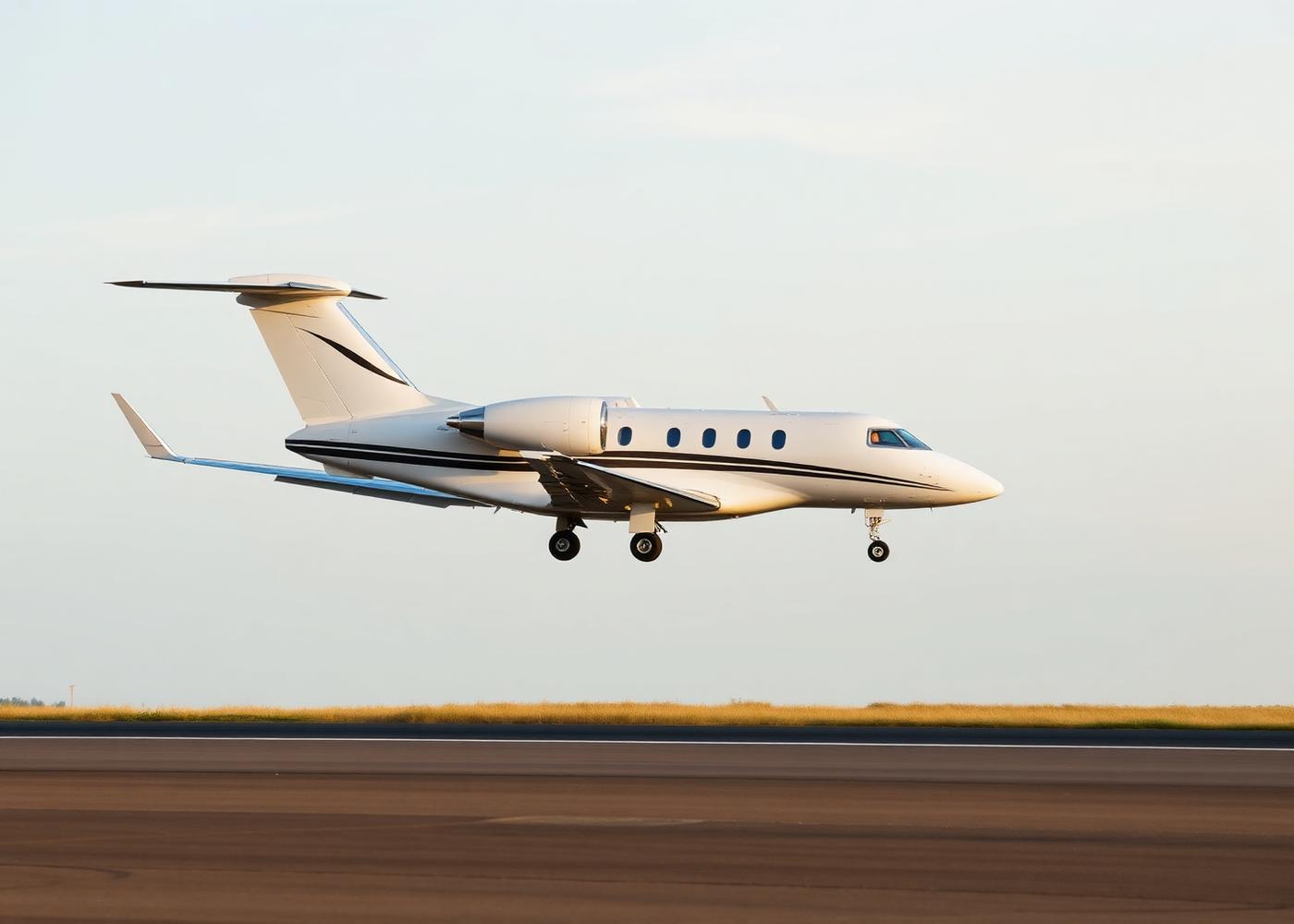
MIDSIZE JET
Hawker Beechcraft
The proven workhorse of midsize charter.
VIEW AIRCRAFT →MIDSIZE JET
Cessna
Six-foot flat-floor cabin at midsize prices.
VIEW AIRCRAFT →CHARTER GUIDES
PRICING & COST
12 min read
OPERATIONS & TRAVEL
12 min read
AIRCRAFT & FLEET
6 min read
AIRCRAFT & FLEET
5 min read
OPERATIONS & TRAVEL
5 min read
FAQ
A chauffeured transfer from Bali Ngurah Rai to Seminyak and Canggu is about 30 minutes (15 km). Typical modes are chauffeured suv. Limitless Sky pre-positions ground transport so the car is waiting planeside.
Usually yes — many operators permit pets in the cabin, subject to aircraft-owner approval, destination rules, documentation and any operator-specific charges. Let us know the size and species when you request a quote and we will confirm per aircraft.
For most major airports we can have an aircraft positioned within 4 hours. Last-minute bookings are our specialty — we operate 24/7.
One-way prices estimated, confirmed quote within 1–2 hours: Singapore → Bali from €8,900 (midsize jet); Jakarta → Bali from €4,400 (light jet). Send your dates and passengers and you get an estimated price per aircraft class straight away, then two or three confirmed options with aircraft photos within 1–2 hours.
RELATED DESTINATIONS
EXPLORE THE CLUSTER
HUB GUIDES
BEST AIRCRAFT FOR BALI
EMPTY LEGS · TO BALI
Repositioning flights to Bali come up occasionally and rarely stay available for long. Set an alert and we will tell you if one matches.
EMPTY-LEG ALERTS
We scan operator inventory every 12 hours. The moment a leg matches your route, date window and budget, we email you with a direct booking link.
MALLORCA · GERMANY, NRW, FRANKFURT
SKI SEASON · ALPS
An estimated price per aircraft class straight away, then two or three confirmed options with aircraft photos within 1–2 hours. 24/7, worldwide.
REQUEST A QUOTEAIRPORT COMPARISON
DPS is the single realistic gateway for Bali charters.
DPS · PREMIER
DPS
DPS — primary jet gateway; 9,790 ft runway; in-town.
RECOMMENDED AIRCRAFT
Super Midsize Jet
Heavy Jet
Ultra Long Range
SEASONALITY
GROUND TRANSPORT
HELICOPTER
CUSTOMS
VISA
WEATHER
RECOMMENDED STAY
MEDICAL / MEDEVAC
DESTINATION PROFILE
luxury
55
business
20
family
45
ski
0
beach
80
golf
10
medical
40
heli
30
marina
0
NEARBY DESTINATIONS
AI CONCIERGE
Structured knowledge object with 1 airports, 0 corridor routes, 0 named event windows, 5 nearby destinations and a full scoring profile — designed to answer concierge-level questions in real time.
FAQ
DPS (DPS) is the primary gateway. There are no realistic alternatives on the ground.
Super Midsize Jet is the best fit for most missions; short-runway constraints may push smaller groups to a Light Jet.
Pricing scales with aircraft class and the departure city (for example London). Send your dates and passengers to see an estimated price per aircraft class straight away; two or three confirmed options with aircraft photos follow within 1–2 hours.
See the seasonality panel — demand is driven by July and August weekends.
Yes — rotary transfer is standard for this destination and can be arranged with the ground team.
CONTINUE YOUR JOURNEY AT SEA
Our sister platform, Blue Ocean Club, curates crewed yachts across Indonesia. When the live yacht feed is connected, availability and pricing will appear here.
Data source status: connecting to Blue Ocean Club…
AVIATION FACTS · AVI-GO 2025
Desk-verified market figures linked to this page — drawn from Avi-Go analytics reports and surfaced for charter planning context.
Indonesia ↔ Singapore ranked #2 Rest of World cross-border country pair in June 2026 with 248 flights (-0.82% MoM, 0.00% YoY).
structured · confidence 95% · verified 2026-07-28
Indonesia ↔ Singapore cross-border volume moved 0.00% YoY in June 2026 vs June 2025.
structured · confidence 94% · verified 2026-07-28
Indonesia ↔ Singapore cross-border volume moved -0.82% MoM in June 2026.
structured · confidence 94% · verified 2026-07-28
Jakarta ranked #6 Asia Pacific business aviation destination city Jan–Aug 2025 — top origin Singapore at 30.65% of arrivals (highest concentration).
structured · confidence 94% · verified 2026-07-28
China–Indonesia ranked #10 Asia Pacific cross-border country pair Jan–Aug 2025 with 356 bidirectional movements.
structured · confidence 94% · verified 2026-07-28
Indonesia ranked #5 in Asia Pacific with 4,045 business jet departures Jan–Aug 2025 (7.25% share).
structured · confidence 94% · verified 2026-07-28
Indonesia ranked #7 fastest-growing Asia Pacific origin market Jan–Aug 2025 at +7.38% (3,767 → 4,045 departures).
structured · confidence 93% · verified 2026-07-28
Indonesia ranked #9 Rest of World by country utilization rate in June 2026 at 11.26%.
structured · confidence 92% · verified 2026-07-28
Indonesia ranked #32 globally by business jet departures in June 2026 with 523 flights.
structured · confidence 92% · verified 2026-07-28
2026
Verified aviation metric
Indonesia ↔ Singapore implied May 2026 baseline ≈ 250 flights given June 248 at -0.82% MoM (derived from printed June volume + MoM%).
structured · confidence 88% · verified 2026-07-28
Jakarta–Singapore ranked #1 Asia Pacific city-pair corridor Jan–Aug 2025 with 1,182 bidirectional movements (+21.9% YoY vs 969).
structured · confidence 95% · verified 2026-07-28
1,182
Verified aviation metric
On Jakarta–Singapore (1,182 flights) Jan–Aug 2025, Gulfstream G450 led at 14.47%, followed by Learjet 60 Series 9.94% and Gulfstream G650ER 6.85%.
structured · confidence 94% · verified 2026-07-28
KNOWLEDGE GRAPH
Airports serving this destination, routes clients fly here on, aircraft that operate them, and nearby destinations you can pair it with.