Seletar
XSPJet Aviation & Hawker Pacific FBOs. 24h customs.
- TRANSFER
- 15 min · 8 km
- TO
- Marina Bay
- MODES
- Chauffeured sedan

Distance, simplified.
Seletar is Singapore's dedicated business aviation airport and one of Asia's premier executive terminals. Changi handles ultra-long-range and Schengen-style scheduled mixing.
See full private jet charter pricing.
BEST TIME TO CHARTER
November to March is peak across South-East Asia; Japan and Hong Kong run year-round on business demand.
AIRPORTS, FBOs & TRANSFERS
Each option below shows the executive airport, drive time to Singapore, and typical ground options. Tap an airport for the full guide — runways, FBOs, customs, slot rules and arrival workflow.
Jet Aviation & Hawker Pacific FBOs. 24h customs.
Jetex VIP Terminal for ultra-long-range arrivals.
New to private terminals? What is an FBO? · Private jet charter cost guide — FBO choice and charter pricing for Singapore
POPULAR ROUTES
| ROUTE | FLIGHT TIME | TYPICAL AIRCRAFT | FROM |
|---|---|---|---|
| Singapore → Bali | 2h 50m | Midsize Jet | from €8,900 |
| Singapore → Hong Kong | 3h 30m | Midsize Jet | from €11,200 |
| Singapore → London | 13h 30m | Ultra Long Range | from €102,900 |
One-way prices for the aircraft class listed are estimated, confirmed quote within 1–2 hours. You get an estimate per aircraft class straight away, then two or three confirmed options with aircraft photos.
COSTS TO EXPECT
ENTRY POINT
from €8,900
Lowest estimated one-way price across the routes above — estimated, confirmed quote within 1–2 hours.
TYPICAL AIRCRAFT
Midsize Jet · Ultra Long Range
Cabin selected against range, runway and party size. We confirm the exact tail before contracting.
WHAT'S INCLUDED
All-inclusive quote
Crew, fuel, handling, landing and de-icing fees, standard catering and FBO access. Peak-period positioning and overnight crew may apply on one-ways — flagged upfront.
Charter pricing is route- and date-sensitive. For a binding number, share dates, pax and luggage in the quote form.
CHARTER BUYER'S GUIDE
Singapore serves as the primary gateway for private aviation in Southeast Asia, acting as a crucial nexus for business travel between the West, China, and Australasia. As a premier global financial hub, the city-state maintains a sophisticated infrastructure specifically designed to handle high volumes of non-scheduled flight movements. Charter traffic into Singapore is largely comprised of corporate delegations, family offices, and high-net-worth individuals transitioning to regional yachting hubs or secondary business markets in Indonesia, Malaysia, and Vietnam. Unlike many regional peers, Singapore offers a streamlined regulatory environment, though its physical constraints as an island nation require precise flight planning and strict adherence to slot windows.
From an operational perspective, Singapore is a year-round destination. While the corporate sector drives consistent demand from Monday to Friday, the city also sees significant leisure spikes during major international events. The profile of the charter buyer here is typically focused on efficiency and connectivity. Most arrivals originate from regional capitals like Jakarta, Kuala Lumpur, and Hong Kong, or as the final leg of an ultra-long-range haul from London, New York, or Dubai. The operational sophistication of Singapore’s ground handling ensures that the transition from cabin to car is amongst the fastest in the world, provided the correct airfield is selected for the specific aircraft type and mission profile.
Singapore’s equatorial climate means weather is rarely a factor that grounds flights, though heavy tropical thunderstorms during the Northeast Monsoon (December to early March) and the Southwest Monsoon (June to September) can occasionally lead to holding patterns or temporary diversions. Operationally, the most critical periods for charter buyers are not defined by weather, but by the city’s major events calendar. The Formula 1 Singapore Grand Prix, typically held in September, represents the absolute peak for business aviation. During this week, hangar space is non-existent, ramp parking at Seletar (XSP) is restricted to short stays, and slot availability becomes highly competitive. If you are planning to attend the Grand Prix, booking your aircraft and securing your landing slots at least three months in advance is essential.
Other peak periods include the Singapore Airshow (biennial in February), where Seletar experiences significant traffic increases and potential airspace closures for aerial displays. The Lunar New Year period also sees a surge in regional light and midsize jet movements. Conversely, the shoulder periods in late October and November, or the primary monsoon months, often see better availability for the best-positioned aircraft. During these windows, you are more likely to find competitive pricing on transient aircraft—jets that have dropped off a passenger in Singapore and are looking for a return leg to their home base in Hong Kong or Australia. For the most cost-effective travel, aim for mid-week departures outside of the major convention and race weeks.
Singapore is served by two primary airports for private aviation: Seletar Airport (XSP) and Changi International Airport (SIN). Choosing between them is the most significant decision a charterer will make, as it affects everything from landing fees to time spent on the ground.
Seletar Airport (XSP) is Singapore's dedicated business aviation gateway. Located in the northeast of the island, it underwent a major redevelopment including the opening of a new passenger terminal in late 2018. The runway (21/03) is 1,840 metres (6,036 feet) long, which is more than sufficient for almost all light, midsize, and large-cabin business jets, including the Gulfstream G650 and Global 7500. Seletar is the preferred choice for 90% of private missions because it is designed for speed. The airport houses several world-class Fixed Base Operators (FBOs), including Jet Aviation, Hawker Pacific (now part of Jet Aviation), and Universal Aviation. These facilities offer 24-hour customs and immigration, private lounges, and direct apron access for vehicles. Parking at Seletar is generally easier to secure than at Changi, though it still requires a Prior Permission Required (PPR) notification. The drive from Seletar to the Downtown Core or Orchard Road takes approximately 20 to 30 minutes depending on traffic.
Changi International Airport (SIN) is one of the world's busiest commercial hubs. While it can technically handle private jets, it is heavily restricted. Slots are extremely difficult to obtain during commercial peak hours, and private movements are often discouraged in favour of scheduled airline traffic. However, Changi is the necessary choice for ultra-long-range arrivals where the aircraft exceeds the weight or length limits of Seletar, or for passengers who are connecting directly from an international commercial flight. The Jetex VIP Terminal at Changi provides a seamless, 'Schengen-style' experience, allowing passengers to bypass the main commercial terminals entirely. The runways at Changi are 4,000 metres long, capable of handling converted airliners like the Boeing Business Jet (BBJ) or Airbus Corporate Jet (ACJ). Be advised that landing fees and handling charges at Changi are significantly higher than at Seletar, and ground delays for taxiing can be substantial.
In the event of a diversion, the most common alternate is Senai International Airport (JHB) in Johor Bahru, Malaysia. While just across the border, a diversion here involves international immigration and a complex land crossing back into Singapore, which can add hours to your journey. Proper fuel planning and slot management are therefore paramount to ensure a direct arrival into XSP or SIN.
Selecting the right aircraft for a Singapore charter depends on the mission range and the number of passengers. The regional geography of Southeast Asia often dictates the use of midsize to long-range jets.
For regional hops such as Singapore to Kuala Lumpur, Bangkok, or Jakarta, Light Jets like the Cessna Citation CJ3+ or the Embraer Phenom 300 are highly efficient. These aircraft offer excellent short-field performance for regional airports and provide a comfortable cabin for 6 to 7 passengers on flights under three hours. They are the most economical way to navigate the immediate ASEAN region.
Midsize and Super-Midsize Jets are the workhorses of the Singapore charter market. For routes like Singapore to Bali or Hong Kong, the Cessna Citation XLS+, Bombardier Challenger 350, or Embraer Praetor 600 are ideal. The Challenger 350 is particularly favoured for its wide cabin and reliability on the 3-hour run to Hong Kong. The Praetor 600 offers exceptional range if the mission profile expands to include Perth or Darwin, providing a stand-up cabin and significant luggage capacity.
For missions to North Asia, the Middle East, or Australia, Heavy Jets such as the Gulfstream G450 or Bombardier Global 5000 are recommended. These aircraft provide the necessary range for 5- to 8-hour flights while offering full galley services and a flight attendant as standard. They are frequently used for corporate teams or families who require more space and a higher level of on-board service.
Ultra-Long-Range Jets are the gold standard for Singapore departures. For the 13-hour 30-minute flight to London, or direct runs to the West Coast of the United States, the Gulfstream G650ER, Bombardier Global 7500, or Dassault Falcon 8X are the only viable options. These aircraft can fly halfway around the world in a single hop, featuring multiple cabin zones, dedicated crew rest areas, and advanced humidification systems to reduce jet lag. The Global 7500 is notably impressive for its ability to operate out of Seletar’s 1,840-metre runway while still maintaining enough fuel for a direct flight to Europe or the US.
Private jet pricing in Singapore is influenced by aircraft positioning, landing fees, and the duration of stay. Below are indicative one-way prices for common routes based on current market data:
Singapore to Bali (DPS): Starting from $32,000 in a Midsize Jet. This price includes the 2-hour 50-minute flight time and standard handling at XSP and DPS. Prices can increase if the aircraft needs to stay on the ground in Bali, where parking is often restricted.
Singapore to Hong Kong (HKG): Starting from $38,000 in a Midsize Jet. This route is highly competitive. The 3-hour 30-minute flight time is well-served by based aircraft in both cities, meaning empty-leg opportunities are more frequent on this corridor. Be aware that Hong Kong slot constraints often drive the schedule.
Singapore to London (LHR/FAB): Starting from $185,000 in an Ultra-Long-Range Jet. Given the 13-hour plus flight time, this price reflects the high operational costs of heavy machinery like a Global 6000 or Gulfstream G550/650. This typically includes a full crew (including a third pilot for long-haul duty limits) and premium catering.
It is important to note that these figures are indicative. Factors that drive the final cost include 'Peak Period Uplift'—where prices can rise by 20-40% during F1 or Chinese New Year—and positioning costs. If you book an aircraft that is not already based in Singapore, you will likely pay for the 'ferry flight' to bring the plane to the city. To save costs, look for empty-leg opportunities. These occur when an aircraft needs to return to its home base after a one-way charter. Savings can range from 30% to 60% off the standard charter rate, though they offer less flexibility as the schedule is dictated by the primary charter.
Arrival at Seletar (XSP) is designed for maximum efficiency. Unlike the commercial experience at Changi, where you may walk for 15 minutes to reach immigration, at the Seletar FBOs, you are often 20 metres from your car. Upon landing, your aircraft will taxi directly to the FBO ramp. Customs and immigration officers are stationed within the FBO lounge, processing passengers in a matter of minutes while ground handlers transfer luggage directly from the aircraft hold to your waiting vehicle.
Ground transfers are the primary method of transport in Singapore. While helicopter transfers exist, the city's compact size and excellent road network make chauffeur-driven cars (typically Mercedes-Benz S-Class or Rolls-Royce Phantoms) the more practical choice. A transfer from Seletar to the main downtown hotels (Raffles, St. Regis) typically takes 20 to 25 minutes. If you are heading to the Marina Bay Sands or the Financial District, expect a similar transit time. For those arriving with significant luggage, many FBOs can arrange for separate van transport to ensure all items reach the destination simultaneously.
Singapore has strict customs regulations, particularly regarding tobacco and alcohol. There is no duty-free allowance for cigarettes, and all tobacco must be declared. Pet handling is also highly regulated; Singapore is a rabies-free country, and importing a pet requires an AVA (Agri-Food & Veterinary Authority) permit and potential quarantine, depending on the country of origin. If you are flying with a pet, this must be coordinated at least 30 days in advance to ensure all paperwork is in order for the FBO arrival.
Singapore is a city of distinct districts, each offering a different atmosphere for the high-end traveller. The Downtown Core and Marina Bay are the centres of finance and modern luxury, home to the city’s most iconic skyline views and high-end dining. Those seeking heritage and old-world elegance typically gravitate toward the Civic District, where colonial-era architecture houses some of the world’s most famous hotels. Orchard Road remains the primary destination for luxury retail, with high-concentration of flagship boutiques from every major fashion house.
For dining, Singapore is arguably the gastronomy capital of Asia. The city boasts dozens of Michelin-starred establishments, ranging from refined French cuisine at Odette within the National Gallery to innovative Australian 'barbecue' at Burnt Ends. For a more relaxed experience, the Dempsey Hill enclave offers upscale dining in converted colonial barracks, surrounded by lush tropical greenery. This area is particularly popular with the local expatriate and private jet-owning community for weekend brunches and discreet dinners.
If the visit requires a maritime focus, Sentosa Cove is the location of the ONE°15 Marina. This is the primary hub for superyachts in the region. Many charterers will arrive via Seletar and head directly to Sentosa to board a yacht for cruising the Riau Islands or heading north toward Phuket. Sentosa also offers a more resort-like feel, with private villas and beachfront clubs like Tanjong Beach Club, providing a stark contrast to the high-rise intensity of the Central Business District.
Insisting on Changi (SIN) over Seletar (XSP): Unless you have a direct commercial connection or an aircraft too large for Seletar, choosing Changi is usually a mistake. The taxi times on the ground at Changi can be 20-30 minutes alone, and the difficulty in securing slots can lead to significant departure delays. Seletar is almost always the faster and more cost-effective choice.
Underestimating Slot Constraints during F1: Many buyers believe that because they are paying for a private jet, they can land whenever they want. During the Singapore Grand Prix, the Civil Aviation Authority of Singapore (CAAS) operates a strict slot system. If you miss your 15-minute slot window due to a late departure from your origin, you may be forced to divert or wait hours for a new opening.
Failing to Account for 'PPR' Lead Times: Singapore requires Prior Permission Required (PPR) for all non-scheduled flights. While this can often be secured within 24-48 hours, during peak periods or for aircraft coming from 'high-risk' regions, the paperwork can take longer. Last-minute bookings are possible but carry a higher risk of slot rejection.
Ignoring Baggage Limits on Regional Hops: When chartering a Light Jet (like a CJ3) for a flight from Singapore to a regional island destination, many travellers over-pack. Unlike a Gulfstream, light jets have limited cubic capacity in the hold. If four passengers each bring two large hard-shell suitcases, they likely will not fit. Always verify the luggage capacity against your specific needs.
Miscalculating Transit Times to Malaysia: Many buyers see the proximity of Johor Bahru on a map and assume they can easily fly there to save on Singapore landing fees. The land border (The Causeway) can have wait times of 1 to 3 hours. The cost savings of using a Malaysian airport are rarely worth the logistical headache and lost time.
For standard regional travel (e.g., Singapore to Jakarta or Bali), a lead time of 3 to 7 days is usually sufficient to secure the preferred aircraft type and ideal departure slots. Same-day charters are feasible in Singapore due to the presence of multiple based operators, though your choice of aircraft will be limited to whatever is currently on the ramp and 'ready to fly.'
For long-haul missions (e.g., Singapore to Europe or the US), we recommend a booking window of at least 14 days. This allows for the coordination of crew rest requirements and ensures that an ultra-long-range jet with the correct cabin configuration can be positioned. For peak periods like the December holiday season or the F1 race in September, the booking window should be 3 to 6 months. This is not just about the aircraft, but about securing one of the limited parking stands at Seletar. Once the stands are full, aircraft are forced to 'drop and go,' meaning they must fly to a secondary airport to park, significantly increasing your costs due to the additional ferry flights. To provide an accurate quote, your broker will need the total passenger count, weights of any heavy luggage, pet details, and specific catering requirements, as everything in Singapore is handled with high attention to detail.
ON THE GROUND
The city's most iconic colonial-era landmark, recently restored to its full glory. Located in the Civic District, it offers all-suite accommodation and the legendary Long Bar. It is the definitive choice for those seeking historical prestige and butler service within 20 minutes of Seletar.
Housed within the restored Capitol Building and Stamford House, this hotel excels in refined European luxury. Its central location near the National Gallery makes it ideal for art and culture enthusiasts. The heritage finishing and bespoke service provide a quiet, high-end sanctuary after a private flight.
Overlooking Marina Bay, this property recently underwent an extensive renovation to modernize its refined Eastern aesthetic. It offers some of the best skyline views in the city and an exceptional Club Lounge. Perfect for travellers who want to be at the heart of the Marina Bay activity.
Situated at the quieter end of Orchard Road, the St. Regis is synonymous with lavish decor and an impressive private art collection. The signature 24-hour butler service and proximity to luxury boutiques make it a preferred base for high-net-worth travellers on shopping or leisure missions.
AIRCRAFT
4–6 passengers, up to 3h
Citation CJ3, Phenom 300 — ideal for short European hops with quick turnarounds.
7–9 passengers, up to 5h
Citation XLS+, Hawker 900XP — stand-up cabin, full galley, transcontinental Europe.
10–14 passengers, 6h+
Challenger 605, Gulfstream G450, Falcon 7X — intercontinental with bedroom-class comfort.
FLEET FOR SINGAPORE
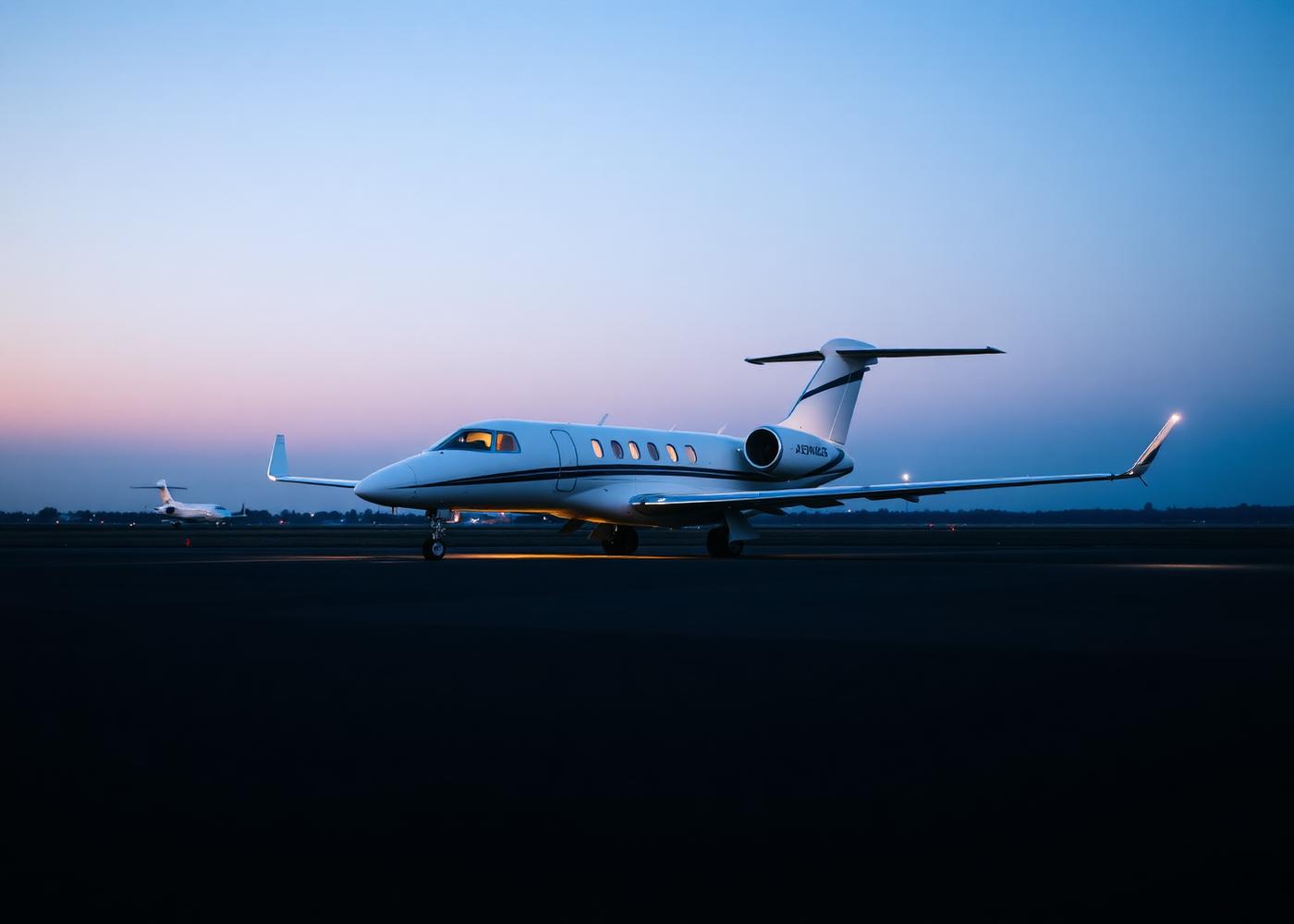
LIGHT JET
Cessna
The benchmark light jet for short European hops.
VIEW AIRCRAFT →LIGHT JET
Cessna
Light-jet economics, midsize cabin comfort.
VIEW AIRCRAFT →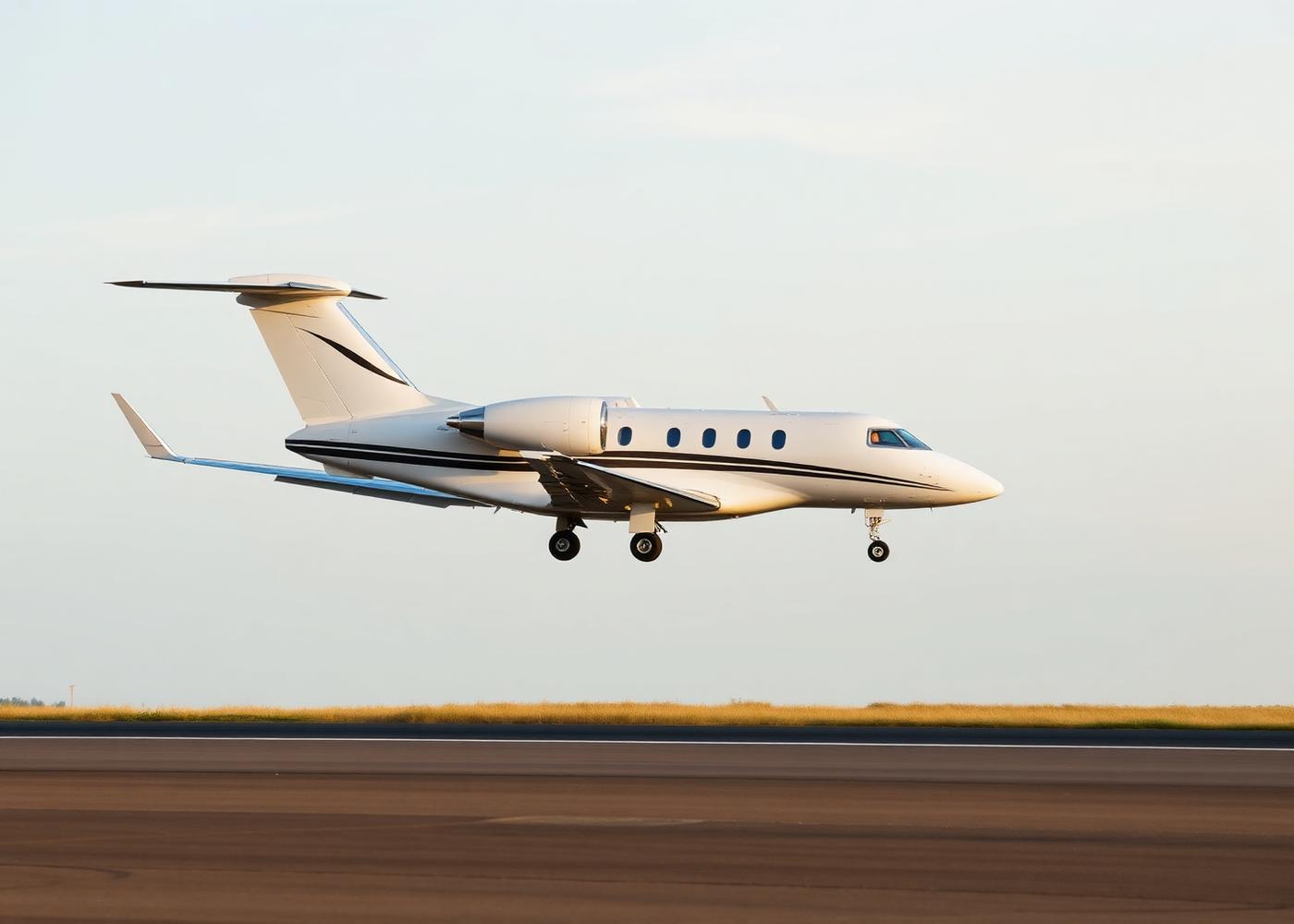
MIDSIZE JET
Hawker Beechcraft
The proven workhorse of midsize charter.
VIEW AIRCRAFT →MIDSIZE JET
Cessna
Six-foot flat-floor cabin at midsize prices.
VIEW AIRCRAFT →HELICOPTER CHARTER — SINGAPORE
Pair a jet arrival with a same-day helicopter transfer. These are the models our desk most often books on the Singapore leg — specifications and live availability sit on the dedicated helicopter fleet page.
HEAVY HELICOPTER · 19 PAX
Sikorsky
VIEW SIKORSKY S-92 →CHARTER GUIDES
PRICING & COST
12 min read
OPERATIONS & TRAVEL
12 min read
AIRCRAFT & FLEET
6 min read
AIRCRAFT & FLEET
5 min read
OPERATIONS & TRAVEL
5 min read
FAQ
A chauffeured transfer from Seletar to Marina Bay is about 15 minutes (8 km). Typical modes are chauffeured sedan. Limitless Sky pre-positions ground transport so the car is waiting planeside.
A chauffeured transfer from Changi to Marina Bay is about 25 minutes (22 km). Typical modes are chauffeured sedan. Limitless Sky pre-positions ground transport so the car is waiting planeside.
Singapore is served by XSP, SIN. Choice depends on aircraft class, where you're staying, and slot availability. We pick the field that puts you closest to your hotel or yacht with the least ground time — see each airport guide for runway, customs and FBO detail.
Seletar (XSP) is the dedicated business-aviation airport with Jet Aviation and Hawker Pacific FBOs and 24-hour customs — the default for anything up to ultra-long-range. Changi (SIN) is used for the largest aircraft (BBJ, ACJ, Global 7500) and for guests connecting to scheduled first-class onward flights, using the Jetex VIP Terminal.
48–72 hours is typical for arrivals and departures; peak times (Formula 1 weekend in September, Chinese New Year, F1 Sunday returns) require 2–3 weeks. Overnight parking at XSP is capacity-constrained — request at the same time as the slot.
Singapore ↔ Bali (2h 50m, midsize), Singapore ↔ Jakarta (1h 30m, light), Singapore ↔ Hong Kong (3h 30m, midsize) and Singapore ↔ Bangkok (2h 30m, midsize) are the reference intra-Asia patterns. Singapore ↔ London (13h 30m) and Singapore ↔ Sydney (7h 45m) require ultra-long-range.
Primarily business — Singapore is Asia's principal financial hub, and Q1 and Q4 activity peaks around family-office cycles. Leisure demand rises around F1 weekend and Chinese New Year, when high-net-worth families combine Singapore with Bali, Phuket or the Maldives.
Limited — ONE°15 Marina Sentosa Cove hosts a small resident superyacht fleet, but Singapore is a jet hub rather than a cruising ground. Yacht itineraries typically start with a jet arrival, then reposition by short jet to Phuket, Langkawi or the Andaman coast.
Usually yes — many operators permit pets in the cabin, subject to aircraft-owner approval, destination rules, documentation and any operator-specific charges. Let us know the size and species when you request a quote and we will confirm per aircraft.
For most major airports we can have an aircraft positioned within 4 hours. Last-minute bookings are our specialty — we operate 24/7.
One-way prices estimated, confirmed quote within 1–2 hours: Singapore → Bali from €8,900 (midsize jet); Singapore → Hong Kong from €11,200 (midsize jet); Singapore → London from €102,900 (ultra long range). Send your dates and passengers and you get an estimated price per aircraft class straight away, then two or three confirmed options with aircraft photos within 1–2 hours.
RELATED DESTINATIONS
EXPLORE THE CLUSTER
HUB GUIDES
BEST AIRCRAFT FOR SINGAPORE
EMPTY LEGS · TO SINGAPORE
Repositioning flights to Singapore come up occasionally and rarely stay available for long. Set an alert and we will tell you if one matches.
EMPTY-LEG ALERTS
We scan operator inventory every 12 hours. The moment a leg matches your route, date window and budget, we email you with a direct booking link.
MALLORCA · GERMANY, NRW, FRANKFURT
SKI SEASON · ALPS
An estimated price per aircraft class straight away, then two or three confirmed options with aircraft photos within 1–2 hours. 24/7, worldwide.
REQUEST A QUOTEAIRPORT COMPARISON
2 airports serve Singapore. XSP is primary; SIN act as alternates when slots or runway constraints dictate.
XSP · GOOD
XSP
XSP — good private-jet access; 6,023 ft runway; in-town.
SIN · PREMIER
SIN
SIN — primary jet gateway; 13,123 ft runway; in-town.
RECOMMENDED AIRCRAFT
Light Jet
Super Midsize Jet
Heavy Jet
Ultra Long Range
POPULAR ROUTES
SEASONALITY
GROUND TRANSPORT
HELICOPTER
CUSTOMS
VISA
WEATHER
RECOMMENDED STAY
MEDICAL / MEDEVAC
DESTINATION PROFILE
luxury
40
business
85
family
30
ski
0
beach
0
golf
0
medical
40
heli
30
marina
0
NEARBY DESTINATIONS
AI CONCIERGE
Structured knowledge object with 2 airports, 4 corridor routes, 0 named event windows, 5 nearby destinations and a full scoring profile — designed to answer concierge-level questions in real time.
FAQ
XSP (XSP) is the primary gateway. SIN
Light Jet is the best fit for most missions; short-runway constraints may push smaller groups to a Light Jet.
Pricing scales with aircraft class and the departure city (for example HLP). Send your dates and passengers to see an estimated price per aircraft class straight away; two or three confirmed options with aircraft photos follow within 1–2 hours.
See the seasonality panel — demand is driven by corporate and event calendars.
Not standard for this destination; chauffeur car service is the primary transfer option.
CONTINUE YOUR JOURNEY AT SEA
Our sister platform, Blue Ocean Club, curates crewed yachts across Southeast Asia. When the live yacht feed is connected, availability and pricing will appear here.
Data source status: connecting to Blue Ocean Club…
AVIATION FACTS · AVI-GO 2025
Desk-verified market figures linked to this page — drawn from Avi-Go analytics reports and surfaced for charter planning context.
MoM comparison: WSSL (Singapore) 732 June 2026 vs 762 May 2026 (-3.94%).
structured · confidence 95% · verified 2026-07-28
Jakarta ↔ Singapore ranked #8 Rest of World city pair in June 2026 with 163 bidirectional flights (+2.52% MoM, +3.16% YoY).
structured · confidence 95% · verified 2026-07-28
Kuala Lumpur–Singapore ranked #3 Asia Pacific city-pair corridor Jan–Aug 2025 with 710 bidirectional movements (+17.4% YoY vs 605).
structured · confidence 95% · verified 2026-07-28
Hong Kong–Singapore ranked #6 Asia Pacific city-pair corridor Jan–Aug 2025 with 354 bidirectional movements (-3.8% YoY vs 368).
structured · confidence 95% · verified 2026-07-28
Jakarta–Singapore ranked #1 Asia Pacific city-pair corridor Jan–Aug 2025 with 1,182 bidirectional movements (+21.9% YoY vs 969).
structured · confidence 95% · verified 2026-07-28
Singapore Seletar (WSSL) ranked #3 in Asia Pacific hub connectivity Jan–Aug 2025 with 219 connected cities.
structured · confidence 95% · verified 2026-07-28
97.03%
Verified aviation metric
Singapore Seletar (WSSL) achieved a 97.03% cross-border ratio Jan–Aug 2025 (5,527 international vs 169 domestic of 5,696 total).
structured · confidence 95% · verified 2026-07-28
Singapore Seletar (WSSL) ranked #1 Asia Pacific business aviation airport Jan–Aug 2025 with 5,747 movements (5.14% share) and 637 unique aircraft.
structured · confidence 95% · verified 2026-07-28
60,298
Verified aviation metric
Asia Pacific logged 60,298 business jet movements Jan–Aug 2025 — up 7.00% versus 56,355 in the same 2024 window.
structured · confidence 95% · verified 2026-07-28
WSSL (Singapore) logged 762 movements in May 2026 (MoM baseline for June's 732).
structured · confidence 94% · verified 2026-07-28
WSSL (Singapore) changed by -30 movements MoM in June 2026.
structured · confidence 94% · verified 2026-07-28
+2.52%
Verified aviation metric
Jakarta ↔ Singapore moved +2.52% MoM in June 2026 (159 → 163).
structured · confidence 94% · verified 2026-07-28
KNOWLEDGE GRAPH
Airports serving this destination, routes clients fly here on, aircraft that operate them, and nearby destinations you can pair it with.