Bombardier Challenger 350 private jet charter

Bombardier Challenger 350 Charter

The world's most-delivered super-midsize jet.

PAX9–10RANGE3,200 nmSPEEDMach 0.83

OVERVIEW

Bombardier Challenger 350

The Bombardier Challenger 350 is the most-delivered super-midsize jet in history — and the aircraft most professional charter buyers benchmark against. With a flat-floor stand-up cabin, transcontinental range and full transatlantic capability on select routes, it bridges the gap between midsize comfort and heavy-jet capability.

Bombardier Challenger 350 cabin and exterior

IN DEPTH

The complete guide to chartering the Bombardier Challenger 350

The story behind the Challenger 350

The Bombardier Challenger 350 is the most chartered super-midsize jet on the planet — by a wide margin. NetJets alone operates over 100 examples; Flexjet, VistaJet and the largest European charter houses each fly fleets in the dozens. Walk into any major business aviation hub on a Monday morning — Teterboro, Farnborough, Le Bourget, Geneva — and you will see the distinctive winglet-tipped silhouette of the 350 lined up on the ramp.

Its lineage traces to the original Bombardier Challenger 300, certified in 2003, which redefined the super-midsize segment by pairing a 6,000-mile-class cabin width with transcontinental range. The Challenger 350, introduced in 2014, was the comprehensive upgrade: new winglets, new Honeywell HTF7350 engines with 7% more thrust, improved cabin acoustics, a redesigned cockpit and a refined cabin. In 2022 Bombardier launched the Challenger 3500 — essentially a Challenger 350 with Nuage seating, a voice-controlled cabin and updated avionics — which now ships in place of the 350. For charter purposes the two aircraft are operationally identical, and the market refers to both as the 'Challenger 350' generation.

The aircraft's appeal is straightforward. It offers the widest, flattest-floor cabin in its category, true coast-to-coast US range, the best operating economics in the super-midsize segment, and a maintenance and parts ecosystem so deep that aircraft availability is almost never the constraint. For Limitless Sky's clients, this is the default super-midsize recommendation for any mission between two and five and a half hours.
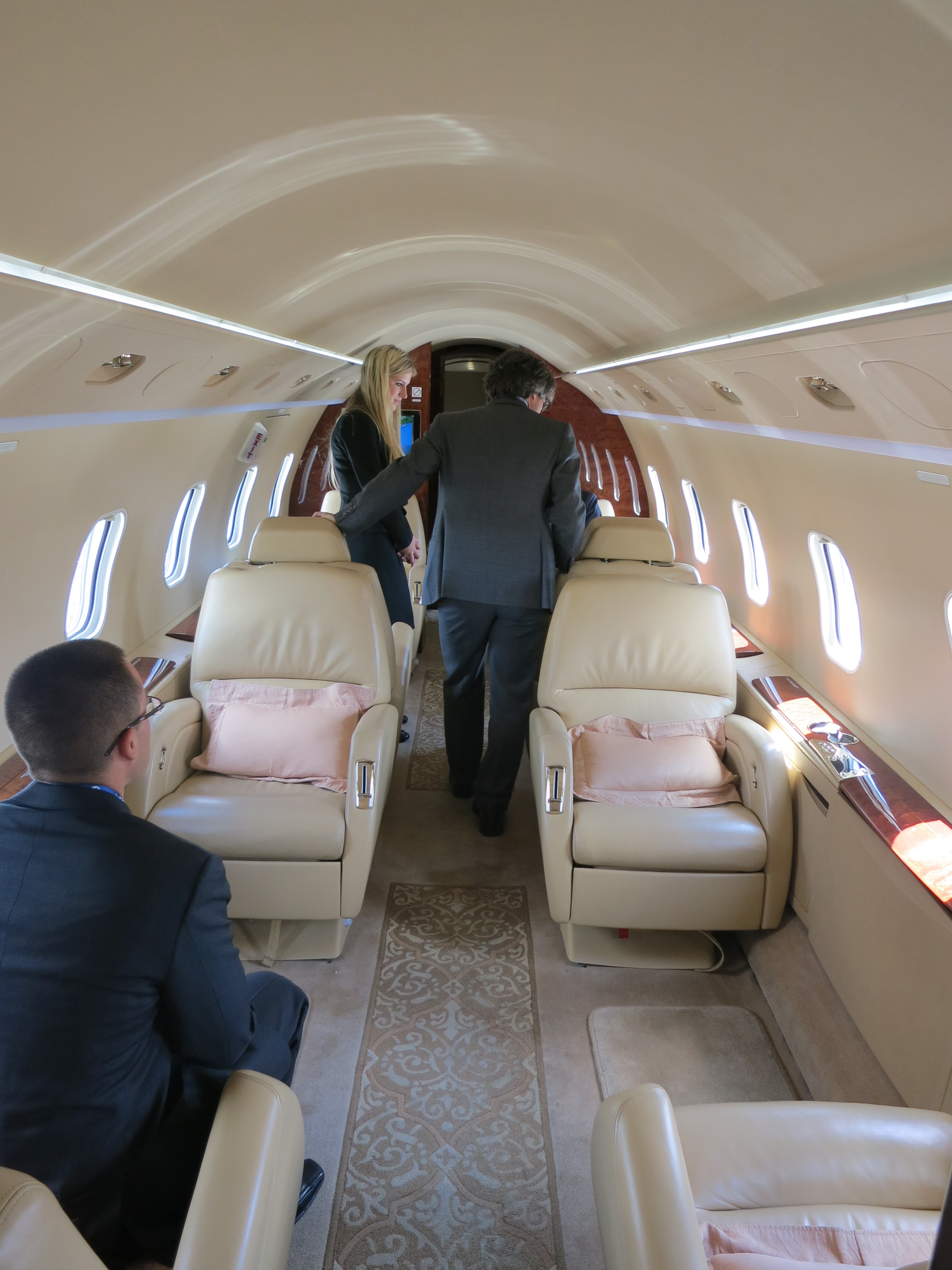
On board: a flat-floor cabin built for nine

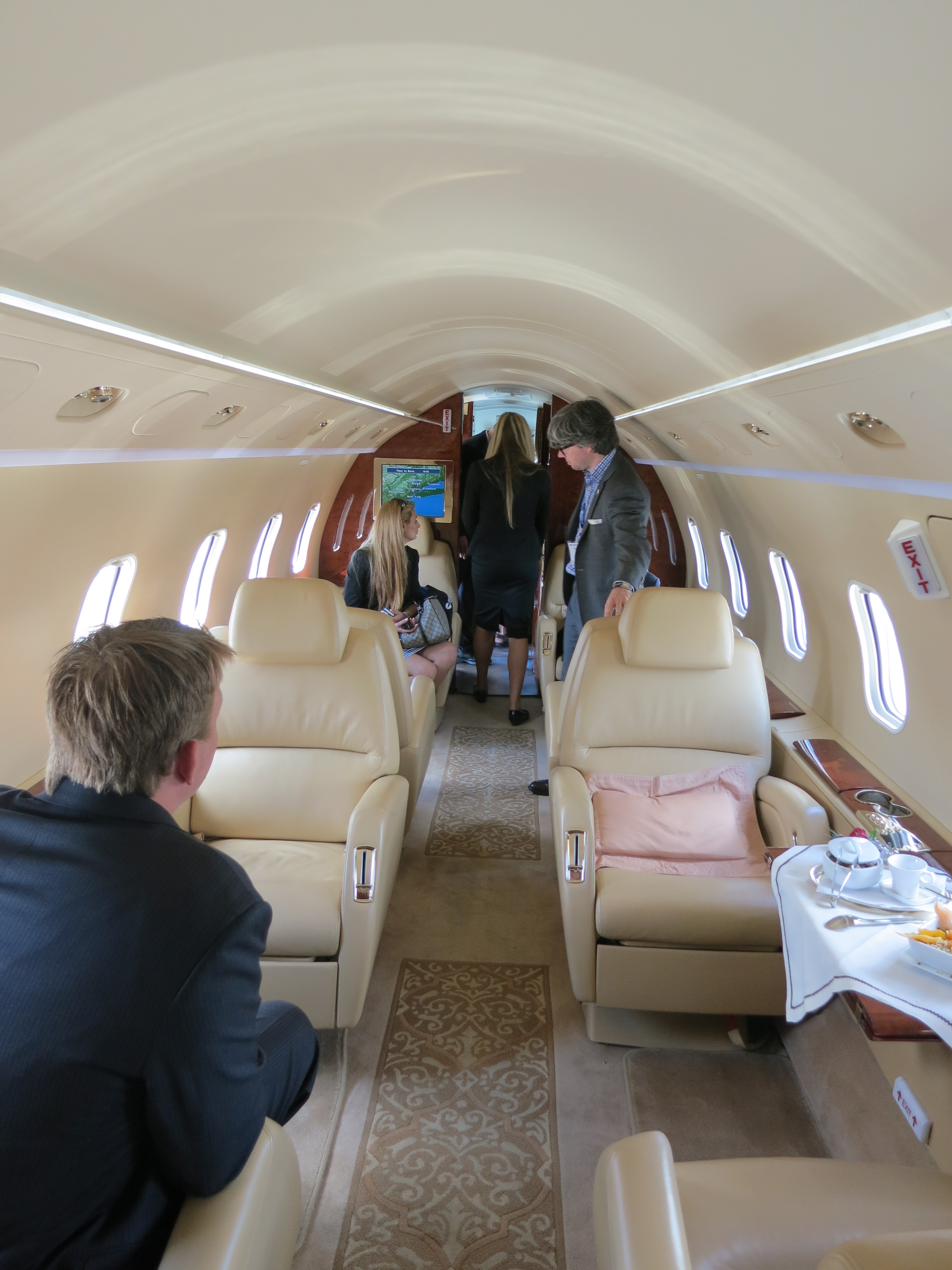
The Challenger 350's cabin is its decisive advantage. 7'2" wide, 6'1" tall and 25'2" long — that gives passengers a full flat floor (no sunken aisle, unlike some competitors that achieve cabin height by lowering the centre channel) and stand-up posture for anyone under about 6'1". In practical terms, it means a tall executive can pace the cabin to take a phone call without stooping, two passengers can pass each other without contortion, and the aft galley is genuinely usable as a workspace rather than a stewardess corner.

Configurations vary by operator but the canonical layout seats nine: a forward four-place club, an aft three-place divan (which converts to a bed) plus two additional forward-facing seats. The Nuage seating found on Challenger 3500 examples adds a tilting headrest and a 'floating' base that articulates more naturally during cruise — small refinements that add up over a five-hour leg.

Cabin altitude is 4,850 ft when cruising at 41,000 ft — one of the lowest in class, which materially reduces fatigue on long flights. Sound levels in cruise sit around 47 dBA, comparable to a quiet office. Ka-band high-speed Wi-Fi is now standard on most chartered examples, and the cabin management system — operated via touchscreen sidewall panels or the passenger's own device — controls lighting, temperature, the entertainment system and the electric window shades.

The galley deserves specific mention. Forward, it features an espresso machine, microwave, convection oven, hot-jug, refrigerator and ample storage for a full catered meal service for nine. The aft lavatory is fully enclosed with vanity, natural light through a window, and a vacuum system. The baggage compartment — 106 cubic feet, accessed externally and in-flight — comfortably absorbs skis, golf bags or a family's full luggage without the trade-offs lighter aircraft demand.

Performance, range and where it can land

Two Honeywell HTF7350 turbofans produce 7,323 lbf of thrust each. The Challenger 350 climbs directly to FL430 in around 22 minutes, cruises at Mach 0.82 normally and Mach 0.83 in high-speed, and has a maximum operating altitude of 45,000 ft. Range with NBAA reserves and four passengers is 3,200 nautical miles — more than enough for any single leg in continental Europe, all of North America coast-to-coast, and trips like New York to London (eastbound with tailwinds), Geneva to Dubai, or Los Angeles to Hawaii (with reduced passengers).

Take-off field length is 4,835 ft at maximum take-off weight; landing distance is 2,402 ft. That opens up plenty of resort airfields — Aspen, Sun Valley, Olbia, Mykonos, Cannes-Mandelieu — though the 350 is not a true short-field aircraft and cannot operate into the smallest mountain airfields a Phenom 300 or PC-24 can reach.

Where the Challenger 350 truly excels is high-and-hot performance. Even at airports like Telluride, Aspen, Mexico City or in Middle East summer heat, the aircraft can take off at near-maximum weight without the payload penalties that affect competitors. This makes it the workhorse of choice for routes into Africa, the Middle East and the American West.

Signature missions and best routes

The Challenger 350 is the dominant aircraft for transcontinental US business travel. Teterboro to LA, Boston to San Francisco, New York to Dallas, Chicago to Miami — all single leg with margin to spare, all done in genuine cabin comfort with nine seats and a flat floor. For US corporate flight departments, this is often the right answer to 'what one jet should we buy?' and for charter clients it is the most-available super-midsize on the spot market.

In Europe, the 350 covers everything from London to Moscow (when politics permit), Paris to Dubai, Geneva to the Maldives via one fuel stop, Zurich to Mauritius via a tech stop in Djibouti. It is the right aircraft for executive teams travelling together to a multi-day meeting where the cabin doubles as a mobile office.

For leisure clients, the 350 is the natural step up from a light jet when the family is travelling with luggage, the trip is over two and a half hours, and at least one segment crosses water. London to St Lucia in 7.5 hours with one fuel stop, Geneva to the Caribbean in similar time, New York to Anguilla nonstop — all comfortably within its envelope.

Operating economics and charter pricing

Charter hourly rates for a Challenger 350 sit between $7,800 and $9,500 in North America, and between €7,200 and €8,500 in Europe — modestly more than a Citation Latitude or Praetor 600 and meaningfully less than a Falcon 2000 or Gulfstream G450. Direct operating cost for owners runs around $3,000 per hour, which underpins the aircraft's pricing competitiveness on the spot market.

Representative one-way all-inclusive charter pricing: Teterboro to LA from $42,000; London to Dubai from £58,000; London to Geneva from £18,500; Geneva to Mykonos from €27,000; Paris to Marrakech from €24,000. Empty-leg availability is excellent given the volume of 350s repositioning between major hubs — Limitless Sky frequently quotes empty legs at 40–55% below confirmed charter pricing.

How the Challenger 350 compares

Direct competitors are the Embraer Praetor 600, Cessna Citation Longitude and Dassault Falcon 2000S. The Praetor 600 has the longest range in the segment (4,018 nm) and the most modern cabin — but the Challenger 350 still has a wider floor and meaningfully better fleet availability. The Longitude is newer and has slightly more cabin length, but is operationally less mature. The Falcon 2000 is more aircraft (and more expensive) for missions where range is the priority.

Compared to a Citation XLS+ (a true midsize), the 350 is a different category — wider, faster, longer-legged, more cabin altitude comfort and significantly more capable. Compared to a Gulfstream G450 or a Falcon 2000LXS (heavy / large-cabin midsize), the 350 sacrifices roughly 1,500 nm of range and a couple of cabin feet, but saves $2,000–$3,000 per hour in operating cost.

Within a single mission profile, the 350 wins on cost-per-seat for nine passengers, on cabin width, on US availability and on the maturity of its in-service support. It loses on absolute range and on the freshness of the cabin design relative to the Praetor 600 and Longitude.

Verdict: who should charter the Challenger 350?

Choose the Challenger 350 when you need to move six to nine passengers in a flat-floor, stand-up cabin for two to six hours, with the highest chance of finding the right aircraft on short notice. It is the right answer for US transcontinental missions, for Europe-to-Middle-East trips, for corporate teams travelling together, and for clients who want the most cabin per dollar in the super-midsize class.

Step up to a Falcon 2000LXS, Gulfstream G450 or Global 5000 when the mission requires a longer single leg or a true large-cabin experience. Step down to a Phenom 300 or Citation Latitude when passenger count is under five and the leg is under three hours. For most of the missions in between, the Challenger 350 remains the smartest charter decision in business aviation.

PHOTO GALLERY

Bombardier Challenger 350 — exterior & cabin

Reference photography of the Bombardier Challenger 350 (and sister types within the same cabin family where noted). Images sourced from Wikimedia Commons under Creative Commons licences.

EXTERIOR

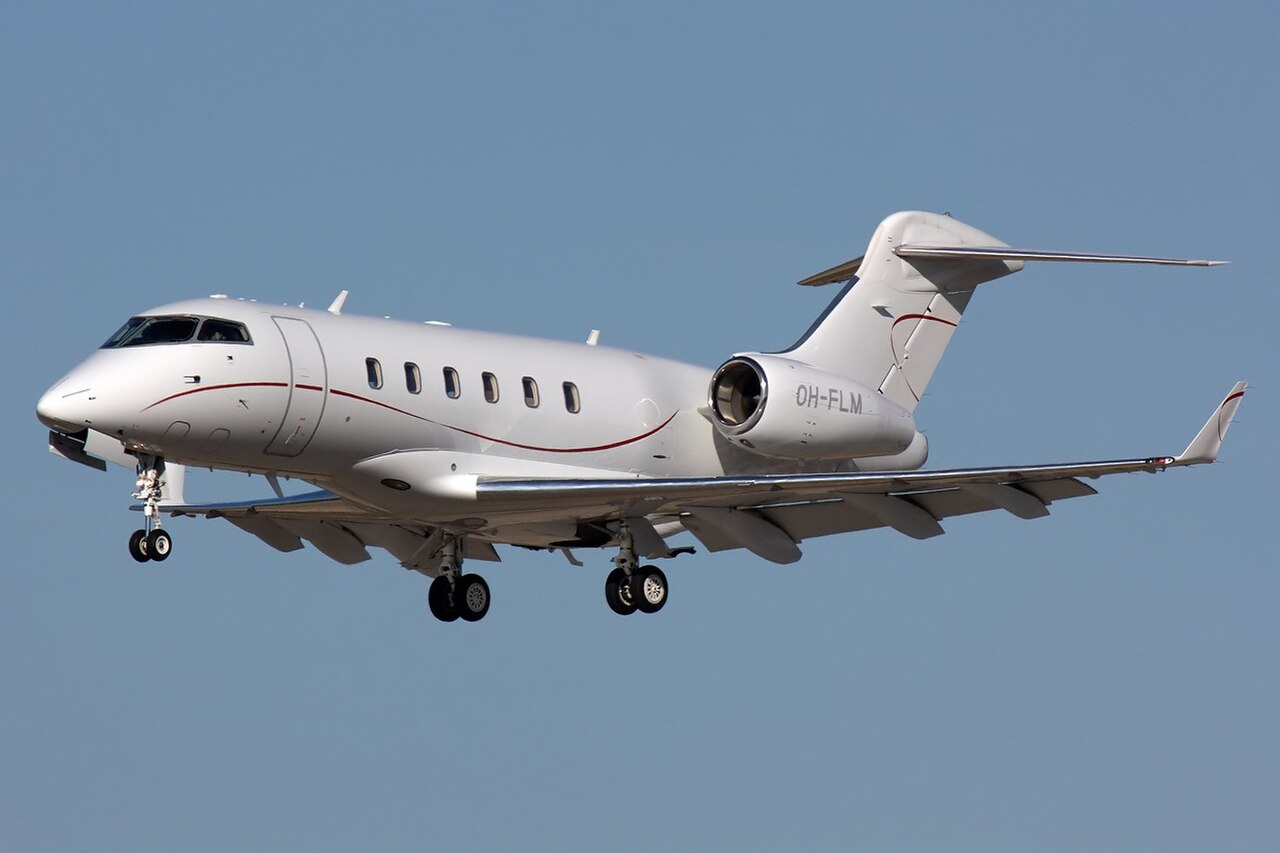
Bombardier Challenger 350 exterior
9H-VCB Challenger 350 · CC BY-SA 4.0 via Wikimedia Commons
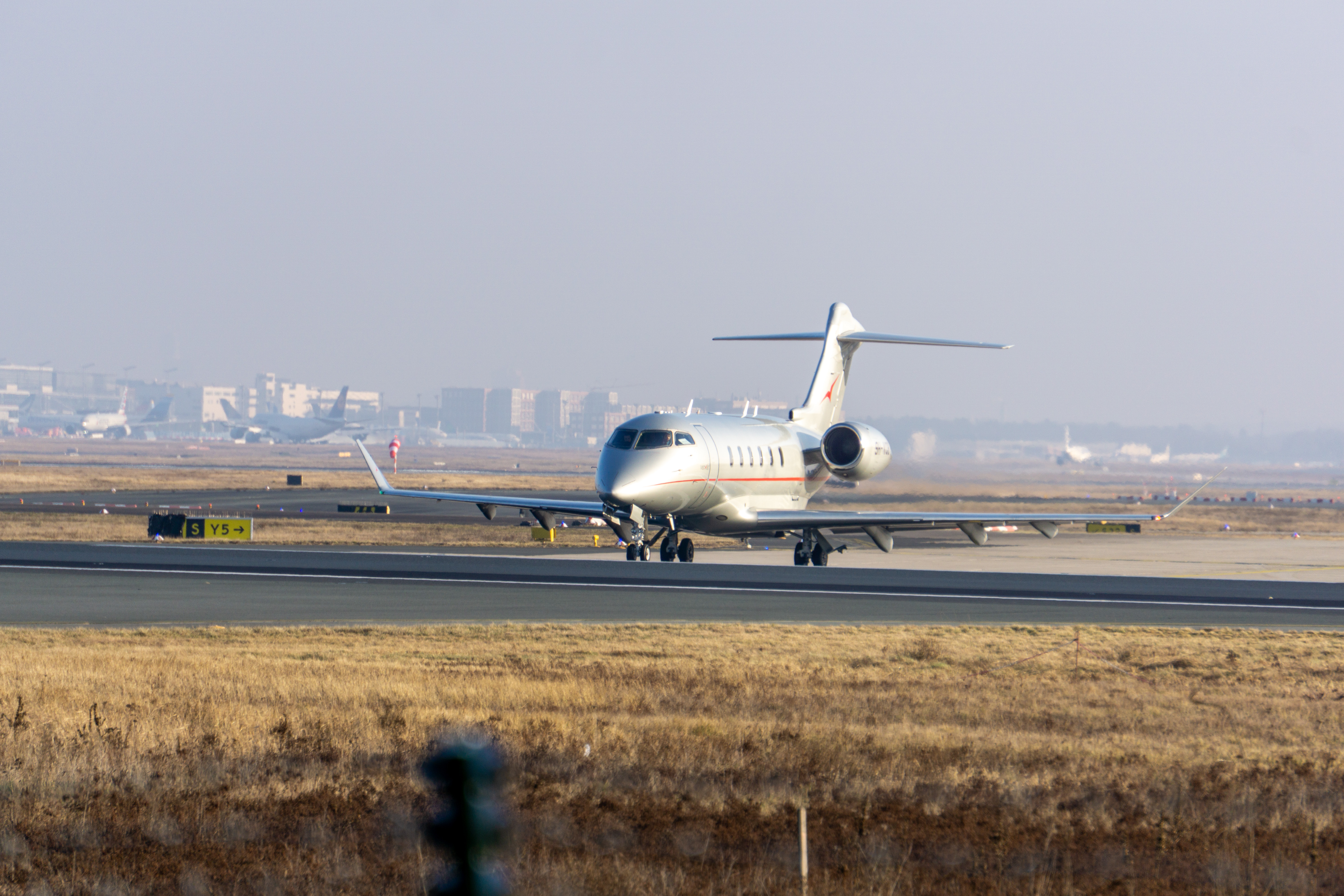
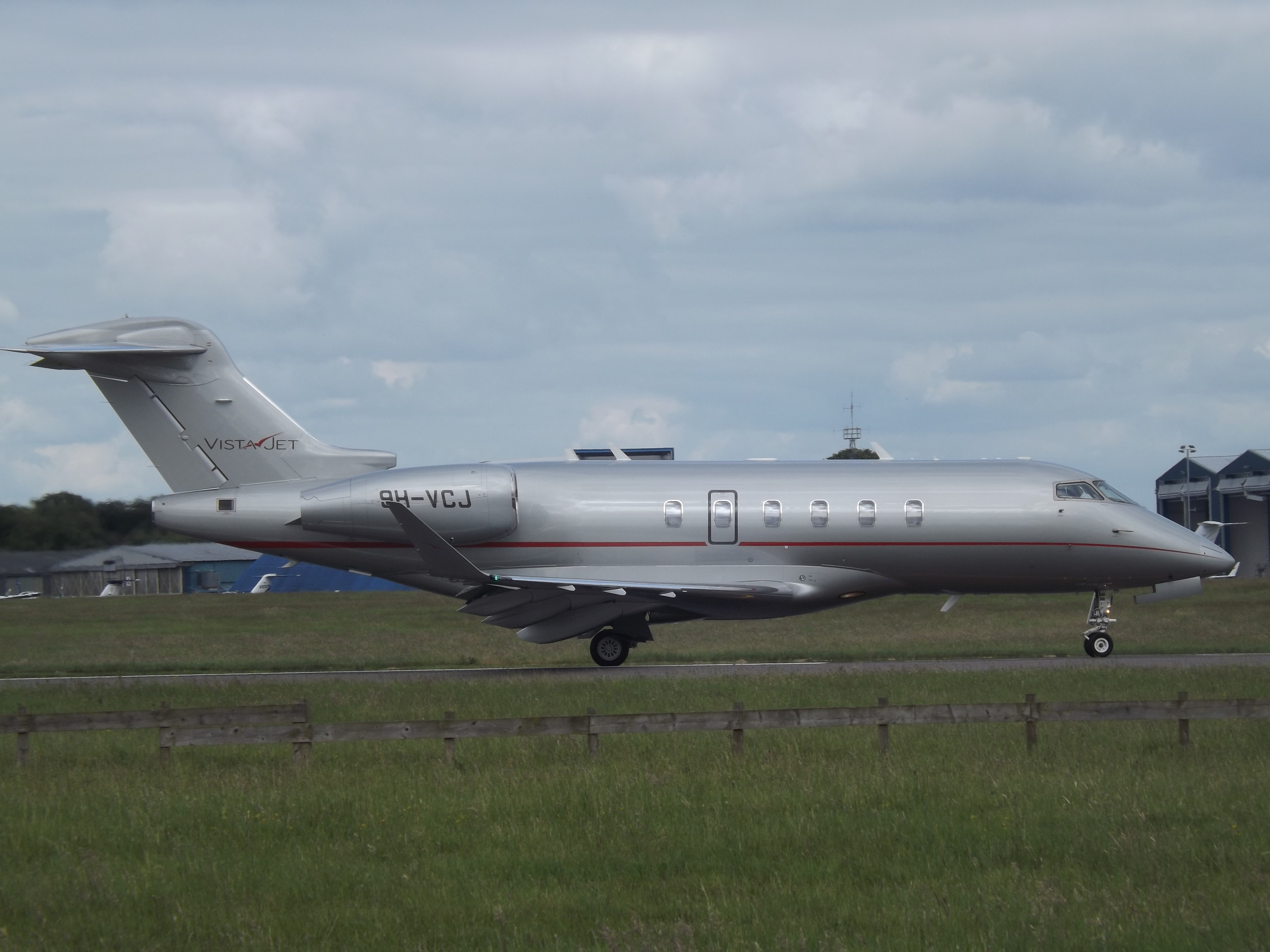
VistaJet Challenger 350 on the ramp in Malta
VistaJet Malta Challenger 350 · CC BY-SA 2.0 via Wikimedia Commons

INTERIOR

Challenger 350 / 300 cabin looking aft
Challenger 300 cabin (shared with 350) · CC BY-SA 3.0 via Wikimedia Commons
Challenger 350 / 300 club seating
Challenger 300 cabin (shared with 350) · CC BY-SA 3.0 via Wikimedia Commons

SPECIFICATIONS

Bombardier Challenger 350 specifications

Passengers9–10
Range3,200 nm
SpeedMach 0.83
Cabin height6'0"
Cabin width7'2"
Baggage106 cu ft
Runway4,835 ft

CABIN EXPERIENCE

On board the Bombardier Challenger 350

  • Widest flat-floor cabin in its class — 7'2" across
  • Eight individual executive seats plus three-place divan
  • Full-service galley with convection oven and espresso machine
  • Aft vacuum lavatory with vanity and external service

BEST ROUTES

Where the 350 flies best

London → Dubai

from £45,000

New York → Aspen

from $28,500

Geneva → New York

from CHF 78,000

BROWSE ALL ROUTES →

CHARTER PRICING

Bombardier Challenger 350 charter pricing

ROUTEESTIMATED PRICE
London → Moscowfrom £32,000
Teterboro → Los Angelesfrom $42,000
Dubai → Maldivesfrom $36,000

Indicative all-inclusive one-way pricing — aircraft, crew, fuel, handling, catering and taxes. Confirmed quote in 10 minutes.

Why choose the Bombardier Challenger 350?

  • Largest cabin in the super-midsize class
  • True transatlantic range on northern routings
  • Highest dispatch reliability in segment (99.7%)

HEAD TO HEAD

350 vs Citation Latitude

The Challenger 350 offers significantly more range, a wider cabin and higher cruise speed; the Latitude wins on operating cost for shorter missions.

FAQ

Frequently asked

Can the Challenger 350 fly transatlantic?

Yes, on northern routes such as London–New York with appropriate winds, fuel stops are usually not required. Westbound winter crossings may require a brief Gander or Bangor stop.

How much does a Challenger 350 charter cost?

Hourly rates start at $5,400/hr. A typical London–Dubai one-way is £42,000–£50,000 all-inclusive.

Is Wi-Fi available onboard?

Yes — most aircraft in this class offer high-speed Ka-band or Starlink connectivity suitable for video calls and streaming throughout cruise.

Can pets fly on board?

Pets travel in the cabin alongside their owners on every Limitless Sky charter at no extra charge. Tell us the species and weight when you request a quote.

How quickly can the aircraft be ready?

Once a quote is confirmed, this aircraft can typically be positioned within 2–4 hours anywhere in its home region, and within 24 hours globally.

SIMILAR AIRCRAFT

Also in Super-Midsize Jet

HEAD-TO-HEAD

Compare the 350

ALL COMPARISONS →

BOMBARDIER CHALLENGER 350 CLUSTER

Everything connected to the Bombardier Challenger 350

Ready to charter the Bombardier Challenger 350?

Quotes in 10 minutes. Aircraft positioned within hours. 24/7, worldwide.

REQUEST A QUOTE