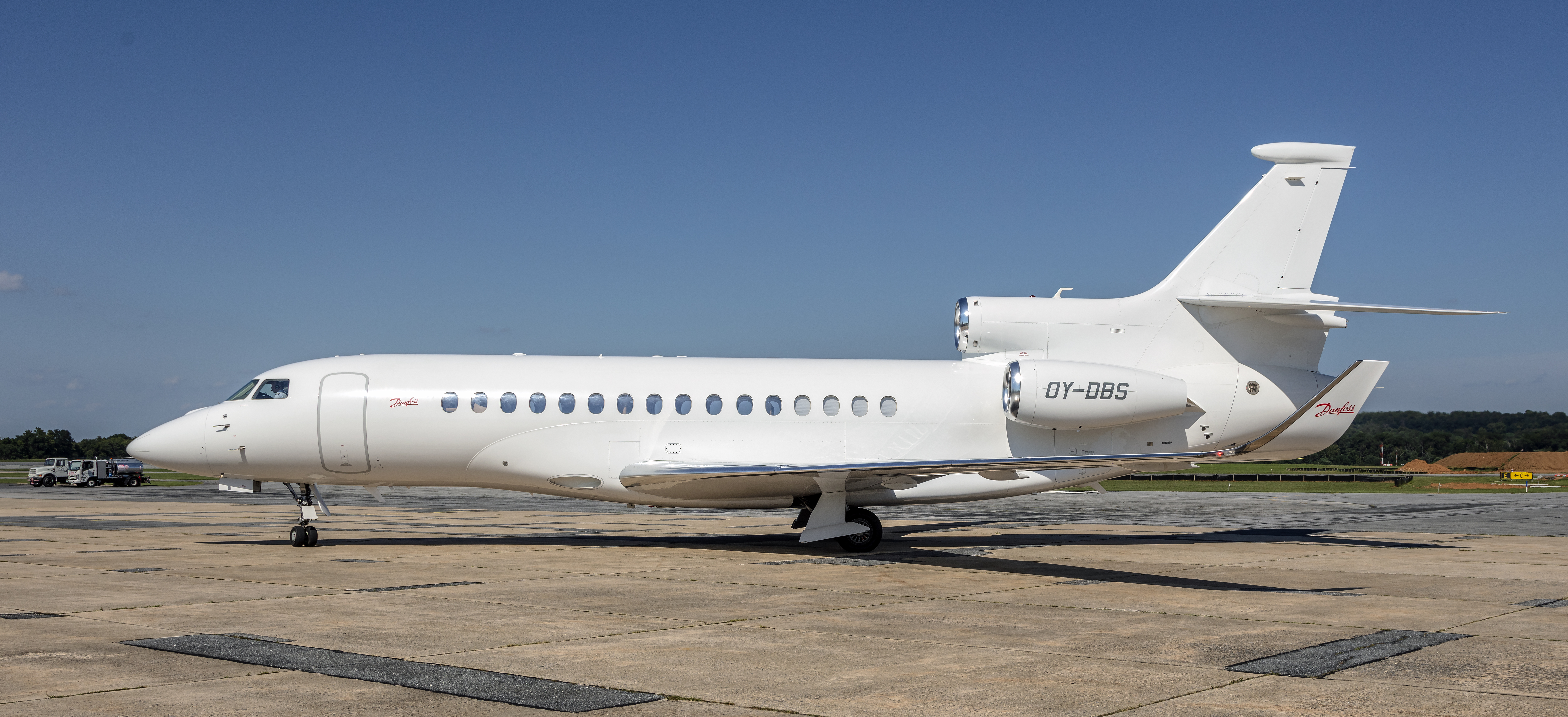
The story behind the Falcon 8X
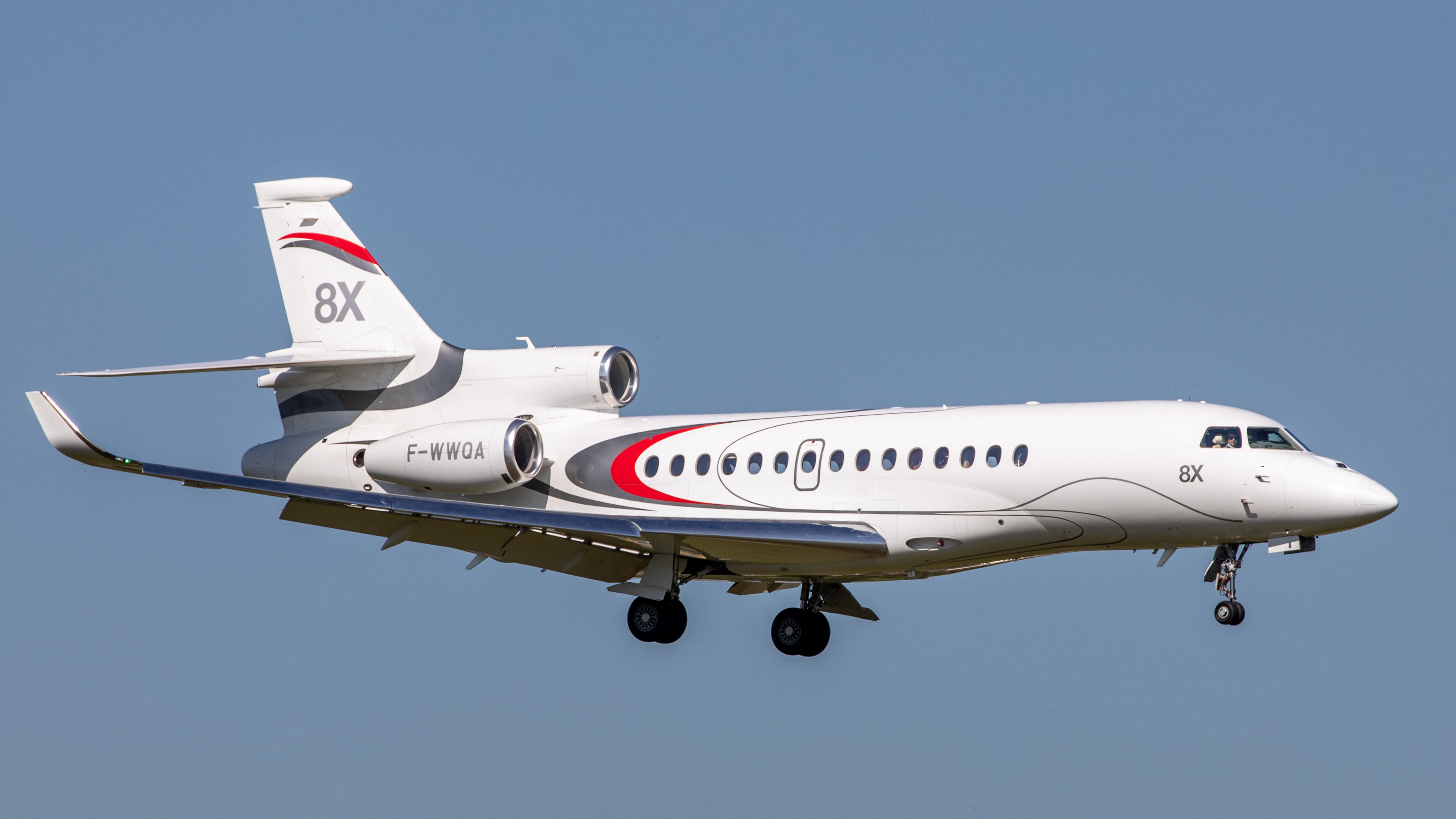
The Dassault Falcon 8X is the current flagship of the company's three-engine lineage — a forty-year-old family tree that includes the Falcon 50, 900 and 7X. First delivered in 2016, the 8X is a stretched, refined, longer-legged evolution of the 7X, the aircraft that introduced fly-by-wire flight controls to business aviation in 2007. Where most of the industry has moved to twin-engined ultra-long-range jets, Dassault has maintained the trijet configuration for a specific reason: redundancy and short-field performance. Three engines mean the 8X can depart from runways its twin-engine rivals cannot, can operate into airports with one-engine-inoperative climb gradients its competitors would have to refuse, and — for clients who care — provides genuine engine-out range over water that an ETOPS-style twin cannot match.
Powered by three Pratt & Whitney Canada PW307D engines, the 8X has 6,450 nautical miles of range, a top speed of Mach 0.90 and a cabin that runs over 42 feet from the cockpit bulkhead to the rear pressure bulkhead. It is, in raw numbers, neither the fastest nor the longest-range ultra-long-range jet — both the Gulfstream G650 and Global 7500 beat it on either or both metrics — but it pairs serious capability with the lowest fuel burn in its class and the best short-runway performance of any aircraft over $50 million.
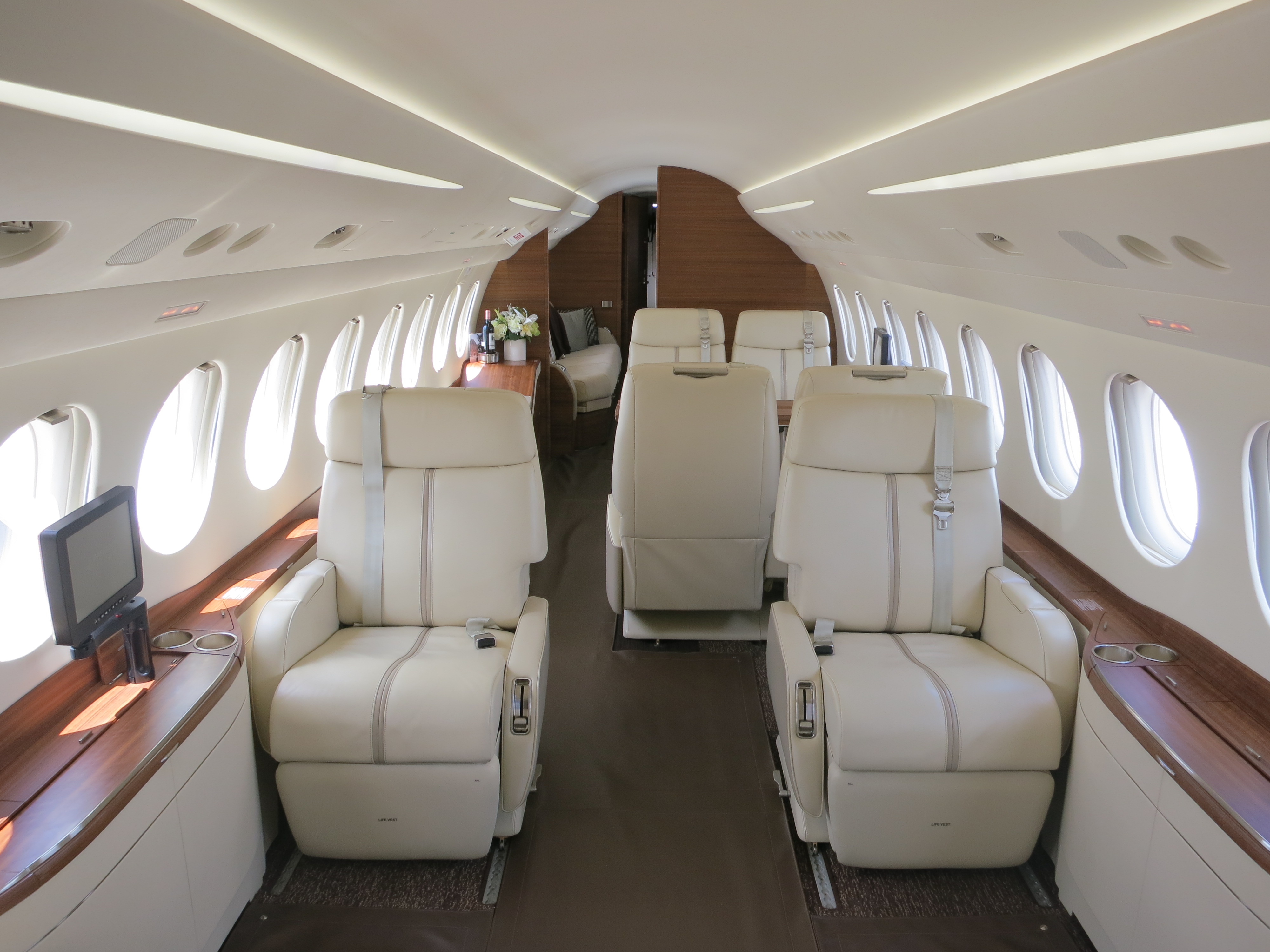
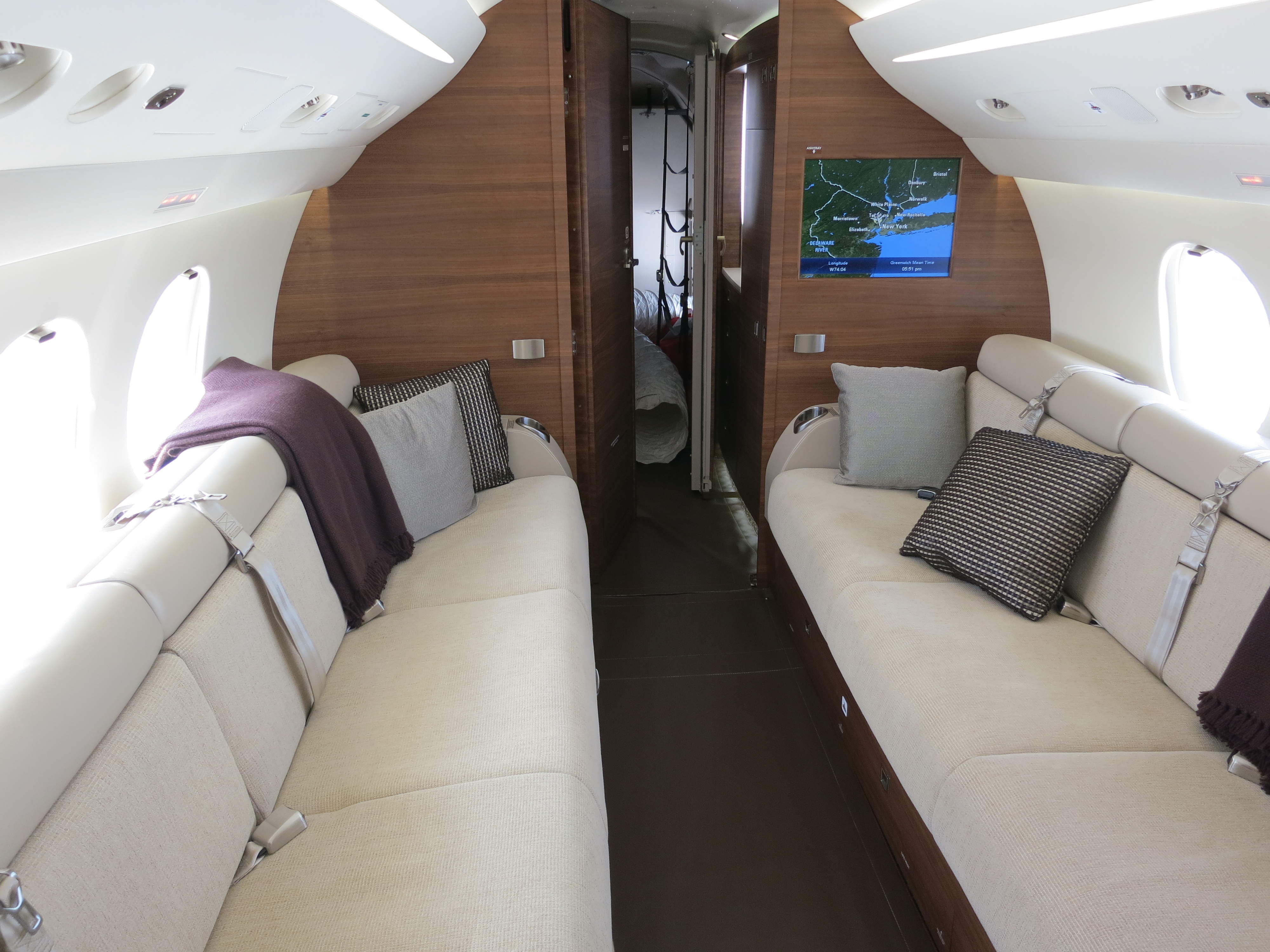
For charter clients, the Falcon 8X occupies a specific niche. It is the aircraft of choice for European clients who frequently fly into smaller, more demanding airfields — London City (with appropriate certification), Lugano, Innsbruck, Sion, Saanen, La Môle (the airfield serving Saint-Tropez), Monaco-via-Cannes, Aspen, Telluride — and who need ultra-long-range capability without compromising on those access patterns. It is also a favourite of clients who prioritise cabin quietness; the 8X has the quietest cabin Dassault has ever certified, measuring around 48 dBA at cruise.