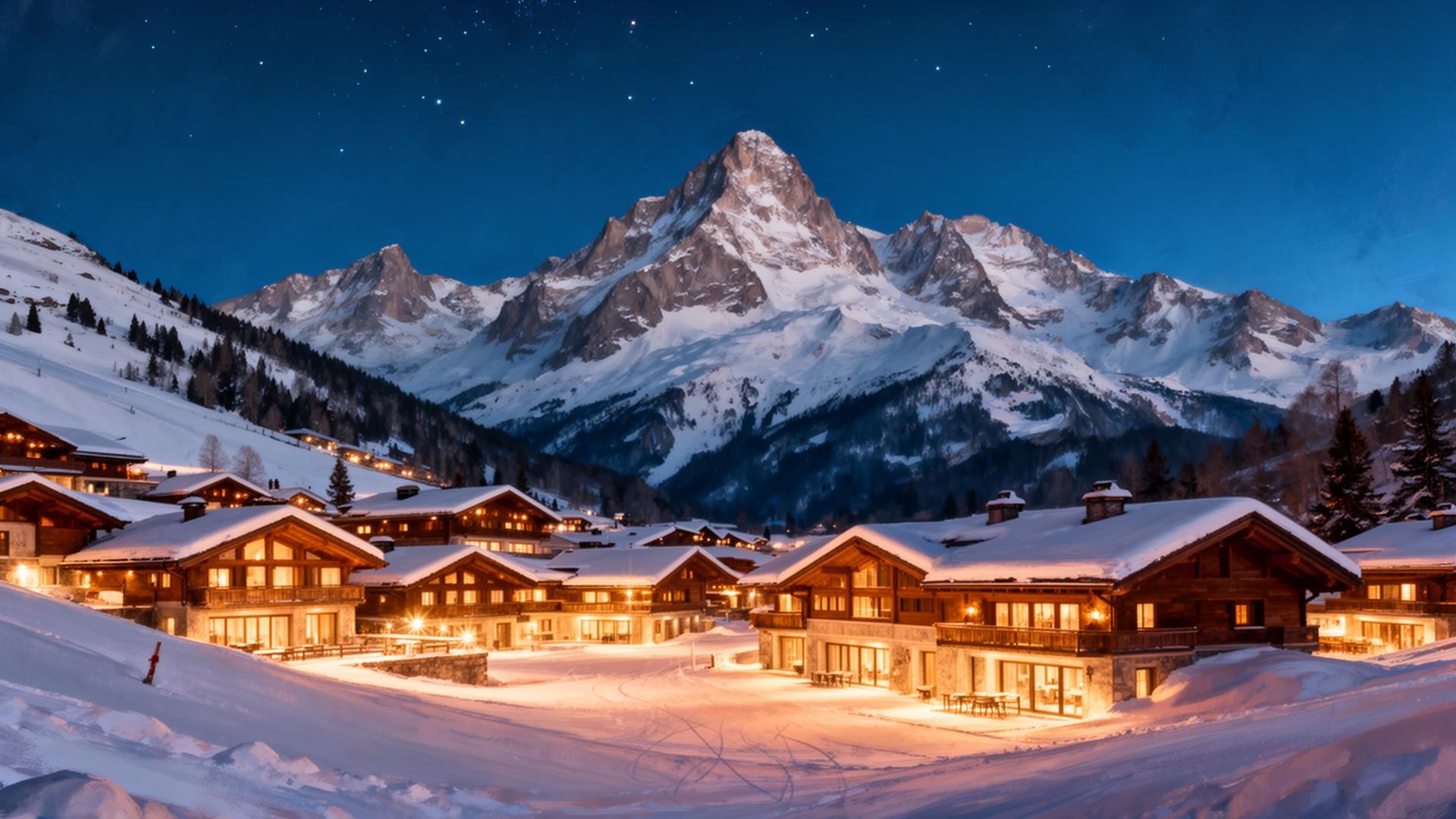
Telluride Regional Airport (TEX) sits on a mesa 5 miles west of town at 9,070 ft, which makes it one of the highest airports in the US with airline service. A private jet lands within minutes of the gondola, and that's the reason people fly here. The same mesa sets the rules: one 7,111 ft runway, no control tower, a firm nightly closure and mountain weather that can change in an hour. Plan around those, and Telluride is an easy airport. When TEX doesn't work for the aircraft or the weather, Montrose (MTJ), 33 nm to the north, nearly always does. This is how we plan a Telluride trip on the charter desk.
The short answer
- Airport: Telluride Regional (TEX / KTEX), 5 miles west of Telluride, Colorado. One runway, 9/27, 7,111 × 100 ft, grooved asphalt, with 6,911 ft available for landing in each direction. Field elevation 9,070 ft. No control tower.
- Opening hours: the runway is open 06:00–21:00 local, 365 days a year. No aircraft may land or take off between 21:00 and 06:00. This is a closure, not a voluntary curfew. There is no snow removal at night.
- Handling: the airport runs its own aircraft and pilot services (fuel, de-icing, GPU, hangars). It publishes landing and overnight fees per aircraft type and charges no ramp, handling or security fees. Hangar space must be reserved separately.
- Alternate: Montrose Regional (MTJ), 33 nm north, has a 10,000 × 150 ft runway at 5,759 ft, an instrument landing system and an Atlantic Aviation FBO. It is the standard plan B for weather, payload or larger aircraft.
- Customs: none at TEX or MTJ. International flights clear US customs first, for example at Eagle County (EGE) or Centennial in Denver (APA), both CBP user-fee airports.
- Jets that fit: turboprops, light, midsize and super-midsize jets are the everyday fleet. Larger jets are possible on some days. At 9,070 ft, the operator's performance numbers for that day decide, not the cabin class.
Send us your dates, passengers, skis and bags, and you get an estimated price per aircraft class straight away, then two or three confirmed options within 1–2 hours, 24/7.
Where you land
| Airport | Runway (FAA data) | Elevation | When we use it |
|---|---|---|---|
| Telluride Regional (TEX / KTEX) | 9/27: 7,111 × 100 ft (6,911 ft landing distance) | 9,070 ft | The default: minutes from town and Mountain Village, when weather and aircraft performance allow |
| Montrose Regional (MTJ / KMTJ) | 17/35: 10,000 × 150 ft | 5,759 ft | Weather alternate, heavier aircraft, or a full fuel load. ILS approach, Atlantic Aviation FBO. About 65 road miles to Telluride |
What makes TEX different. The FAA's airport remarks describe TEX as sitting on a 1,000 ft mesa, with strong vertical turbulence near the mesa edge and rising terrain in every direction. The runway dips about 1.3% towards the middle and rises again, and both ends have an arresting bed of crushable material (EMAS) to stop an aircraft that overruns. The preferred pattern is to land on runway 9 and take off from runway 27, away from populated areas. TEX is also a cold-temperature airport, so crews correct their altitudes in deep cold.
None of this rules jets out. It's why operators send crews who know the field and why we check the specific crew's mountain experience before we confirm.
The 21:00 closure. The airport's own rule: "No aircraft shall land or take off from the airport during the period between 21:00 and 06:00 local time." In winter, the FAA lists attended hours of 07:00–18:00 (November–March). After-hours services need 8 hours' notice. In practice, plan to land in daylight. If an East Coast departure would put the arrival after dark, we suggest an earlier wheels-up or Montrose, which stays attended until 21:00.
Fees, published. TEX publishes its landing, overnight and hangar fees per aircraft type. For example, a Phenom 300 is listed at $135.59 to land and $168.79 per night on the ramp, and a Challenger 350 at $304.50 to land and $300.42 per night. De-icing (Type I and IV fluid) is $25 per gallon. Our quotes include these and show them up front.
Which private jets suit a Telluride trip?
At 9,070 ft, the air is about a third thinner than at sea level. Aircraft need more runway to take off, especially on a warm afternoon or with a full fuel load, and landing speeds over the ground are higher. The operator runs the numbers for the actual date, temperature and weight. In practice:
- From Denver, Phoenix, Las Vegas or Salt Lake City (about 170–370 nm): a light jet such as a Phenom 300 or Citation CJ3+, or a Pilatus PC-12 turboprop, which is well suited to short mountain hops.
- From California and Texas (about 560–800 nm): light and midsize jets fly it nonstop. With skis and full bags, a midsize such as a Citation XLS+ or Latitude is the comfortable choice.
- From Chicago (about 950 nm): midsize for most groups.
- From New York, Boston or Florida (about 1,560–1,700 nm): a super-midsize such as a Challenger 350 (3,200 nm range on our aircraft pages) or a Latitude (2,700 nm). Because of the high-altitude take-off, the operator may limit the fuel for the return. A planned fuel stop on the way home, or departing from Montrose, is sometimes the better plan.
- Heavy and large-cabin jets: TEX publishes fees for types up to the Global 7500 and G650, but whether a large jet can use TEX on a given day depends on its performance at 9,070 ft. When it can't, the jet lands at Montrose and the group drives or takes a short helicopter or turboprop hop. We tell you which applies before you book.
- From Europe (about 4,230 nm from Farnborough): a heavy or ultra-long-range jet into a US airport with customs first, then a domestic leg to TEX or MTJ.
Skis. Ski bags are long. Light jets carry a few. For a family of four with skis, boots and winter luggage, we usually recommend a midsize or larger aircraft with a bigger baggage hold. Tell us how many ski bags at booking, and the operator confirms they fit.
Flight times
Estimates from great-circle distance and typical cruise speeds. Winds (westbound headwinds in winter especially), routing and the aircraft change the final block time, and the operator confirms it in the quote.
| From | Distance to TEX (approx.) | Typical block time |
|---|---|---|
| Denver (Centennial) | 175 nm | light jet about 50 min |
| Salt Lake City | 255 nm | light jet about 1 h |
| Phoenix (Scottsdale) | 325 nm | light jet about 1 h 5 min |
| Las Vegas | 365 nm | light jet about 1 h 10 min |
| Los Angeles (Van Nuys) | 560 nm | light jet about 1 h 40 min |
| Dallas (Love Field) | 620 nm | midsize about 1 h 50 min |
| San Francisco | 685 nm | light jet about 2 h |
| Houston (Hobby) | 800 nm | midsize about 2 h 15 min |
| Chicago (O'Hare) | 950 nm | midsize about 2 h 35 min |
| New York (Teterboro) | 1,570 nm | super-midsize about 4 h |
| Palm Beach | 1,560 nm | super-midsize about 4 h |
| Boston | 1,700 nm | super-midsize about 4 h 15 min |
What a private jet to Telluride costs
We don't publish fixed route prices for Telluride, so the honest starting point is our published hourly rates. From our cost-per-hour guide, 2026 retail rates run:
| Class | Typical aircraft | Hourly rate (USD) |
|---|---|---|
| Light jet | Phenom 300, Citation CJ3+ | $3,500 – $5,500 |
| Midsize | Hawker 900XP, Citation XLS+ | $5,500 – $7,500 |
| Super-midsize | Challenger 350, Praetor 600 | $7,500 – $9,500 |
| Heavy | Falcon 7X, Challenger 605 | $9,500 – $13,000 |
As a rough illustration: Dallas to Telluride in a midsize, at about 2 hours, is around $11,000–$15,000 of flight time. New York to Telluride in a super-midsize, at about 4 hours, is around $30,000–$38,000. These are not quotes. The real figure depends on where the aircraft is based, whether it waits for you or flies home empty, and the date.
Four things push Telluride prices up:
- Peak weeks. Christmas to New Year and Presidents' Day week in winter, and the big summer festival weekends.
- Repositioning. Few charter jets are based at TEX. Most come from Denver, Phoenix or further, and on a one-way trip the empty return leg is usually in the price.
- Overnights. Overnight ramp or hangar fees and crew hotels in Telluride add up on a multi-night trip. Sometimes it's cheaper for the jet to leave and come back for you.
- Weather days. If a storm sends the flight to Montrose, the ground transfer changes. We confirm a Montrose backup car in winter so a diversion costs time, not stress.
Empty legs. Jets reposition out of the Colorado mountains after busy weekends. Our empty-leg alerts watch TEX and MTJ in both directions. When one lines up, it's typically 25–75% below the retail rate.
When to go
Telluride Ski Resort's targeted opening day is 26 November 2026, and the 2026–27 season is planned to close on 4 April 2027. Both dates depend on conditions. Christmas to New Year and Presidents' Day week are the busiest winter weeks. Summer is busy too: the Telluride Film Festival runs over Labor Day weekend, and the June bluegrass festival fills the valley.
The quietest windows are mid-April to May and October to mid-November, between the seasons.
Arriving: what you need
- From anywhere in the US: it's a domestic flight. A government-issued photo ID is all you need; there is no customs.
- From abroad: neither TEX nor Montrose has customs. The aircraft first lands at an airport with US Customs and Border Protection, such as Eagle County (EGE) or Centennial (APA) in Colorado, or your first US stop on the way. Eagle County's CBP office works Thursday to Monday, 09:00–17:00, and in ski season wants permission to land at least a day ahead. The operator files the APIS manifest and gets CBP's permission to land before leaving the foreign airport. Non-US passengers need the usual ESTA or visa.
- Who flies you within the US: a US domestic leg must be flown by a US operator. Foreign-registered charter aircraft can't carry paying passengers between two US airports (cabotage rules). We source US Part 135 operators for every domestic Telluride flight.
On the ground
From TEX, it's a short drive to the town of Telluride and to Mountain Village. The airport has no Uber or Lyft service, so cars are pre-booked: we arrange an authorised car service or SUV to meet you at the aircraft. From Montrose, allow roughly 65 road miles to Telluride, which in winter means about an hour and a half.
Booking with Limitless Sky
- Send your departure city, dates, passengers, ski bags and any pets through the quote form.
- We return fixed, all-inclusive options and confirm which aircraft can operate into TEX on your date, or whether Montrose is the better plan.
- We file the arrival notice, reserve a hangar if you want one, plan around the 21:00 closure and arrange de-icing.
- You confirm the aircraft, and we handle operator contracting and the car to your hotel or home.
Limitless Sky is an independent charter broker and NBAA member. Flights are operated by licensed air carriers that keep full operational control of the aircraft.
For other mountain trips, see our guide to flying private to Jackson Hole, the Aspen destination guide and the best private jets for ski trips. For airport detail, see Telluride Regional Airport and Montrose Regional Airport.
Frequently asked questions
- Which airport do private jets use for Telluride?
- Telluride Regional (TEX), 5 miles west of town at 9,070 ft, with a single 7,111 ft runway. Montrose Regional (MTJ), 33 nm north with a 10,000 ft runway, is the usual alternate.
- Is Telluride Airport open at night?
- No. The runway is open 06:00–21:00 local every day, and no aircraft may land or take off between 21:00 and 06:00. There is no snow removal at night, so we plan arrivals in daylight.
- Can a large private jet land in Telluride?
- Sometimes. Light, midsize and super-midsize jets are the everyday fleet at TEX. Larger jets depend on their performance at 9,070 ft on the day. When a large jet can't use TEX, it lands at Montrose, about 65 road miles away.
- How long is a private jet flight to Telluride?
- About 50 minutes from Denver, 1 h 40 min from Los Angeles, 1 h 50 min from Dallas and roughly 4 hours from New York in a super-midsize, depending on winds.
- How much does a private jet to Telluride cost?
- At our published 2026 hourly rates, Dallas to Telluride in a midsize is roughly $11,000–$15,000 of flight time, and New York to Telluride in a super-midsize roughly $30,000–$38,000, before the return plan and fees. Send your dates for an estimate per aircraft class.
- What happens if the weather closes Telluride?
- The flight diverts, usually to Montrose, which has a longer runway and an ILS approach. In winter, we line up a backup car at Montrose in advance so the transfer is ready if it's needed.
- Can I fly to Telluride directly from Europe?
- Not without a stop. Neither TEX nor Montrose has customs, so international flights clear US customs first, for example at Eagle County or Centennial in Denver, then continue to Telluride as a domestic flight with a US operator.